

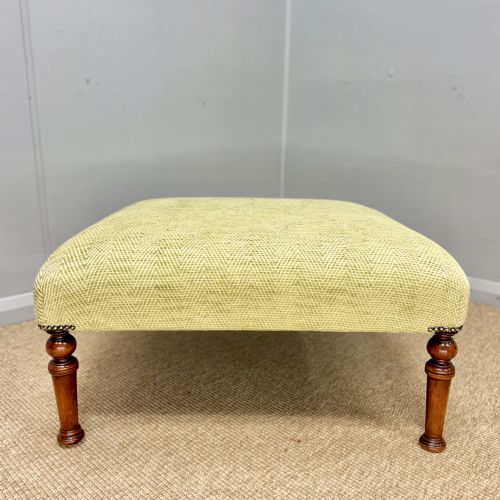

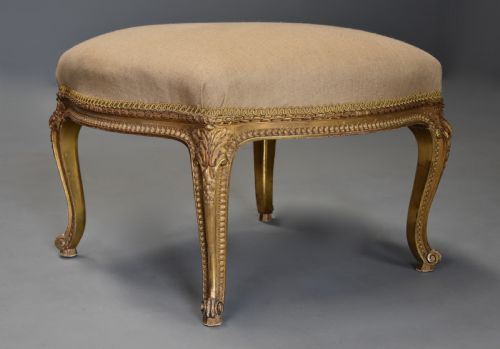
Large Footstool
A large antique footstool brings generous proportions and grounded comfort to a room, offering a tactile anchor for seating arrangements.
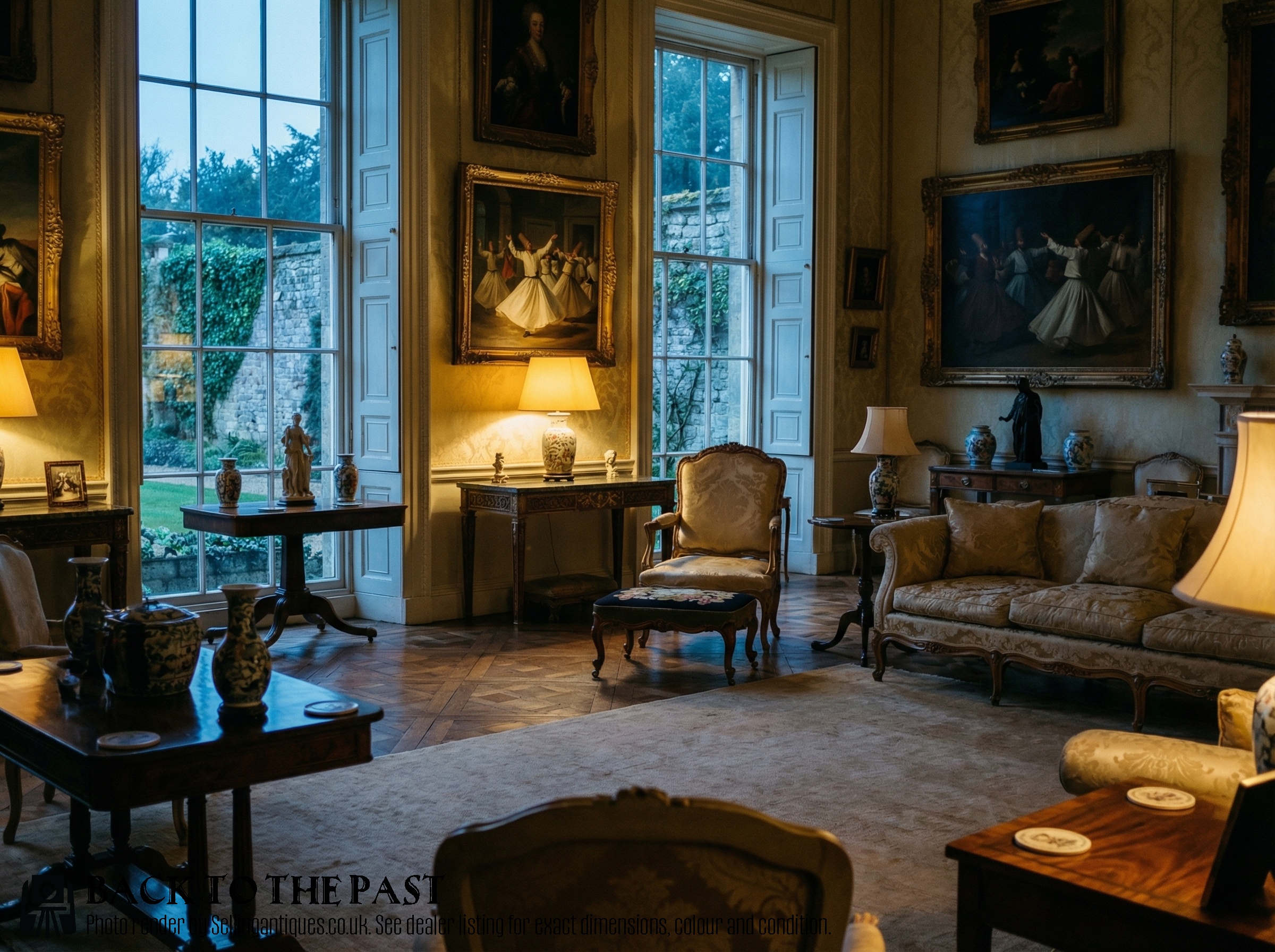
Large Footstool
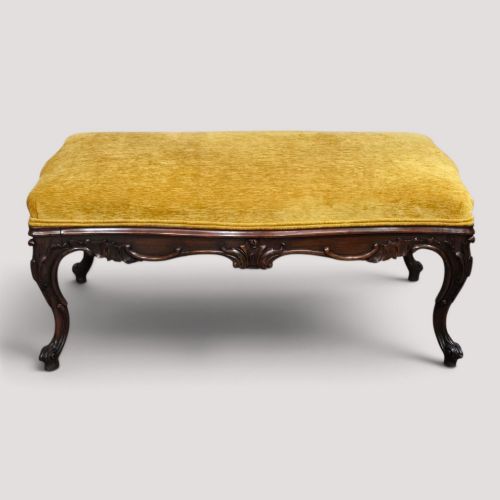
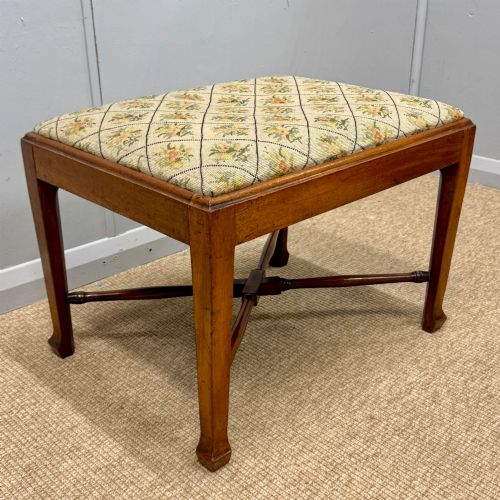
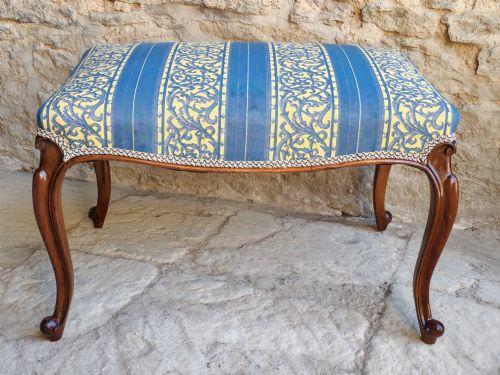
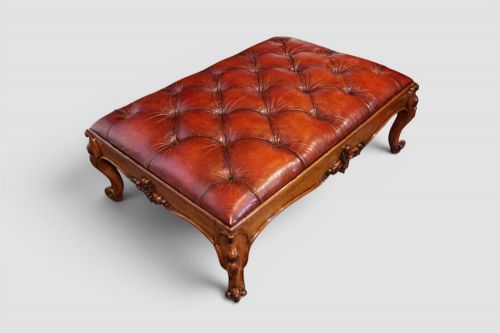
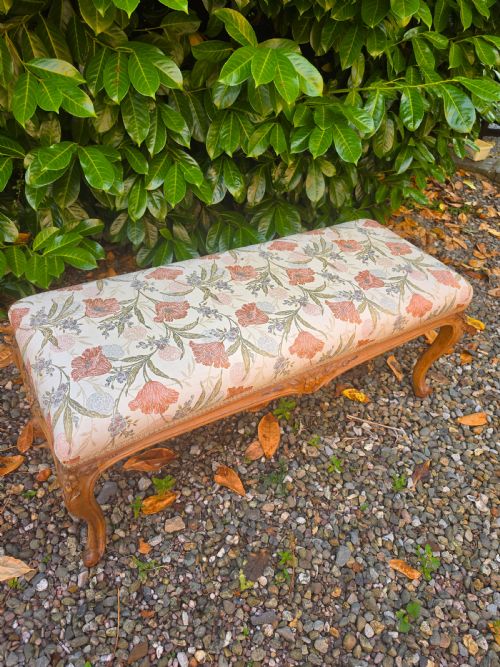
When you search for a large antique footstool, you encounter substantial seating pieces designed to support feet or serve as low tables in principal rooms. The selection ranges widely from formal Victorian rosewood frames to robust English country house ottomans upholstered in leather, fabric, or kelim.
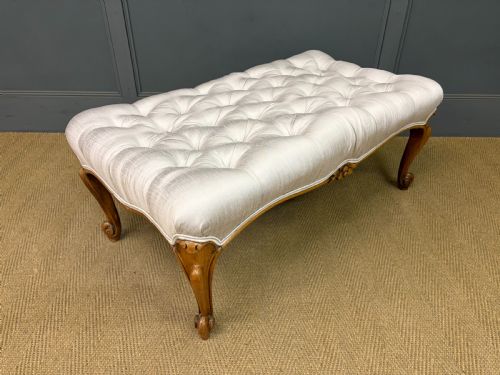
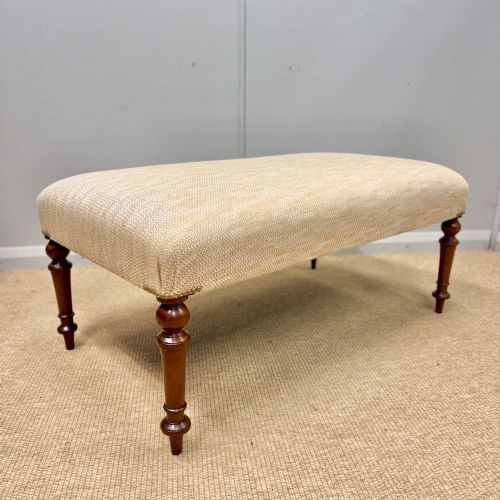
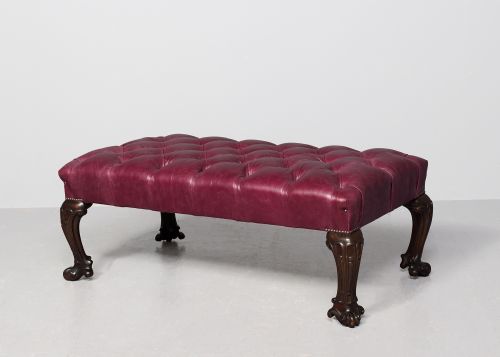
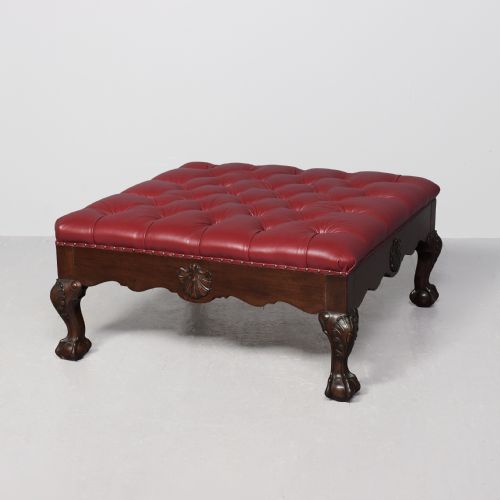
You are most likely to meet nineteenth-century examples featuring turned or cabriole timber legs, buttoned leather tops, and occasionally brass castors for mobility. These objects bridge utility and decoration, evolving from fireside comforts into versatile centre pieces.
How they were made
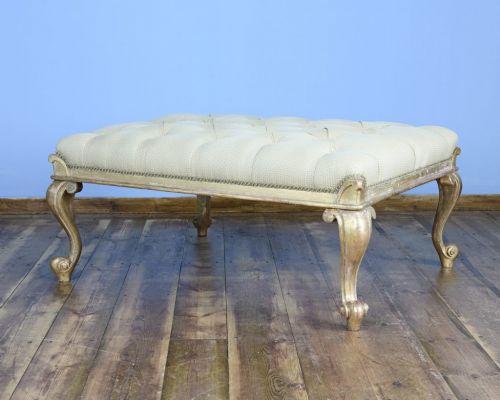
Cabinetmakers constructed the supportive frames using dense native and exotic timbers such as mahogany, walnut, rosewood, oak, and giltwood. Structural stability often relied on cross stretchers, sturdy corner blocks, and carved legs featuring cabriole or parcel gilt details.
Upholstered surfaces combined traditional webbing and stuffing with top covers in leather, velvet, fabric, or kelim. Buttoning techniques secured the padding while creating distinct geometric patterns across the seating area.
What varies in quality
The distinction between standard utility seating and exceptional pieces rests in the ambition of the timber carving and the integrity of the frame construction. Richly figured rosewood, intricate walnut carving, and maker stamps elevate certain stools into the upper tier of craftsmanship.
Proportion and scale also dictate worth, particularly grander examples designed for country houses or formal drawing rooms. The harmony between the original show wood and the quality of the hide, velvet, or kelim upholstery defines the enduring presence of the piece.
Hallett And Sons·Loidrault Freres Paris
The Large Footstool Glossary
- Ottoman
- A low, upholstered seat or couch without arms or a back, frequently utilised as a coffee table or footrest. These large forms often include storage space beneath the hinged top.
- Cabriole leg
- A furniture leg that curves outward at the knee and tapers inward toward the ankle, ending in a pad or scroll foot. This stylistic element appears frequently on mid-nineteenth-century walnut frames.
- Cross stretcher
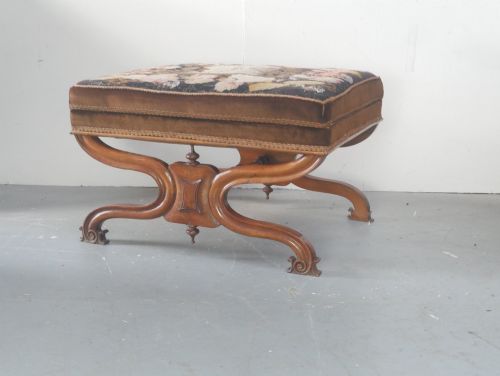
- A structural timber brace forming an X shape between the legs of a stool to provide lateral stability. They frequently feature a central finial or floral carving.
- Buttoning
- An upholstery method where deep indentations are formed by pulling twine or thread through padding and securing it with fabric-covered buttons. This technique yields a padded surface with distinct diamond patterns.
- Kelim
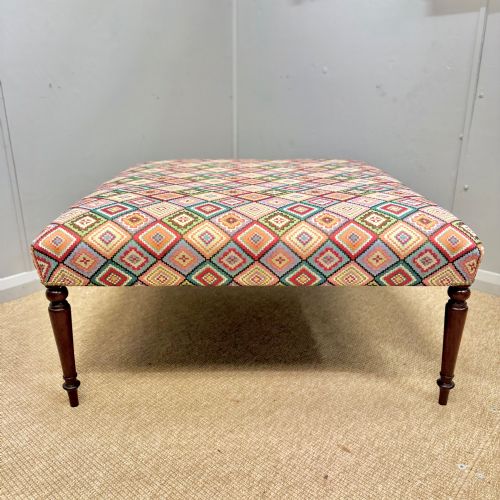
- A flat-woven carpet or rug utilised historically as an upholstery fabric on nineteenth-century footstools. It introduces geometric patterns and muted wool textures to the seating surface.
Large Footstool: Frequently Asked Questions
How were large antique footstools used?
These large footstools served primarily beside firesides or in drawing rooms to rest feet or provide extra seating for guests.
Over time, many of these generous platforms transitioned into centre tables or ottomans by placing trays atop the leather or fabric surfaces.
Can I use an antique footstool as a coffee table?
Many sturdy nineteenth-century stools with firm leather or wood tops adapt readily to function as coffee tables in modern interiors.
Placing a tray on buttoned leather or tight fabric protects the upholstery while providing a stable surface for everyday items.
How do I tell Victorian stools from Regency ones?
Regency examples often display leaner classical lines, rosewood or mahogany frames, and restrained brass mounts or castors reflecting earlier neoclassical tastes.
Victorian pieces tend toward heavier proportions, darker walnut or oak timbers, deeper buttoning, and more exuberant carved details such as cabriole legs.
What is a country house style footstool?
Country house stools are defined by their generous scale, deep buttoned leather upholstery, and robust timber construction designed for relaxed domestic comfort.
These pieces often show patinated surfaces and substantial proportions that anchor large reception rooms.