



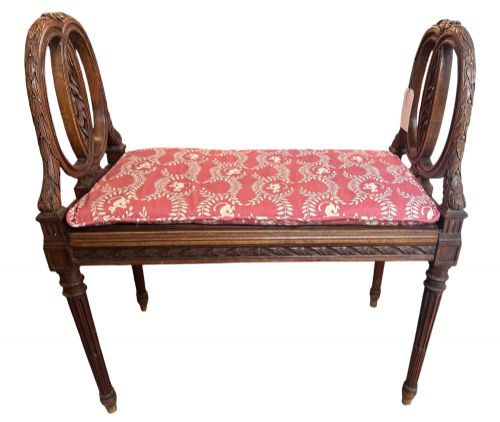
19th Century Walnut Stool
A 19th century walnut stool brings rich timber grain and period character to a seating arrangement.
19th Century Walnut Stool
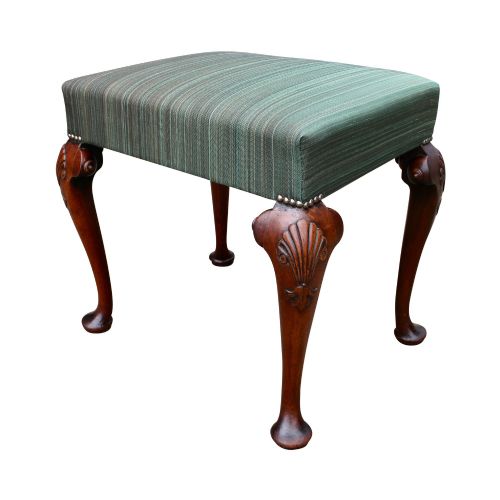
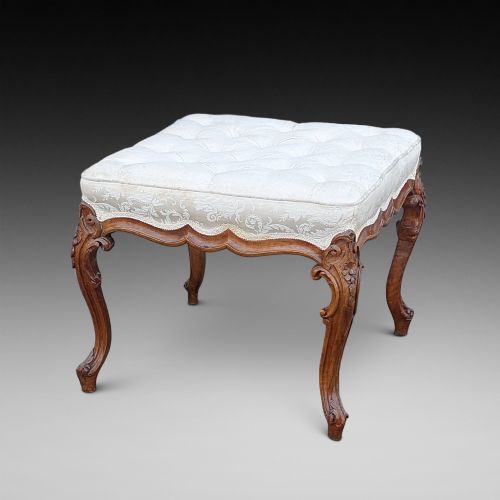
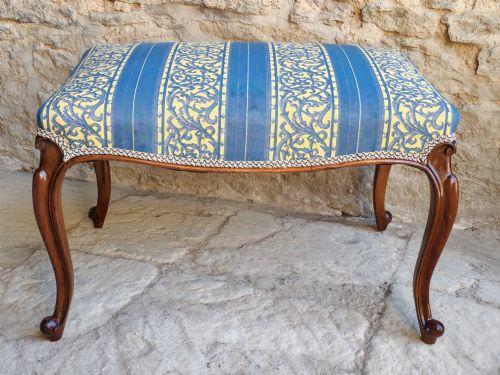
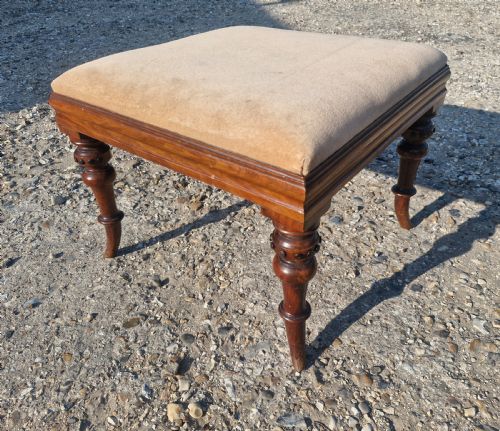
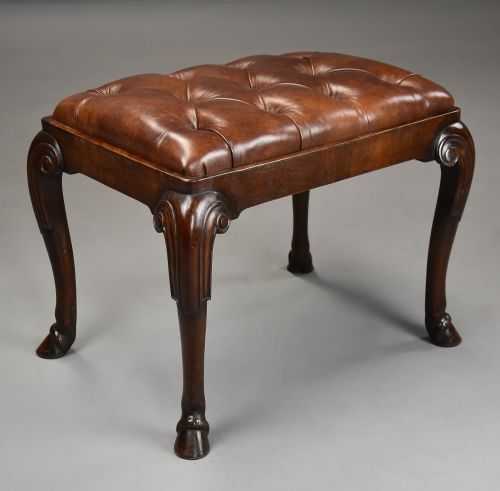
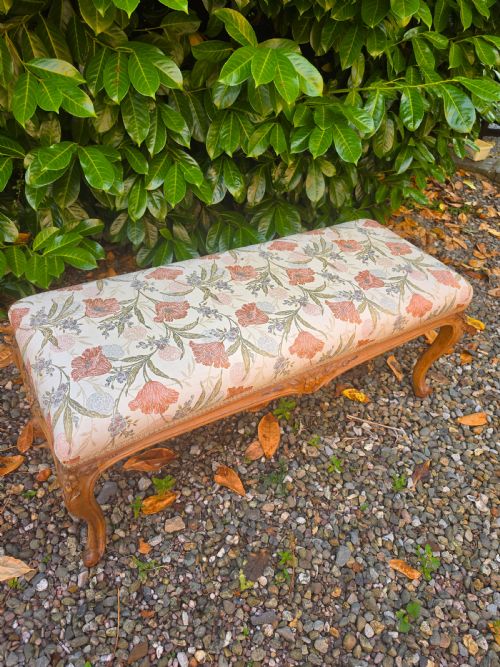
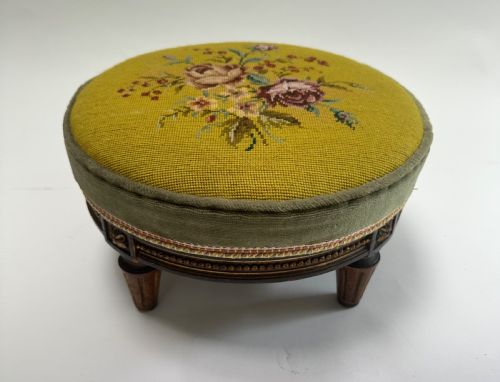
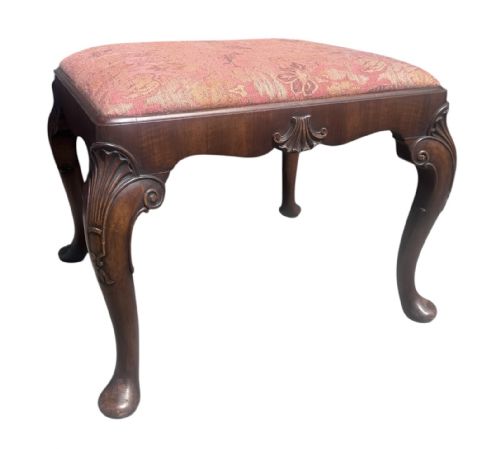
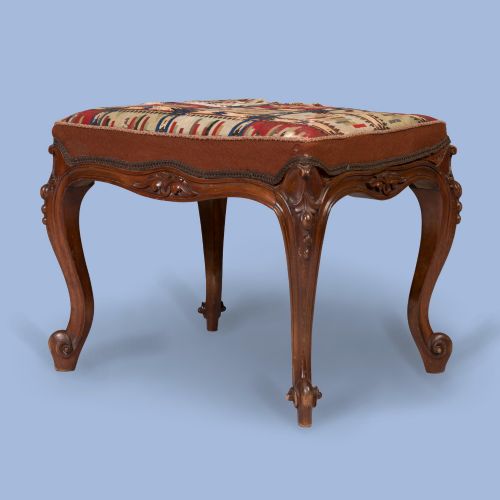
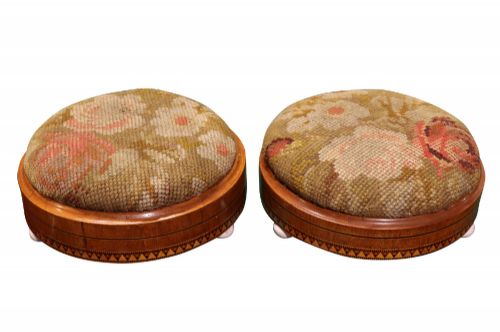
A 19th century walnut stool spans modest footstools and piano seats to large centre stools and window seats. The selection shows revival designs such as Queen Anne, Rococo, and William and Mary.
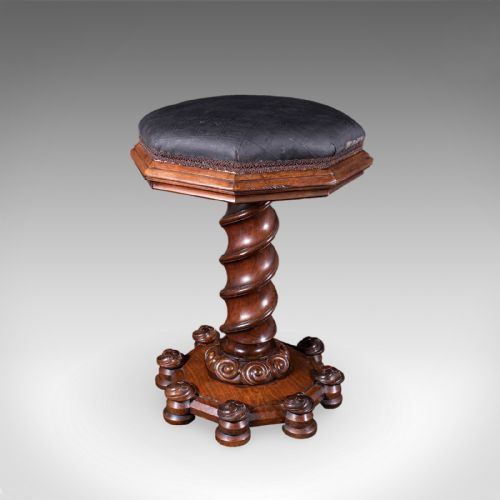
Makers utilised walnut for its warm tone and reliable strength, shaping frames into cabriole legs, spiral turnings, and X-frames. Upholstery ranges from simple fabric to buttoned leather.
Most examples date across the Victorian era, alongside Regency and French provincial pieces. They served functional roles in parlours, music rooms, and dressing chambers.
How they were made
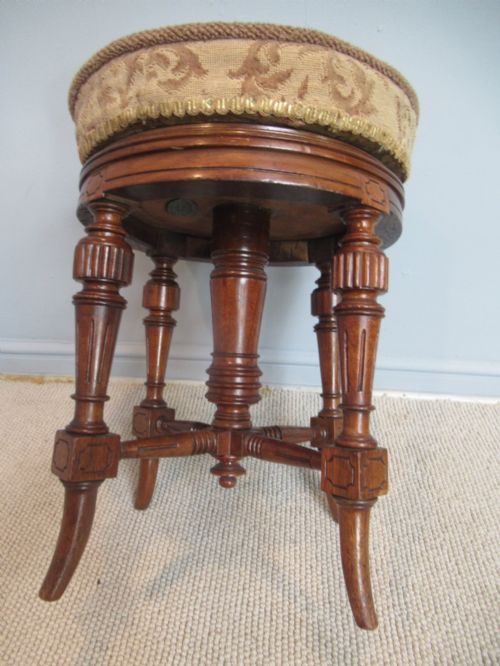
Frames rely predominantly on solid walnut, frequently shaped by hand carving or turned on a lathe into barley twist and spiral forms. Joinery is traditionally concealed to maintain clean lines along aprons and legs.
Upholstered tops utilise supportive textiles including velvet, leather, and woven fabric, secured with brass tacks or deep buttoning. Internal padding often incorporates traditional webbing and horsehair stuffing beneath the outer layer.
Organists required sturdy seating to manage foot pedals, leaving chapel stools with wonderfully robust frames built to withstand vigorous weekly performances.
What varies in quality
The refinement of the timber carving dictates much of the distinction, separating briskly turned legs from deeply sculpted acanthus leaves and cabriole curves. Crisp detailing in revival styles indicates superior workshop execution.
Scale and proportion alter the presence of a piece, with larger centre stools and matched pairs demanding greater joinery skill. The integrity of the original wood grain and the retention of period upholstery materials influence the overall character.
Copes and Collinson
The 19th Century Walnut Stool Glossary
- Cabriole leg
- A furniture leg featuring a double curve, swelling outward at the knee and tapering inward to the foot. This shape draws inspiration from animal limbs and appears frequently on Queen Anne revival pieces.
- Centre stool
- A large, freestanding seat designed to sit in the middle of a room rather than against a wall. These pieces often feature generous proportions and upholstered tops.
- Revolving stool
- A seat mechanism allowing the top to spin, commonly found on music and piano stools. Height adjustment screws were often integrated into the wooden column.
- X-frame
- A structural base formed by intersecting diagonal timbers that cross to support the seat. This ancient form enjoyed revivals during the Victorian period.
- Prie-dieu
- A devotional chair or stool equipped with a low shelf for kneeling during prayer. They often feature padded armrests or upright back panels.
19th Century Walnut Stool: Frequently Asked Questions
How do I use a walnut stool today?
These pieces fit readily into modern rooms as extra fireside seating, coffee table alternatives, or bedroom dressing seats. Their compact footprints allow them to move easily between spaces.
Larger centre models anchor open floor plans, while smaller footstools slide neatly beneath consoles when not in use.
Were piano stools adjustable?
Many musical seats from this era include revolving mechanisms or screw threads concealed beneath the upholstery. This allowed musicians to alter their seating height for recitals.
Non-adjustable variants relied on fixed frames suited to standard parlour heights.
How do I date a walnut frame?
Stylistic revivals provide a primary clue, as cabinetmakers frequently copied Queen Anne, Louis XV, or Jacobean motifs during the Victorian decades. Secondary woods and construction methods inside the frame offer further context.
Hardware such as castors can also indicate the manufacturing period.
What is a grotto stool?
A specific Victorian fantasy design incorporating rustic carved elements like shells, coral motifs, or gnarled branches. These decorative items reflect nineteenth-century interior whimsy.
They function as striking accent pieces in eclectic settings.