


Antique Needlepoint Bench
An antique needlepoint bench brings tactile warmth and period design to a room, offering practical seating worked in durable wool.
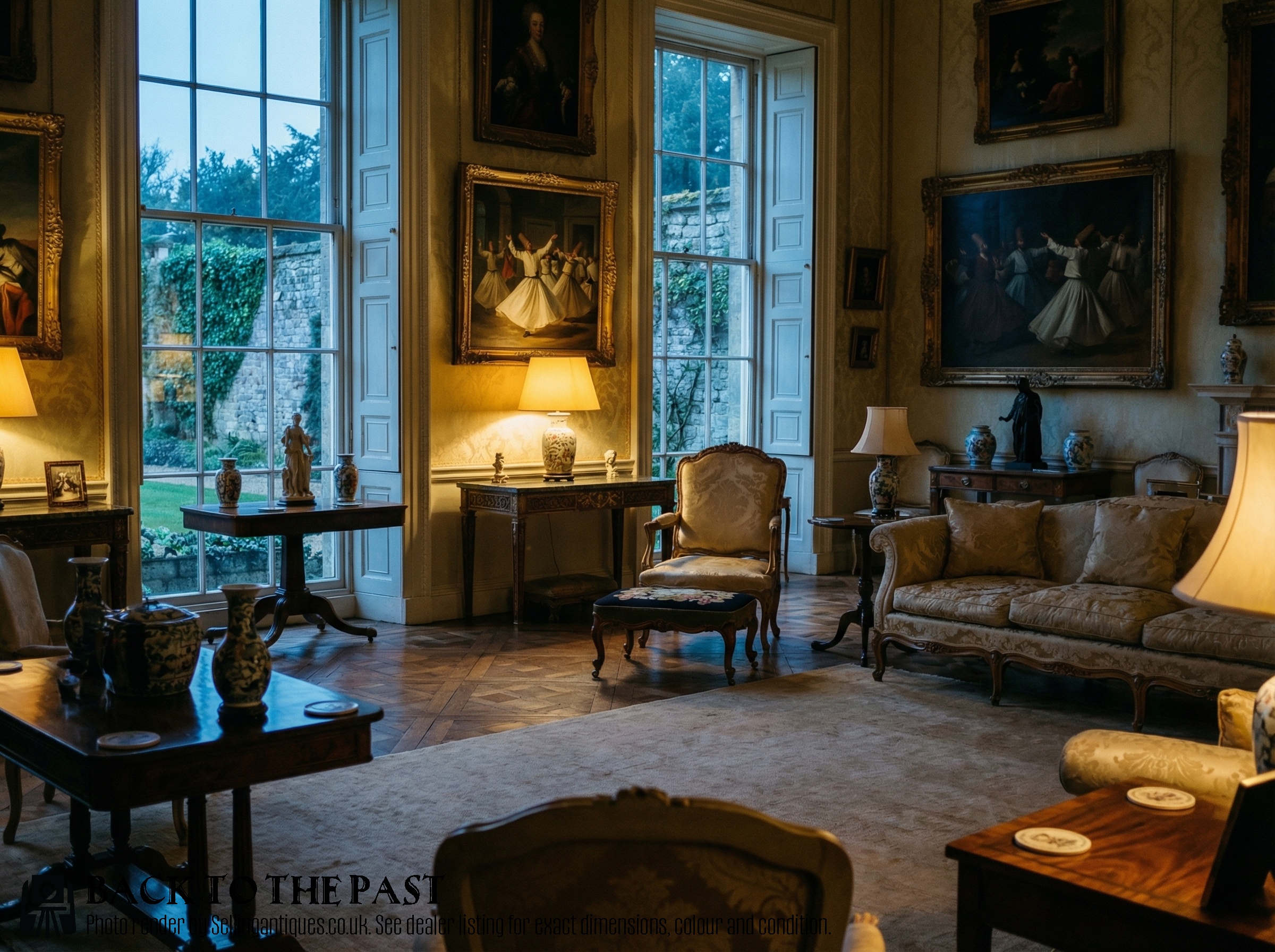
Antique Needlepoint Bench
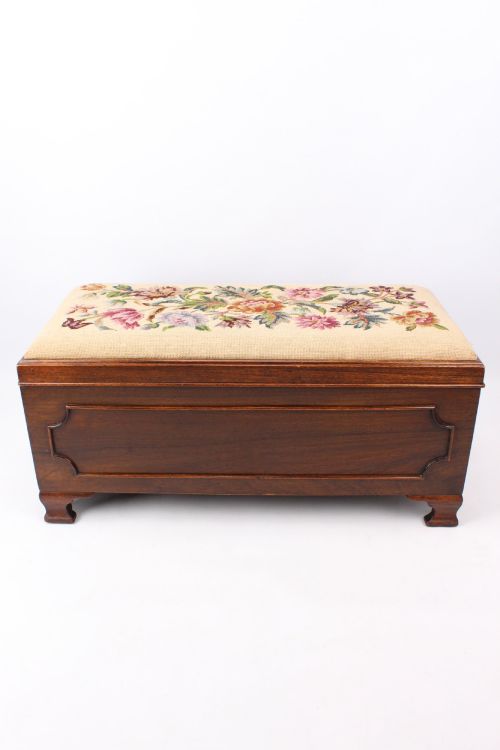
When you search for an antique needlepoint bench, you encounter a variety of low seating forms designed for dressing tables, pianos, and parlours. The selection spans the nineteenth century and the early decades of the twentieth century, including Victorian, Edwardian, and various revival styles.
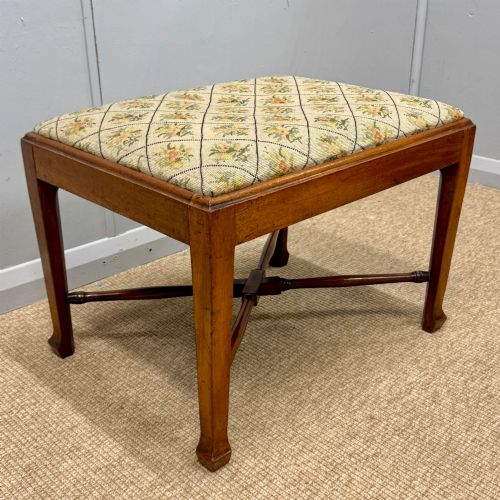
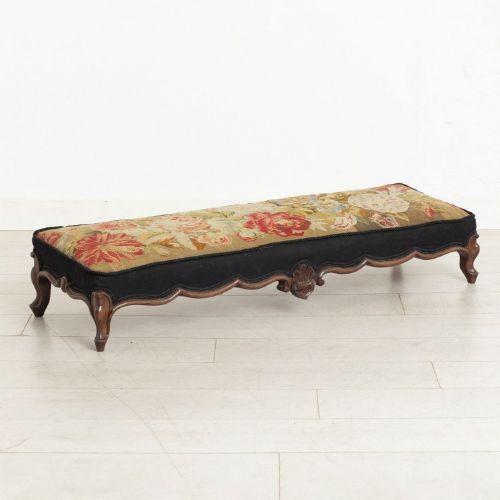
Most examples present as small stools, long footstools, ottomans, or window seats rather than large benches. Mahogany and walnut frame these pieces, often finished with cabriole legs, cross stretchers, or painted surfaces.
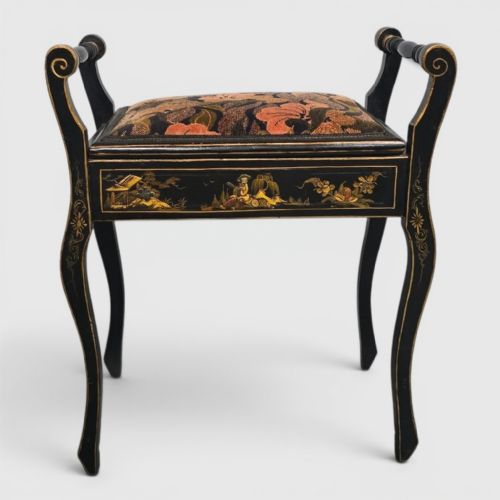
Origin and style vary widely, encompassing English Georgian revivals, French models, Chinoiserie decoration, and Swedish Empire forms. You find dressing table stools and piano stools alongside centre stools and long footstools bearing worked textile covers.
Materials and construction
Makers shaped the frames of these seats from hardwoods, predominantly mahogany and walnut, alongside birch and painted woods. Joinery techniques varied from simple framing to carved cabriole legs and cross stretchers, sometimes incorporating brass details.
The defining textile element is needlepoint or tapestry work, executed in wool on canvas. Many pieces retain original fabric or upholstery, ranging from traditional needlework to velvet and other textiles.
Listings span the nineteenth and early twentieth centuries, featuring walnut, mahogany, and birch frames paired with wool tapestry and velvet upholstery.
Judging quality and execution
Quality in an antique needlepoint bench rests on the execution of the woodwork and the fineness of the textile work. Carved details on walnut and mahogany frames, such as cabriole legs, separate simpler forms from more ambitious pieces.
The needlepoint itself dictates the character of the seating, with dense, intricate wool work marking the upper end of the range. Original fabric and decorative touches, such as cross stretchers or painted Chinoiserie finishes, elevate the standing of a piece.
Jas Shoolbred·Whytock and Reid
The Antique Needlepoint Bench Glossary
- Needlepoint
- A type of counted thread embroidery stitched onto a stiff open-weave canvas. It forms the durable, patterned top characteristic of these seats.
- Cabriole leg
- A furniture leg that curves out and then in, resembling an animal's leg. This form appears frequently on walnut and mahogany frames.
- Cross stretcher
- Wooden rails connecting the legs near the base to provide structural rigidity. They often feature turning or central finials.
- Chinoiserie
- European decorative art reflecting Chinese artistic motifs. Pieces in this style feature hand-painted oriental scenes and figures.
- Centre stool
- A large, freestanding stool designed to sit in the middle of a room rather than against a wall.
Antique Needlepoint Bench: Frequently Asked Questions
What is an antique needlepoint bench used for?
These pieces function primarily as low seating at dressing tables, pianos, or the foot of a bed. They also serve as flexible footstools, ottomans, or window seats in living spaces.
Because of their compact dimensions, they fit easily into small alcoves or serve as movable seats when hosting guests.
How do I identify the period of a stool?
Dating relies on combining the timber, the style of the frame, and the needlepoint design. Victorian and Edwardian examples often feature walnut or mahogany with distinct revival influences.
Later pieces from the early twentieth century adopt Georgian or Queen Anne revival lines, while mid-nineteenth-century items may show Empire or simpler regional characteristics.
Are the needlepoint covers original?
Many listings specify whether the needlework or fabric is original to the frame. Wool tapestry covers endure well, but textile replacement is common in pieces of this age.
Examining the underside and the wear on the wool helps determine if the needlepoint dates to the same era as the wooden frame.
How should I care for wool needlepoint?
Protect the wool textile from direct sunlight to prevent fading of the dyed threads. Gentle vacuuming through a mesh screen removes surface dust without damaging the stitches.
Avoid placing heavy or sharp objects on the needlepoint top to protect the canvas and wool from wear and tearing.