

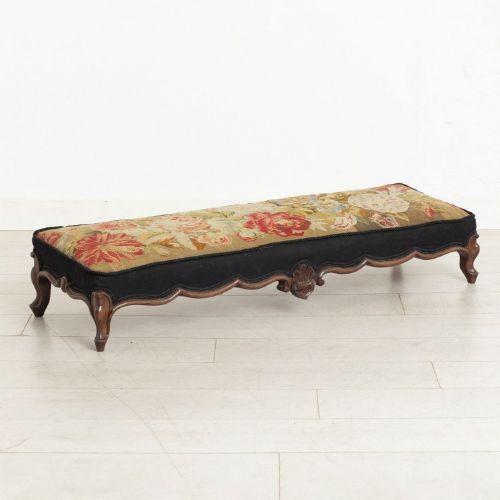


Antique Floral Ottoman
An antique floral ottoman brings tactile warmth and period character to a room, offering practical seating or foot support upholstered in historic textiles.
Antique Floral Ottoman
An antique floral ottoman encompasses a variety of low seating forms, including footstools, fireside stools, and box ottomans upholstered in textiles. Buyers searching this phrase encounter nineteenth-century walnut and mahogany frames alongside needlepoint, tapestry, and embroidered fabrics.
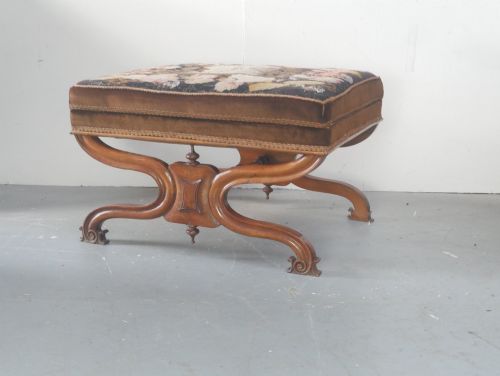
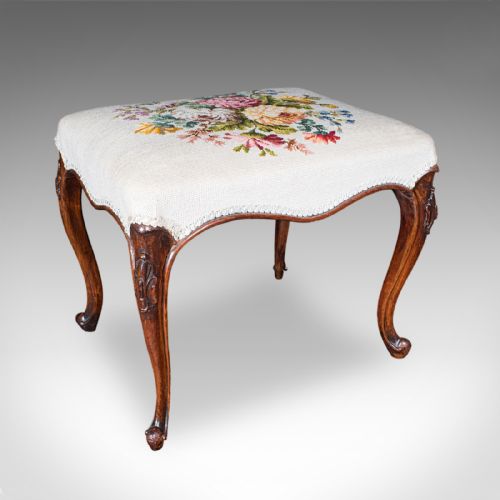
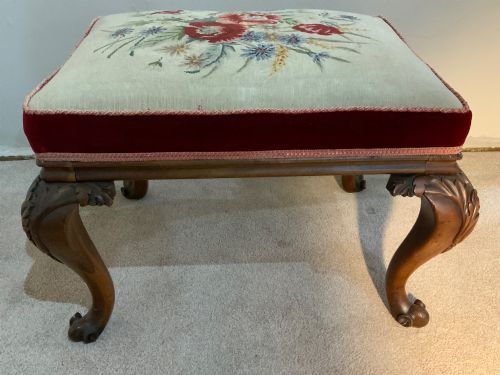
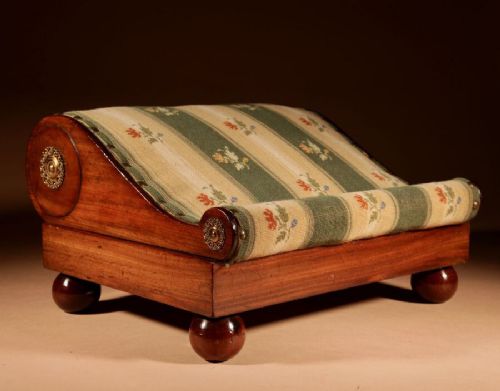
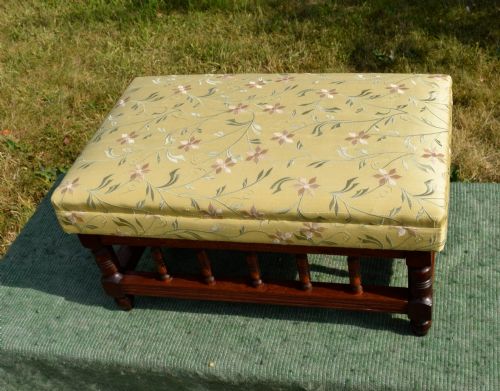
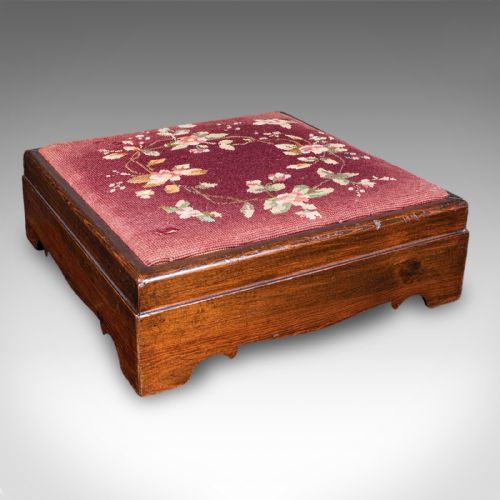
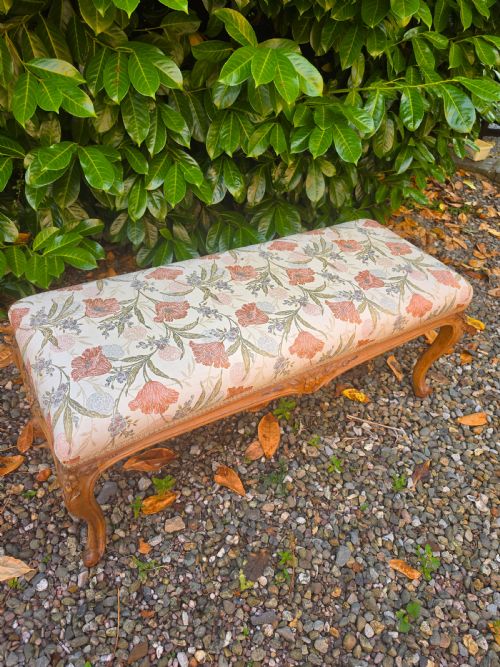
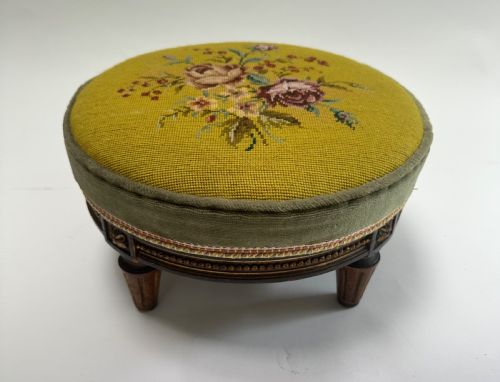
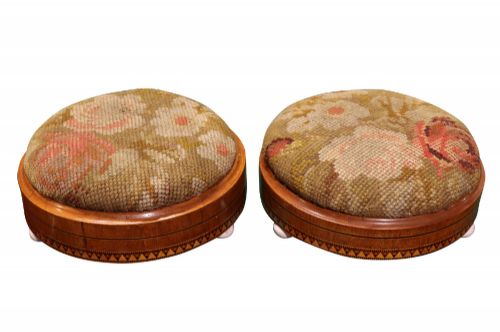
The pieces appearing on this page range from compact circular footstools to large Scottish Baronial and Victorian centre stools. Many examples feature carved wooden frames supporting wool, cotton, or needlework covers displaying floral motifs.
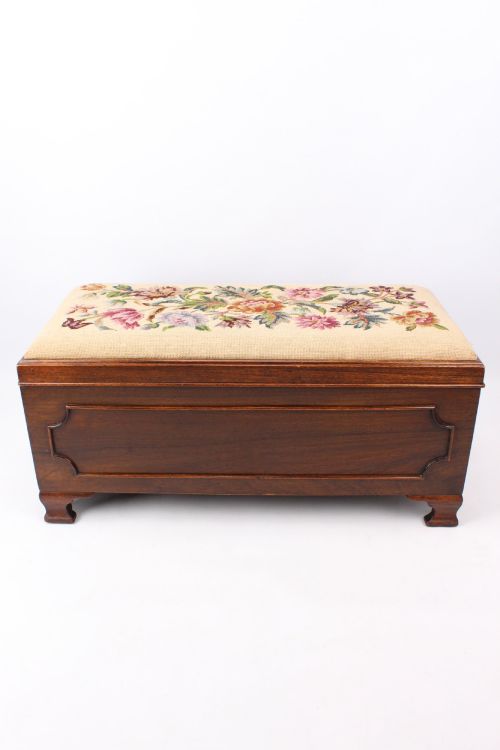
Originating across England, France, and Scotland, these items combine functional seating with decorative upholstery. Buyers find both open-frame stools on cabriole legs and enclosed storage ottomans designed for domestic comfort.
Materials and construction methods
Makers utilised dense hardwoods such as mahogany, walnut, rosewood, and pitch pine to build sturdy foundational frames. These timbers were frequently carved, turned, or inlaid, particularly on nineteenth-century Victorian and Edwardian examples.
Upholstery involved hand-stitched needlepoint, tapestry, and embroidered textiles incorporating wool and cotton threads. Original fabric survivals sit atop traditional stuffing materials secured to wooden seat rails.
Listings feature walnut, mahogany, and rosewood frames paired with wool needlepoint and tapestry textiles across the Victorian and Edwardian periods.
Distinctions in craftsmanship
Quality rests in the precision of the timber framing and the execution of the hand-stitched needlework. Finer pieces display deeply carved cabriole legs, substantial hardwood construction, and intricate floral tapestries with tight, even stitching.
Lesser examples show simpler turned supports and machine-woven replacement textiles rather than period needlepoint or embroidery. The presence of original upholstery and solid secondary timbers elevates the standing of an individual piece.
Howard And Sons
The Antique Floral Ottoman Glossary
- Cabriole leg
- A furniture support that curves outward at the knee and tapers inward to a scroll or pad foot. This design appears frequently on mid-nineteenth-century walnut stools.
- Needlepoint
- A type of canvas work embroidery executed with wool yarn, commonly found covering Victorian and Edwardian footstools with floral patterns.
- Centre stool
- A large freestanding seat designed to be viewed from all angles, often positioned in the middle of a spacious room.
- Ottoman
- A low, upholstered seat or footstool without a back or arms, sometimes incorporating internal storage beneath a hinged lid.
- Rosewood
- A heavy, dark timber prized for its rich grain and utilised in fine nineteenth-century frames.
Antique Floral Ottoman: Frequently Asked Questions
How do I clean antique upholstery?
Surface dust can be removed gently using a soft brush attachment on a low-suction vacuum. Historic textiles require professional conservation rather than wet cleaning.
Applying water or chemical cleaners directly to nineteenth-century wool or cotton thread risks permanent shrinkage and fibre damage.
Are these ottomans comfortable for daily use?
Most pieces were built with dense traditional stuffings designed to support firm seating or resting feet. Their structural integrity remains strong when handled with reasonable care.
Historic padding lacks modern synthetic bounce, offering a firmer sit than contemporary equivalents.
How do I date a wooden footstool?
Dating relies on timber selection, leg shape, and the joining techniques visible beneath the frame. Victorian examples often feature walnut with cabriole legs, while earlier pieces show Georgian or Regency characteristics.
Fabric can be replaced over time, so the structural wood frame provides the most reliable guide to age.
What is the difference between a stool and an ottoman?
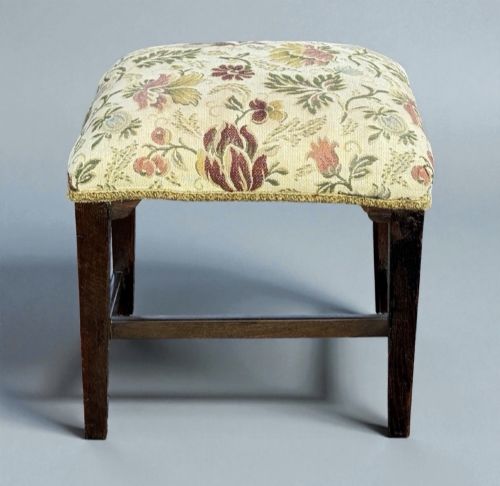
Stools generally feature an open wooden frame with exposed legs and a fixed upholstered top. Ottomans can also include enclosed box bases built for interior storage.
Both forms utilise similar decorative needlework and textile coverings across the nineteenth century.