



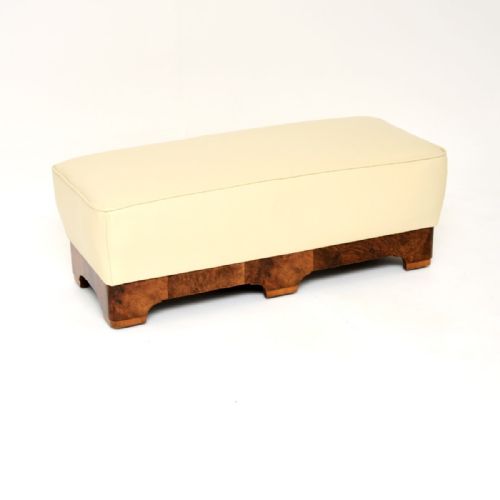
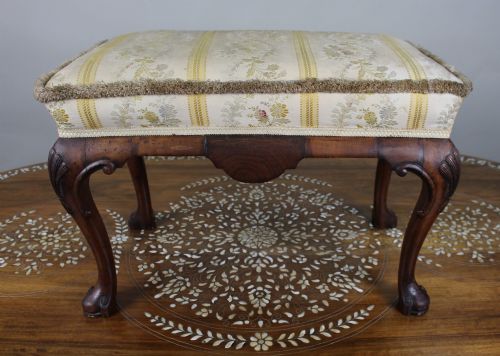
Padded Dressing Stool
A padded dressing stool offers low seating for a bedroom or vanity, bringing period timber and textile work close to the floor.
Padded Dressing Stool
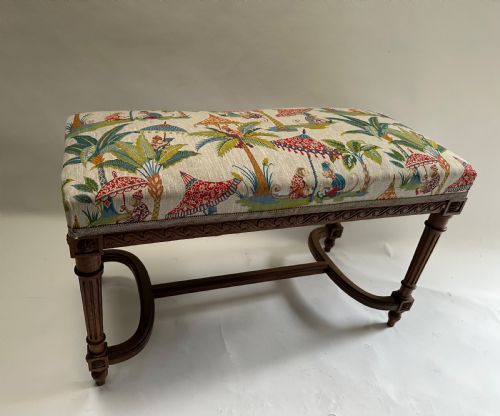
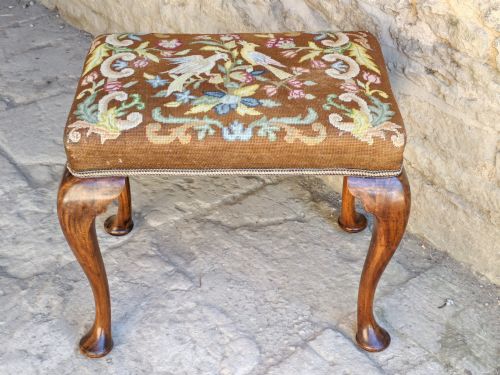
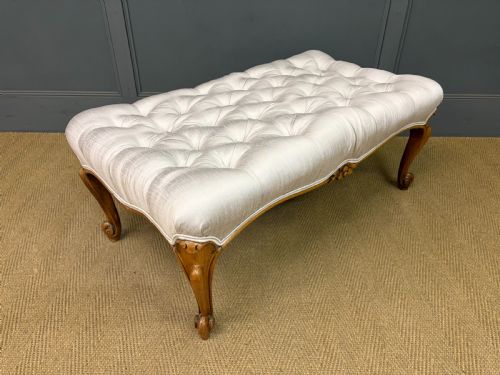
A padded dressing stool stands as a compact seat designed to sit beneath a dressing table or vanity mirror. The form spans several centuries, drawing on forms from the 18th century through the Victorian and Edwardian eras up to Art Deco designs.
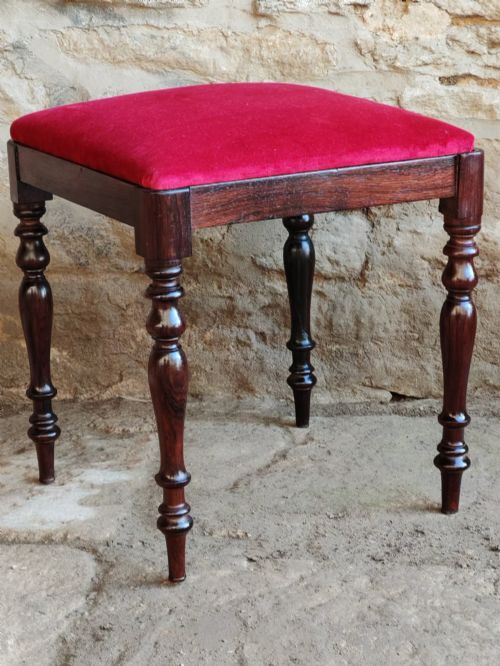
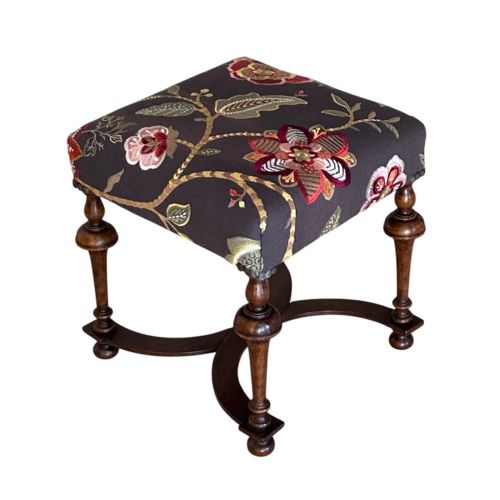
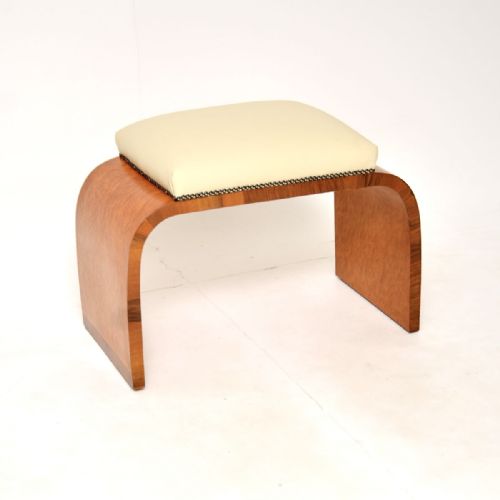
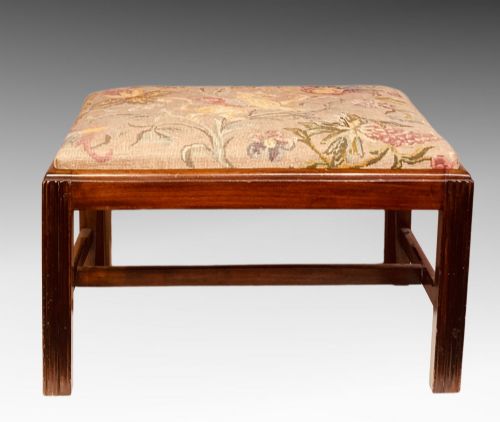
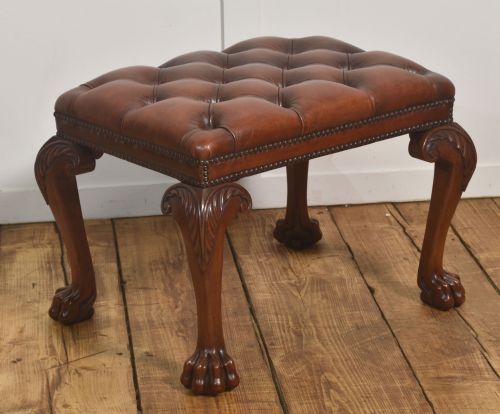
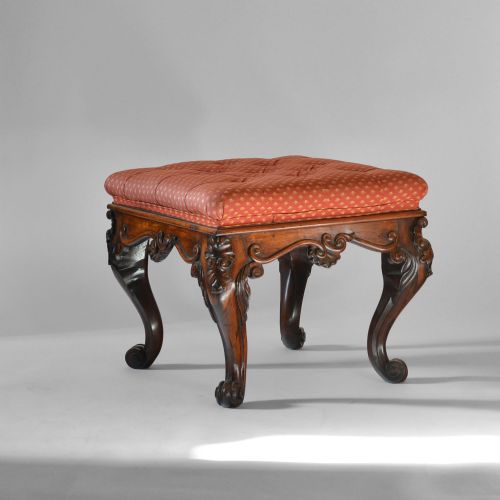
The pieces appearing here include walnut and mahogany frames, alongside rosewood, ebonised timber, and burr maple. Upholstery ranges from plain leather and velvet to tapestry and needlepoint covers.
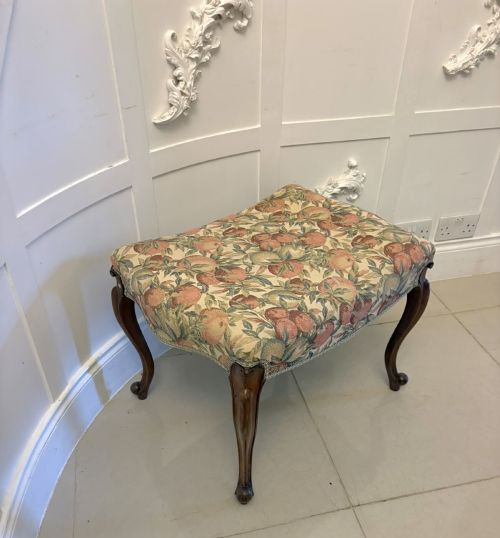
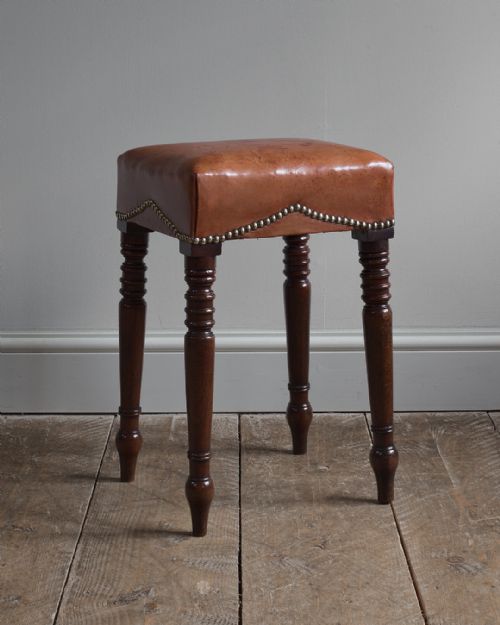
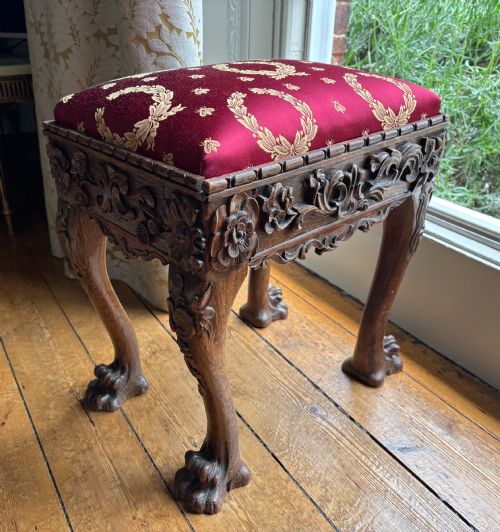
Makers shaped these supports as oval or rectangular seats, resting on cabriole legs, square tapering legs, or twisted rope supports. Many follow revivals of earlier styles such as Queen Anne and Chippendale.
How They Were Made
Cabinetmakers constructed the wooden frames using solid hardwoods like walnut, mahogany, and rosewood, alongside decorative veneers such as burr walnut and oyster veneers. Joinery relies on traditional methods to keep the compact frames rigid under daily use.
Carvers shaped cabriole legs, scroll feet, and cross stretchers by hand from the solid timber. Upholsterers then padded the seats with textiles, leather, velvet, and needlepoint tapestry secured over webbing and stuffing.
Padded Dressing Stool Retail Price Guide 2026
Typical asking prices for padded dressing stool among the pieces listed under this phrase on Sellingantiques today, from the lower quarter to the upper quarter. They describe what is for sale here now, not the wider market.
Period styles span George II and Queen Anne revivals through to Art Deco geometric forms.
What Varies in Quality
The crispness of carved detail on the wooden frame separates standard joinery from superior cabinet work. Deep relief carving on cabriole legs and crisp turning on stretchers show the hand of a skilled maker.
The choice of timber grain and the integrity of the underlying frame construction dictate the longevity of the piece. Period upholstery materials and replacement covers also influence the character of the seating.
LOIDRAULT FRERES PARIS
The Padded Dressing Stool Glossary
- Cabriole leg
- A furniture leg that curves outward at the knee and tapers inward to an ankle, mimicking an animal limb. This shape defines many 18th century and Victorian pieces.
- Cross stretcher
- Wooden rails connecting the lower legs of a stool in an X shape to add stability. They often feature central finials or turned details.
- Oyster veneer
- Circular slices of branch wood laid down to create an intricate oyster-shell pattern across the surface. This technique appears on earlier walnut frames.
- Needlepoint
- Hand-stitched canvas embroidery utilising wool yarn to cover seat pads. These floral or geometric panels supply traditional colour and texture.
- Goncalo Alves
- A dense tropical hardwood with contrasting dark brown streaks, utilised in cabinet making during the Victorian period.
Padded Dressing Stool: Frequently Asked Questions
What is a padded dressing stool used for?
These low seats function primarily as seating at a dressing table or vanity mirror in a bedroom. Their compact dimensions allow them to tuck neatly underneath furniture when not in use.
Beyond the dressing room, they serve as occasional seats or low footstools in living spaces. Their varied upholstery styles help coordinate with existing room textiles.
How do I identify a Victorian stool?
Victorian examples often employ dense timbers like walnut, rosewood, or mahogany paired with robust turned or cabriole legs. Upholstery on these pieces frequently includes deep buttoning or heavy woven fabrics.
Proportions tend to be generous and sturdy compared to lighter 18th-century precedents. The internal construction typically shows period hand-tool marks and traditional joinery.
Are these stools comfortable for daily use?
The comfort level depends on the firmness of the internal padding and the condition of the webbing. Many surviving pieces retain original support structures that provide firm, upright seating.
Some examples arrive with recently restored covers and renewed padding for everyday utility. Checking the height relative to your dressing table ensures proper ergonomic alignment.
How do I care for antique wood and upholstery?
Protect the wooden frame from direct sunlight and rapid humidity changes to prevent timber splitting or veneer lifting. Regular dusting with a soft cloth maintains the finish without harsh chemicals.
Upholstery requires gentle vacuuming using a low-suction attachment to remove surface debris. Professional cleaning is recommended for delicate textiles, velvet, and needlepoint panels.