
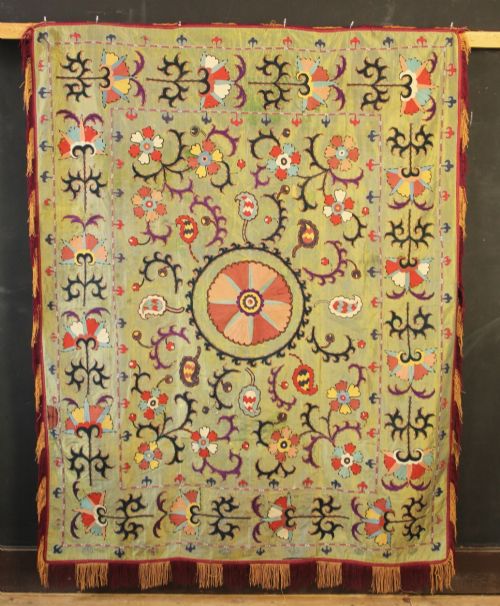


Lakai Embroidered Suzani
These lakai embroidered suzani pieces are vibrant Central Asian textiles carrying centuries of tribal history straight into modern interiors.
Lakai Embroidered Suzani
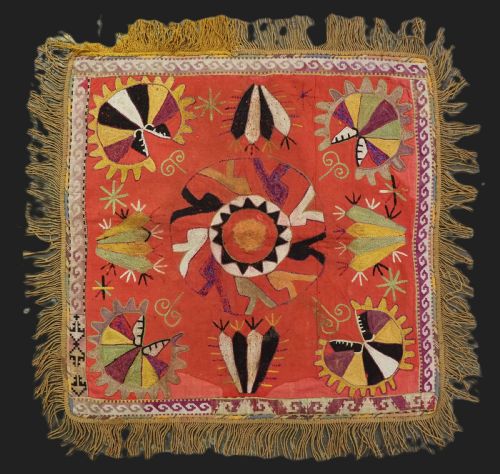
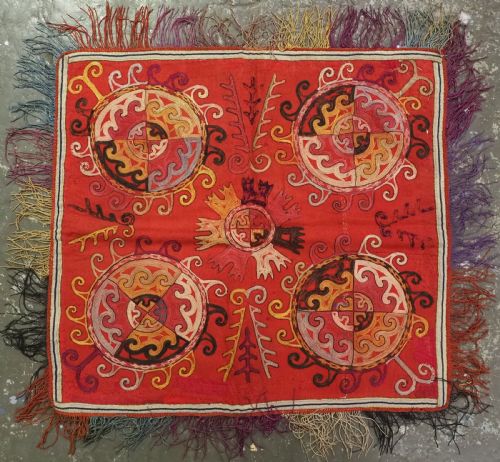
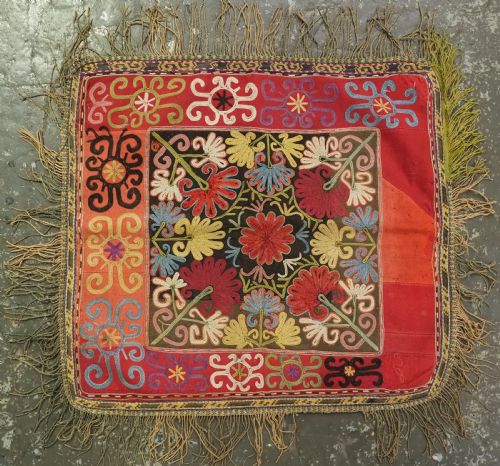
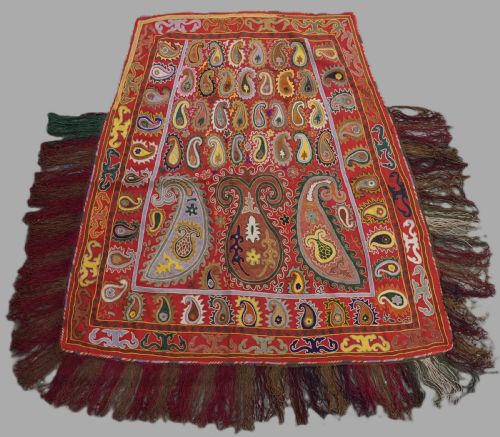
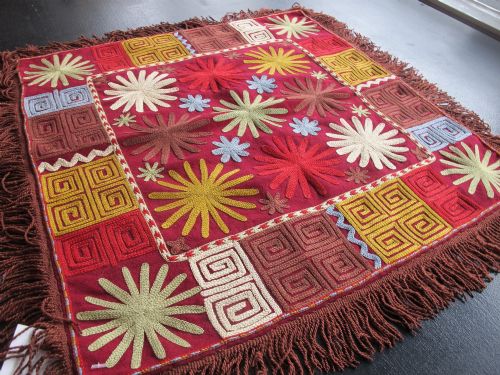
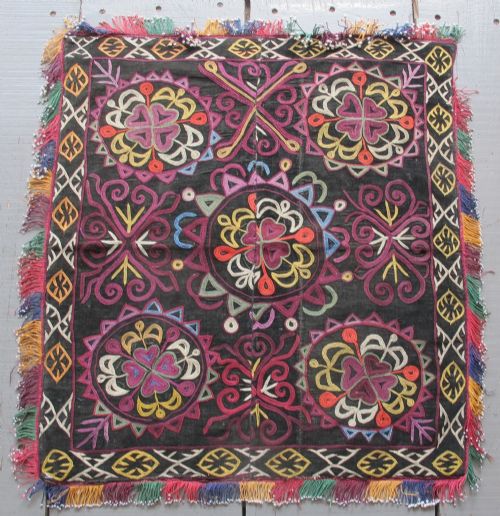
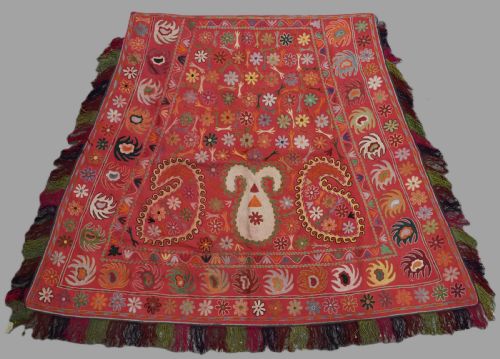
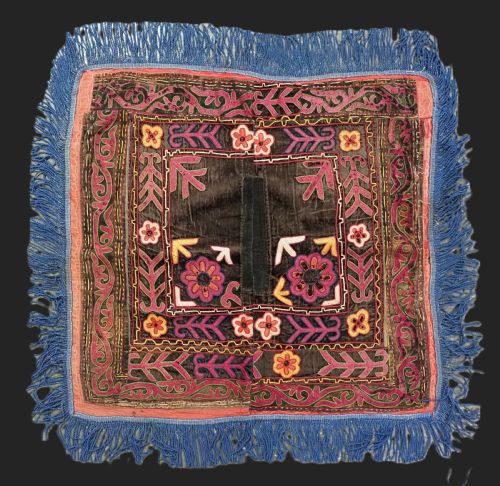
When you search for a lakai embroidered suzani, you are looking at textile panels, wall hangings, and ceremonial covers originating from Central Asia and Uzbekistan. The most common forms met here include dowry embroideries known as ilgich, saddle covers, mirror covers, and bed decorations.
These works stem from the late nineteenth century and early twentieth century, specifically from periods around eighteen eighty up to nineteen twenty. They represent the distinctive folk art and tribal traditions of Uzbek makers.
How They Were Made
Maker communities embroidered fine silk thread onto supporting grounds of cotton or wool, occasionally incorporating velvet and glass beads. This surface work created dense, tactile patterns across each panel.
Many examples include wool fringe finishes to frame the pictorial design. The union of silk stitching with sturdy woven foundations gave these textiles the durability needed for domestic use and ceremonial display.
Several textiles served as ceremonial horse covers, proving that Uzbek horses enjoyed superior interior design to most humans.
What Varies in Quality
Quality rests in the precision of the needlework and the complexity of the traditional motifs deployed across the ground. Tightly packed silk embroidery denotes superior execution compared to sparse stitching.
The choice of secondary materials, such as the inclusion of glass beads and the condition of the wool fringe, elevates particular pieces. Cohesion in the colour palette across silk and wool grounds also separates standard examples from exceptional ones.
The Lakai Embroidered Suzani Glossary
- Ilgich
- A dowry embroidery traditionally used for wall hanging within Central Asian households. These textiles display distinct tribal patterns.
- Suzani
- An embroidered hanging originating from Central Asia, typically worked in silk thread upon a cotton or wool ground. They served various domestic and ceremonial functions.
- Nim Suzani
- A half-sized suzani embroidery variant used for smaller wall spaces or specific domestic settings. These items maintain the same intricate needlework as larger counterparts.
- Saye Gosha
- A specific bed decoration textile created by tribal makers. These panels contributed to the textile wealth of Central Asian homes.
Lakai Embroidered Suzani: Frequently Asked Questions
What is a lakai embroidered suzani?
A lakai embroidered suzani is a textile panel or hanging created by Uzbek tribal groups in Central Asia using silk thread on a woven ground.
These pieces encompass dowry items, saddle covers, and wall hangings dating from the late nineteenth and early twentieth centuries.
How were these textiles used?
Communities utilised these textiles as wall hangings, dowry items, mirror covers, and ceremonial horse covers during tribal celebrations.
Smaller pieces functioned as bed decorations or protective amulets within domestic spaces.
How do I hang a suzani?
Owners typically mount these textiles on a fabric sleeve or use conservation-grade methods to support the weight of the silk and cotton ground.
Avoid direct sunlight to protect the silk threads and natural dyes from fading over time.
How do I date these embroideries?
Dating relies on examining the materials, including the specific type of silk thread, wool ground, and accompanying glass beads.
Stylistic elements associated with Central Asian tribal traditions also help place pieces within periods like nineteen hundred or nineteen twenty.