


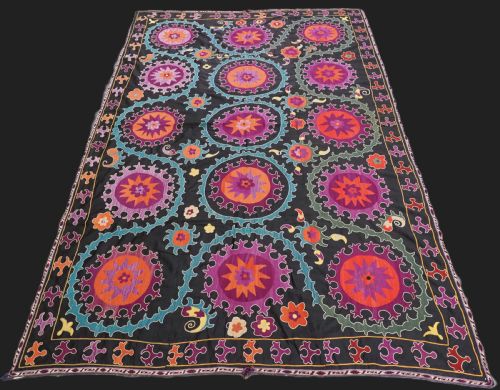


Embroidered Cotton Panel
An embroidered cotton panel brings vibrant Central Asian folk art and traditional needlework directly into modern interiors.
Embroidered Cotton Panel
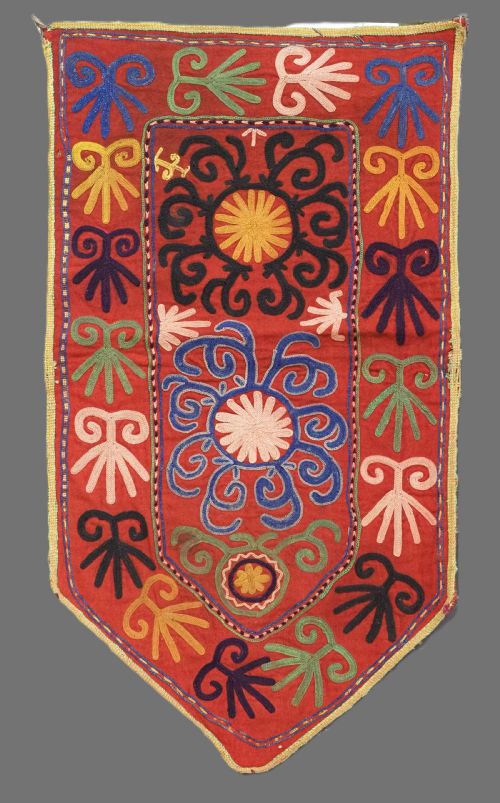
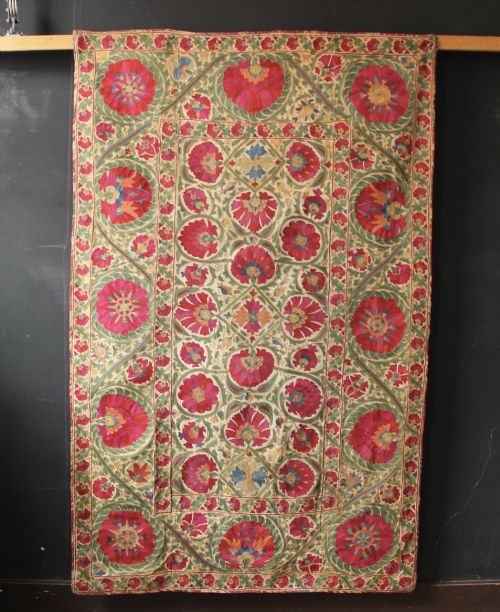
When searching for an embroidered cotton panel, buyers encounter textiles originating primarily from Central Asian traditions, including Uzbek and Lakai tribal work. These pieces take forms such as suzanis, dowry embroideries for wall hanging, and smaller devotional or decorative covers.
The selections available span periods from the mid-nineteenth century through the early twentieth century, alongside Victorian examples. Collectors find diverse regional types, ranging from Bokhara and Nurata designs to Tashkent palak suzanis featuring central star motifs.
Most items combine silk needlework executed upon a woven cotton, adras silk-cotton mix, or linen ground. They function primarily as wall art and decorative hangings, bringing distinct folk art patterns into living spaces.
How They Were Made
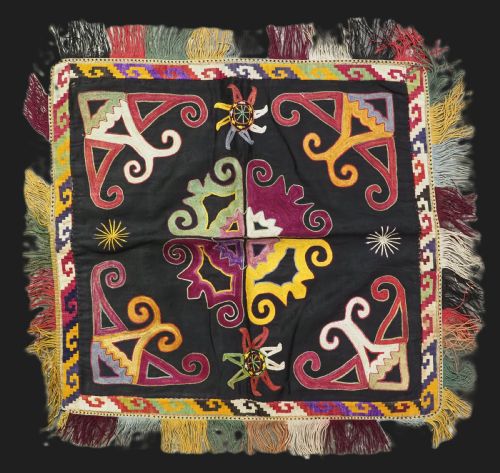
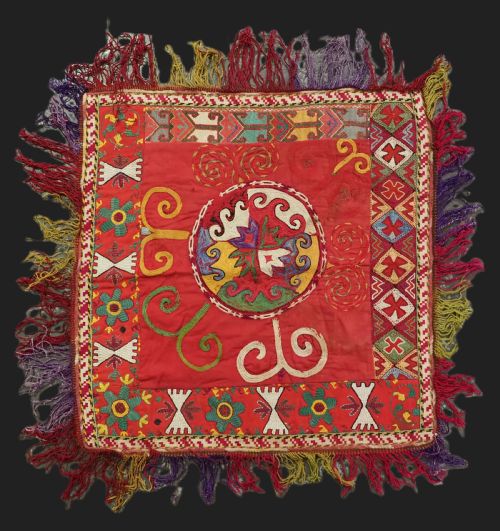
Artisans executed these textiles by stitching colourful silk thread onto supportive base fabrics made from cotton, wool, linen, or adras. Grounds appear in various shades, including red, yellow, and black cotton.
Needlework techniques involved dense embroidery covering the ground fabric entirely in regional styles such as those from Shakhrisabz and Samarkand. Finished textiles frequently incorporated mounted frames or served as domestic covers and prayer panels.
A photographic prop screen from Japan sits among the Central Asian needlework, proving that decorators mixed global curiosities long ago.
What Varies in Quality
The visual impact of an embroidered cotton panel depends on the density of the silk threadwork and the complexity of the traditional design. Fully embroidered surfaces, such as palak suzanis with central stars, demonstrate greater technical execution than sparse compositions.
Condition and colour retention significantly influence the desirability of these older textiles. Pieces maintaining vibrant original hues and intact grounds stand apart from examples showing heavy wear or fading.
The Embroidered Cotton Panel Glossary
- Suzani
- An embroidered tribal textile originating from Central Asia, typically worked in silk thread on a cotton or linen ground. These large decorative hangings often feature bold floral and geometric motifs.
- Adras
- A traditional woven fabric made from a blend of silk and cotton yarns. It serves as a textured ground for intricate embroidery.
- Palak
- A specific type of suzani characterised by a fully embroidered field, frequently dominated by a large central star motif. These panels require extensive needlework.
- Nim Suzani
- A smaller scale version of the traditional suzani hanging. These half-sized panels were often utilised as domestic covers or dowry items.
- Ilgich
- A form of dowry embroidery created by the Lakai tribe in Central Asia. They were traditionally produced for wall hanging within the home.
Embroidered Cotton Panel: Frequently Asked Questions
What is a suzani panel?
A suzani is a traditional embroidered textile from Central Asia, stitched by hand with silk thread on a cotton or linen foundation. Artisans created these large panels as part of dowry traditions and domestic furnishings.
Today, collectors mount and display these vibrant works as wall art. They reflect the distinct regional folk art styles of towns like Bukhara, Samarkand, and Nurata.
How were these panels used originally?
These textiles served multiple domestic and ceremonial purposes within Central Asian households. Families utilised them as wall hangings, decorative covers, prayer panels, and essential components of traditional dowries.
Lakai tribal groups produced specific pieces like ilgich and small covers for domestic display. Their vibrant patterns held cultural significance for the communities that made them.
How do I hang a textile safely?
Hanging an antique textile requires weight distribution that avoids placing stress on the historic cotton or linen ground. Professional framing behind glass protects the delicate silk embroidery from dust and physical handling.
Alternatively, conservation mounting involves stitching the panel to a supportive fabric backing attached to a wooden batten. Direct exposure to strong sunlight should be avoided to prevent the silk threads from fading.
How can I tell regions apart?
Regional styles appear through distinct colour palettes, compositional layouts, and embroidery densities. Tashkent pieces often feature dense palak patterns with central stars, while Nurata designs emphasise flowing floral arrangements.
Lakai tribal work is typically distinguished by smaller formats and geometric folk art motifs executed in bold tones. Comparing the ground fabric colour, such as red versus black cotton, also aids regional identification.