


Vintage Uzbek Throw
These vintage uzbek throw pieces are textile panels and wall hangings rooted in Central Asian folk art, bringing rich silk embroidery into modern interiors.
Vintage Uzbek Throw
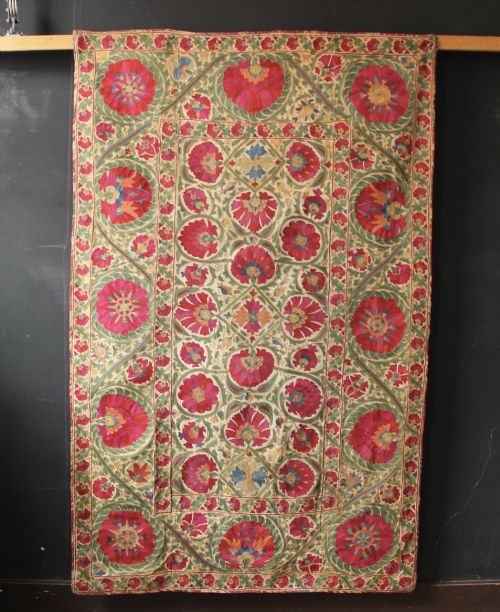
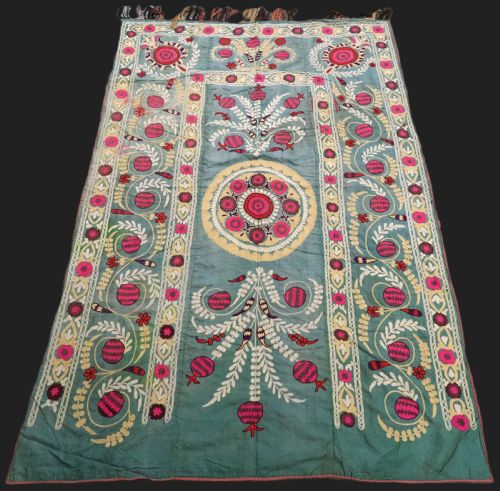
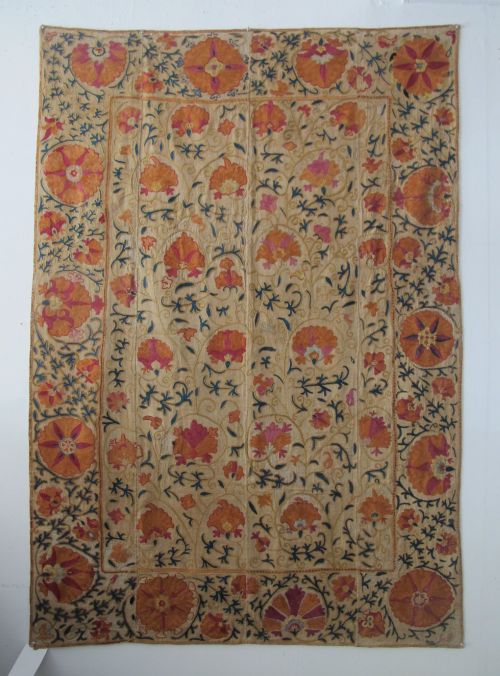
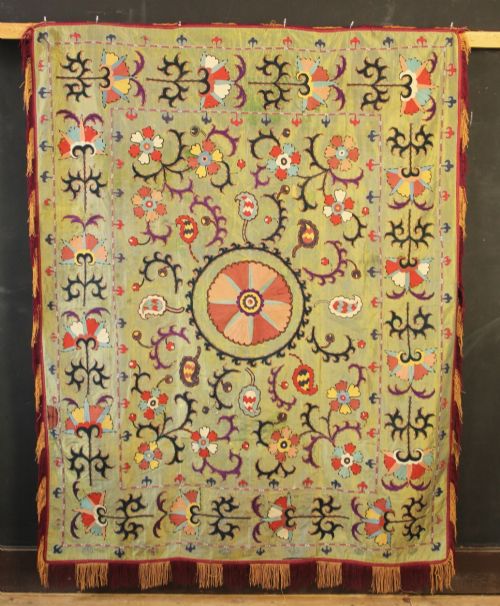
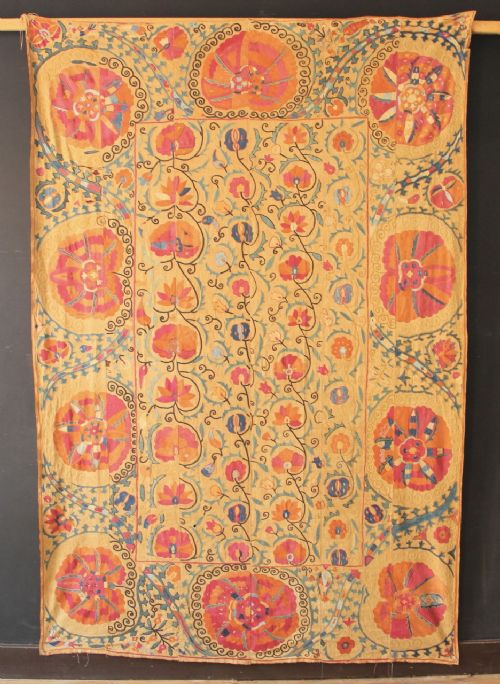
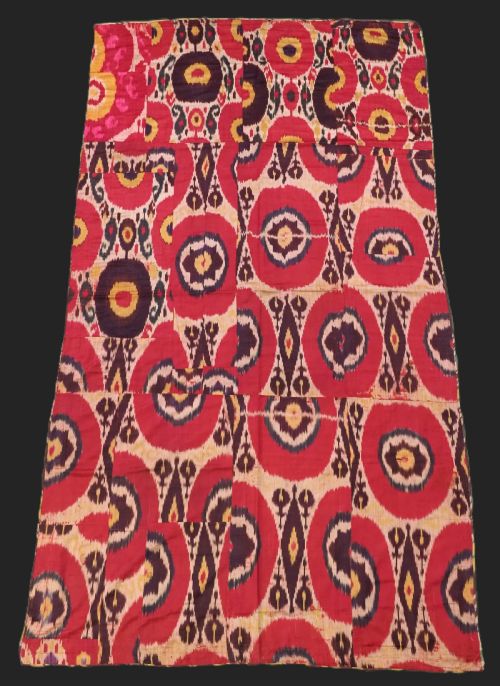
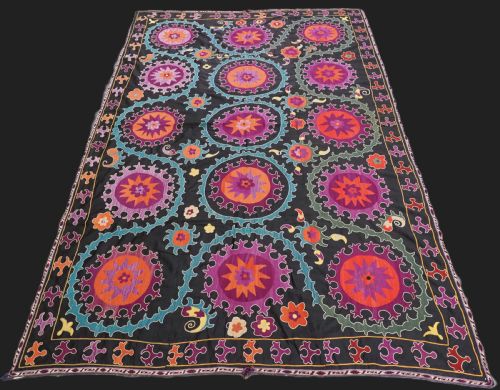
A vintage uzbek throw typically manifests as an antique suzani, an embroidered bed cover, or a silk ikat panel originating from Central Asian traditions. These works encompass regional variations such as Bokhara, Tashkent, Shahrisabz, and Samarkand styles, alongside tribal Lakai and Tajik pieces.
The selections available range from smaller nim suzani fragments to large medallion variant panels and fully embroidered palak designs. Formats span textiles utilised as wall hangings, decorative bed covers, and textile panels dating from the nineteenth century into the early twentieth century.
Buyers encounter ground materials including plain cotton, red cotton, black cotton, wool, and adras silk-cotton blends. Silk thread embroidery forms the dominant decorative layer across these historic household textiles.
Materials and construction
Makers utilised natural foundations of cotton, wool, adras, and silk for the base grounds of each textile. Upon these woven surfaces, fine silk threads were applied through hand embroidery to build dense floral and geometric patterns.
Ikat panels involved the tie-dyeing of warp threads before weaving to create characteristic blurred pattern edges prior to assembly. Regional workshops in centres such as Bokhara and Tashkent employed distinct colour palettes and stitch densities.
Current listings feature pieces spanning the nineteenth and early twentieth centuries, constructed from silk, cotton, wool, and adras materials.
Assessing quality
Quality rests upon the density of the silk embroidery and the complexity of the design, such as full work versus lighter floral arrangements. Full palak and heavily worked suzani panels demonstrate greater artisan time investment than sparse compositions.
The condition of the ground fabric and the vibrancy of the original silk threads influence visual impact. Surviving textiles retaining strong colour saturation on cotton, wool, or adras foundations represent the upper tier of the range.
The Vintage Uzbek Throw Glossary
- Suzani
- An embroidered textile panel produced in Central Asia, traditionally made as part of a bride's dowry. These pieces often feature large floral medallions and vine motifs.
- Nim Suzani
- A smaller half-scale suzani format, typically measuring roughly half the dimensions of a full bed cover. They offer a more compact option for wall display.
- Palak
- A fully embroidered Tashkent suzani type dominated by a large central star motif. The ground is densely covered in intricate needlework.
- Adras
- A traditional hand-woven fabric combining silk warp threads and cotton weft threads. It provides a sturdy yet lustrous ground for embroidery.
- Ikat
- A dyeing technique where yarn bundles are tightly wrapped and dyed prior to weaving. This process yields characteristic feathered pattern boundaries.
- Bokhara
- A historic Uzbek city and major centre for suzani production. Pieces from this region are noted for specific floral arrangements and fine silk work.
Vintage Uzbek Throw: Frequently Asked Questions
How were suzanis used originally?
These textiles served primarily as ceremonial bed covers, wall hangings, and functional furnishings within traditional Central Asian households. Families also created them as significant components of a bride's dowry.
Over time, panels were displayed during weddings and other important domestic celebrations to signify status and artistry.
How do I hang a textile panel?
Mounting requires a method that distributes the weight evenly across the entire top edge of the piece. A fabric sleeve can be stitched to the reverse to accommodate a slim wooden rod.
Alternatively, conservation-grade Velcro systems allow larger panels to rest flat against a wall without placing stress on the historic silk threads.
What is the difference between an ikat and a suzani?
An ikat achieves its pattern through tie-dyeing threads before the weaving process begins, resulting in characteristic blurred outlines. A suzani relies on needle embroidery applied directly onto a completed woven foundation fabric.
Both techniques originated within the same Central Asian regions but involve entirely different textile production methods.
How do I clean an antique silk throw?
Historic silk embroidery requires professional textile conservation rather than standard domestic washing methods. Surface dust can be gently removed using low-suction vacuum attachments through a protective mesh screen.
Water and chemical solvents risk running the natural dyes or weakening aged cotton and wool ground fabrics.