


Floral Uzbek Tapestry
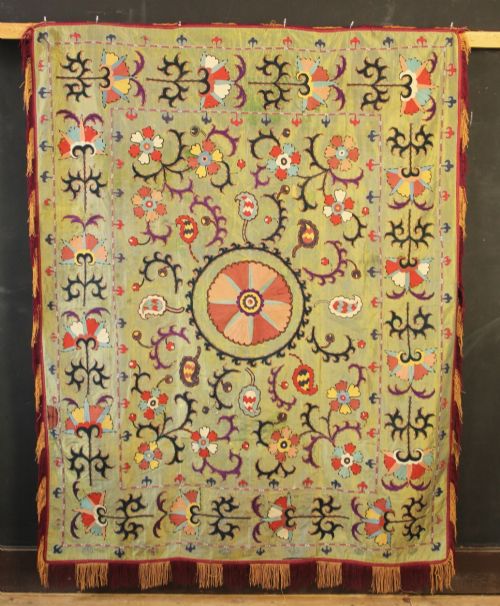
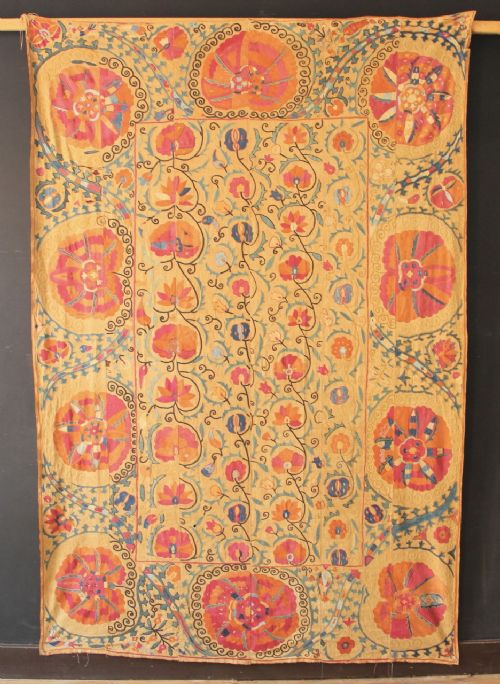
These floral uzbek tapestry pieces are embroidered Central Asian textiles, bringing rich botanical motifs and vibrant colour into modern interiors.
Floral Uzbek Tapestry
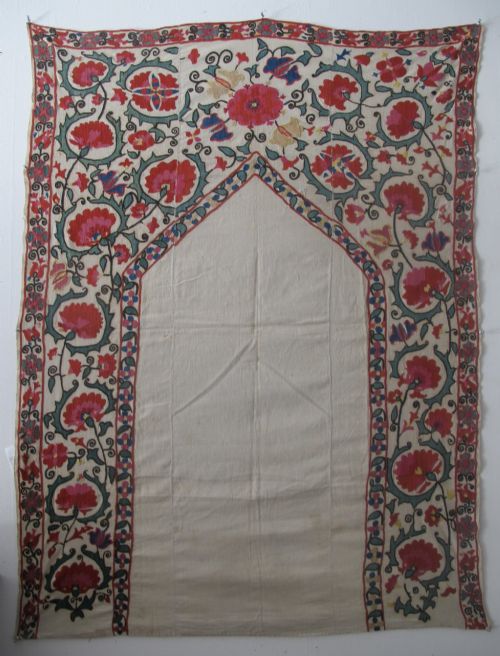
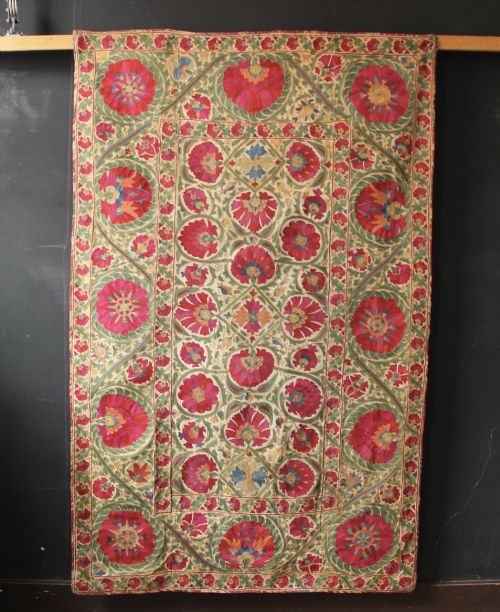
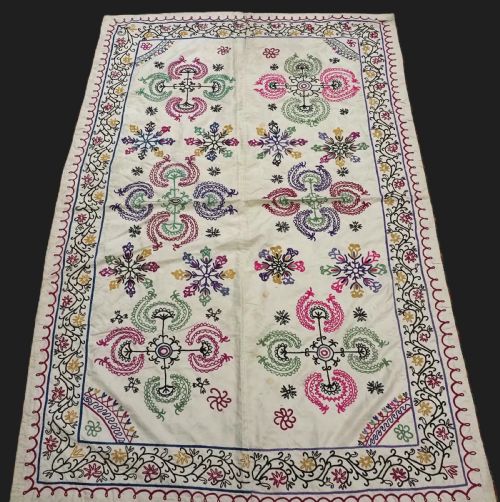
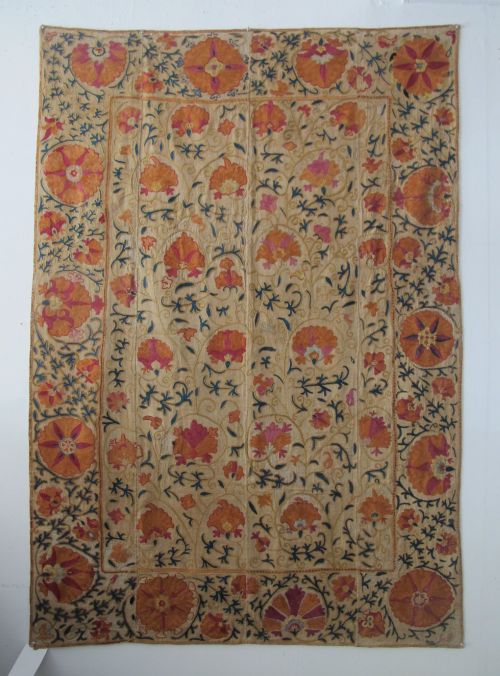
When you search for a floral uzbek tapestry, you are looking at traditional embroidered textiles originating from Central Asia, known locally as suzanis. These pieces span from the early nineteenth century through the early twentieth century, showing distinct regional styles from centres such as Bokhara, Samarkand, Shakhrisabz and Uratube.
The format varies from large medallion layouts and architectural designs down to smaller nim suzanis and prayer formats. Most examples on this page reflect Central Asian folk art and traditional designs created in Uzbekistan.
You will encounter pieces worked in various sizes, ranging from compact wall hangings to substantial wall textiles measuring over two metres across. Each piece reflects the textile heritage of the region through distinct floral patterns.
How they were made
Makers embroidered these textiles primarily using silk thread on a foundation ground of cotton or silk. The embroidery technique relies on dense needlework, creating tactile surfaces with pronounced texture and depth.
The base fabrics often consist of hand-woven cotton dyed in distinct shades, including yellow and red grounds, or foundational silk. Artisans worked vibrant silk threads across these grounds to execute elaborate floral and medallion compositions.
Many nineteenth-century makers hid tiny stitching irregularities in plain sight, proving human hands guided every floral leaf.
What varies in quality
Quality in these textiles rests upon the density of the embroidery and the intricacy of the needlework. Finely executed pieces display precise execution in the floral motifs and harmonious distribution of colour across the ground.
The complexity of the design also distinguishes the work, with larger medallion variants and architectural compositions demonstrating advanced planning by the maker. The choice of materials, particularly the balance between silk embroidery and the supporting cotton or silk ground, shapes the character of the piece.
Bokhara·Samarkand·Lakai·Uratube
The Floral Uzbek Tapestry Glossary
- Suzani
- An embroidered hanging or textile from Central Asia, traditionally worked by women as part of a dowry. The word derives from the Persian term for needle.
- Nim Suzani
- A smaller or half-sized version of a traditional suzani, often more compact in scale while retaining the intricate floral embroidery of larger examples.
- Bokhara
- A historic Central Asian centre associated with fine textile production and distinct regional styles of suzani embroidery.
- Lakai
- A tribal group within Central Asia known for distinct embroidered works characterised by bold motifs and specific regional variations.
- Medallion
- A central focal motif placed within the design field of the textile, frequently surrounded by floral borders and secondary patterns.
Floral Uzbek Tapestry: Frequently Asked Questions
What is a floral uzbek tapestry?
These pieces are traditional embroidered Central Asian textiles, known as suzanis, featuring botanical and floral motifs created by skilled makers.
Originating in Uzbekistan, they were traditionally produced as dowry items and interior furnishings, utilising silk thread on cotton or silk grounds.
How were these textiles used?
Historical records show these pieces served primarily as decorative wall hangings, covers, and festive furnishings within Central Asian homes.
Today, collectors use them similarly as statement wall art or draped textiles to introduce texture and colour to interior spaces.
How do I tell different regional types apart?
Regional types often reveal themselves through specific design layouts, colour palettes, and embroidery density associated with centres like Bokhara or Samarkand.
Smaller formats are often classed as nim suzanis, while tribal pieces such as Lakai work display distinct composition choices compared to urban workshops.
How should I care for a textile?
These antique textiles require gentle handling, protection from direct sunlight to preserve the dyed silk threads, and stable indoor humidity.
Professional mounting or hanging support helps distribute the weight evenly across the cotton or silk ground without placing strain on the fabric.