
Antique Suzani Wall Hanging
An antique suzani wall hanging brings richly dyed Central Asian textile art into a modern interior.
Antique Suzani Wall Hanging
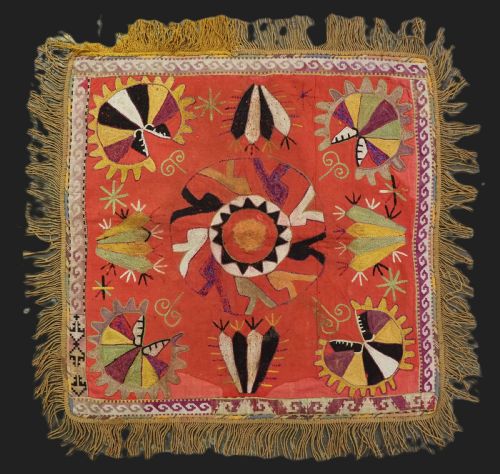
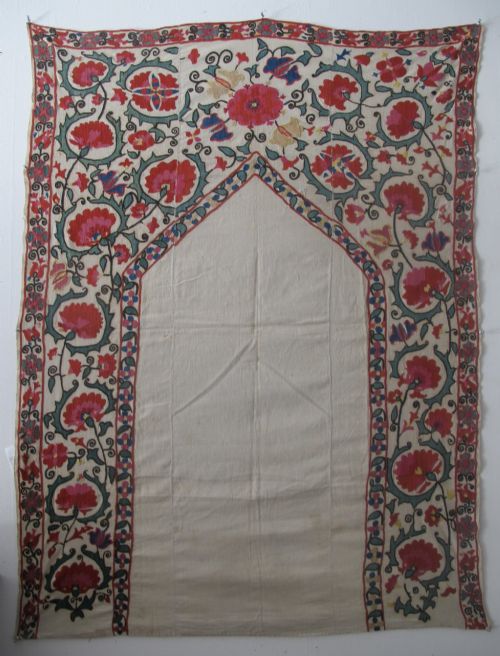
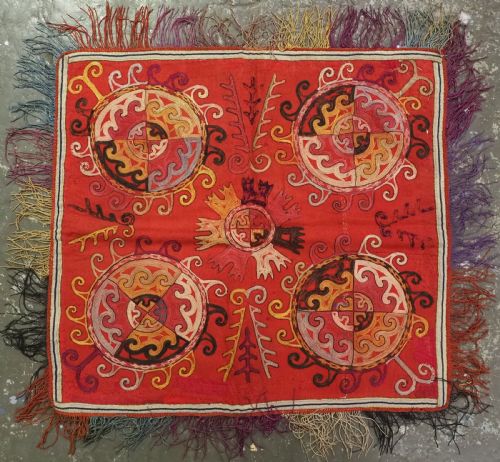
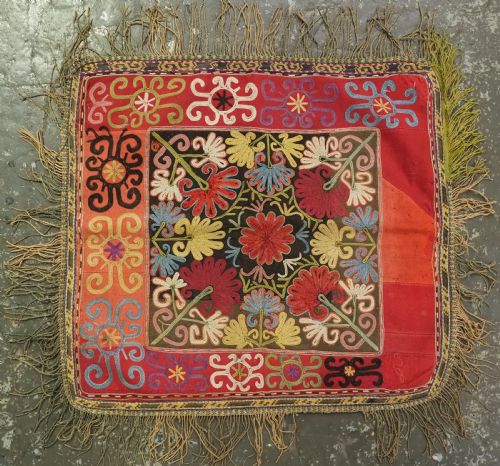
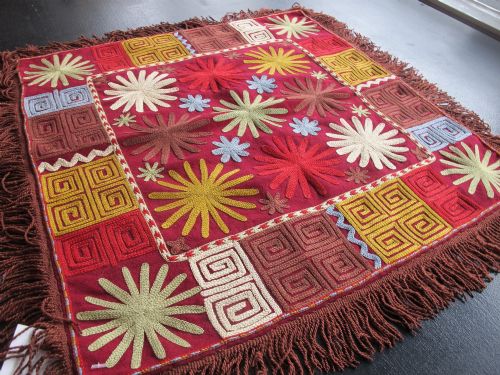
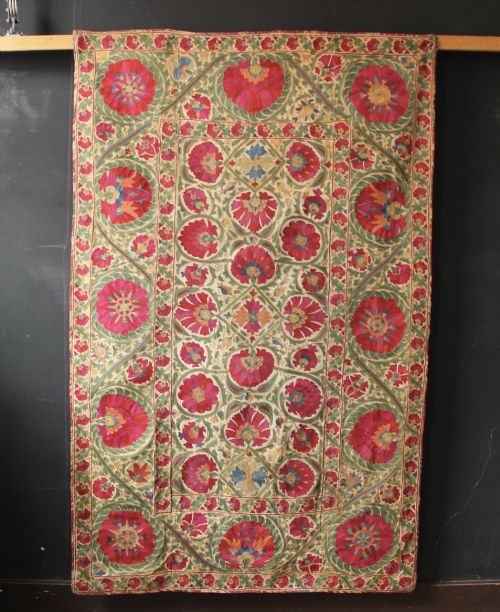
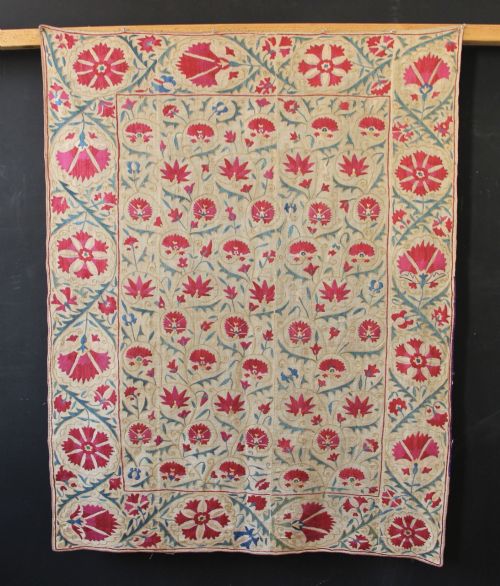
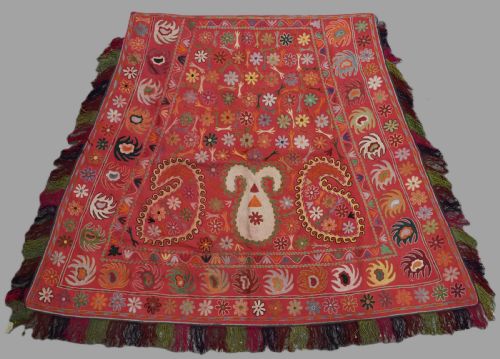
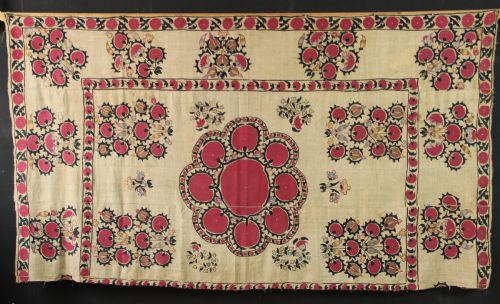
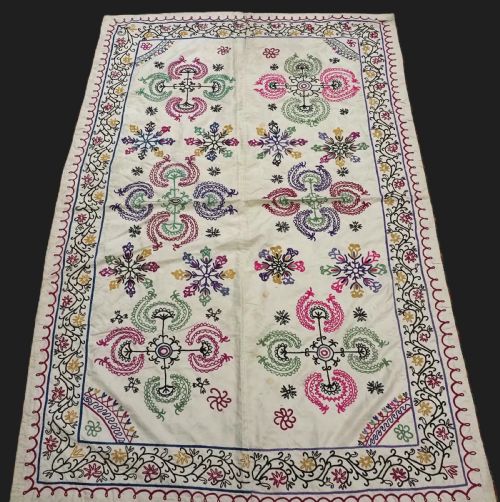
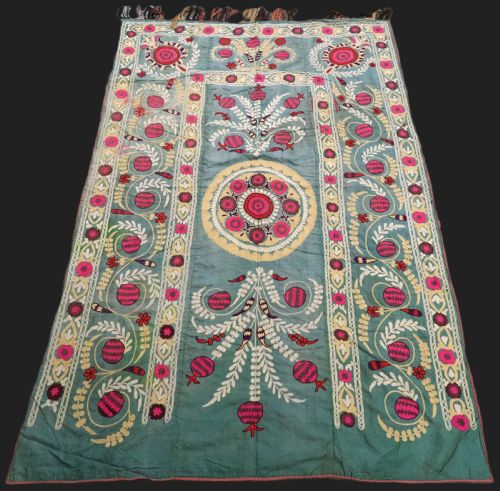
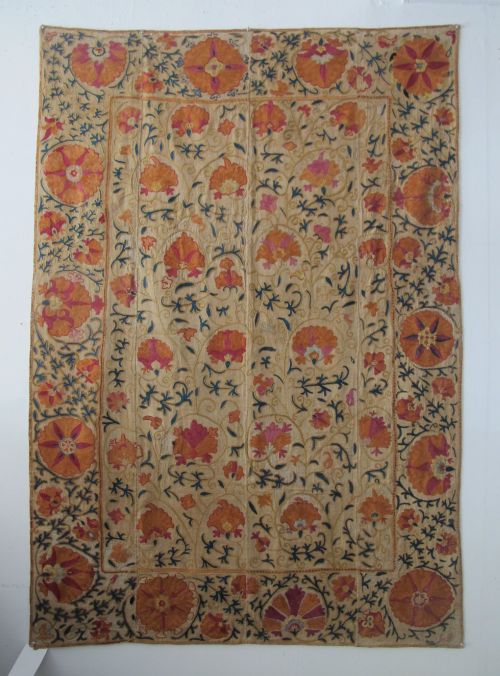
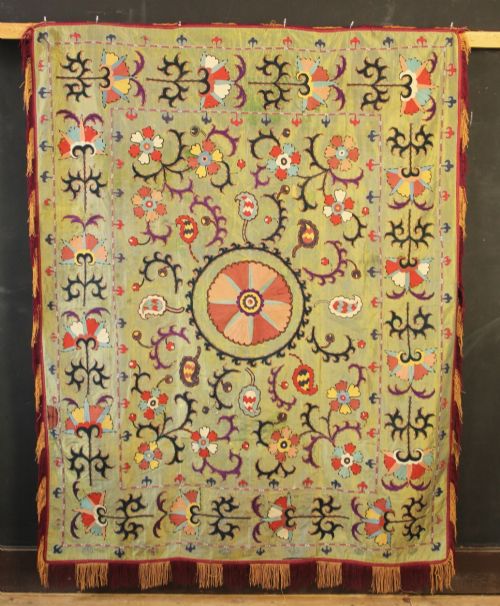
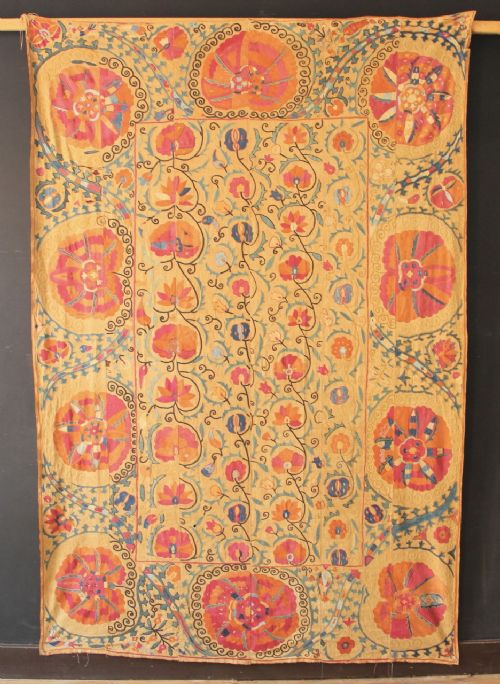
The selection on this page centres heavily on pieces produced across the nineteenth and early twentieth centuries, spanning periods from the eighteen-hundreds through to the nineteen-thirties. Buyers will frequently encounter regional variants including Bokhara, Nurata, Ura Tube, and Shahrisabz designs, alongside dynamic tribal work attributed to the Lakai.
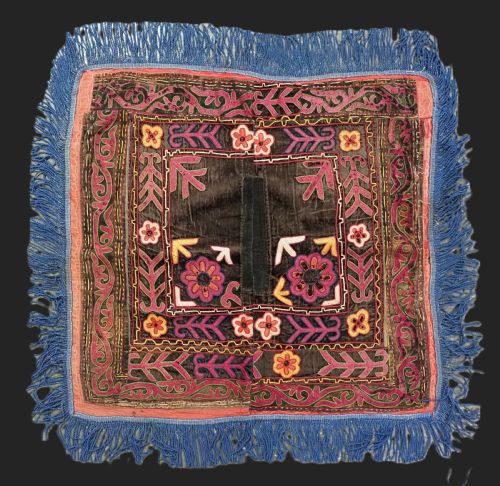
While many examples functioned originally as utilitarian or ceremonial furnishings, such as horse covers or saddle rugs, their intricate compositions lend themselves naturally to modern wall display. Formats range from large medallion variants and prayer designs down to smaller nimble panels known as nim suzanis.
How They Were Made
Makers constructed the foundation of each textile using woven natural fibres, employing cotton, linen, wool, or blended adras silk and cotton grounds. Artisans then worked dense imagery onto these supportive foundations using vibrant silk thread.
Certain specialised pieces incorporate additional tactile elements like velvet grounds or glass beads to enrich the surface texture. Embroidery stitches follow traditional regional patterns, delineating architectural motifs, floral medallions, and expressive tribal geometry.
Antique Suzani Wall Hanging Retail Price Guide 2026
Typical asking prices for suzani wall hanging among the pieces listed under this phrase on Sellingantiques today, from the lower quarter to the upper quarter. They describe what is for sale here now, not the wider market.
Several textiles served past lives as ceremonial horse covers and saddle rugs before finding their way onto modern walls.
What Varies in Quality
Quality rests upon the density and precision of the needlework, where tightly packed silk embroidery demonstrates superior technical execution. The complexity of the composition also dictates distinction, with elaborate architectural layouts and large medallion variants requiring greater design skill.
The choice and preservation of the foundation fabric influence overall integrity, alongside the vibrancy and survival of the dyed silk threads. Regional distinctiveness, particularly the energetic folk art interpretation found in Lakai tribal work, adds a layer of artistic merit.
The Antique Suzani Wall Hanging Glossary
- Suzani
- A traditional embroidered textile from Central Asia, typically worked in silk thread on a cotton or linen ground. The name derives from the Persian word for needle.
- Nim Suzani
- A smaller half-scale version of a full-sized suzani embroidery. These compact formats were often utilised for specific domestic spaces.
- Ilgich
- A specific form of Central Asian dowry embroidery or hanging. They frequently display distinct tribal motifs associated with nomadic makers.
- Adras
- A traditional hand-woven fabric made from a blend of silk and cotton yarns. It served as a durable ground for embroidery.
- Tush Kyiz
- An elaborately embroidered Kyrgyz wall hanging created by women to commemorate the marriage of a son or daughter. They often feature symbolic plants and floral motifs from the local landscape.
Antique Suzani Wall Hanging: Frequently Asked Questions
How do I hang a suzani safely?
Mounting a textile requires careful weight distribution to avoid pulling the historic fabric. Conservation-grade framing or professional sleeve attachment preserves the integrity of the piece.
Avoid direct sunlight and high humidity to protect the natural silk threads and dyed cotton grounds from fading.
What is the difference between a suzani and a nim suzani?
A standard suzani is a large-scale textile designed to cover an entire bed wall or room surface in a traditional Central Asian home. These substantial pieces often feature complex medallion layouts or architectural schemes.
A nim suzani is simply a smaller variant of the same tradition, making it easier to accommodate on domestic walls today.
Where were these textiles made?
These embroideries originate from Central Asia, with specific regional centres in Uzbekistan, Tajikistan, and Kyrgyzstan. Prominent towns like Bokhara, Nurata, and Shahrisabz developed distinct artistic traditions.
Nomadic groups such as the Lakai also produced highly individual tribal work with energetic folk art compositions.
How do I identify a Lakai piece?
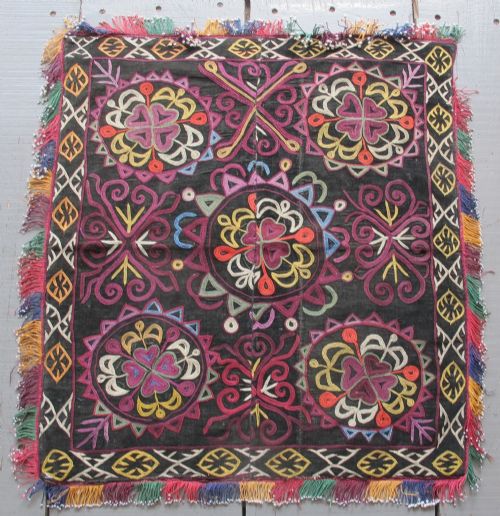
Lakai embroideries are characterised by bold tribal motifs and a dynamic folk art aesthetic. They frequently appear in formats like small ilgich hangings, horse covers, or saddle rugs.
The stitchwork often utilises vibrant silk on contrasting grounds such as red wool or black cotton.