
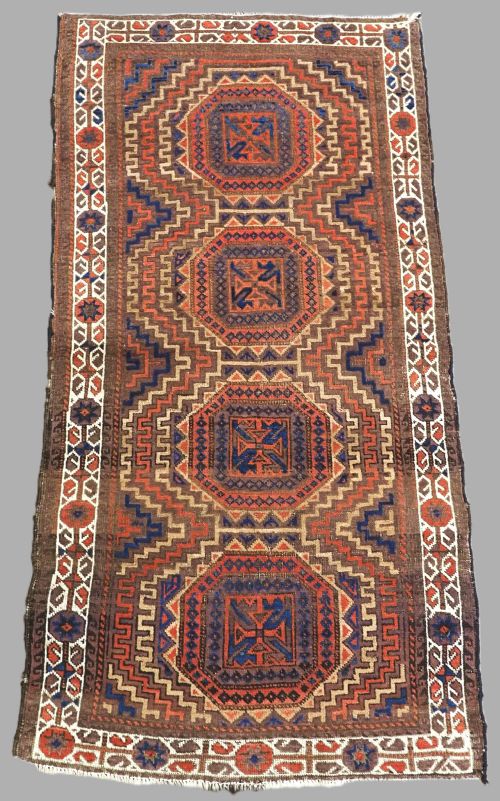


Khorasan Tribal Carpet
A khorasan tribal carpet brings nomadic artistry into a room, combining geometric motifs and rich wool.

Khorasan Tribal Carpet
Every khorasan tribal carpet reflects the heritage of weavers from north east Persia, particularly associated with Kurdish and Baluch traditions. These pieces date from the nineteenth century and the early decades of the twentieth century.
The version most commonly met on this page is the rug format, often featuring specific regional patterns such as the Mina Khani variant, calyx lattice, or Salar Khani designs. They serve as tactile links to nomadic weaving history.
Makers include distinct regional groups such as the Quchan Kurds and Mahdad Khani weavers. Their output showcases traditional iconography rendered in durable formats.
Materials and construction
Construction relies primarily on wool piles set against cotton foundations, utilising natural fibres that endure decades of use. Certain examples incorporate camel wool to introduce undyed, earthy tones into the composition.
Weavers construct these textiles using regional knotting techniques passed down through generations. The resulting density supports intricate lattice patterns and large guls without losing structural integrity.
Khorasan Tribal Carpet Retail Price Guide 2026
Typical asking prices for khorasan tribal carpet among the pieces listed under this phrase on Sellingantiques today, from the lower quarter to the upper quarter. They describe what is for sale here now, not the wider market.
Listings feature nineteenth and early twentieth-century pieces, spanning periods from 1880 to 1910 in wool, cotton, and camel wool.
Judging quality in weaving
Quality rests on the precision of the lattice or motif execution and the handling of natural dye palettes. Finer examples display crisp geometry in designs like the Mina Khani variant.
The choice of fleece also dictates standard, with superior pieces utilising lustrous wool that ages gracefully. Condition and structural tightness further separate standard examples from exceptional survivals.
The Khorasan Tribal Carpet Glossary
- Gul
- A medallion motif commonly found in tribal rugs. It often repeats across the central field.
- Mina Khani
- A repeating floral lattice pattern. It links stylized blooms with delicate stems.
- Calyx
- The outer floral structure supporting a flower petal. In these weaves, it forms part of a repeating geometric trellis.
- Salar Khani
- A specific sub-tribal design tradition. It identifies particular border and field arrangements within Baluch weaving.
Khorasan Tribal Carpet: Frequently Asked Questions
What is a khorasan tribal carpet?
A khorasan tribal carpet is a hand-knotted textile produced by nomadic and village weavers in the Khorasan region of north east Persia. These pieces typically date from the nineteenth and early twentieth centuries.
They display traditional patterns such as lattice designs, guls, and floral variants, reflecting the distinct cultural heritage of groups like the Baluch and Quchan Kurds.
How do I care for my rug?
Protect your rug by placing it in areas with moderate foot traffic and avoiding direct, harsh sunlight to preserve the natural dyes. Regular gentle vacuuming without a beater bar prevents dust accumulation in the wool pile.
Rotate the textile periodically to ensure even wear across the surface. Professional cleaning should occur only when necessary by specialists familiar with antique nomadic wool.
How are different tribal designs told apart?
Distinguishing between tribal designs involves examining the specific arrangement of motifs such as guls, borders, and lattice networks. Baluch and Kurdish weavers utilised distinct regional vocabularies and colour proportions.
Reference markers include specific patterns like the Mina Khani variant or Salar Khani layouts. Comparing knot density and foundation materials also aids attribution.
Are these carpets made from pure wool?
Most examples feature wool piles combined with cotton foundations to provide stability and structure. Some rustic pieces incorporate camel wool for un-dyed, natural brown and golden tones.
The use of natural animal fibres ensures durability while contributing to the textured handle characteristic of nineteenth-century nomadic weaving.