

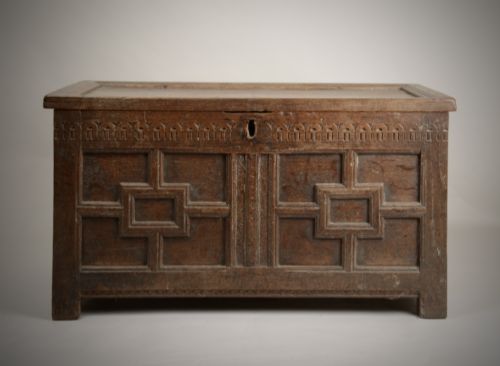
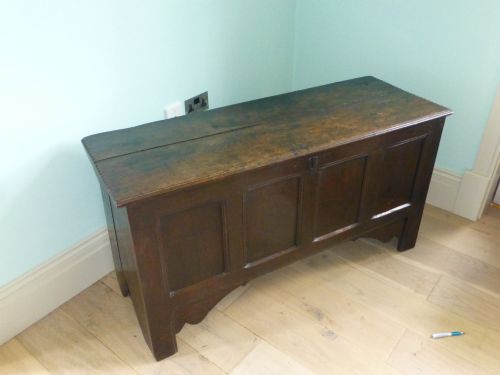
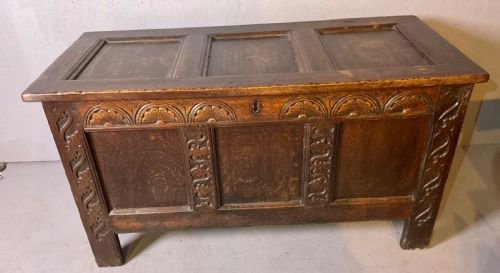
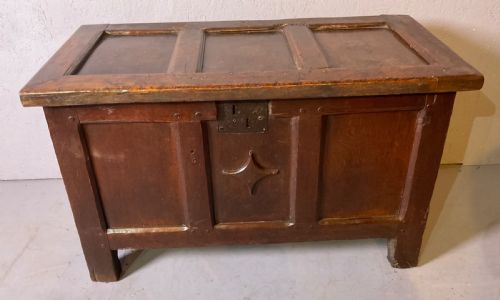
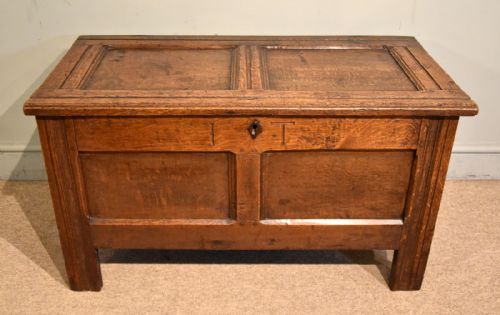
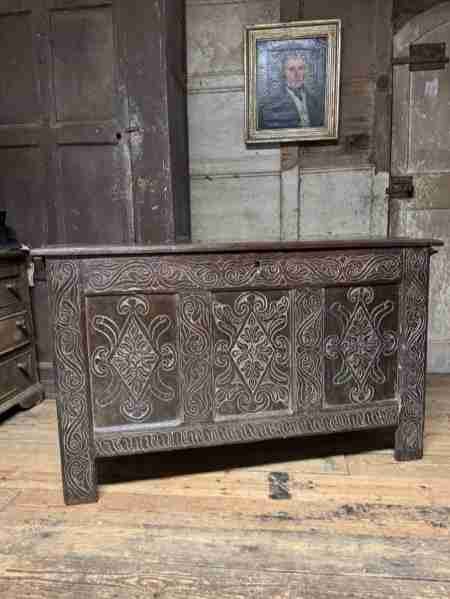
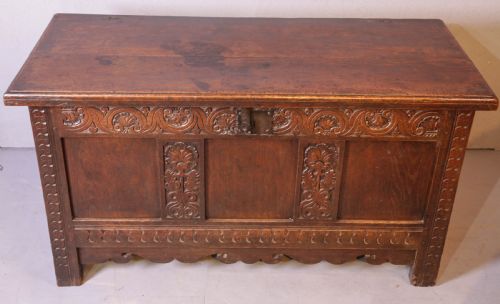
Joined Oak Chest
A joined oak chest provides durable storage rooted in centuries of English cabinet-making.
Joined Oak Chest
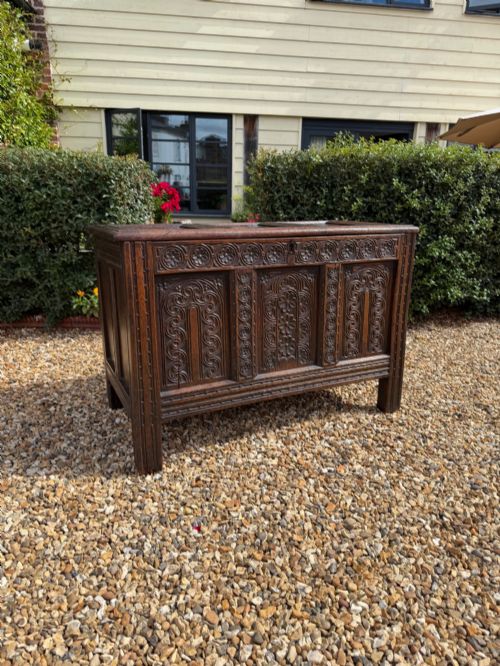
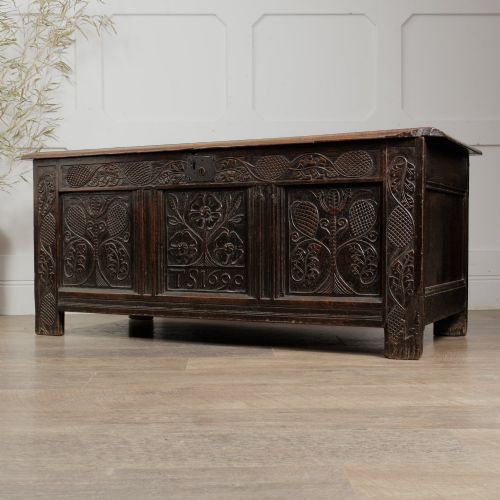
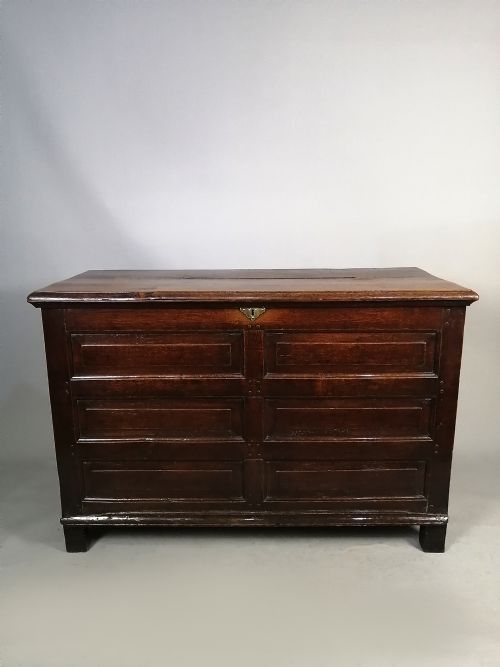
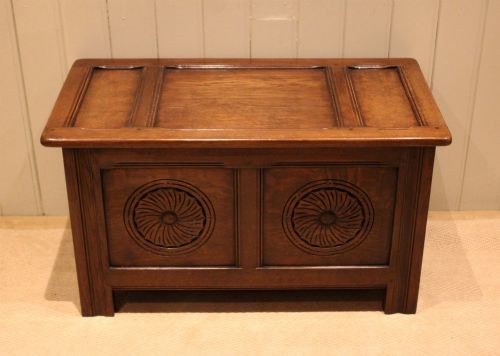
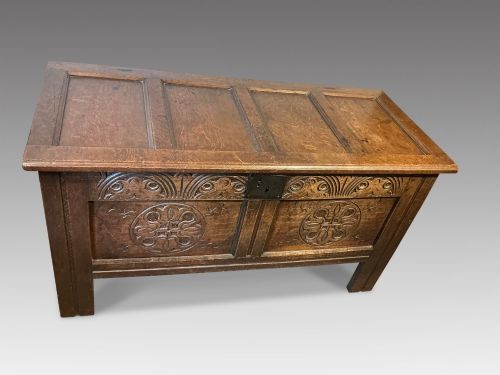
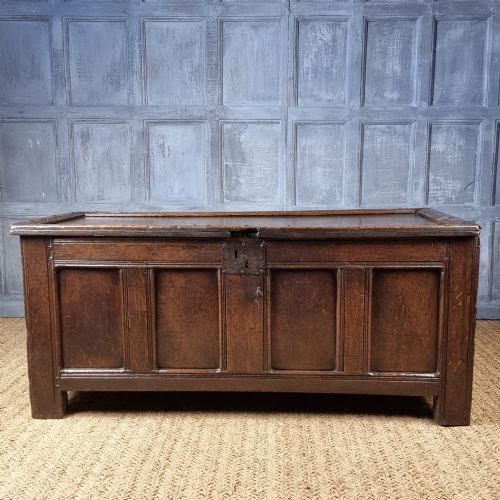
A joined oak chest, often called a coffer or blanket box, serves as a traditional storage vessel constructed with frame-and-panel techniques rather than simple boards. Buyers searching this phrase encounter examples originating primarily from the sixteenth, seventeenth, and eighteenth centuries, reflecting styles spanning the Elizabethan, Jacobean, and Georgian periods.
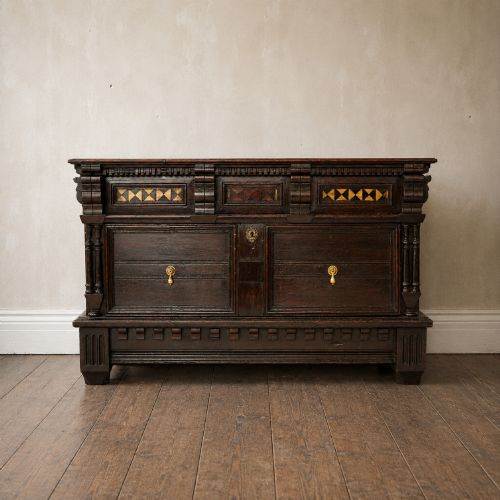
The inventory on this page consists heavily of seventeenth-century and early eighteenth-century pieces, alongside regional variations such as Welsh, Lancashire, and West Country examples. These range from plain panelled boxes to carved chests and mule chests fitted with lower drawers for expanded utility.
Materials and Construction
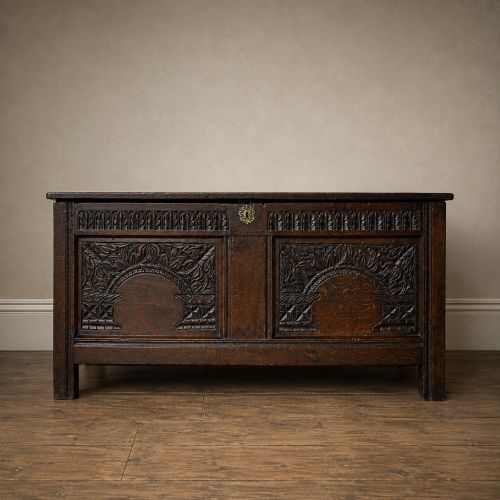
These items rely on solid English oak, shaped using traditional joinery methods like mortise and tenon joints secured with wooden pegs. Master craftsmen utilised iron or brass hardware for hinges and locks, while select pieces incorporate wood inlay or geometric mouldings.
Surface decoration frequently includes carved panels, linenfold motifs, or inscribed dates that record the year of creation.
Joined Oak Chest Retail Price Guide 2026
Typical asking prices for joined oak chest among the pieces listed under this phrase on Sellingantiques today, from the lower quarter to the upper quarter. They describe what is for sale here now, not the wider market.
Several seventeenth-century examples double as close stools, proving our ancestors valued multi-tasking furniture just as much as we do.
Factors That Separate Examples
Quality depends upon the integrity of the original timber frame, the crispness and depth of hand carving, and the survival of original hardware and boarded lids. Pieces retaining their early surface patination and untouched regional characteristics command greater interest than those altered by later restorations or replacements.
The Joined Oak Chest Glossary
- Joined chest
- A box constructed using frame-and-panel joinery locked with wooden pegs rather than simpler boarded construction. This method allows the timber to expand and contract naturally without splitting.
- Coffer
- A traditional storage chest with a hinged lid, often used for linens, valuables, or documents. They represent the precursor to modern drawer-based furniture.
- Mule chest
- A joined storage chest featuring one or more drawers built into the base beneath the primary compartment. This form emerged as domestic storage needs evolved.
- Linenfold
- A style of carved wooden panelling that resembles folded fabric, popular during the Tudor and Elizabethan periods. It provides texture to plain structural panels.
- Peg joined
- A method of securing mortise and tenon joints by driving a tapered wooden pin through pre-drilled holes. This technique avoids the need for metal nails.
Joined Oak Chest: Frequently Asked Questions
How were these chests used historically?
Historically, households relied on these vessels to safeguard precious textiles, winter blankets, family silver, and important documents from dampness and pests. Their heavy lids allowed them to double as seating or tables within communal rooms.
As domestic spaces evolved, variants like mule chests introduced lower drawers for easier access to stored garments without moving items off the top.
How do I tell periods apart?
Early sixteenth-century examples often display heavy linenfold carving and robust proportions, whereas seventeenth-century pieces frequently feature geometric mouldings, strapwork, or inscribed dates. Georgian pieces from the eighteenth century tend to incorporate cleaner architectural lines and integrated drawer bases.
Regional traits, such as specific Welsh or Lancashire carving styles, also help determine the geographical origin and approximate decade of manufacture.
How do I live with one today?
These chests function effectively as coffee tables, end-of-bed blanket storage, or hallway statement pieces that anchor a room's decor. Their durable oak construction withstands daily use while offering hidden storage capacity.
menjaga stable indoor humidity levels protects the antique timber and preserves the original surface patination over decades of domestic life.