







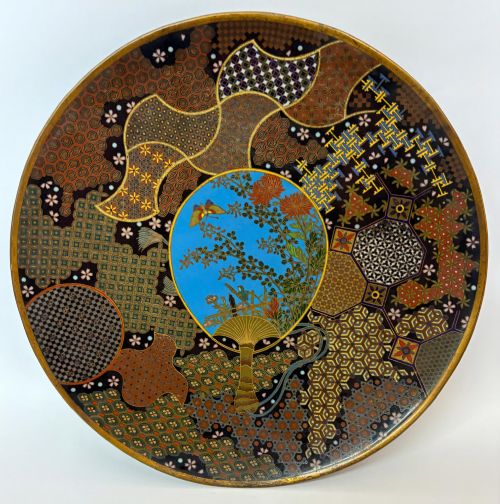
Japanese Wall Charger
When you search for a japanese wall charger, you find large decorative plates designed to hang or display.
Japanese Wall Charger
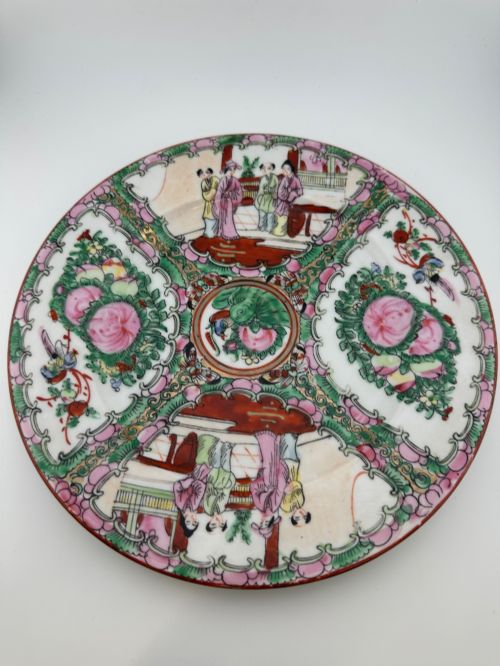
A japanese wall charger is a wide decorative plate or dish created for display rather than dining. The examples you encounter on this page span the Meiji and Taisho periods, alongside late nineteenth-century items.
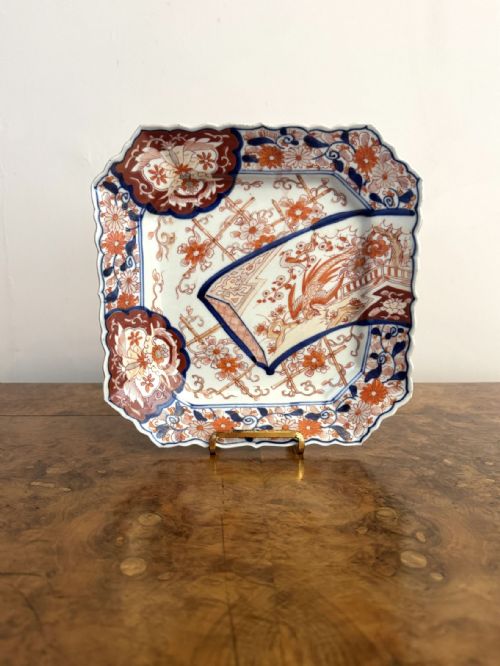
Most pieces take traditional circular forms, though square and oval shapes appear among the listings. Makers produced these items in porcelain, enamel, and patinated metal to decorate interiors.
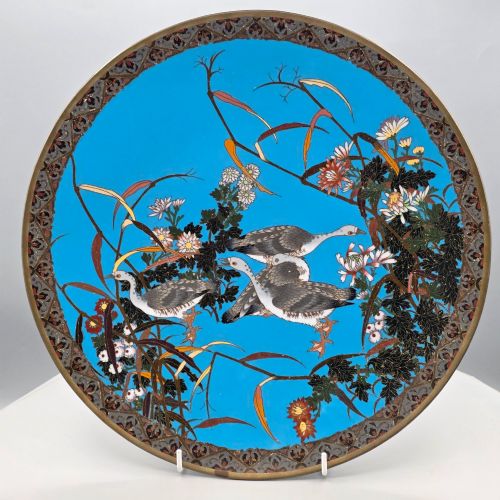
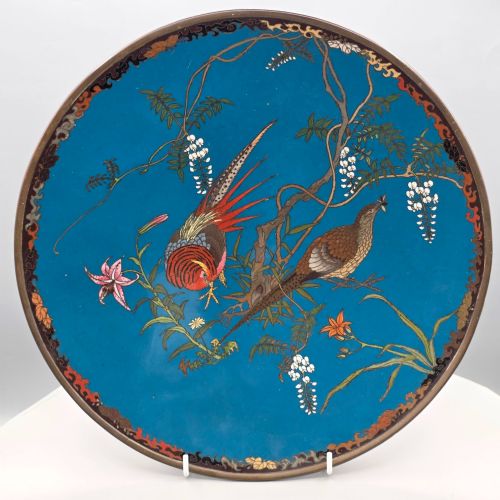
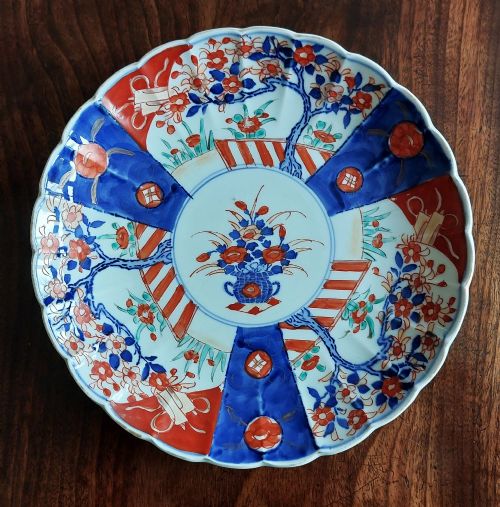
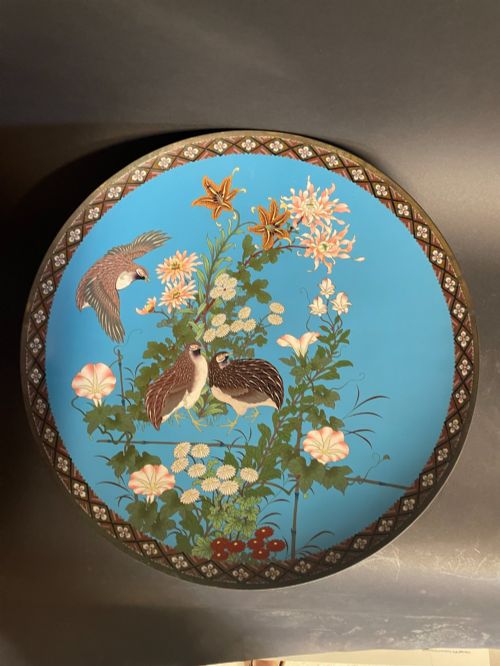
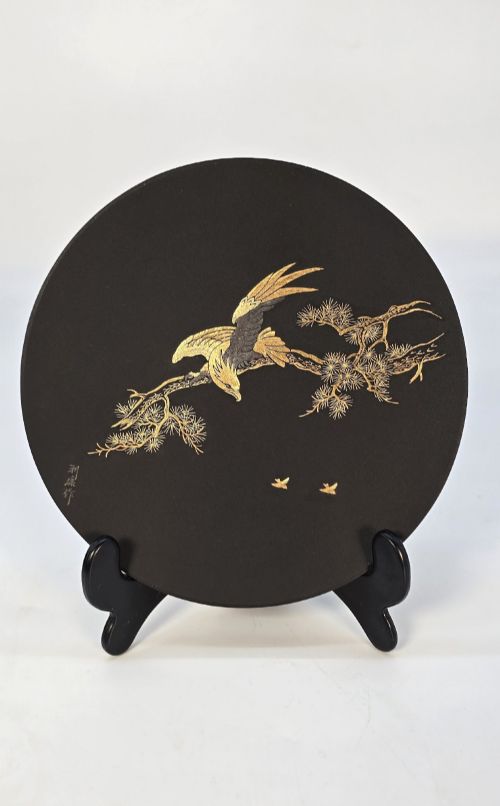
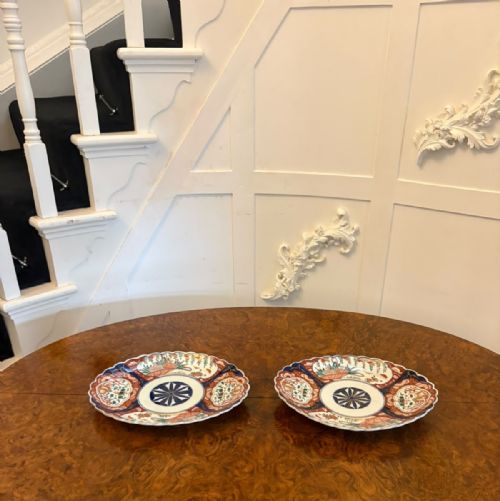
Designs frequently incorporate birds, flowers, landscapes, and traditional motifs. You meet Satsuma, Imari, Kutani, and cloisonne styles predominantly across the available selection.
How they were made
Porcelain items utilise blue and white glazes or colourful Imari decoration painted directly onto the ceramic body. Artisans shaped clay into plates, chargers, and dishes before firing and glazing.
Cloisonne enamel pieces involve soldered metal wires forming cells on a copper base, which workers filled with coloured enamel pastes. Metal plaques also incorporate gold and silver inlay techniques for detailed ornamentation.
Materials recorded on this page include enamel, porcelain, copper, gold leaf, brass, glaze, gilt, and cloisonne enamel.
What varies in quality
Quality depends on the precision of the hand-painted detail and the complexity of the design. Masterpieces show intricate depiction of subjects like birds, flowers, and landscapes with careful colour control.
In cloisonne enamel, the fineness of the wirework and the smoothness of the polished surface determine the standard. Superior metal inlay and crisp porcelain forms separate standard production from exceptional examples.
Koshida
The Japanese Wall Charger Glossary
- Imari
- A style of Japanese porcelain decorated in underglaze blue and overglaze iron red, gold, and other colours. This traditional aesthetic appears frequently on plates and chargers from the Meiji period.
- Cloisonne
- An enamelling technique where metal wires are applied to a base to create compartments for coloured paste. Artisans fired these pieces to produce detailed pictorial surfaces depicting birds and landscapes.
- Satsuma
- A type of Japanese earthenware featuring a ivory-coloured crackle glaze decorated with polychrome enamels and gold. Items in this style often display elaborate scenes with figures, flowers, and birds.
- Meiji Period
- The era in Japanese history spanning from 1868 to 1912, corresponding to much of the manufactured output seen here. Many decorative chargers and plates date from this time of artistic production.
Japanese Wall Charger: Frequently Asked Questions
How do I hang a japanese wall charger?
Most chargers include or require a specialised wall-mounting wire spring hanger that grips the rim securely. Ensure the wall fixing supports the weight of the ceramic or metal plate safely.
Display them at eye level in dining rooms or living spaces to appreciate the detailed painted or enamelled designs properly.
What is the difference between Imari and Satsuma?
Imari pieces are made of porcelain with distinct blue, red, and gilt decoration. They offer a harder ceramic body and a resonant ring when tapped gently.
Satsuma items utilise an earthenware body with a characteristic crackled ivory glaze and heavy enamel detailing. They feel slightly softer and display elaborate pictorial scenes.
How do I date a japanese wall charger?
Dating relies on stylistic clues, materials, and historical periods such as the Meiji or Taisho eras. Nineteenth-century examples often display specific hand-painted motifs and traditional factory marks.
Compare the glaze type, metal composition, and decorative style with known pieces from the same era to estimate its age.
Can I use these chargers for food?
These pieces are intended purely for decorative wall display and interior ornamentation rather than serving food. Older glazes and metallic finishes are not suited for culinary use.
Keep them solely for visual appreciation on walls or display stands to preserve their historic surfaces.