


Japanese Tree Bark Enamel
Japanese tree bark enamel brings tactile Meiji period craftsmanship to your room through textured ceramic and metal wire vessels.
Japanese Tree Bark Enamel
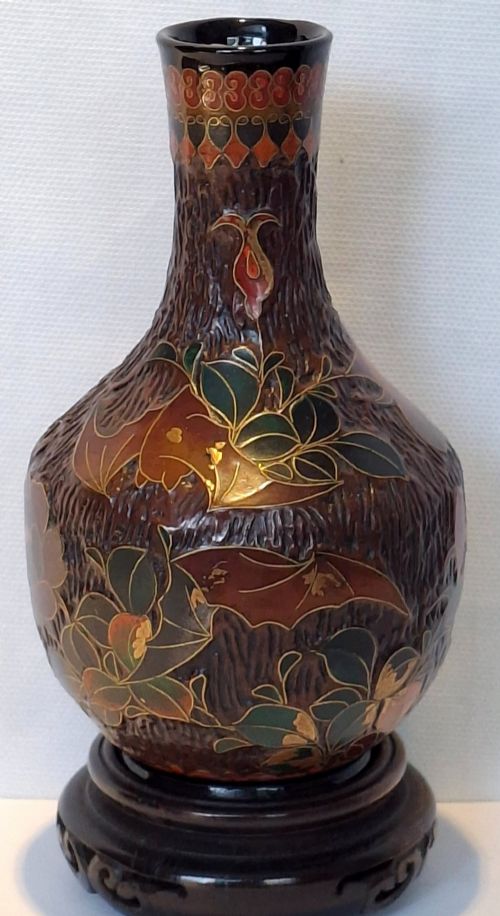
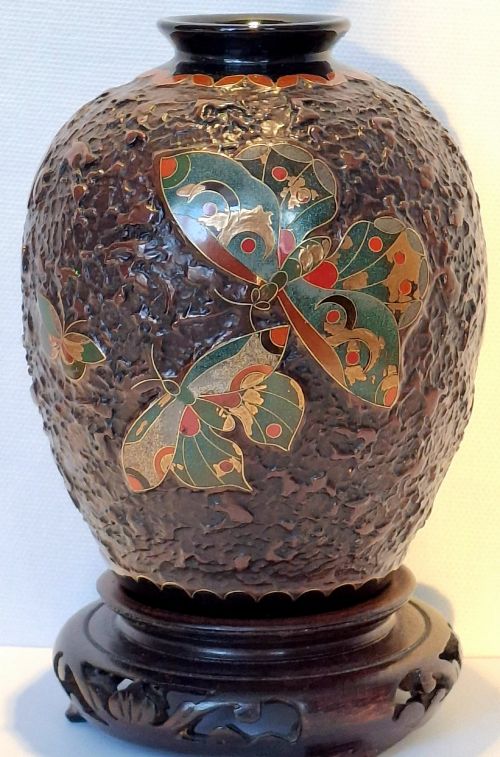
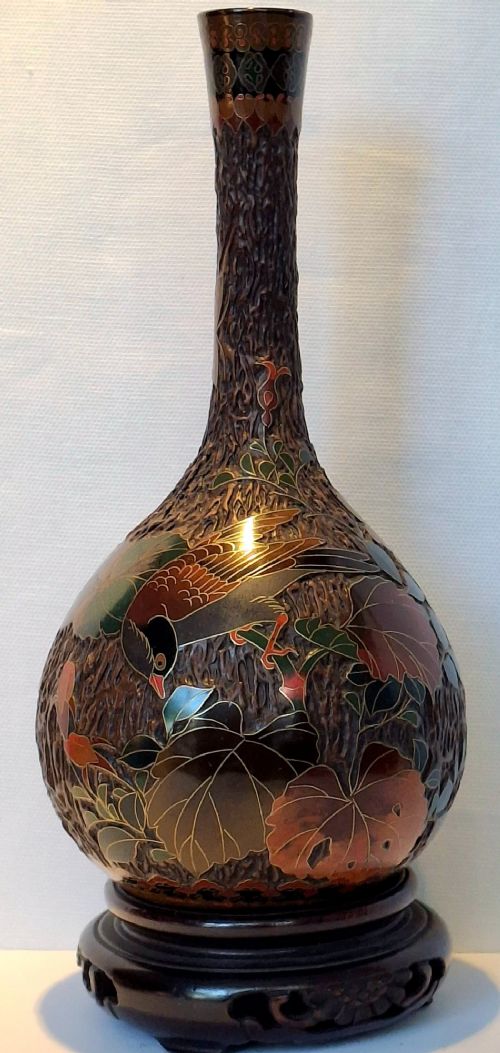
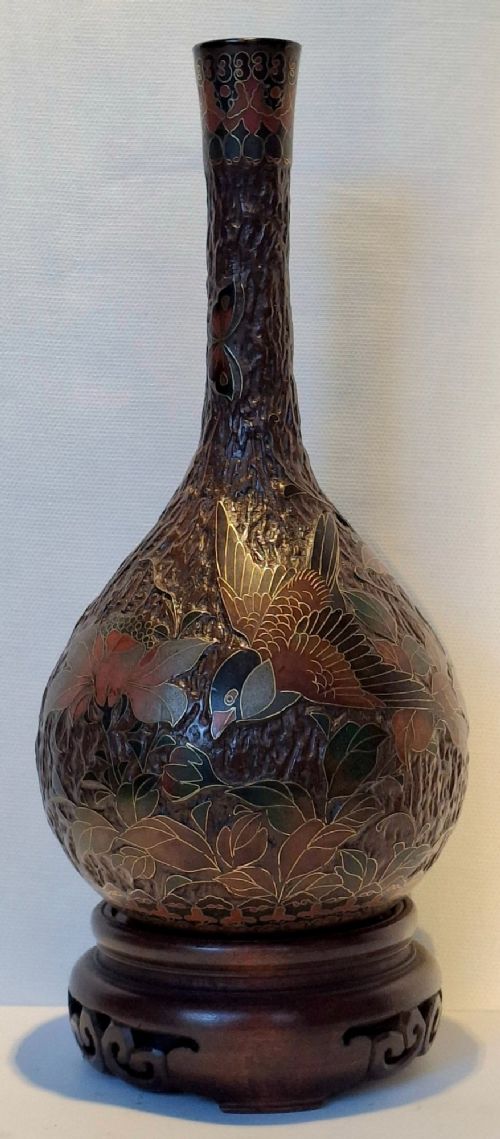
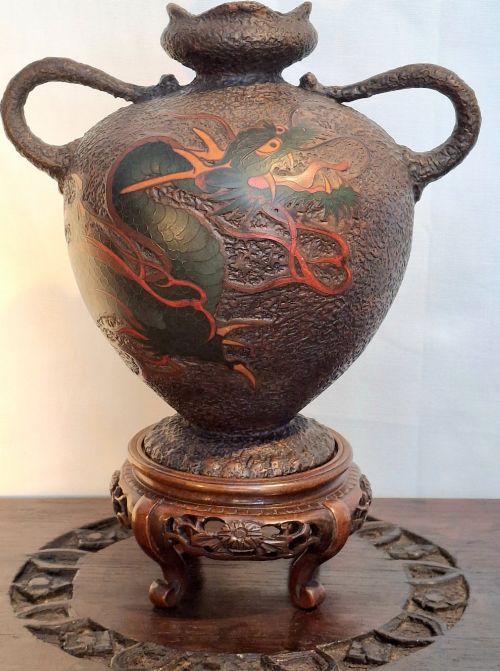
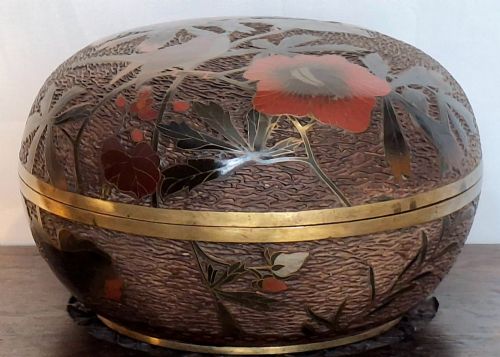
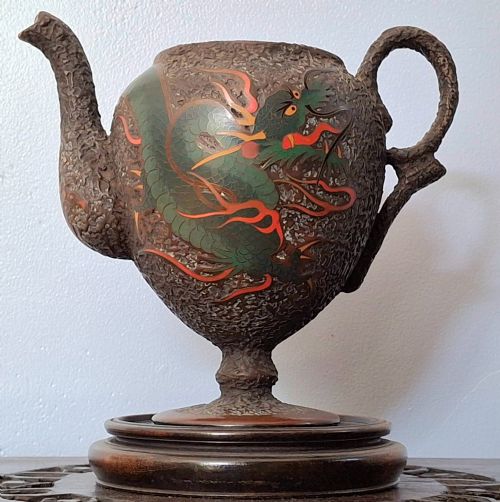
When you search for Japanese tree bark enamel, you encounter distinctive Meiji period objects created around eighteen ninety. These works take the form of chargers, decorative plates, vases, round boxes, sugar bowls, and sake teapots.
The aesthetic imitates natural timber texture on a rigid substrate. Artisans applied cloisonné enamel techniques over porcelain, ceramic, and wood bodies to replicate organic bark patterns.
Vessels feature detailed motifs integrated into the textured surface. Common subjects include cranes, bamboo, dragons, butterflies, bats, birds, flowers, and picturesque scenery.
How Japanese tree bark enamel was made
Makers utilised porcelain, ceramic, and wood as the foundation for each piece. Metal wire, including copper wire, brass wire, and standard wire, formed the complex cellular framework on the substrate.
Enamel paste filled the compartments created by the wire outlines to build the pictorial elements and the simulated bark texture. Selected items incorporate the kintsugi technique into their finish.
Japanese Tree Bark Enamel Retail Price Guide 2026
Typical asking prices for japanese tree bark enamel among the pieces listed under this phrase on Sellingantiques today, from the lower quarter to the upper quarter. They describe what is for sale here now, not the wider market.
Current listings exclusively feature works dated to eighteen ninety from the Meiji period.
What varies in quality
The precision of the metal wirework dictates the clarity of the bark texture and the definition of the pictorial motifs. Finer wire placement yields sharper contrasts between the simulated wood grain and the enamel subjects.
Signed pieces and complex compositions featuring dragons or multi-element scenery demonstrate higher artisan skill than simpler floral designs. The integration of specialised methods like kintsugi further distinguishes masterwork examples.
The Japanese Tree Bark Enamel Glossary
- Totai shippo
- A Japanese term for cloisonné enamel on a ceramic, porcelain, or wooden body rather than a standard metal base. This technique allows the creation of tree bark enamel effects.
- Cloisonné
- An enamelwork technique where metal wire is soldered to a base to form compartments that are filled with paste. The piece is then fired and polished smooth.
- Kintsugi
- The Japanese art of repairing broken pottery with lacquer dusted or mixed with powdered gold, silver, or platinum. This method highlights the mend as part of the object's history.
- Meiji period
- The era in Japanese history spanning from eighteen sixty-eight to nineteen twelve, characterised by significant artistic innovation and international export. Pieces from eighteen ninety sit squarely within this dynamic period.
- Charger
- A large decorative plate intended for display rather than for serving food at table.
Japanese Tree Bark Enamel: Frequently Asked Questions
What is Japanese tree bark enamel?
Japanese tree bark enamel refers to totai shippo works from the Meiji period that mimic the rough texture of timber. Artisans combined metal wire and enamel on ceramic or porcelain bases.
These objects include vases, chargers, and boxes decorated with natural scenes, birds, and mythical beasts.
How old are these enamel pieces?
The available pieces date from around eighteen ninety, placing them in the late Meiji period of Japan. This era produced highly sophisticated decorative arts for domestic and international markets.
Craftsmen perfected specialised glazing and wirework techniques during these decades.
Were these items used or displayed?
Larger chargers and decorative plates were primarily intended for visual display in interiors. Vessels like vases, round boxes, and sake teapots combined decorative surfaces with functional forms.
The robust enamel construction allowed for both ornamental display and actual containment.
How do I identify a signed piece?
Makers sometimes applied signatures directly into the enamel design or onto the base of the vessel during production. These signatures appear on major works like large chargers and masterwork tea items.
Examining the underside and the lower edges of the body reveals these artist marks.