

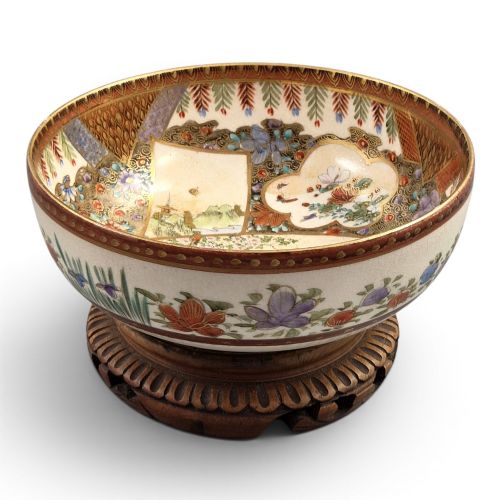
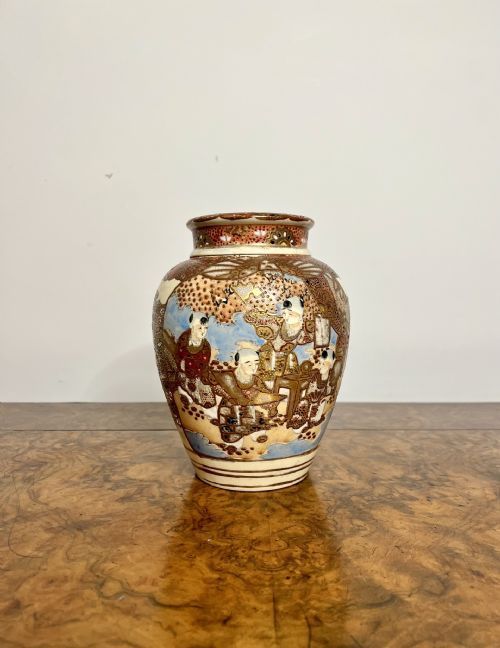

Japanese Satsuma Pottery
Japanese satsuma pottery brings finely painted earthenware into a room, prized for intricate enamel scenes and rich gilding.
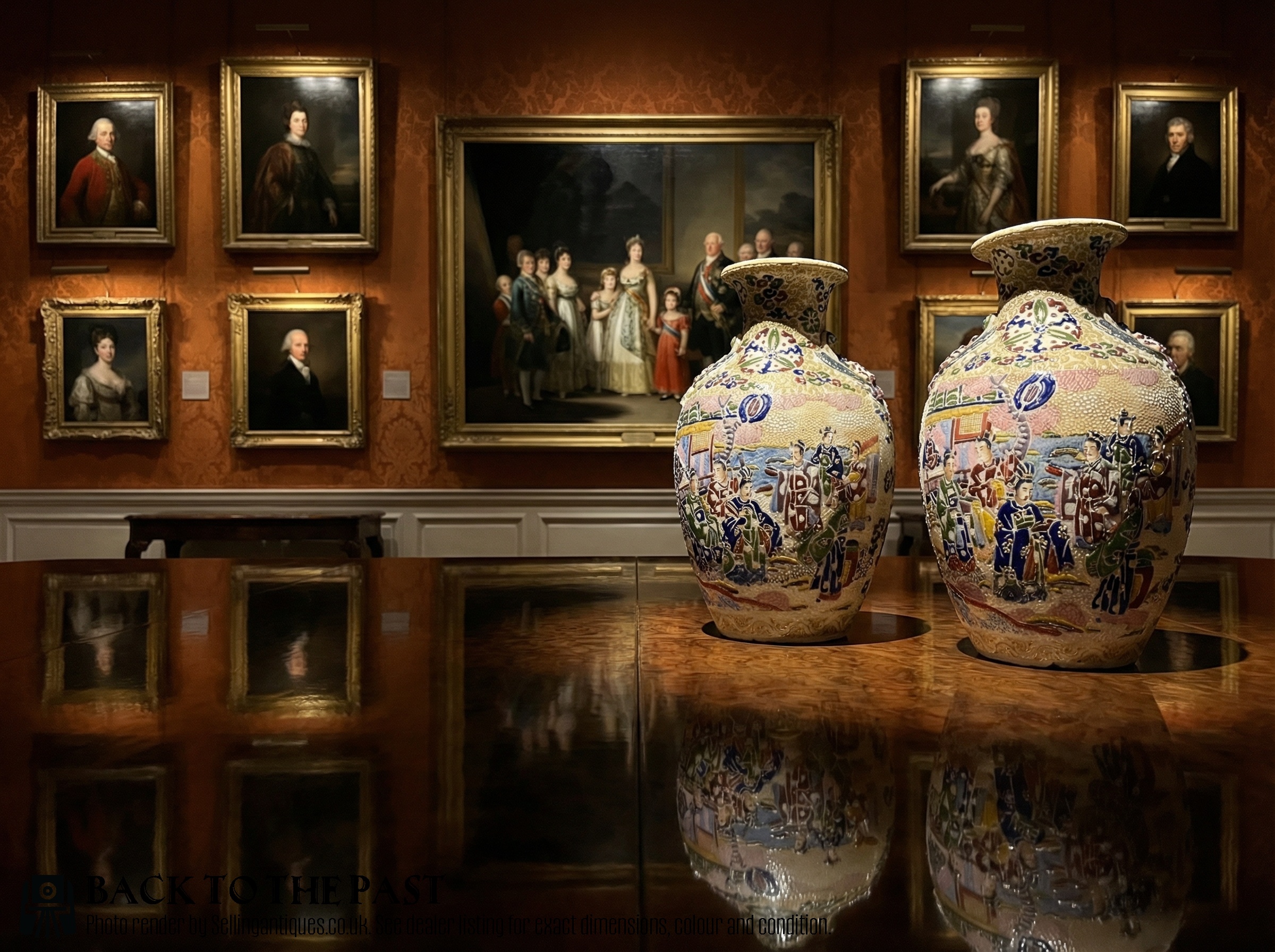
Japanese Satsuma Pottery
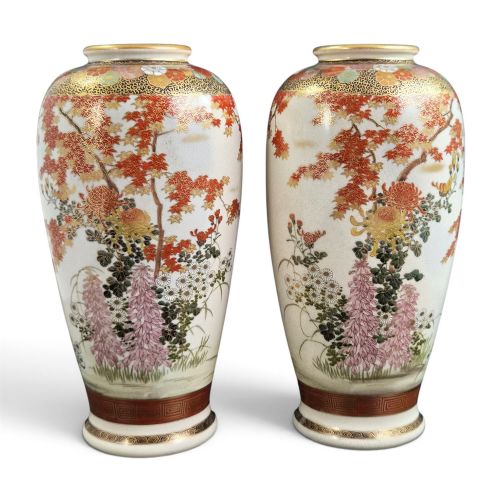
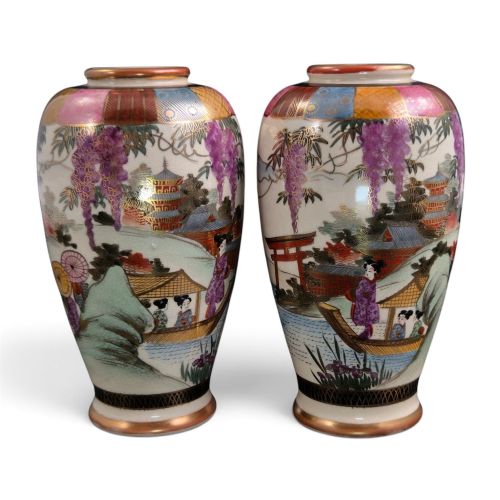
Japanese satsuma pottery comprises earthenware vessels, bowls, plates, and figurines decorated with detailed enamel work and gold leaf. These pieces originate primarily from the Meiji period, alongside examples from the Edo and Taisho periods.
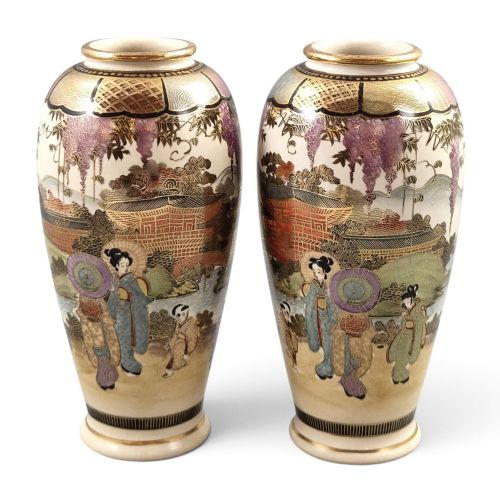
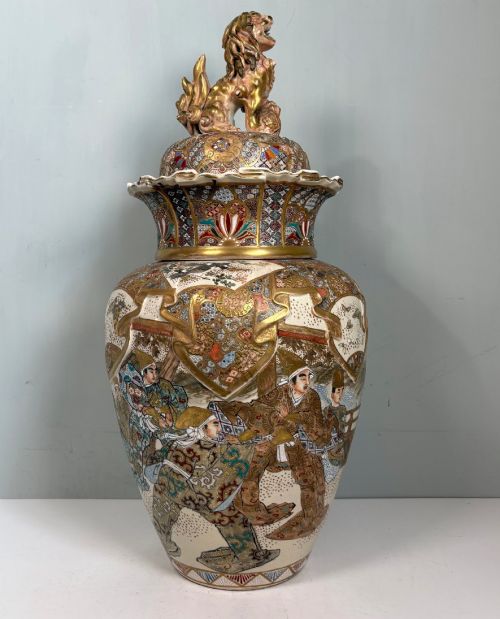
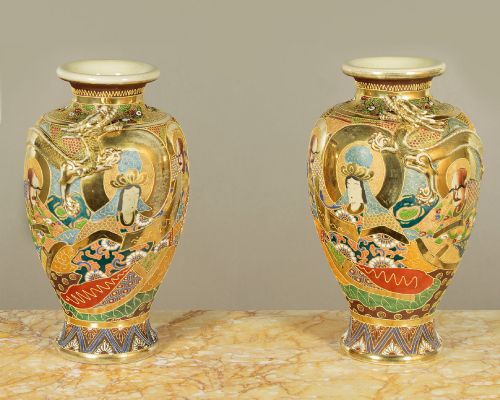
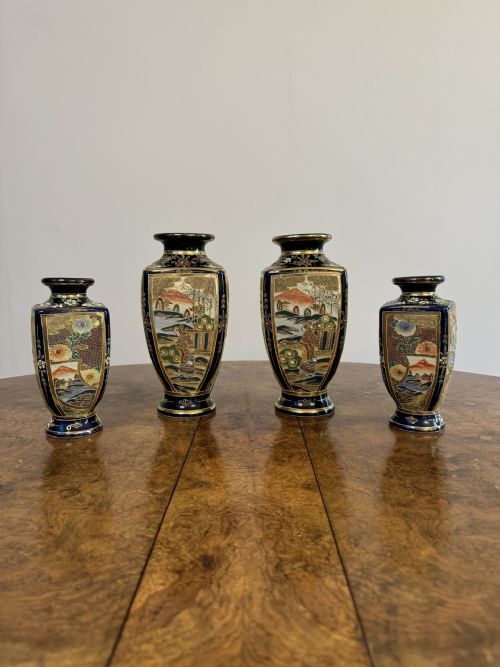
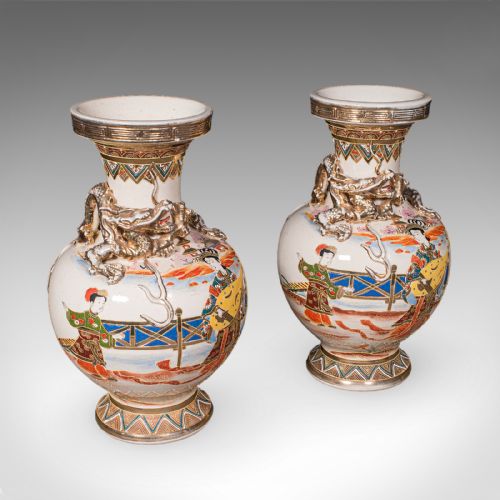
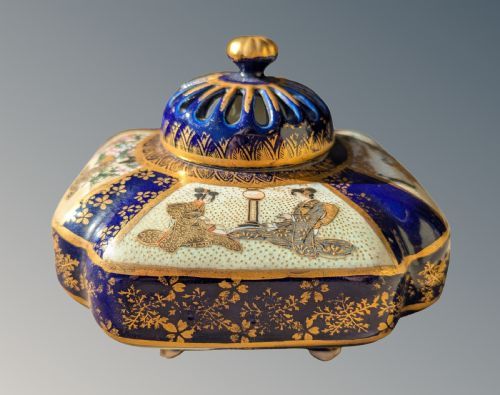
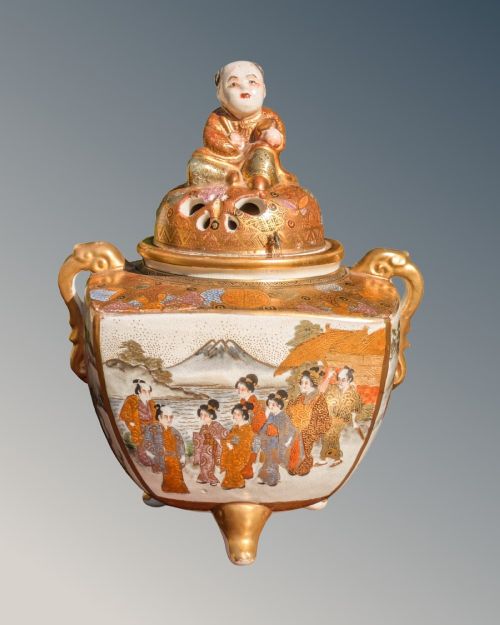
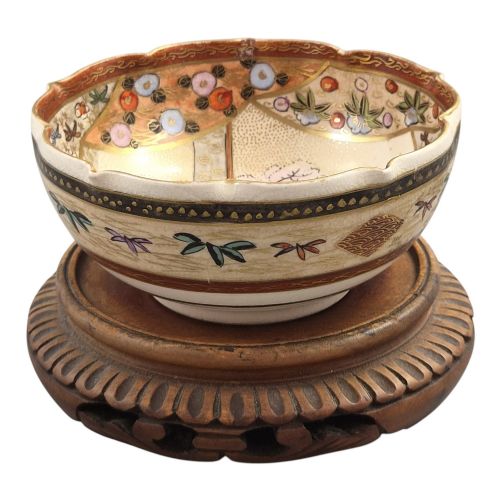
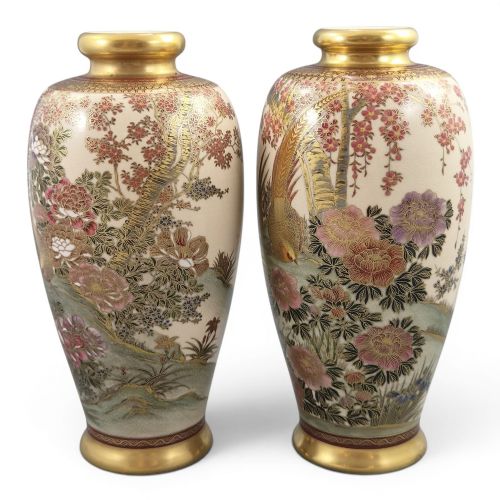
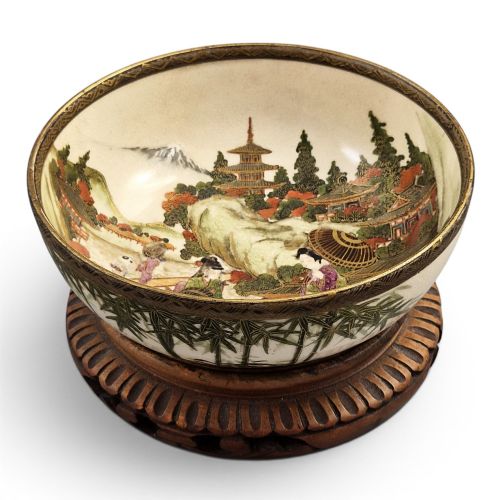
Buyers frequently encounter vases, decorative bowls, and figurines featuring traditional motifs such as samurai, gods, dragons, and processions. The forms range from miniature square vessels to monumental bowls and pairs of matching vases.
Originating from workshops in regions like Kyoto, these items carry distinct historical marks and signatures. They bridge traditional Japanese craftsmanship with ornate decorative styles popular in the late nineteenth and early twentieth centuries.
How They Were Made
Potters shaped these objects from ceramic earthenware, providing a porous, cream-coloured or buff base body. Wood components sometimes appear in associated fittings or presentations, though the core remains ceramic.
Artisans applied complex enamel colours over the earthenware base to build up figurative and floral scenes. Detailed gilding using gold leaf and gold gilt highlights key elements of the design, creating raised textures.
Japanese Satsuma Pottery Retail Price Guide 2026
Typical asking prices for japanese satsuma pottery among the pieces listed under this phrase on Sellingantiques today, from the lower quarter to the upper quarter. They describe what is for sale here now, not the wider market.
Edo period monks carved from clay remind us that even enlightened figures needed a sturdy ceramic frame.
What Varies in Quality
The precision and density of the enamel painting separate standard export pieces from masterworks. Finer items exhibit meticulous brushwork on complex battle scenes, processions, or deities rather than repetitive floral patterns.
The application of gold leaf and raised gilding dictates the visual depth of a piece. Superior examples utilise rich, thick gilding that remains crisp and bright, whereas lesser items show flat or worn metallic accents.
Kinkōzan Workshop·Kinkozan Kyoto·Tashiro·Hododa
The Japanese Satsuma Pottery Glossary
- Earthenware
- A porous type of ceramic fired at relatively low temperatures. It forms the standard body material for satsuma wares before enamelling.
- Enamel
- Opaque glass paste fused to the ceramic surface through firing. It provides the vibrant colours used for figures, garments, and backgrounds.
- Gilding
- The application of gold leaf or gold gilt to ceramic surfaces. This technique accents borders, garments, and motifs with metallic lustre.
- Mon
- A Japanese heraldic badge or crest. These family or clan emblems often appear on satsuma pottery to indicate patronage or origin.
- Meiji Period
- The era in Japanese history spanning from 1868 to 1912. Many of the most ornate and sought-after satsuma pieces originate from this time.
Japanese Satsuma Pottery: Frequently Asked Questions
What is satsuma pottery?
Satsuma pottery is a type of Japanese earthenware traditionally characterised by a crackled ivory glaze decorated with polychrome enamels and gold.
Originating in the Satsuma Province, production later expanded to major urban centres like Kyoto and Tokyo to supply international export markets.
How do I identify Meiji period satsuma?
Meiji period pieces typically display dense, highly detailed figural scenes including deities, samurai, and processions painted in rich enamels.
They frequently feature maker signatures, workshop marks, or mon crests on the underside, reflecting the boom in decorative export arts after 1868.
How should I display satsuma pottery?
Display these vessels in stable locations away from direct sunlight to protect the delicate enamel colours and gold leaf from fading.
Because the earthenware body is relatively porous, keep them indoors in stable humidity conditions to prevent moisture absorption.
Were satsuma vases used for flowers?
Most antique satsuma vases served primarily as ornamental display pieces rather than functional vessels for holding water and flowers.
Their intricate raised gilding and fine enamel work made them luxury decorative objects for drawing rooms and cabinet displays.