


Japanese Porcelain Pottery
Japanese porcelain pottery brings together intricate hand-painted enamels, crisp blue and white ceramics, and historic forms created for international display.
Japanese Porcelain Pottery
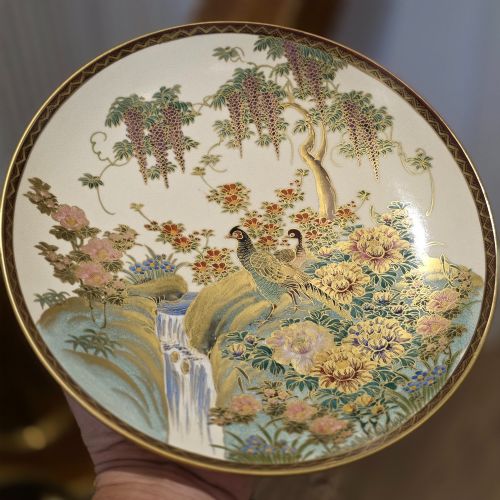
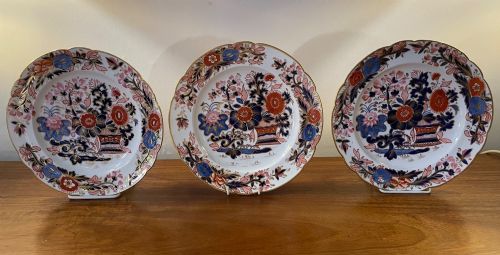
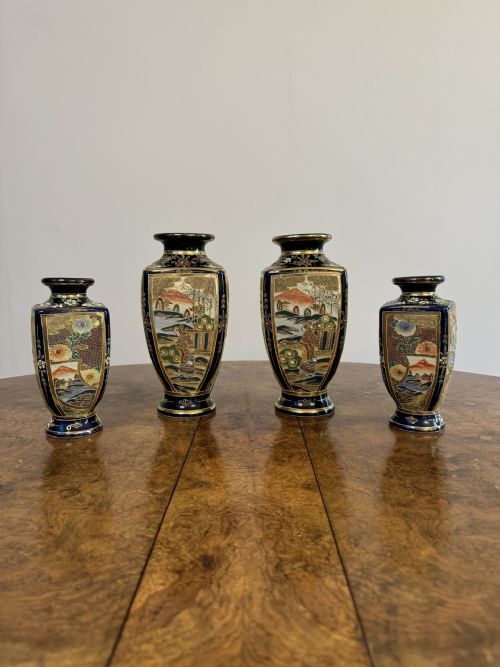
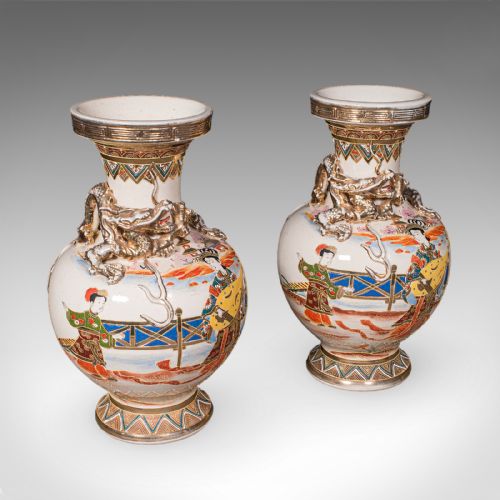
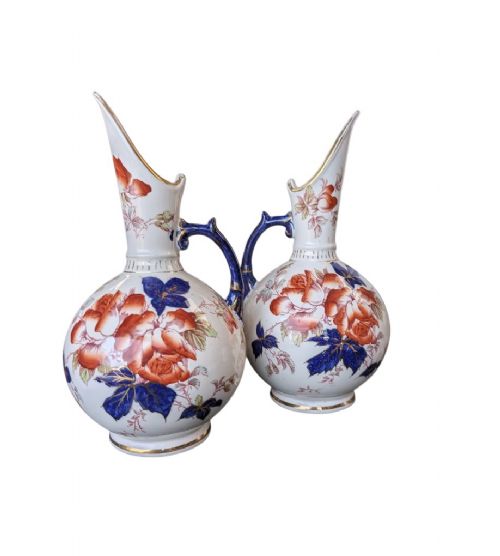
Japanese porcelain pottery encompasses a rich variety of decorative objects made for both domestic use and export during the nineteenth and early twentieth centuries. Buyers seeking these items encounter distinct aesthetic traditions, including vibrant Imari palettes, finely detailed Satsuma wares, and striking Kutani vessels.
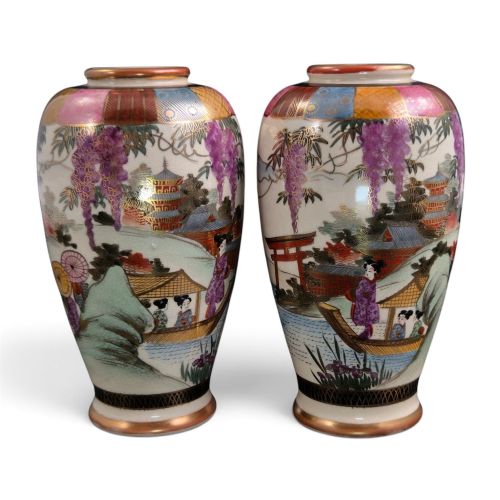
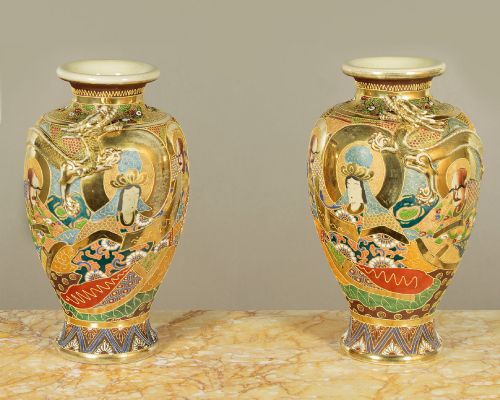
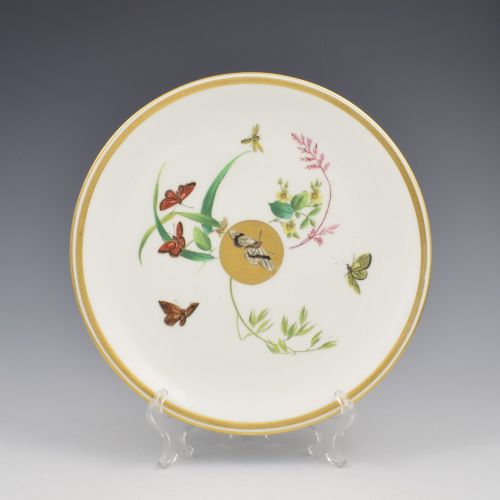
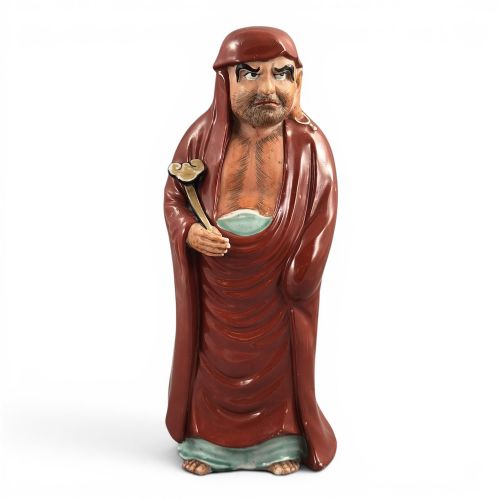
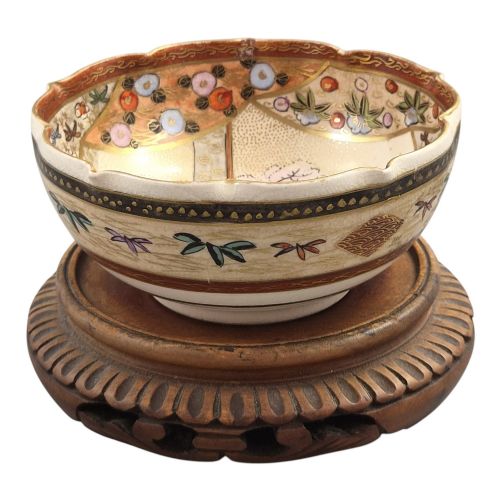
The selection centres on functional and decorative forms such as large vases, cabinet plates, bowls, ginger jars, and figurative okimono. Many pieces originate from the Meiji period, reflecting a high point of craftsmanship exported to Western markets during the Victorian and Edwardian eras.
Vessels range from everyday export items to imperial workshop productions signed by notable makers. Buyers most frequently meet Satsuma earthenware and Imari porcelain pieces, which dominate the available forms.
How they were made
Potters utilised local clay and refined porcelain paste to shape vessels on the wheel or press them into moulds, creating balanced baluster vases, scalloped plates, and rounded bowls. Artisans then applied underglaze blue pigments or prepared surfaces for overglaze enamels.
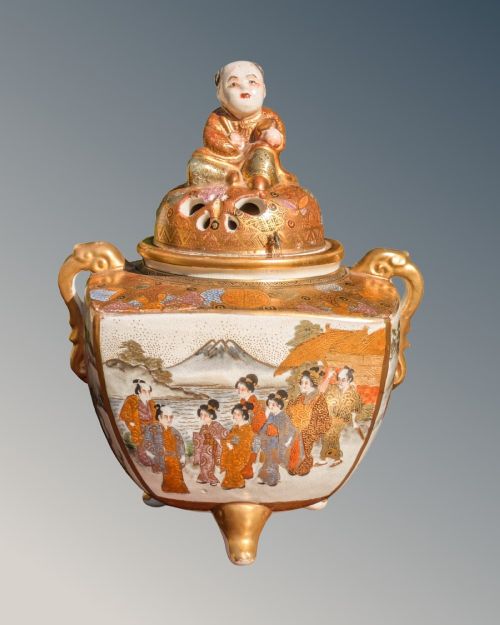
Decoration relied heavily on coloured enamel work and intricate gilding using gold leaf to highlight floral motifs, figures, and landscapes. Workshops in Kyoto, Arita, and Kobe employed specialised painters to layer fine details across Satsuma earthenware and hard-paste porcelain bodies.
Listings feature works spanning the nineteenth century through the 1930s, encompassing the Meiji, Taisho, and early Showa periods.
What varies in quality
Quality rests primarily on the precision of the brushwork and the complexity of the enamel and gilt detailing. The finest items display controlled, minute painting without blurring, whereas standard export pieces show broader, repetitive strokes.
The reputation of the workshop or artist dictates the upper tier of the range, with signed pieces from known makers commanding greater attention. The crispness of the porcelain body and the evenness of the glaze further distinguish standard commercial wares from superior studio productions.
Koshida·Manpei·Gyokkō·Kozan·Kinkōzan·Hotoda·Makuzu Kozan·Kōko
The Japanese Porcelain Pottery Glossary
- Satsuma
- A type of earthenware with a crackled ivory glaze, typically decorated with polychrome enamels and extensive gilding. It originated in Satsuma Province and became immensely popular during the Meiji period.
- Imari
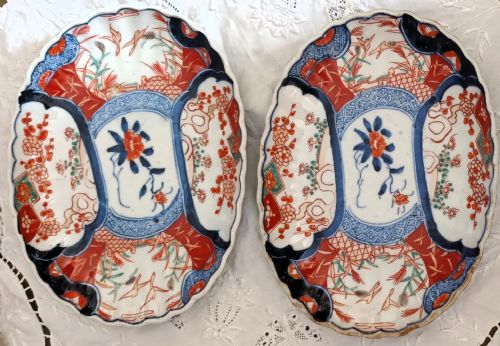
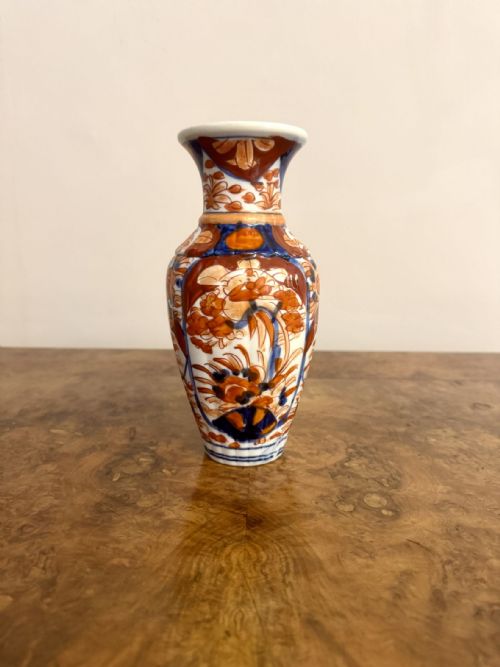
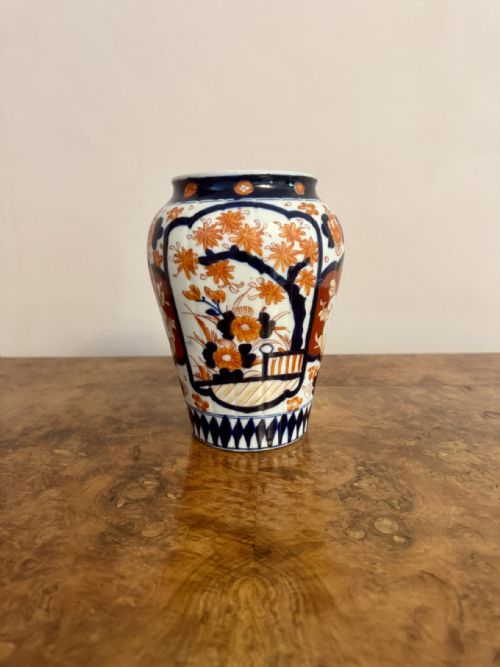
- A style of Japanese porcelain featuring a distinctive palette of underglaze blue, iron red, and gold. These pieces were produced in Arita and exported in large quantities to Europe.
- Kutani
- A style of Japanese ceramics known for bold overglaze colours, particularly strong greens, yellows, and reds, often depicting pictorial scenes. The tradition dates back centuries and includes striking figures and vases.
- Okimono
- A decorative figurine designed for display on a shelf or in a tokonoma alcove. These sculptures frequently depict deities, animals, or everyday figures carved from ceramic or ivory.
Japanese Porcelain Pottery: Frequently Asked Questions
How do I identify Satsuma ware?
Satsuma ware is characterised by its distinctive cream-coloured earthenware body covered in a fine network of crackled glaze. The surfaces are typically decorated with dense polychrome enamels and raised gold leaf.
Unlike hard-paste porcelain, Satsuma feels slightly softer to the touch and was primarily produced for decorative display and export rather than kitchen use.
What is the difference between Imari and Kutani?
Imari porcelain relies on a strict palette of cobalt blue underglaze combined with iron red and gilt details over the glaze. The designs often feature geometric panels, flowers, and natural scenes.
Kutani ceramics, by contrast, focus on heavier overglaze enamel work dominated by vibrant greens, yellows, and reds, frequently showcasing figurative subjects and narrative scenes.
How should I display these pieces at home?
Larger vases and chargers make striking focal points on stable wooden surfaces, sideboards, or within cabinets where their detailed enamel work catches the light. Smaller bowls and covered jars suit tabletops or mantels.
Keep delicate earthenware and gilded porcelain away from direct sunlight and damp environments to protect the fragile overglaze enamels over time.