



Gold Satsuma Earthenware Vase
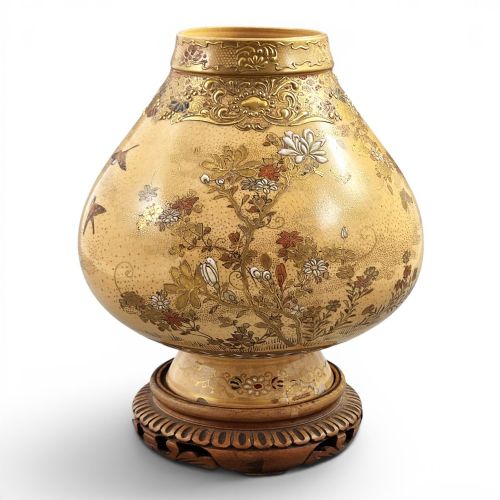
A gold satsuma earthenware vase brings intricately painted figures and heavy gilding into interiors, spanning the Meiji period to the early twentieth century.
Gold Satsuma Earthenware Vase
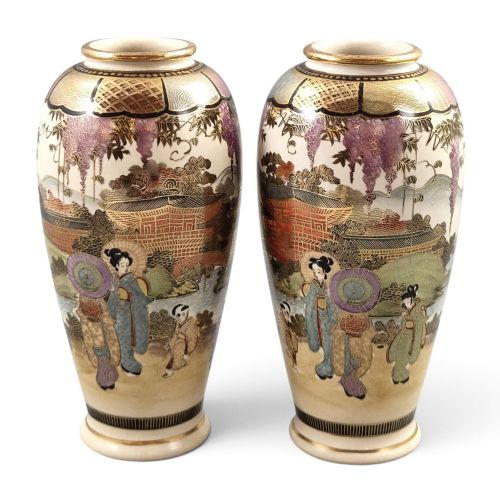
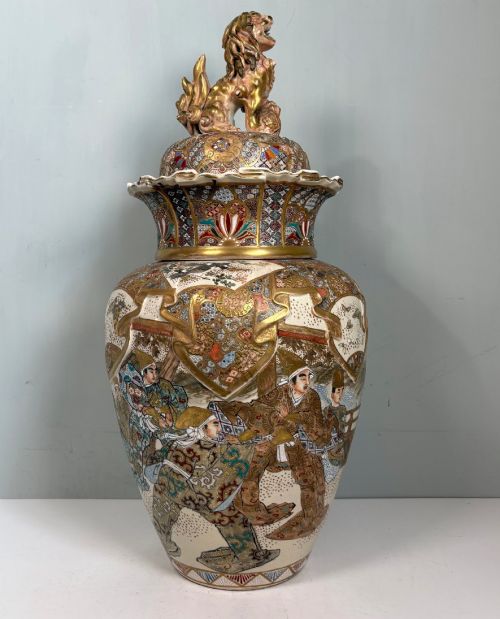
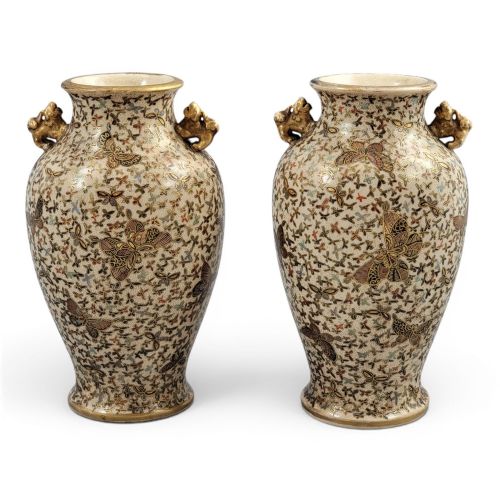
When searching for a gold satsuma earthenware vase, collectors encounter decorative ceramic vessels originating from Japan, predominantly created during the Meiji period and extending into the Edwardian and later periods. These pieces take various forms including baluster shapes, garlic head vases, bottle vases, and larger lidded urns or jardinieres.
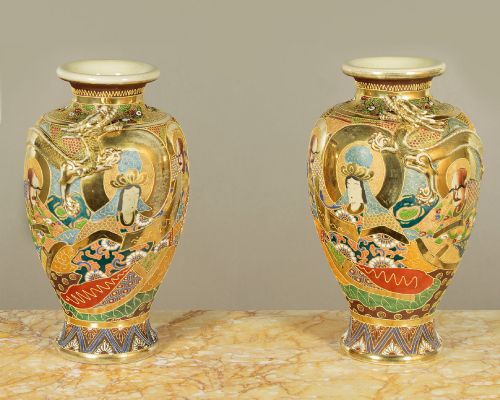
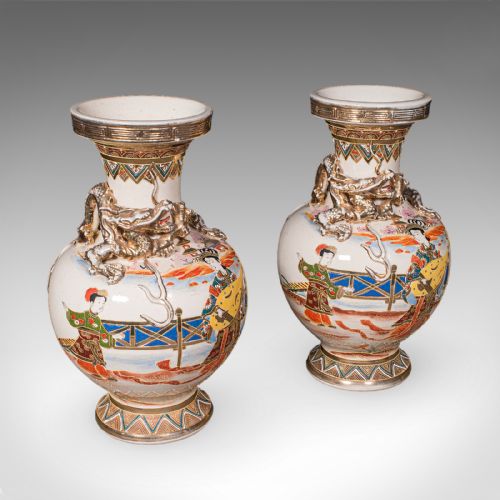
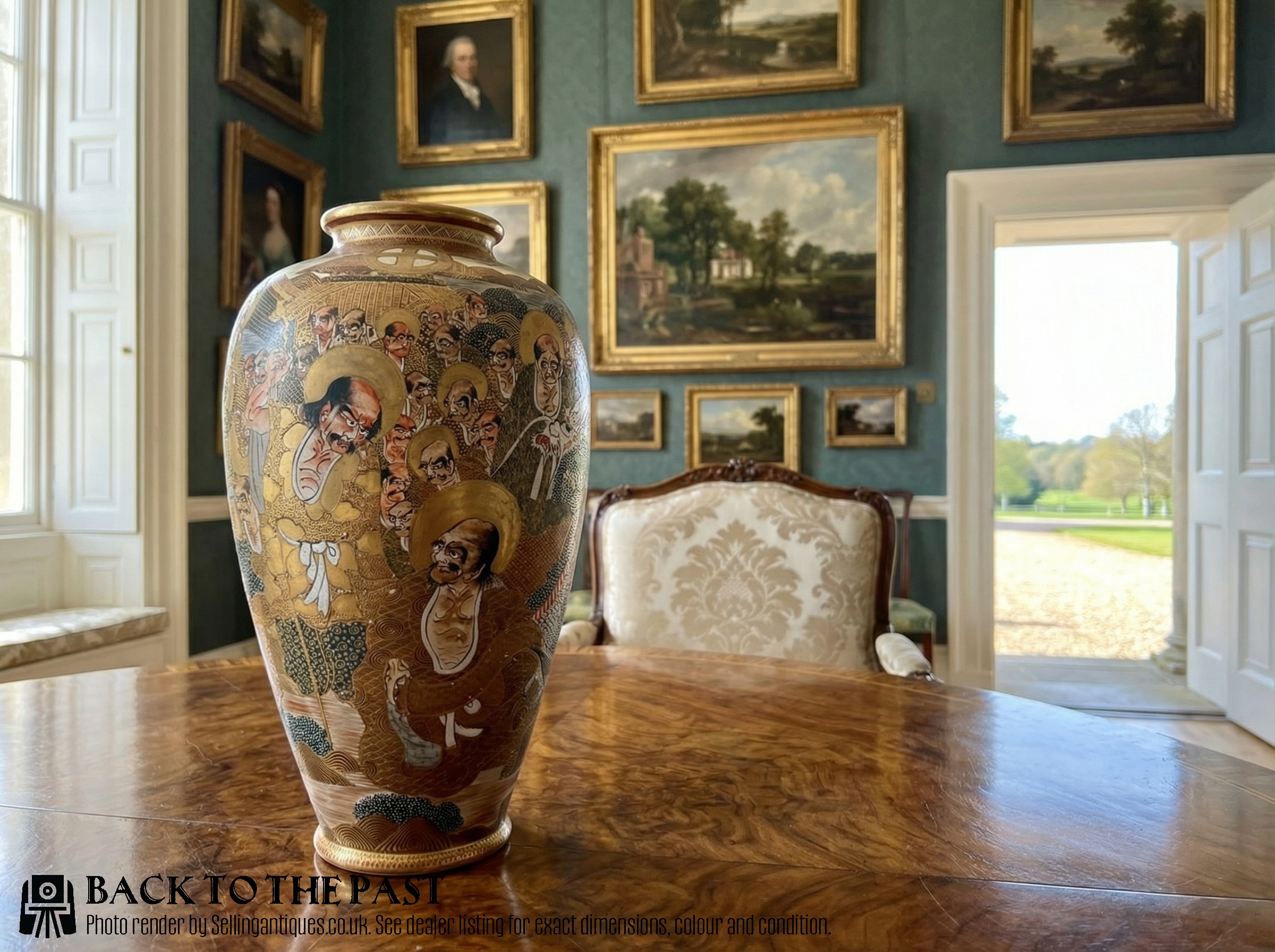
The aesthetic is defined by earthenware bodies decorated with detailed hand-painted scenes, often depicting human figures such as samurai, arhats, and family processions, alongside motifs like wisteria gardens, thousand butterflies, and dragons. Many examples survive as pairs, reflecting the export tastes of the late nineteenth and early twentieth centuries.
How they were made
The construction relies on an earthenware ceramic body finished with crackle-glaze, providing a textured canvas for subsequent decoration. Artisans applied rich enamel paints alongside gold leaf, gilt, and gold gilt accents to highlight figural processions and geometric panel borders.
Techniques such as moriage were utilised to build up raised clay details before gilding, creating a tactile surface relief. Pieces often incorporate workshop signatures or mon symbols, pointing to specialised Kyoto production centres.
Minutely painted processions of a thousand arhats peer out from miniature surfaces, requiring sharp eyes to count every single figure.
What varies in quality
Quality rests in the precision of the hand-painted brushwork and the density of the gilding across the ceramic body. Finer examples display sharply delineated facial expressions on figures and disciplined control within complex landscape panels.
The ambition of the form also dictates standing, with monumental vessels and unusual profiles like bamboo-handle shapes or heavy moriage detailing showing greater workshop skill than standard baluster iterations.
Shozan·Kinkōzan·Kinzan·Hotoda·Chosei·Nanzan·Seiko-en Chokei·Hakusan
The Gold Satsuma Earthenware Vase Glossary
- Satsuma ware
- A type of Japanese earthenware originating from Satsuma Province, traditionally characterised by an ivory-coloured crackle glaze and elaborate polychrome and gilt decoration.
- Moriage
- A ceramic technique where slip is piped onto the surface in dots or lines to create raised relief patterns before painting and gilding.
- Meiji Period
- The era in Japanese history spanning from 1868 to 1912, corresponding with a massive expansion of decorative arts exported to Western markets.
- Mon
- A Japanese emblem or badge used to decorate objects and signify family or clan lineage, often seen on export ceramics.
- Baluster
- A vase form featuring a rounded body that tapers toward the base and swells gracefully before rising to a narrow neck.
Gold Satsuma Earthenware Vase: Frequently Asked Questions
What is a satsuma vase?
A satsuma vase is an earthenware ceramic vessel featuring a characteristic ivory crackle-glaze surface. These pieces are heavily decorated with hand-painted enamels and gold gilt.
They were predominantly produced in Japan for export during the late nineteenth and early twentieth centuries, capturing traditional scenes of figures and landscapes.
How do I date a satsuma vase?
Dating relies on stylistic markers, workshop signatures, and period contexts such as the Meiji or Taisho eras. Earlier pieces from the nineteenth century often exhibit finer hand-painted detail and specific Kyoto workshop marks.
Changes in ceramic forms and the introduction of heavier moriage relief work also help narrow down the production decade.
Were these vases made for use?
Most surviving pieces were created as decorative display items for Western export markets rather than functional vessels for holding water. Their delicate earthenware bodies and elaborate gilding suited parlour and drawing room display.
Some larger examples functioned as jardinieres or lidded urns within grand Victorian and Edwardian interiors.
How should I clean a gilded vase?
Dusting gently with a dry, soft brush is the safest method to maintain the delicate enamel and gold leaf surfaces. Moisture and abrasive cleaning agents can damage the fragile crackle-glaze and historical gilt work.
Keeping pieces out of direct sunlight helps preserve the vibrant pigments used in the figural panels.