
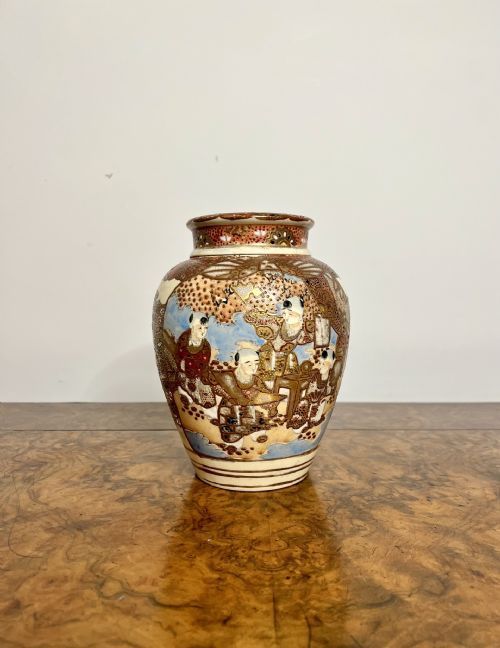


Japanese Porcelain Ginger Jar
A japanese porcelain ginger jar brings centuries of kiln tradition into a room, offering covered storage shaped in classic bulbous or baluster profiles.
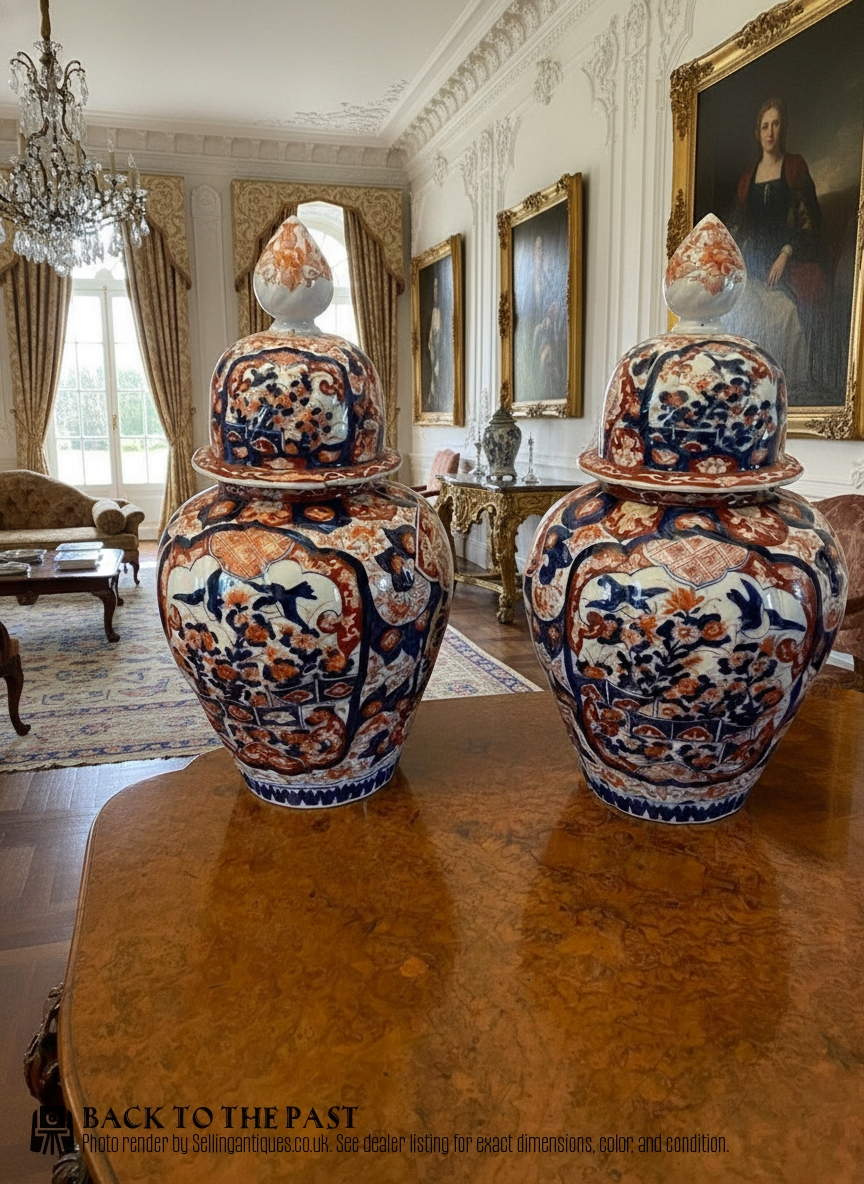
Japanese Porcelain Ginger Jar
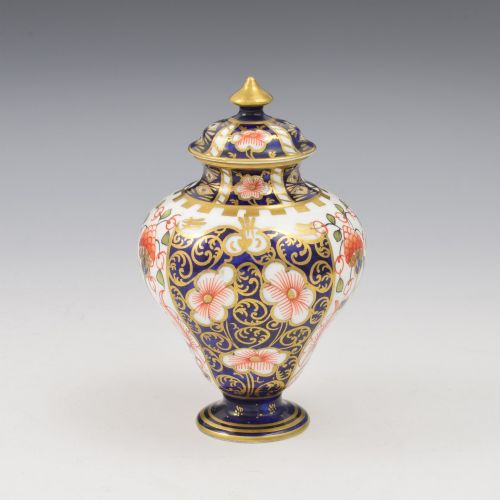
When you search for a japanese porcelain ginger jar, you encounter covered vessels originating primarily from nineteenth-century production centres, alongside eighteenth-century works. These pieces take the form of lidded jars and baluster vases designed originally for storage and later adapted for display.
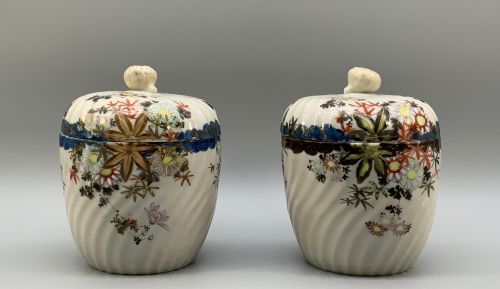
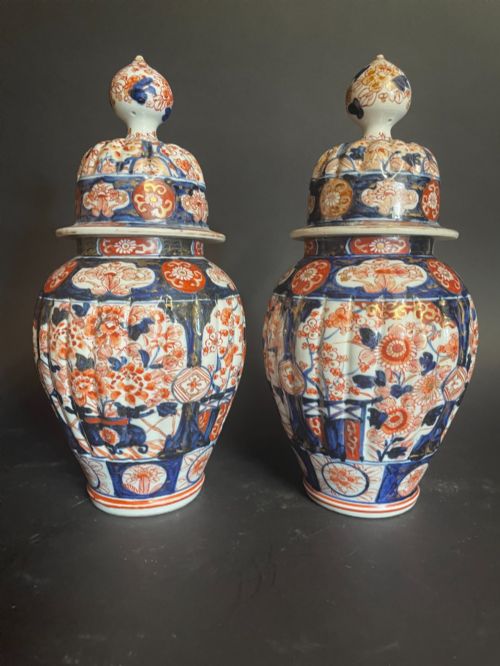
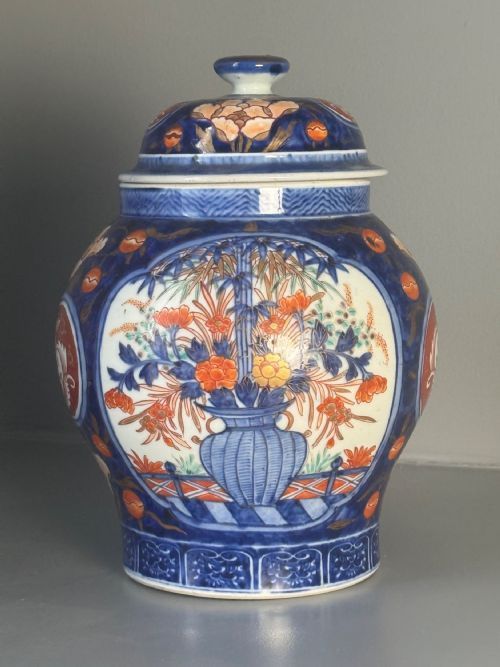
The selections on this page span several distinct traditions, with Japanese Imari forming the majority alongside Satsuma and Kutani wares. Most examples date from the Meiji period and Victorian eras, reflecting an intense period of international trade and artistic exchange.
Materials and technique
The core material is hard-paste porcelain or earthenware, shaped into vessels and finished with glaze before firing. Artisans applied cobalt blue underglaze and iron-red and gilt enamel overglaze, creating the characteristic rich palettes seen in Imari and Kutani pieces.
Many Satsuma examples incorporate intricate gilding and detailed hand-painting over a cream crackle-glaze earthenware body. Gold leaf and enamel work provide the layered surface texture that defines these decorative jars and covers.
Some jars spent a century hiding ginger before getting promoted to the mantelpiece.
What separates the grades
Quality rests in the crispness of the hand-painted brushwork and the precision of the enamel application. Superior jars display clean potting, balanced proportions, and well-executed decorative schemes without muddy colours or misplaced lines.
The refinement of the gilding and the clarity of the underlying glaze distinguish finer workshop productions from standard commercial output. Artist signatures, such as those from Kyoto or Tokyo studios, indicate higher status pieces.
Yamashu·Tokyo Taizan
The Japanese Porcelain Ginger Jar Glossary
- Imari
- A style of Japanese porcelain decorated in underglaze blue, iron red, and gold. This palette originated in Arita and became widely exported during the Edo and Meiji periods.
- Satsuma
- Earthenware pottery featuring a ivory-coloured crackle glaze decorated with polychrome enamels and gold leaf. These wares were heavily produced for the Western export market.
- Kutani
- Japanese coloured porcelain characterised by bold pictorial designs, often incorporating greens, purples, reds, and gold. The tradition dates back centuries within Ishikawa Prefecture.
- Baluster
- A vase shape with a rounded body that tapers toward the base and swells near the shoulder. This profile supports the domed covers typical of ginger jars.
- Edo period
- The historical period in Japan lasting from sixteen hundred and three to eighteen sixty-eight. Pieces from this era precede the Meiji expansion of export ceramics.
Japanese Porcelain Ginger Jar: Frequently Asked Questions
How were ginger jars used?
These lidded vessels served primarily to store spices, salt, and precious herbs in domestic households. Their airtight lids kept dry goods protected from moisture.
Over time, Western collectors repurposed them purely as ornamental objects for mantelpieces and display cabinets. Today, they function as decorative centrepieces that add historic character to interiors.
How do I date a Japanese jar?
Dating relies on stylistic markers, materials, and historical periods such as the Edo or Meiji eras. Porcelain body density and underglaze blue tones often point towards earlier eighteenth-century production.
Later Victorian and Edwardian imports frequently exhibit distinct export marks or Victorian registry hints. Comparing glaze textures and enamel styles helps narrow the decade of creation.
Can I use them as lamps?
Historical listings occasionally show these porcelain jars converted into table lamps through professional wiring. This practice preserves the decorative body while offering modern functional lighting.
Collectors generally prefer unaltered pieces with their original matching covers intact. However, conversion work has a long history within European interior design.
What is the difference between Imari and Kutani?
Imari ware relies on a strict palette of cobalt blue, iron red, and gilt overglaze on a hard porcelain body. The designs are often geometric, floral, or landscape-based.
Kutani ware employs a broader, more vibrant spectrum featuring deep greens and yellows alongside reds and gold. Kutani pieces frequently depict figurative scenes and detailed narrative compositions.