


Japanese Porcelain Urn Lid
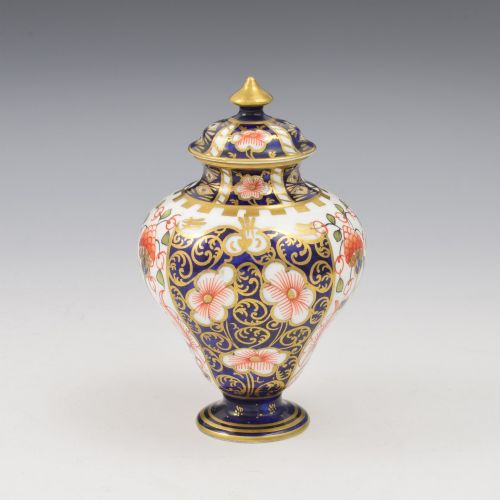
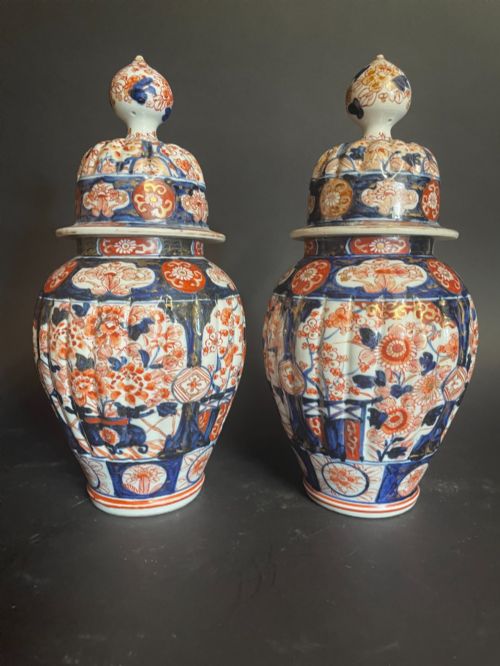
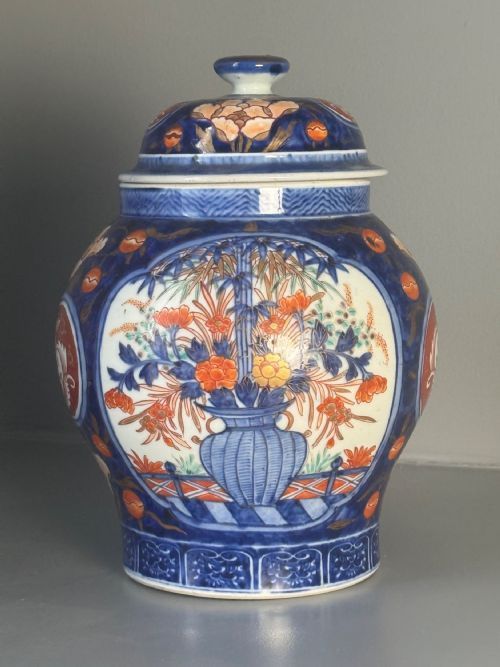
These japanese porcelain urn lid selections bring together covered jars and vases decorated in the Imari, Satsuma, Kutani and Arita manners.
Japanese Porcelain Urn Lid
A japanese porcelain urn lid belongs to lidded vessels, ginger jars, and covered vases originating from the Edo and Meiji periods, alongside later nineteenth and twentieth-century interpretations.
The objects seen here span Japanese Imari, Satsuma, Kutani, and Arita styles, frequently taking the form of baluster jars, octagonal vessels, and pair sets designed with matching covers.
While some pieces emerge from seventeenth and eighteenth-century traditions, the selection leans heavily toward nineteenth-century works produced for export and domestic collections.
Materials and construction
Potters shaped these vessels from porcelain and earthenware, applying glaze and enamel decoration before firing.
Many examples incorporate gold leaf, gilt, and gold gilding to highlight the painted patterns characteristic of the Imari palette.
Assessing quality in covered jars and vases
Quality rests upon the crispness of the porcelain body, the precision of the hand-painted enamels, and the harmonious fit between the vase and its lid.
Peculiarities in form, such as octagonal shaping or large proportions, separate standard production items from more ambitious works.
Fukagawa·Royal Crown Derby·Samson
The Japanese Porcelain Urn Lid Glossary
- Imari
- A style of Japanese porcelain decorated in underglaze blue, iron red, and gold, named after the port from which the wares were shipped. This palette appears widely across nineteenth-century jars and vases.
- Satsuma
- An earthenware pottery type with a crackle glaze, typically decorated with polychrome enamels and gilding. These pieces range from ginger jars to large decorative urns.
- Arita
- The Japanese town and surrounding region where porcelain production began in the seventeenth century. Arita kilns produced blue and white wares as well as early Imari pieces.
- Kutani
- A style of Japanese coloured porcelain and pottery noted for vibrant pigments and detailed pictorial designs. Kutani jars often feature bold natural motifs.
- Edo period
- The period in Japanese history spanning from sixteen-three to eighteen-sixty-eight, known for stable governance and flourishing ceramic arts. Pieces from this era set stylistic precedents for later export wares.
Japanese Porcelain Urn Lid: Frequently Asked Questions
How were lidded jars used?
These covered vessels served to store dry goods, spices, or ginger in domestic interiors.
Over time, larger examples functioned primarily as decorative garniture sets on mantelpieces and cabinets.
Are the lids original?
Matching the lid to the body requires checking the porcelain body, glaze tone, and painted pattern continuity.
Many nineteenth-century pieces survive with their original covers intact, though replacements occur in older ceramics.
How do I date Japanese porcelain?
Dating relies on stylistic markers, potting techniques, and the presence of period-specific export signatures.
Nineteenth-century pieces often display denser enamel work compared to earlier seventeenth-century Arita wares.
How should I display them?
Keep these fragile porcelain and earthenware vessels away from direct sunlight and high-traffic edges.
Pair sets look best positioned symmetrically on sturdy furniture where their lids can be viewed safely.