
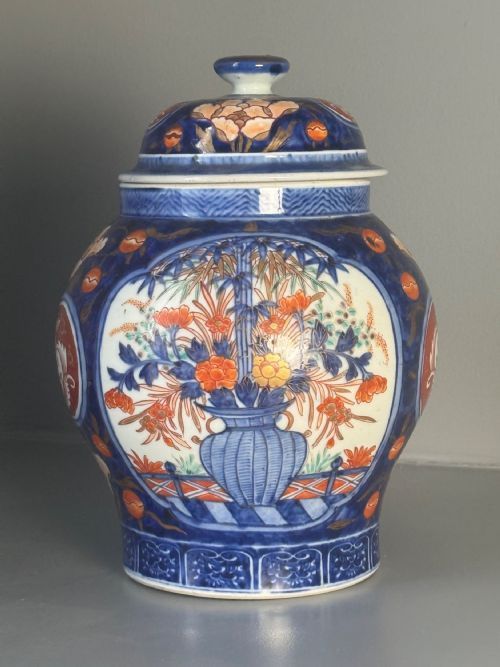
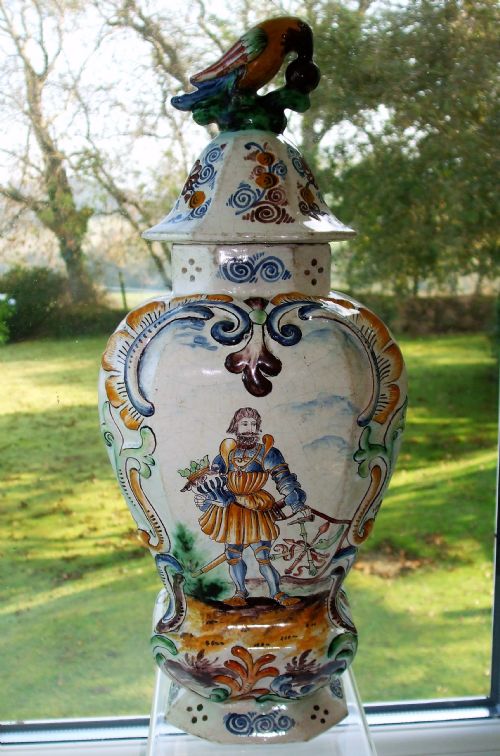


Orange Ceramic Lidded Vase
These orange ceramic lidded vase pieces bring vibrant palette and traditional cover design into a room, drawing the eye instantly.
Orange Ceramic Lidded Vase
When you search for an orange ceramic lidded vase, you encounter a distinct group of covered vessels spanning Japanese Imari, Dutch Delftware, and British ironstone. These pieces range from ginger jars and baluster vases to large decorative urns fitted with matching lids.
The selections on this page lean heavily towards late nineteenth century Japanese Imari porcelain, alongside Victorian interpretations and Art Deco examples. You find octagonal baluster shapes and pots designed for potpourri, showing varied silhouettes across the periods.
Origins stretch from Arita kilns in Japan to European potteries like Royal Winton and Mason’s. Each maker adopts the characteristic palette, blending orange ceramic bodies with rich cobalt blues and gilt highlights.
Materials and construction
Potters shape these vessels using porcelain, ironstone, and ceramic bodies, fired at high temperatures to achieve durable forms. Glaze seals the surface, providing a smooth finish that supports subsequent hand painting.
Makers apply enamel colours, glaze, and gold leaf by hand, often building up intricate patterns of underglaze blue and iron-red orange. Gilding and enamel work receive secondary firings to bond the decorative layers to the ceramic substrate.
Some nineteenth century potpourri jars were engineered with interior ledges specifically to trap dried rose petals while letting the scent escape through the lid.
Judging the work
The fineness of the hand painting dictates the visual strength of the piece, separating standard production from exceptional work. Crisp brushwork on the orange enamel and precise registration of the gilt highlights reveal the skill of the original decorator.
The integration of the lid with the vase body marks another distinction, where tighter tolerances and balanced proportions elevate the object. Weight, potting thickness, and the clarity of the glaze also indicate the tier of the manufacture.
The Orange Ceramic Lidded Vase Glossary
- Imari
- A style of Japanese porcelain exported from Arita, traditionally decorated in underglaze blue, iron-red orange, and gold. This palette dominates the examples seen in these listings.
- Baluster
- A vase shape with a rounded body that tapers toward the base and swells above, resembling an architectural baluster. Many lidded jars on this page use this silhouette.
- Ironstone
- A type of durable heavy earthenware patented in Britain, offering a robust alternative to porcelain. Mason's works provide notable examples of this material.
- Potpourri
- A vessel featuring pierced or perforated covers designed to diffuse scent from dried plant materials into a room. These specialised lidded jars appear among the nineteenth century pieces.
- Gilt
- A thin layer of gold applied to the ceramic surface to accent patterns and borders. This material catches the light alongside the orange enamel details.
Orange Ceramic Lidded Vase: Frequently Asked Questions
How do I date an Imari lidded vase?
Dating relies on examining the potting style, the brightness of the orange enamel, and the baseline characteristics of the porcelain body. Nineteenth century pieces often display heavier craquelure or specific blue tones underneath the glaze.
Matching the shape and lid fit against documented periods helps narrow down the decade of manufacture. Comparing the hand-painted motifs with known Arita export patterns provides further confirmation.
Were these lidded vases meant to hold water?
Most of these covered jars and vases served decorative or dry storage purposes rather than holding cut flowers. Ginger jars and potpourri vessels were constructed to contain dry aromatics or preserves.
Using them for displays of dried stems protects the interior glaze from moisture damage. Checking the interior for water staining tells you how past owners utilised the piece.
What is the difference between porcelain and ironstone?
Porcelain is a vitrified ceramic material fired at high heat until non-porous and translucent, characteristic of traditional Japanese Imari pieces. Ironstone is a dense, opaque earthenware developed in Britain to mimic porcelain's strength.
Ironstone items generally feel heavier and thicker in the hand than fine export porcelain. Both materials support the bright orange and gilt decoration seen across these listings.
Can I display the lid separately from the vase?
The lid forms an integral part of the silhouette and balance of a lidded vase, completing the decorative scheme. Removing it alters the intended profile created by the potter.
Keeping the cover in place protects the rim from chips and maintains the historical integrity of the object. Collectors generally prefer pieces that retain their original matching covers.