
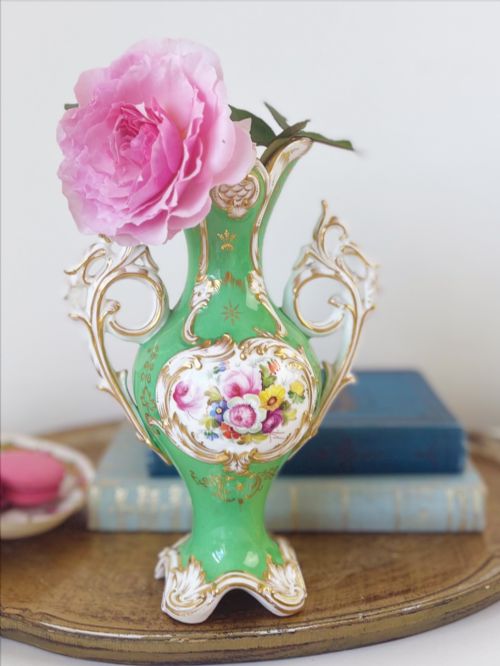
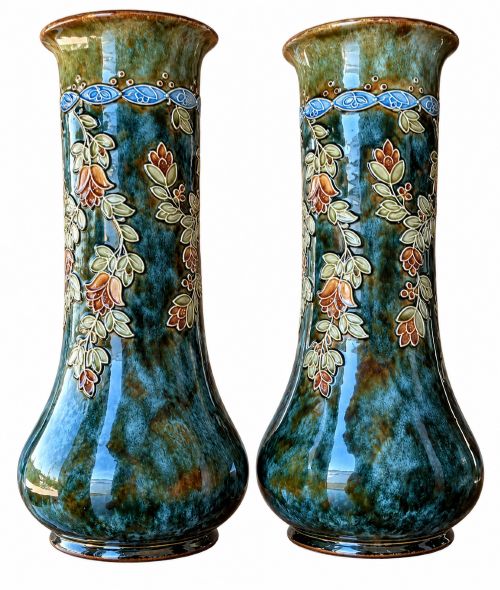
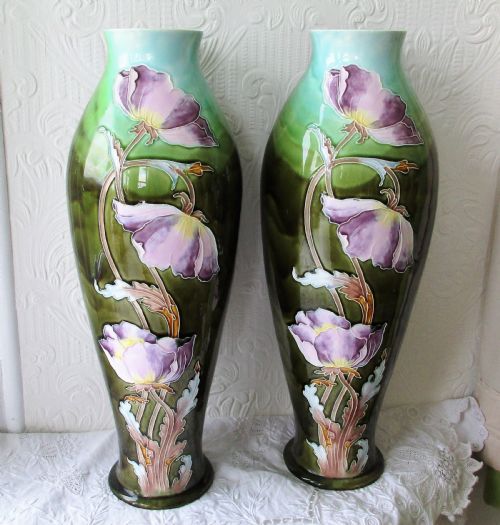
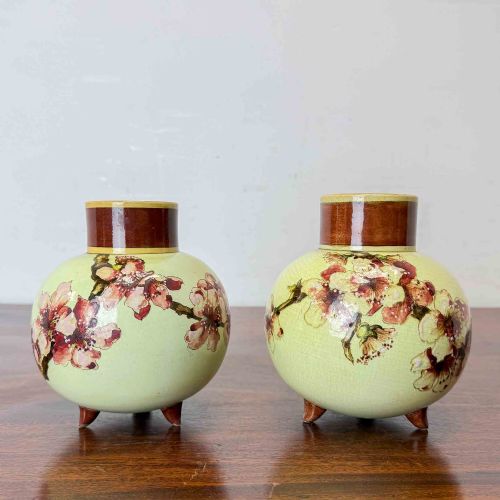


Green Floral Ceramic Urn
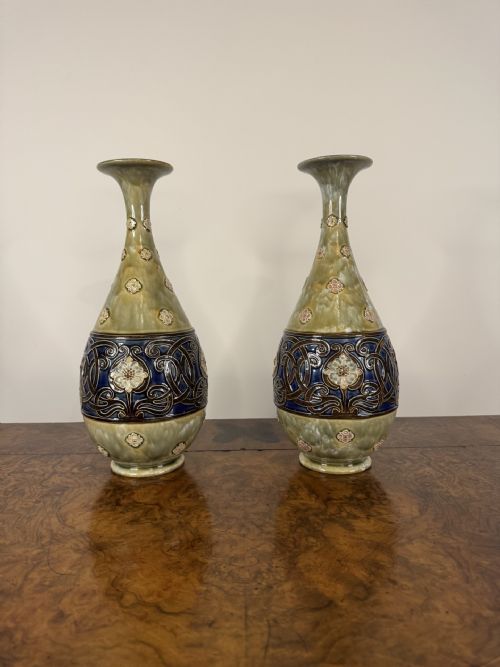
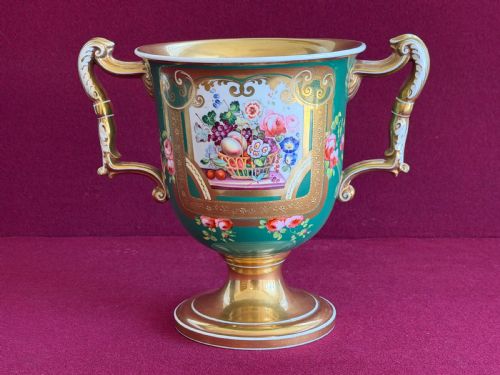
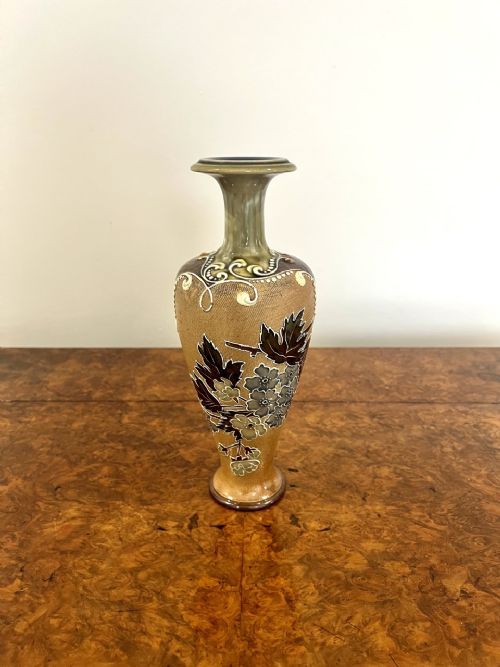
These green floral ceramic urn pieces bring botanical decoration and ceramic form together in nineteenth and early twentieth century works.
Green Floral Ceramic Urn
A green floral ceramic urn sits within a selection of vases, loving cups, decorative jars, and ewers spanning the eighteenth century through to the Art Deco period. Pieces take the form of baluster shapes, pedestal ewers, and pot pourri jars, reflecting the varied vessel types produced across these decades.
Makers and potteries from England, France, Austria, China, and Bohemia contribute to the range, covering styles such as Art Nouveau, Victorian, Arts and Crafts, Aesthetic Movement, Regency, and Secessionist. Collectors encounter earthenware, stoneware, porcelain, and faience examples featuring glaze and enamel decoration.
The nineteenth century and the decades around nineteen hundred provide the majority of the examples seen here. These items demonstrate the shift from Regency and Victorian formality into the flowing organic lines of Art Nouveau and the geometric patterns of Art Deco.
Materials and Techniques
Potters shaped these vessels using ceramic, stoneware, porcelain, earthenware, and faience bodies, often finished with coloured glaze and enamel paint. Artisans applied surface decoration through hand painting, sometimes combining these techniques with gilding and gilt accents.
Factories utilised specialised throwing and moulding methods to achieve baluster profiles, lidded jars, and pedestal forms. Kiln firing fixed the clay bodies before secondary decorative firings set the enamel colours and glaze surfaces.
Vessel forms span from baluster vases and ewers to lidded pot pourri jars and loving cups.
Judging Quality
Quality rests upon the crispness of the modelled form and the precision of the hand-painted or glazed botanical decoration. Superior examples display careful balance in their proportions and a confident execution of surface motifs.
The reputation of the pottery and the skill of the individual designer or artist elevate certain pieces above standard production work. Superior vessels maintain integrity in their glaze surfaces and sharpness in relief detailing.
Royal Doulton Lambeth·H & R Daniel·TG Green·Turn Vienna·Royal Dux Bohemia·Royal Worcester
The Green Floral Ceramic Urn Glossary
- Baluster
- A vertical architectural form or vase shape that swells outward towards the lower portion before tapering. This profile provides stability and visual weight to ceramic vessels.
- Faience
- Tinned-glazed earthenware produced in various European centres. The opaque white or coloured glaze forms a smooth ground for painted decoration.
- Stoneware
- A heavy, durable ceramic fired at high temperatures until vitrified. This body is impermeable to liquids even without glaze.
- Ewer
- A large jug with a wide spout and curved handle, often paired with a basin. In decorative ceramics, these pieces served ornamental display purposes.
- Pot Pourri
- A decorative jar or vase featuring a pierced cover designed to diffuse scent from dried flower petals. These vessels often incorporate elaborate handles and pedestal bases.
Green Floral Ceramic Urn: Frequently Asked Questions
What periods do these ceramic pieces represent?
The selection spans from the eighteenth century through the Regency and Victorian eras into the twentieth century, covering Art Nouveau, Arts and Crafts, and Art Deco movements.
Dates primarily cluster around nineteen hundred and the preceding decades, reflecting nineteenth-century manufacturing output.
How were these decorative vessels utilised originally?
Vessels served as ornamental mantelpiece ornaments, centrepieces, and functional containers for pot pourri or floral displays within domestic interiors.
Ewers and loving cups held ceremonial or decorative roles rather than everyday service functions.
What ceramic materials appear in these listings?
Makers employed porcelain, earthenware, stoneware, and faience bodies to construct these diverse vessel forms. Surfaces received treatments including coloured glaze, enamel paint, and gilding.
Some items utilise specialised stoneware bodies developed by nineteenth-century English potteries.
How do styles change across the periods?
Early nineteenth-century examples display classical Regency proportions and refined porcelain bodies. Later nineteenth-century and early twentieth-century pieces embrace organic floral motifs associated with Art Nouveau and the Secessionist movement.
Art Deco items introduce more structured, geometric influences.