
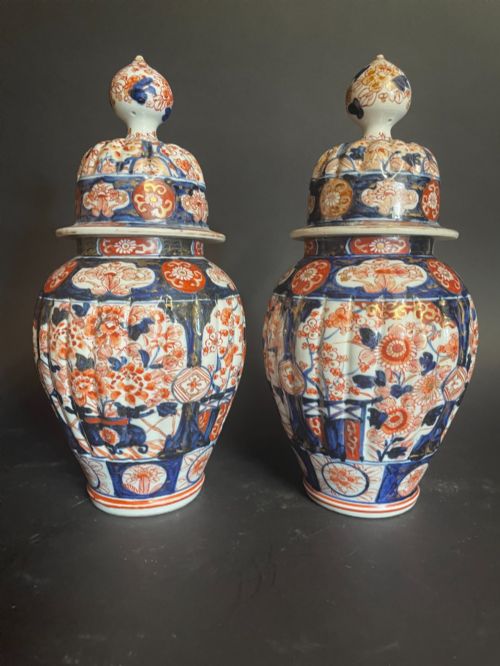
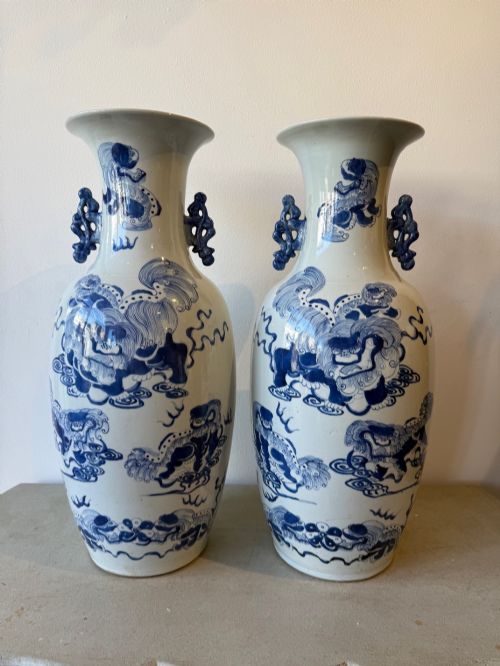


Asian Ceramic Temple Jar
These asian ceramic temple jar selections bring striking form and rich glazed detail to interiors, offering the bold presence collectors seek.
Asian Ceramic Temple Jar
When you search for an asian ceramic temple jar, you are looking at substantial lidded vessels designed for display rather than holding wine or water. These pieces often arrive as matched pairs featuring generous bodies and fitted covers, echoing traditional forms from East Asian kilns. The selection here spans production from the nineteenth century into the early twentieth century.
You are most likely to meet Japanese Imari ware and Satsuma porcelain on this page, alongside Chinese blue and white vases and ginger jars. Makers utilised distinct stylistic traditions, ranging from the intricate cobalt blues and iron reds of Imari to the detailed landscapes of Satsuma and the classic motifs of the Qing style. Many examples retain their original covers, which completes the silhouette.
The forms vary from grand decorative lidded urns to robust ginger jars and occasional tables paired with vessels. Dating stretches across the Victorian era and the Meiji and Edo periods, reflecting sustained European interest in imported Asian ceramics during the late nineteenth century. These objects function successfully as centrepieces on sideboards or mantelpieces.
Materials and construction
Potters shaped these vessels from high-fired porcelain and earthenware, applying mineral pigments before glazing and firing the clay. Cobalt glaze provided the deep blue tones found on Chinese ginger jars, while enamel and gold leaf added polychrome richness to Japanese Imari and Satsuma pieces. Gilt accents and ormolu mounts sometimes supplement the ceramic body.
The execution relies on precise brushwork and controlled kiln temperatures to achieve stable glazes and sharp detail. Hand-painted panels depict landscapes, flora, and traditional motifs, requiring steady hands from decorators working in established workshops. Enamels are layered over or under the glaze depending on the regional technique.
Some nineteenth-century makers were so prolific that even their ginger jars needed ginger breaks.
Assessing quality in these vessels
Quality rests in the crispness of the hand-painted decoration and the harmony of the palette across the body and cover. Stronger examples display deeply saturated cobalt blues or finely rendered enamel detailing with minimal blurring. The weight of the porcelain and the symmetry of the thrown vessel also separate standard production from superior work.
The survival of the matching lid is critical, as covers frequently suffered damage or loss over time. The clarity of underglaze marks and the precision of gilding indicate the skill level of the original workshop. Finer pieces maintain clean interior glazing and a balanced stance.
Yamashu
The Asian Ceramic Temple Jar Glossary
- Imari
- A style of Japanese export porcelain characterised by a palette of underglaze blue, iron red, and gold. This decorative tradition originated in Arita and gained immense popularity in Europe.
- Satsuma
- A type of earthenware originating from the Satsuma province in Japan, featuring a ivory-coloured cracked glaze and intricate polychrome enamel painting. It is frequently enhanced with gilt details.
- Ginger jar
- A high-shouldered ceramic vessel with a domed lid, originally used in China for storing spices and salt. Later periods produced them purely for decorative display in domestic interiors.
- Ormolu
- Gilded bronze mounts applied to the base or rim of ceramic vessels. This technique was often added by European artisans to elevate the status of imported Asian porcelain.
- Cobalt glaze
- A deep blue mineral pigment applied beneath the transparent glaze before firing. It withstands high kiln temperatures without fading, producing durable and vibrant surface patterns.
Asian Ceramic Temple Jar: Frequently Asked Questions
How are asian ceramic temple jar pieces dated?
Dating relies on stylistic markers, glaze composition, and historical production periods such as the Meiji era or the nineteenth century. Makers' marks on the base provide further clues, though many export pieces carry imitation marks from earlier reigns.
Examining the wear on the base and the method of potting helps narrow down the decade of manufacture. Comparing pieces with dated examples in museum collections clarifies the timeline.
Are matching covers original to the jars?
Matching covers are generally original if the glaze, potting clay, and decorative palette align perfectly with the body. Replacements often show subtle variations in the shade of white or the thickness of the porcelain.
Checking the interior rim of both lid and jar reveals how the pieces were thrown and fired together. Original pairs command greater interest from collectors.
How do I care for antique porcelain?
Antique porcelain requires gentle cleaning with a soft, dry cloth to remove dust without disturbing delicate enamels or gold leaf. Water should be used sparingly, and abrasive cleaning agents must be avoided entirely.
Placing vessels away from direct sunlight protects coloured enamels from fading over time. Secure placement on stable furniture prevents accidental tipping.
What is the difference between Imari and Satsuma?
Imari ware uses hard-paste porcelain with a distinctive palette of cobalt blue, iron red, and gold in geometric and floral patterns. Satsuma ware employs a softer earthenware body with a distinctive crackle glaze covered in densely painted figures and landscapes.
Imari tends to have a resonant ring when tapped, whereas Satsuma sounds duller due to the earthenware body. Both represent major strands of Japanese export art.