


Japanese Polychrome Porcelain Urns
Japanese polychrome porcelain urns bring rich historic craft and bold colour into modern rooms.
Japanese Polychrome Porcelain Urns
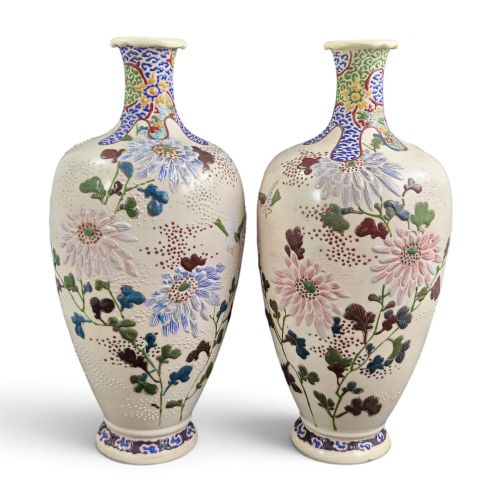
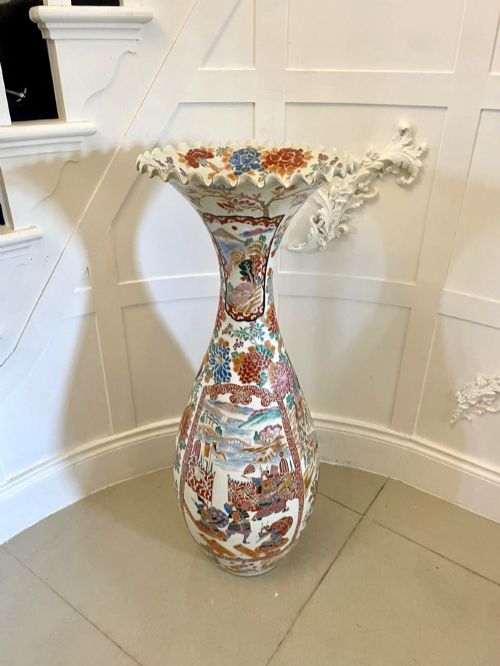
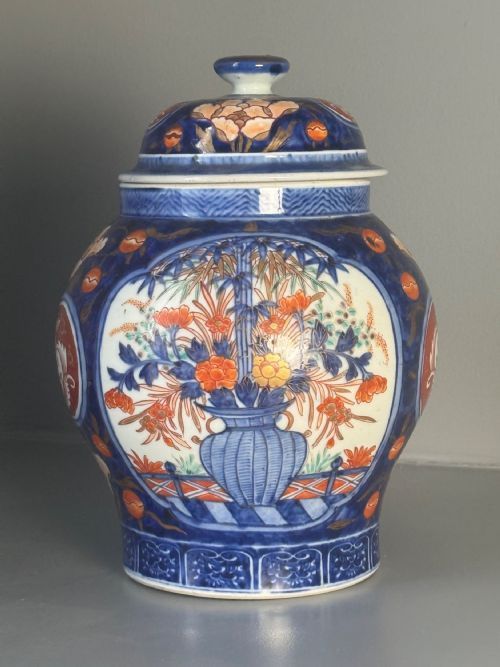
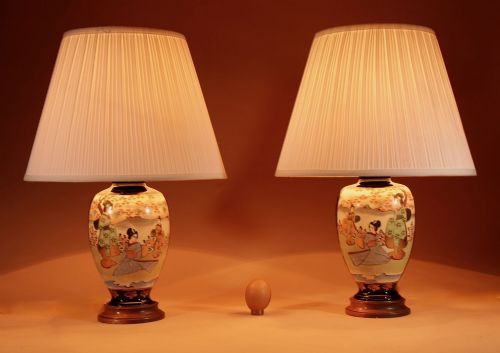
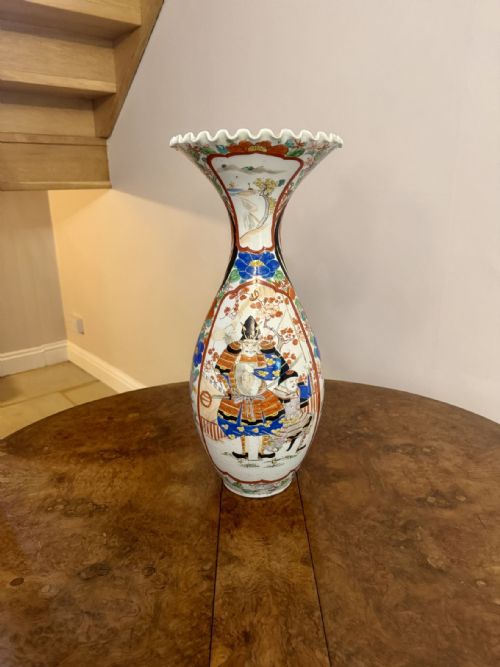
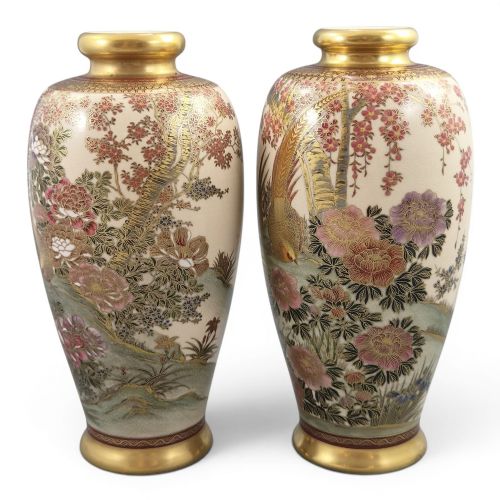
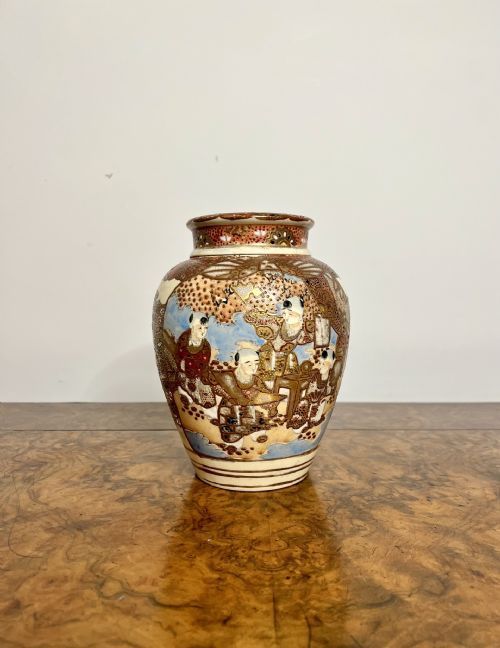
Japanese polychrome porcelain urns encompass large floor-standing vessels, lidded jars, and table lamps originating from the Meiji, Taisho, and Showa periods. Buyers meeting these pieces on this page encounter robust Imari patterns, Satsuma earthenware styles, and detailed Kutani compositions created for export and domestic display.
The forms range from towering floor vases to ginger jars and handled vessels produced across the nineteenth and early twentieth centuries. Many examples span the late Meiji and Edwardian eras, combining traditional Japanese motifs with forms adapted for Western interiors.
Methods and Materials
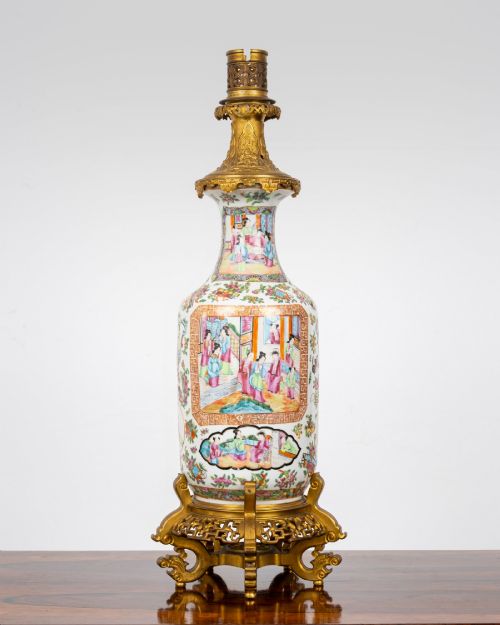
The physical construction relies on porcelain and earthenware bodies shaped into vases, jars, and urns, frequently mounted on hardwood stands or fitted with gilt bronze mounts. Makers applied heavy enamel and glaze layers alongside intricate gold leaf to build up complex decorative surfaces.
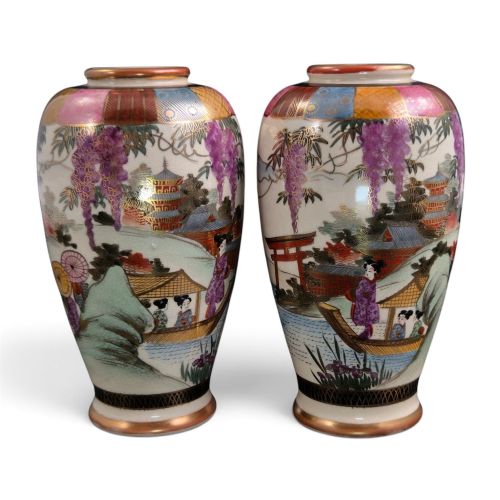
Hand-painted scenes incorporate polychrome pigments fixed by kiln firing, often finished with rich gilt decoration that highlights figures, landscapes, and floral arrangements like wisteria.
Floor vases reach heights up to thirty-eight inches, demanding careful clearance from lively pets.
Judging Quality
Quality rests on the crispness of the hand-painted brushwork and the precision of the polychrome enamel and gold leaf application. Finer pieces demonstrate control in intricate figural scenes or dense floral patterns, whereas simpler productions show looser lines.
The presence of named makers, identifiable workshop signatures, and exhibition-standard scaling distinguishes exceptional historical production from standard decorative ware.
Manpei Kobe·Yamashu·Hododa·Hayakawa·Kinkozan·Fukagawa
The Japanese Polychrome Porcelain Urns Glossary
- Imari
- A traditional style of Japanese porcelain featuring a distinct palette of underglaze blue, iron red, and gilt highlights. These pieces were widely produced for export during the nineteenth century.
- Satsuma
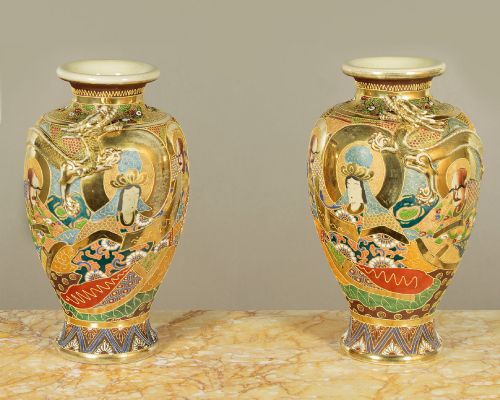
- A type of Japanese earthenware characterised by a crackle glaze and elaborate polychrome and gilt decoration depicting figures, landscapes, and flowers.
- Kutani
- A style of Japanese porcelain known for bold polychrome designs, frequently employing rich greens, reds, yellows, and purples in detailed pictorial scenes.
- Meiji Period
- The historical Japanese era spanning from 1868 to 1912, associated with a massive expansion of decorative arts created for international export.
- Mon
- A Japanese heraldic badge or emblem used to identify families, clans, or governmental organisations on traditional artefacts.
Japanese Polychrome Porcelain Urns: Frequently Asked Questions
What periods do these urns come from?
The available selection spans from the late eighteenth century through the Meiji, Taisho, and Showa periods into the early twentieth century. Most examples date from the nineteenth century and the Edwardian era.
Production methods shifted across these decades, moving from traditional export wares of the Meiji period to later twentieth-century interpretations.
How were these vessels used originally?
These pieces served as prominent decorative elements in traditional Japanese interiors and later as luxury display items in European and American homes. Large floor vases and lidded jars occupied principal reception rooms.
Many later pieces were adapted into table lamps to suit contemporary lighting trends while retaining their original hand-painted porcelain bodies.
How do I style an urn in a modern room?
Placing a large floor vase or lidded jar in an empty corner introduces height, colour, and historic texture to contemporary spaces. Table lamp conversions integrate functional lighting directly with traditional Satsuma or Imari patterns.
Pairing these vessels with neutral backgrounds allows the intricate enamel work and gold leaf to stand out without competing with other furnishings.
How do I distinguish Satsuma from Kutani?
Satsuma pieces typically feature a characteristic cream-coloured earthenware body covered in fine crackle glaze, decorated with detailed figures and heavy gilding. Kutani works are generally rendered on porcelain with vibrant, saturated polychrome palettes dominated by greens, reds, and blues.
Examining the base material and the underlying glaze texture clarifies which tradition produced the vessel.