


Japanese Porcelain Mantel Vases
Japanese porcelain mantel vases bring striking colour and intricate hand-painted detail to any room, offering traditional form and heritage craftsmanship.
Japanese Porcelain Mantel Vases
Japanese porcelain mantel vases comprise decorative vessels originating from distinct historical eras, including the Edo and Meiji periods, alongside later Showa and Edwardian examples. You will frequently encounter pairs and larger garnitures designed to sit symmetrically on a mantelpiece or shelf.
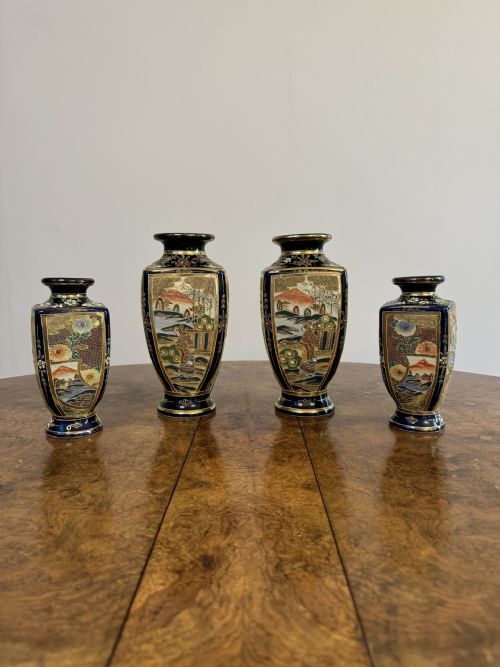
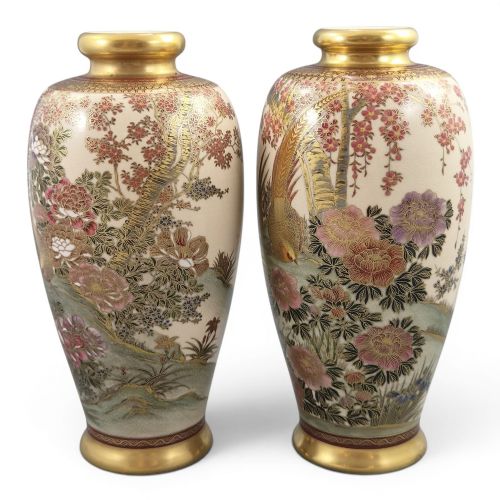
The selections span traditional Imari palettes, Kutani wares, and Satsuma pieces, often featuring detailed hand-painted scenes and rich gilding. These decorative vases reflect the diverse aesthetic shifts across nineteenth and early twentieth-century Japanese ceramic production.
Materials and construction methods
The foundational body relies on high-fired porcelain and earthenware, shaped into forms such as polygon profiles and shaped garniture vessels. Artisans applied cobalt underglaze, vibrant enamel colours, and delicate gold leaf to build complex surface designs.
Decoration involved meticulous hand-painting, frequently enhanced with gilding and specialised glazes. Workshops incorporated specific regional motifs, such as the Shimazu mon on Satsuma wares, applied during distinct periods of manufacture.
Listings feature pieces spanning the 18th century, Edo period, Meiji period, and early 20th century, utilising porcelain, earthenware, enamel, and gold leaf.
Distinctions in quality
Quality rests upon the precision of the hand-painted decoration, the crispness of the enamel work, and the richness of the gold leaf application. Finer pieces demonstrate superior control over the cobalt and enamel pigments, creating balanced and harmonious compositions.
The distinction between standard decorative items and exhibition quality pieces lies in the complexity of the narrative scenes and the finesse of the brushwork. Maker attribution and well-preserved gilding further elevate the standing of individual examples.
Manpei, Kobe·Hododa
The Japanese Porcelain Mantel Vases Glossary
- Imari
- A style of Japanese porcelain decorated in underglaze blue, iron red, and gold. This palette originated in Arita and became immensely popular for export.
- Satsuma
- A type of earthenware from Satsuma province with a cracked ivory glaze and elaborate polychrome and gilt decoration. These pieces were heavily produced for the export market during the Meiji period.
- Kutani
- Japanese ceramic ware known for its bold colour schemes, particularly involving greens, blues, yellows, and purples. Kutani pieces often feature intricate figural or natural motifs.
- Garniture
- A set of matching vases or pots designed to be displayed together on a mantelpiece or furniture top. They typically consist of three or five graduated pieces.
- Meiji Period
- The era of Japanese history lasting from 1868 to 1912, marked by the opening of trade with the West and a surge in export ceramics.
Japanese Porcelain Mantel Vases: Frequently Asked Questions
What are Japanese mantel vases?
These are decorative ceramic vessels produced in Japan, often created as pairs or larger garnitures for display on mantelpieces. They encompass various traditional styles including Imari, Satsuma, and Kutani.
They reflect distinct periods of Japanese ceramic history, ranging from the Edo era through to the early Showa period, utilising porcelain and earthenware.
How do I identify Imari vases?
Imari pieces are typically recognised by their distinctive palette, which combines underglaze blue, iron red, and significant amounts of gold leaf or gilding. The patterns often feature intricate floral and geometric panels.
This style originated in the town of Arita and was exported in large quantities to Europe, becoming a staple of interior decoration.
What is Satsuma ware?
Satsuma ware is characterised by a distinctive cream-colored, earthenware body covered in a fine network of crackled glaze. It is traditionally decorated with elaborate polychrome enamel designs and raised gilding.
Many pieces feature figurative scenes, historical narratives, or familial crests such as the Shimazu mon, particularly those made for international exhibitions.
How should I display a garniture?
A garniture typically consists of three or five matching vases that are meant to be arranged symmetrically across a mantelpiece or large surface. The traditional arrangement places the tallest piece in the centre with the matching pairs flanked outwards.
Ensure the surface is stable and capable of supporting the weight of these ceramic vessels, keeping them away from direct foot traffic to prevent accidental knocks.