



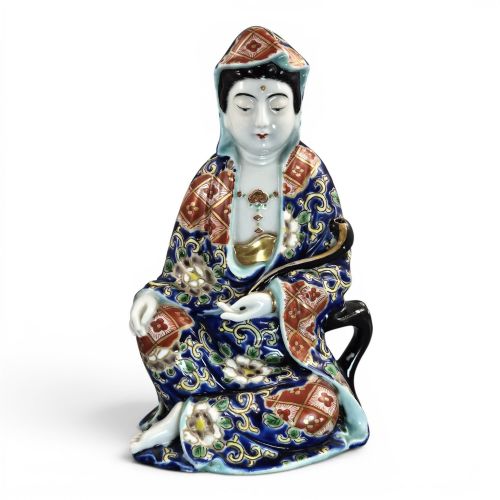
Japanese Polychrome Ceramics
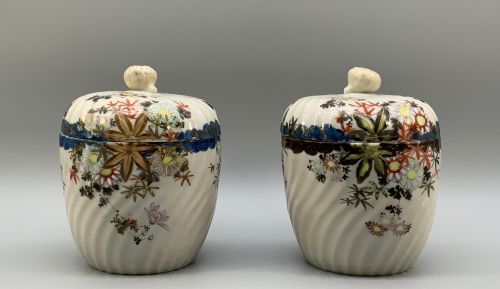
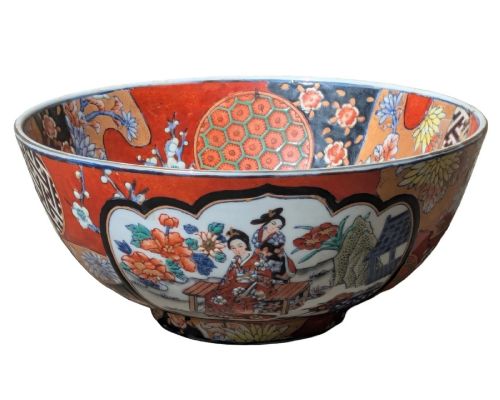
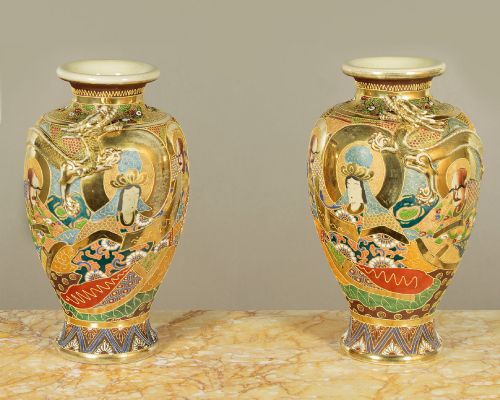
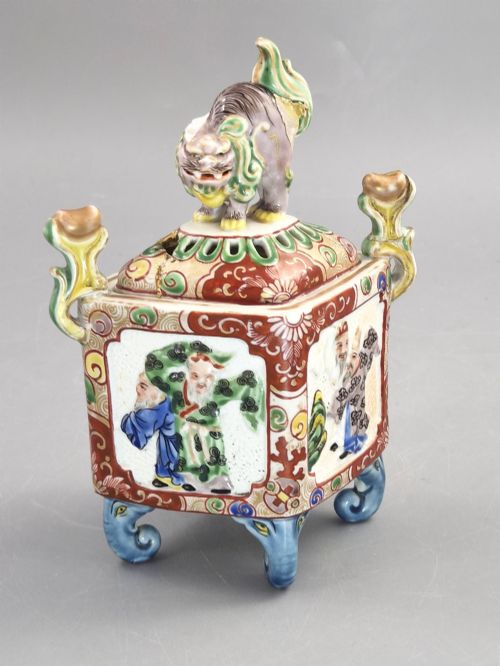
These Japanese polychrome ceramics bring together centuries of skilled hand painting, intricate enamel work and rich gilding from the Meiji, Taisho and Showa periods.
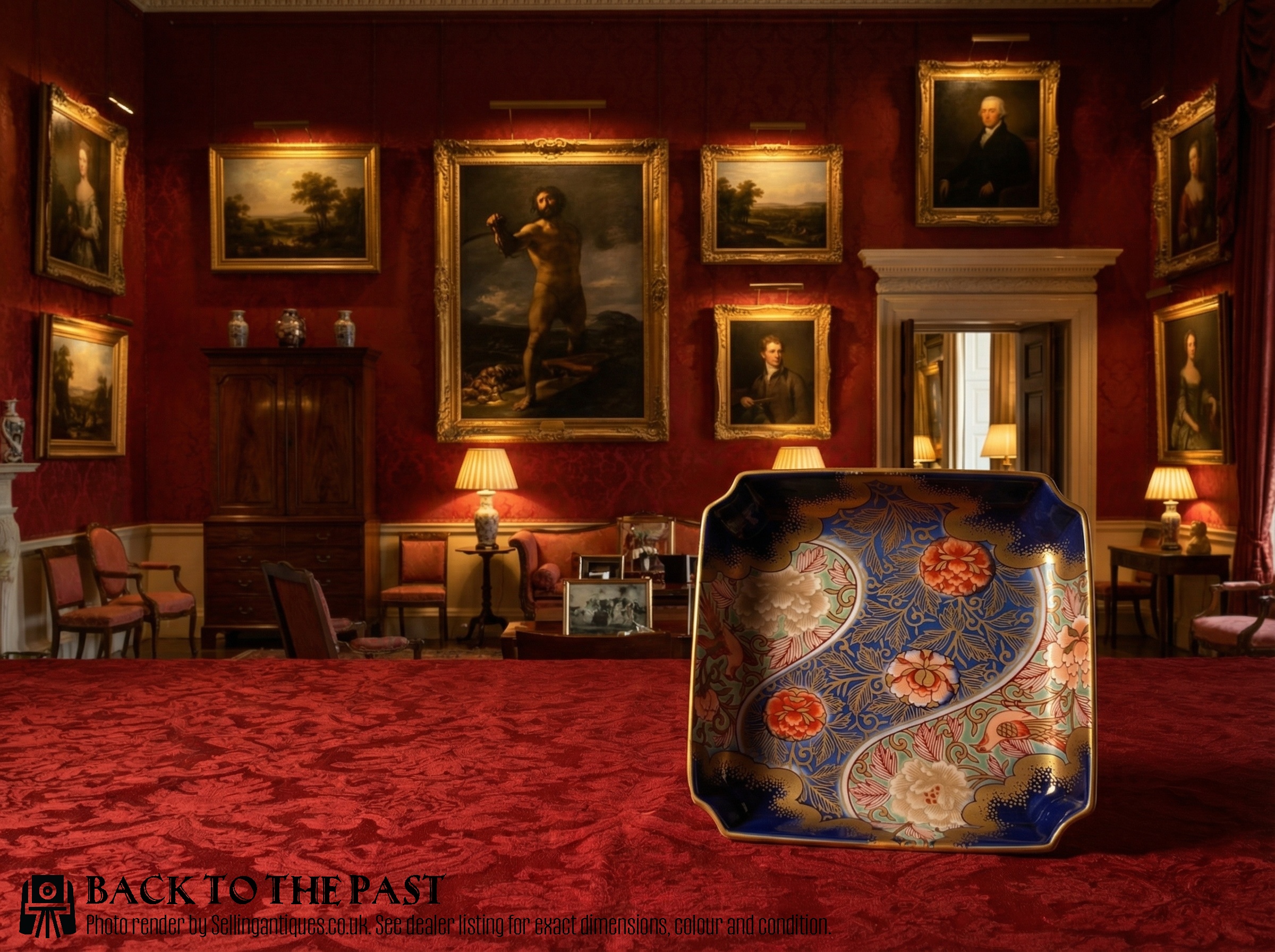
Japanese Polychrome Ceramics
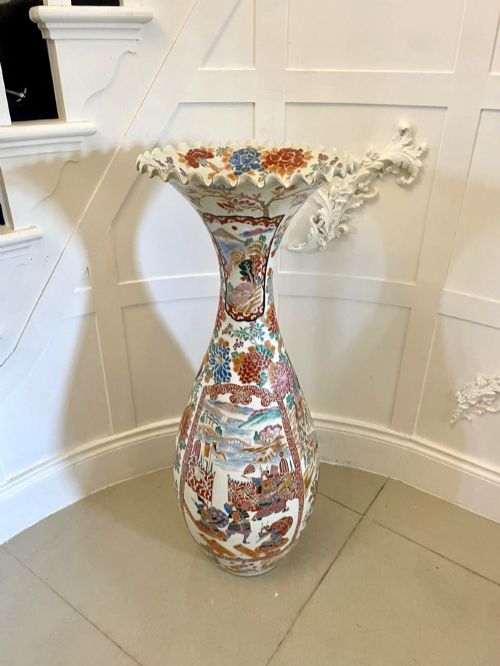
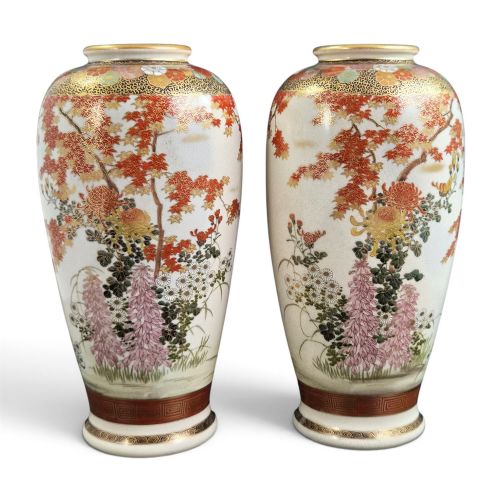
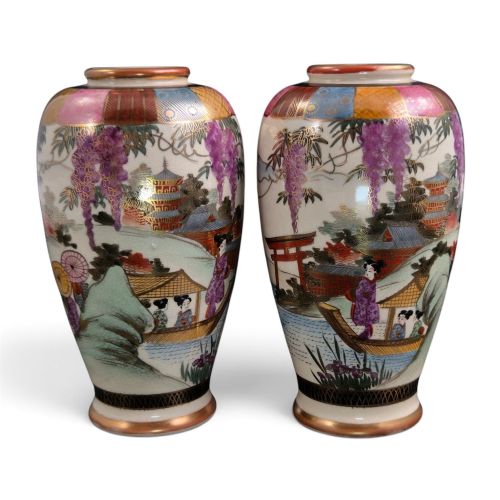
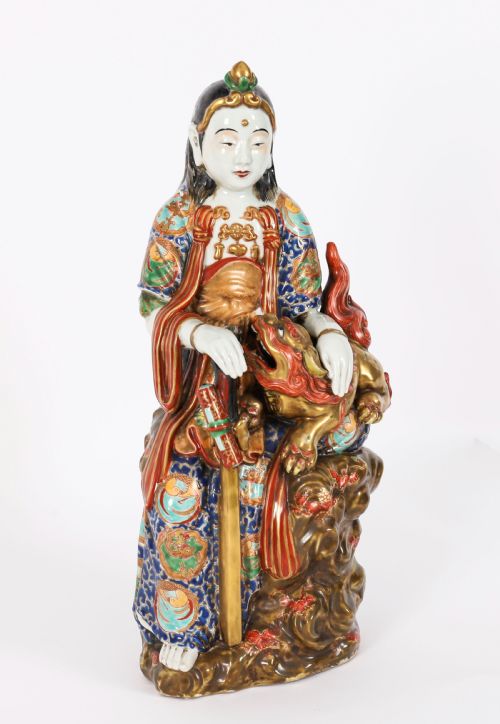
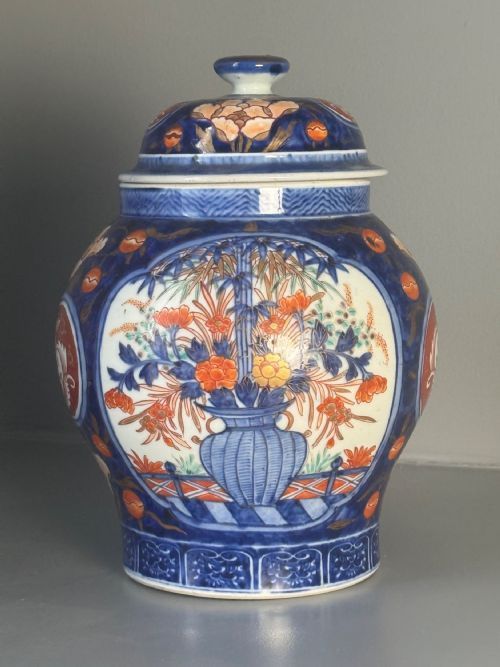
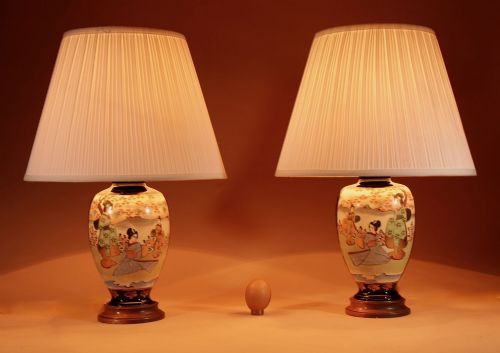
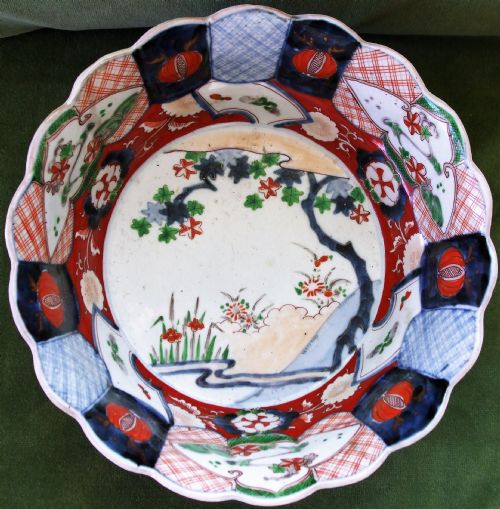
Japanese polychrome ceramics encompass a wide range of decorated wares, from large Imari chargers and Kutani porcelain figures to delicate Satsuma earthenware vases and lidded jars. When exploring Japanese polychrome ceramics on this page, buyers frequently encounter pieces originating from the nineteenth and early twentieth centuries, spanning the Meiji, Taisho and Showa eras.
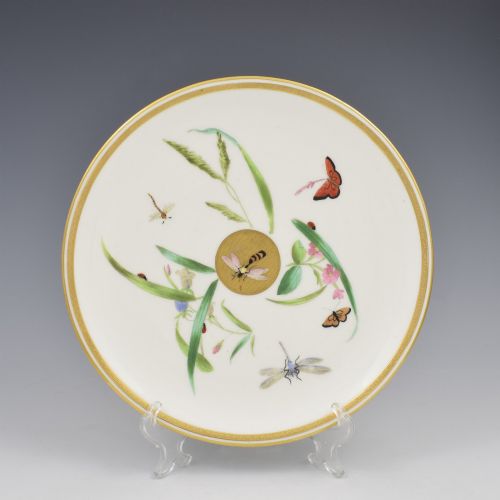
The selection ranges from utilitarian vessels and tea caddies to sculptural okimono, incense burners and decorative plates. Many items reflect traditional motifs such as flora, fauna and historical figures, demonstrating the diverse stylistic output of Japanese kilns during periods of significant international trade and artistic exchange.
How they were made
Potters shaped bodies from porcelain or earthenware, often applying a smooth white glaze as a base for subsequent decoration. Artisans then hand painted detailed designs utilising mineral-based enamel colours alongside gold leaf and gilt accents.
Many Satsuma pieces employed raised moriage decoration to create tactile surfaces, while porcelain bodies from centres such as Kutari and Arita achieved fine detail through careful kiln firing and precise brushwork.
The available selection includes works attributed to specific Meiji and Taisho period workshops alongside export pieces from Arita, Kyoto, and Kobe.
What varies in quality
Quality rests upon the precision of the hand painting, the complexity of the polychrome palette and the crispness of the gilded detailing. Superior examples exhibit deliberate brush control, balanced composition and fine detailing on figures and floral panels.
The refinement of the ceramic body itself, whether fine eggshell porcelain or carefully potted earthenware, distinguishes standard decorative output from exceptional artisan pieces bearing signatures from established makers.
Maruni Kobe·Kizan·Manpei·Gyokkō·Fukagawa·Hichozan Shinpo·Kinzan·Toshozan·Makuzu Kozan II
The Japanese Polychrome Ceramics Glossary
- Imari
- A style of Japanese porcelain decorated in underglaze blue, iron red, and gold. This traditional aesthetic originated in the Hizen province and became popular for export during the Edo and Meiji periods.
- Satsuma
- Earthenware pottery featuring a crackle-glaze finish decorated with polychrome enamels and extensive gilding. Originating in Kagoshima prefecture, production later expanded to Kyoto and other centres.
- Kutani
- Japanese porcelain known for its vibrant polychrome enamel palettes, particularly strong greens, yellows, and reds. Pieces often incorporate dense geometric patterns alongside pictorial scenes.
- Okimono
- A freestanding Japanese decorative figurine designed for display on a tokonoma alcove or shelf. These carved or modelled pieces depict deities, historical figures, animals, and everyday subjects.
- Moriage
- A ceramic decoration technique where slip is piped onto the surface in raised dots or lines before firing, creating a textured relief effect. This method appears frequently on Satsuma wares.
Japanese Polychrome Ceramics: Frequently Asked Questions
How do I identify Satsuma ware?
Satsuma ware is typically recognised by its distinct ivory-coloured earthenware body covered in a fine network of crackled glaze. Artisans then decorated these surfaces using dense polychrome enamel painting and raised gold detailing.
Many pieces also feature artist signatures on the base, often written in gold or black enamel, indicating the workshop or individual maker responsible for the piece.
What is the difference between Imari and Kutani?
Imari porcelain is characterised by its palette of underglaze cobalt blue combined with iron red, white, and gold, typically featuring symmetrical floral and geometric panels. The style emphasises strong contrast and traditional motifs.
Kutani ceramics rely on a broader polychrome enamel scheme dominated by rich greens, purples, blues, and heavy gold leaf work, often focusing on pictorial narratives or intricate nature scenes.
How should I care for antique Japanese ceramics?
Antique ceramics require gentle maintenance to preserve their delicate enamels and gilding. Dusting should be performed softly with a dry, lint-free cloth, avoiding chemical cleaning agents or abrasive materials that could harm the glazed surfaces.
Display areas should remain away from direct sunlight and extreme temperature fluctuations to protect the integrity of both the earthenware bodies and the gold leaf details.