



Cream Porcelain Dishes
Cream porcelain dishes are gathered here for the table and cabinet, offering tactile warmth and hand-painted detail from the eighteenth century onwards.
Cream Porcelain Dishes
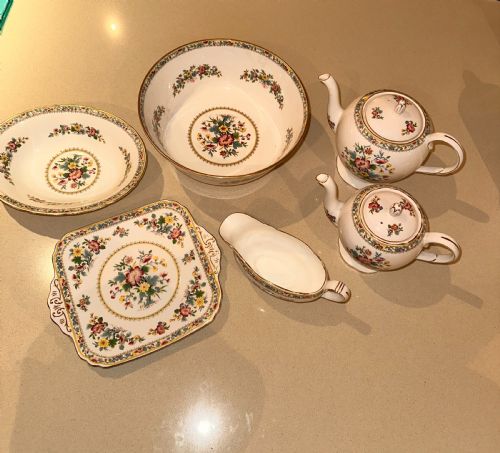
Cream porcelain dishes include plates, bowls, service pieces, and decorative dishes originating from British, European, and Japanese makers across the Georgian, Victorian, Edwardian, and later periods.
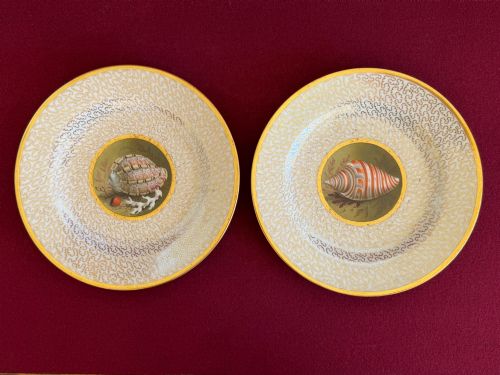
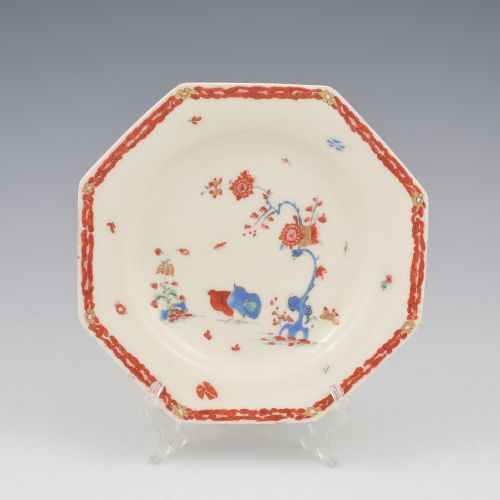
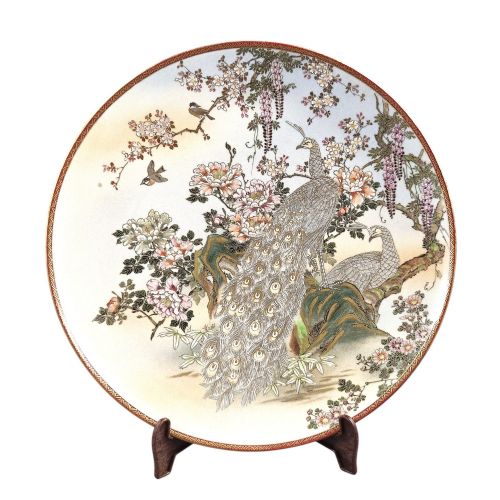
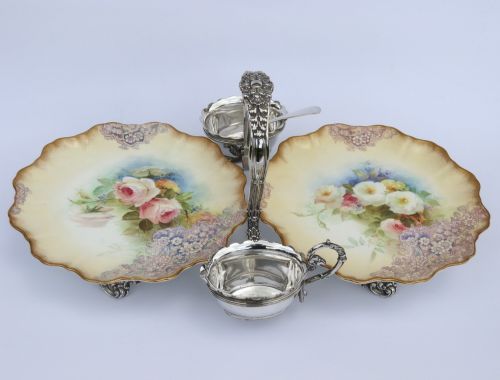
The pieces on this page range from cabinet plates and dessert services to figural centrepieces, featuring hand-painted botanical scenes, floral motifs, and gilt highlights.
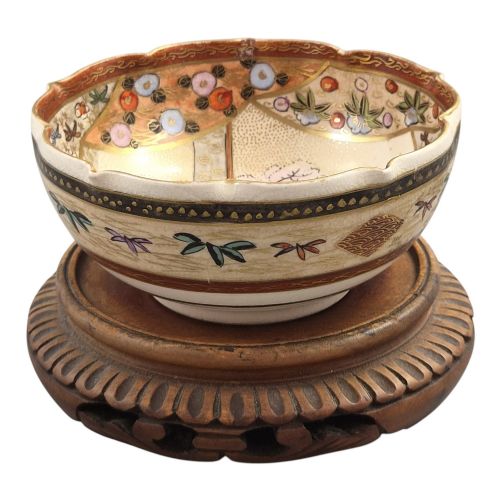
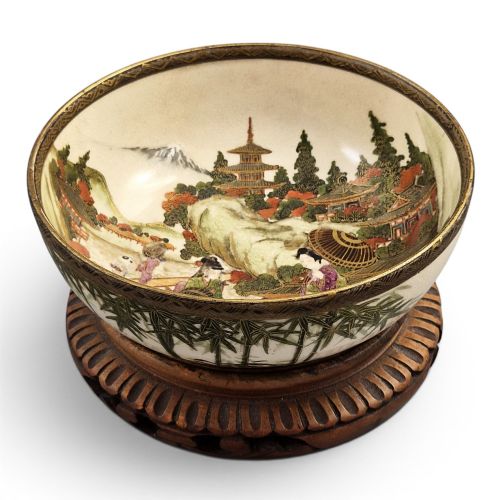
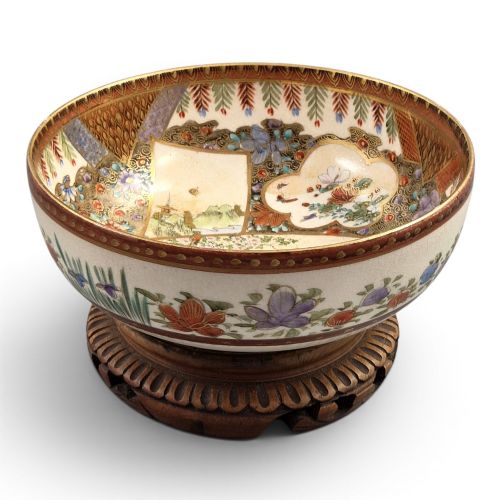
Makers span famous English factories alongside Japanese ceramic artists working during the Meiji period, reflecting diverse historical techniques and decorative styles.
How They Were Made
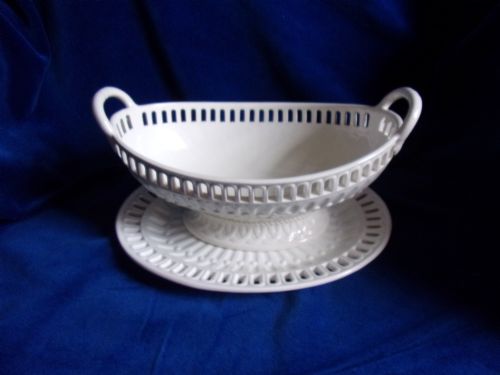
Potters shaped fine ceramic and porcelain bodies, sometimes employing pearlware or earthenware foundations before applying enamel pigments and hand-painted details.
Gilt, gold leaf, and gilding were frequently applied to rims and borders, often alongside raised enamels such as moriage work to create tactile surface relief.
Maidens lean against giant porcelain shells while birds peer through wisteria branches across these historical tables.
What Varies in Quality
Quality rests upon the precision of the hand-painted brushwork and the complexity of the decorative scheme, distinguishing standard production ware from artist-signed cabinet pieces.
The delicacy of the porcelain body and the preservation of original gilding and enamel colours dictate the standing of individual plates, bowls, and centrepieces.
Koshida·Walker and Hall·Doulton Burslem·Gyokkō·Kozan·Nikko·Meizan·James Rouse Jnr.·Rockingham Pottery·Copeland·Royal Worcester·Wedgwood·Royal Dux·Limoges·Meissen
The Cream Porcelain Dishes Glossary
- Cabinet plate
- A decorative dish intended for display rather than dining use. These pieces often showcase intricate painted scenes and gilt borders.
- Centrepiece
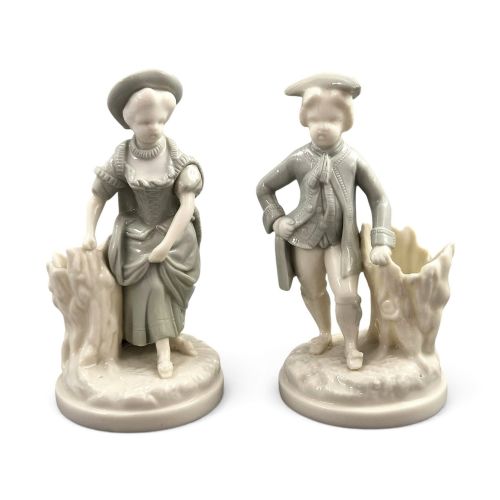
- A large decorative vessel or figural grouping placed in the middle of a table. Examples often feature sculptural porcelain figures supporting bowls or shells.
- Moriage
- A Japanese ceramic technique using raised enamel slip to create textured, tactile surface designs. This method appears frequently on Satsuma wares.
- Pearlware
- An earthenware body developed in the Georgian era with a bluish glaze that pooled in recesses to mimic Chinese porcelain. It forms the base for certain early serving vessels.
- Vide poche
- A small tray or dish designed for emptying pockets of small items. These decorative receptacles often take organic forms such as shells or leaves.
Cream Porcelain Dishes: Frequently Asked Questions
How do I care for antique porcelain dishes?
Wash porcelain pieces gently by hand using lukewarm water and mild soap, avoiding abrasive sponges that might harm the glaze.
Keep gilded items away from dishwashers and harsh detergents to preserve the metallic leaf and hand-painted enamels.
Can I use these antique dishes for serving food?
Many historical plates and bowls were designed for dessert services or dining tables and remain suitable for careful modern use.
Dishes with delicate gilt highlights or cabinet pieces intended purely for display are better reserved for visual appreciation.
How do I identify a Meiji period Satsuma dish?
Satsuma pieces typically feature a fine network of crackled earthenware glaze decorated with polychrome enamels and extensive gilding.
Look for artisan signatures or workshop marks painted on the base, such as the Shimazu family crest.
What is the difference between porcelain and earthenware?
Porcelain is fired at higher temperatures to create a dense, vitreous, and sometimes translucent material that resists staining.
Earthenware and pearlware are more porous ceramic bodies that require an opaque or tinted glaze to seal the surface.