




Gold Japanese Plates
These gold japanese plates bring together intricate metalwork, delicate porcelain and rich enamel from centuries of skilled artisan tradition.
Gold Japanese Plates
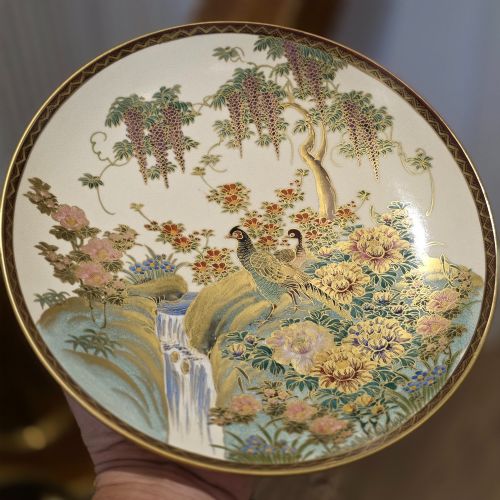
When you search for gold japanese plates, you encounter a diverse range of decorative dishes, chargers, and plaques spanning several centuries. The selection on this page leans heavily towards pieces created during the Meiji period, alongside earlier Edo examples and later Taisho works.
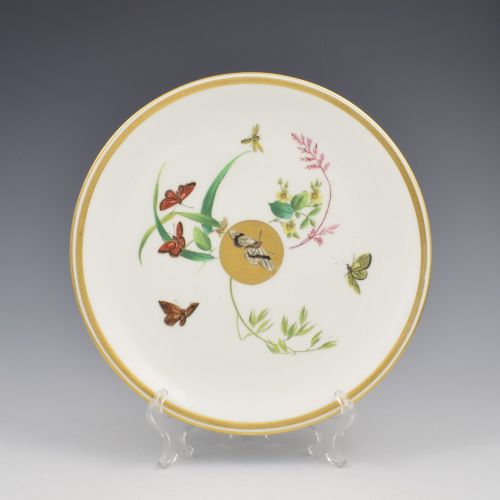
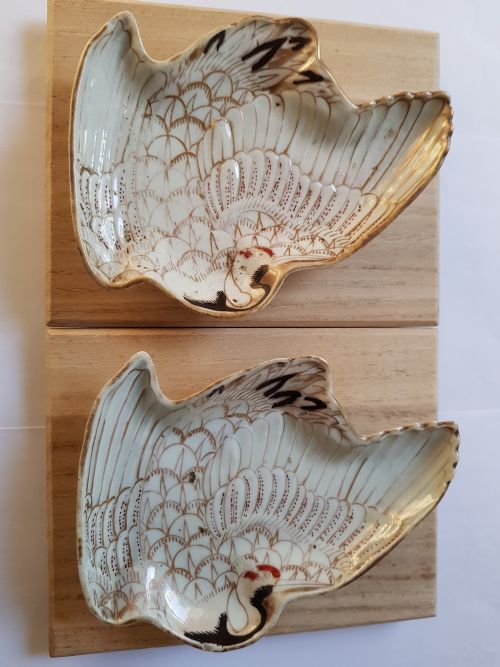
Forms vary from cabinet plates and shallow relief crane-shaped dishes to large chargers and brass or patinated iron plaques. European interpretations also appear, such as Victorian aesthetic porcelain pieces designed in a Japanese style.
Origins stretch from traditional kilns producing Imari, Satsuma, and Kutani wares to specialised metalwork studios utilising intricate inlay techniques. Each form reflects distinct regional specialisms and the evolving tastes of both domestic and export markets.
Materials and manufacture
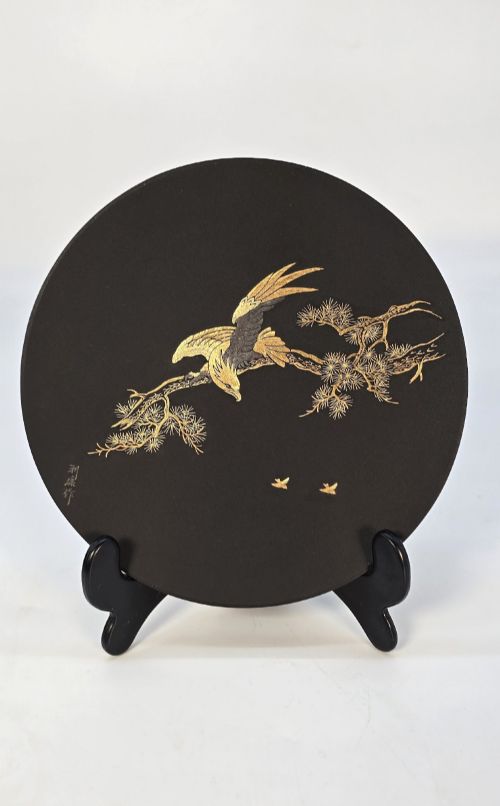
Makers utilised a foundation of porcelain or earthenware for ceramic pieces, applying pigments, iron red, enamel, and gold leaf or gilt details. Iron, copper, and brass served as bases for metal plaques and dishes, often enhanced with gold and silver inlay.
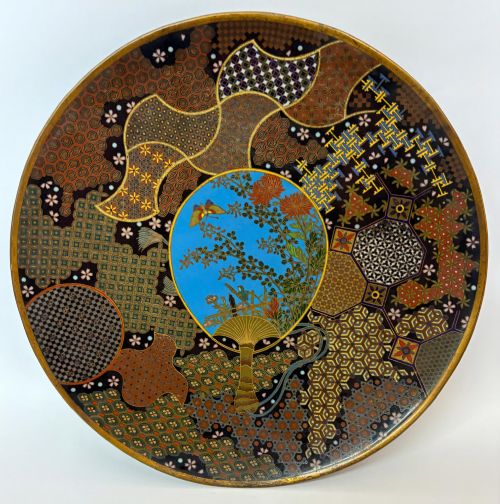
Techniques combined throwing or moulding with meticulous hand-painting, glazing, and cloisonne enamel work. Metal surfaces underwent patination and mixed-metal inlay processes to create high-contrast pictorial scenes.
Materials range from porcelain and earthenware to iron, copper, brass, enamel, and gold leaf.
Assessing quality
Quality rests upon the precision of the hand-painting, the fineness of the gold leaf or inlay work, and the complexity of the composition. Dense, multi-figure Satsuma scenes and finely articulated cloisonne chargers demonstrate superior artisan skill.
The weight and finish of the underlying ceramic or metal body also dictate the grade of the piece. Crisp moulding in relief and stable, well-applied glazes distinguish finer items from standard commercial wares.
Koshida·Shuzan for Yasuda·Meizan
The Gold Japanese Plates Glossary
- Satsuma
- A type of Japanese earthenware featuring a crackle glaze and elaborate polychrome and gilt decoration. These pieces frequently depict figures, flora, and fauna.
- Imari
- A traditional style of Japanese porcelain featuring a distinct palette of underglaze blue, iron red, and abundant gold. Production centred around the port of Arita during the Edo period.
- Cloisonne
- A decorative metalwork technique where thin metal wires form compartments on a base, which are then filled with coloured enamel paste and fired. Chargers and plates often utilise this method for intricate pictorial designs.
- Kutani
- A style of Japanese porcelain known for bold, colourful designs and extensive use of gold. These wares often feature detailed narrative scenes or natural motifs.
- Patinated iron
- Metal treated with chemical solutions to produce a dark, aged surface finish. This serves as a contrasting background for gold and silver inlay.
Gold Japanese Plates: Frequently Asked Questions
How do I date a Japanese plate?
Dating relies on identifying the artistic style, materials, and production marks associated with periods such as the Edo, Meiji, or Taisho eras. Examining the glaze characteristics and manufacturing methods also helps establish the timeframe.
Changes in export regulations and kiln technologies across the nineteenth and twentieth centuries provide further clues for chronological placement.
Are these plates meant for food?
Most decorative plates, chargers, and plaques were created for display rather than culinary use. The delicate gold leaf, enamel, and ironwork are susceptible to wear from cutlery and washing.
Displaying them on plate stands or mounting them securely protects their intricate surfaces from accidental damage.
What is the difference between Satsuma and Imari?
Satsuma ware consists of earthenware with an ivory crackle glaze decorated in enamel and gold. Imari ware is hard-paste porcelain characterised by underglaze blue, iron red, and gilt highlights.
Both styles gained significant popularity during export periods but utilise entirely different clay bodies and glazing techniques.
How should I clean my decorative dish?
Dusting gently with a soft, dry brush is generally sufficient for maintaining these pieces. Moisture can harm vulnerable surfaces, particularly on patinated iron or crackle-glazed earthenware.
Avoid chemical cleaning products entirely, as they risk stripping the delicate gold leaf and enamel details.