




Japanese Koro Vessel
A japanese koro vessel is a lidded incense burner shaped for ritual and display, sought after for intricate metalwork and ceramic painting.
Japanese Koro Vessel
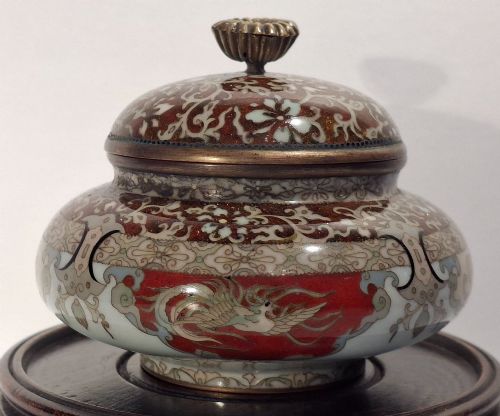
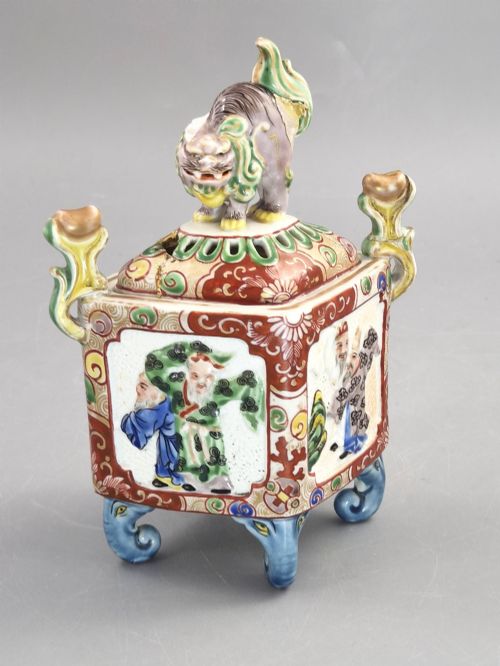
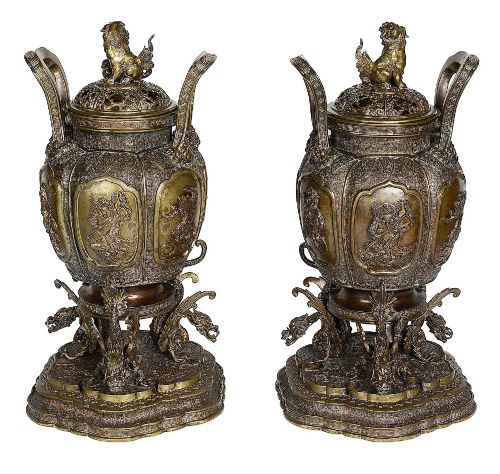
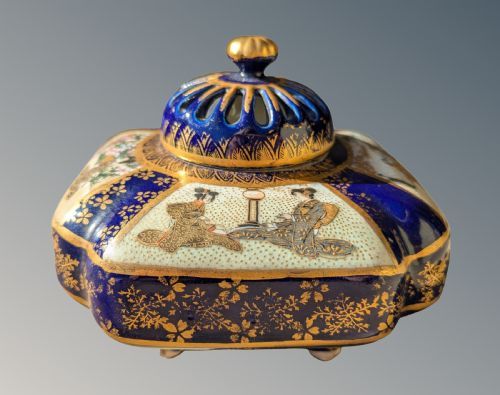
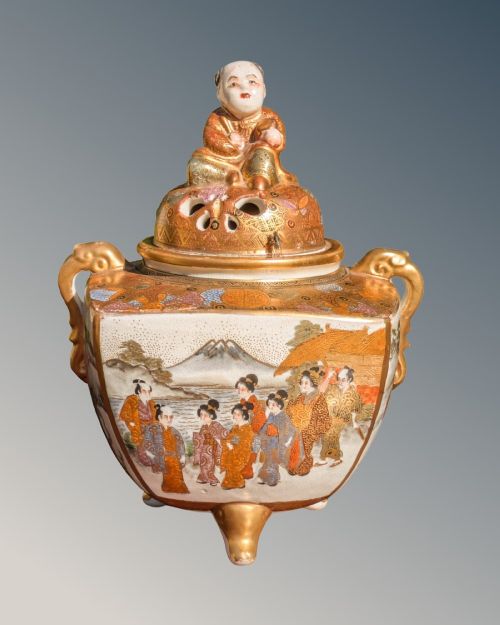
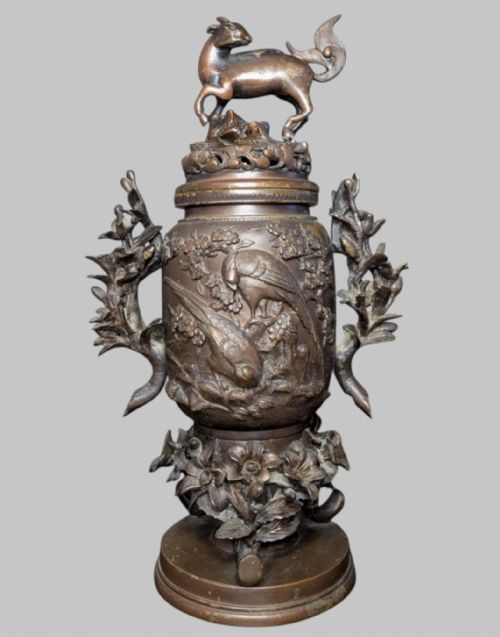
When searching for a japanese koro vessel, you encounter lidded incense burners and decorative censers originating primarily from the nineteenth century and the Meiji period. These vessels take various forms, including footed bowls, urns, and hanging boat shapes.
Ceramic examples appear frequently, particularly in Satsuma earthenware and Imari porcelain styles, often featuring figural finials and detailed polychrome painting. Bronze and cloisonne enamel pieces also appear, demonstrating the diverse output of Japanese craft workshops.
Materials and Construction
Makers utilised bronze, earthenware, and porcelain as the primary foundations for these vessels, frequently applying gilding, gold leaf, and enamel decoration to the surfaces. Bronze pieces involve metal casting techniques, sometimes incorporating silver details or cloisonne wirework.
Ceramic koro combine thrown or moulded clay bodies with hand-painted glazes, followed by kiln firing. Lids often feature sculpted finials such as shishi lions, goats, or karashishi figures.
Japanese Koro Vessel Retail Price Guide 2026
Typical asking prices for japanese koro vessel among the pieces listed under this phrase on Sellingantiques today, from the lower quarter to the upper quarter. They describe what is for sale here now, not the wider market.
Object forms span lidded urns, footed bowl burners, hanging boat vessels, and decorative vases.
Evaluating Quality
Quality rests upon the precision of the modelling and the fineness of the surface decoration, whether in the crispness of a bronze casting or the minute detail of Satsuma enamelwork. Signature marks from recognised studios or makers indicate higher production standards.
Proportion and the harmonious integration of covers and finials distinguish superior pieces from standard workshop output. Preservation of delicate gilding and enamel work also influences the standing of an individual vessel.
Kinkozan·Kizan·Kotobuki-do
The Japanese Koro Vessel Glossary
- Koro
- An incense burner used in traditional Japanese settings. These lidded vessels are designed to diffuse aromatic materials.
- Satsuma
- A type of Japanese earthenware featuring a crackle-glaze finish. It is typically decorated with polychrome enamels and gold.
- Cloisonne
- A metalwork technique where compartments are created using thin wires and filled with enamel paste. These are subsequently fired to a smooth finish.
- Finial
- An ornamental crowning feature placed on the lid of a vessel. In this category, they frequently take the form of mythical beasts or animals.
Japanese Koro Vessel: Frequently Asked Questions
What is a japanese koro vessel used for?
These vessels functioned primarily as ritual incense burners within traditional Japanese interiors. Fragrant woods or resins were placed inside to scent the surrounding space.
Over time, many examples transitioned into purely decorative objects, valued for their sculptural form and intricate surface decoration in bronze or ceramic.
How do I identify a Satsuma koro?
Satsuma wares are distinguished by their characteristic ivory-coloured earthenware body covered in a fine network of crackled glaze. They are typically hand-painted with detailed enamel scenes and heavy gilding.
Many examples include maker seals or artist signatures on the underside, often associated with workshops from the Meiji period.
Are all koro made of ceramic?
No, while ceramic examples in Satsuma, Imari, and Kutani styles are common, many vessels are cast in bronze. Some pieces combine both mediums through the use of bronze bodies paired with cloisonne enamel sections.
Metal versions frequently incorporate silver details, patinated surfaces, and sculptural animal finials on their lids.
How should I display a lidded koro?
These pieces require a stable surface where their intricate details and three-dimensional forms can be viewed safely. Because many feature removable lids and delicate finials, placement away from high-traffic areas is advisable.
Allowing sufficient space around the vessel helps highlight the quality of the bronze casting or ceramic painting without visual clutter.