

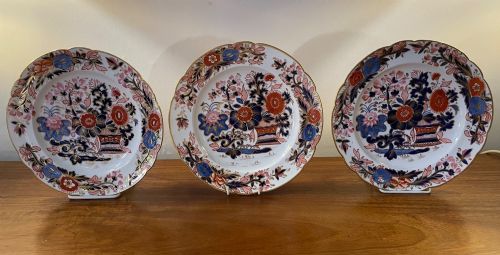


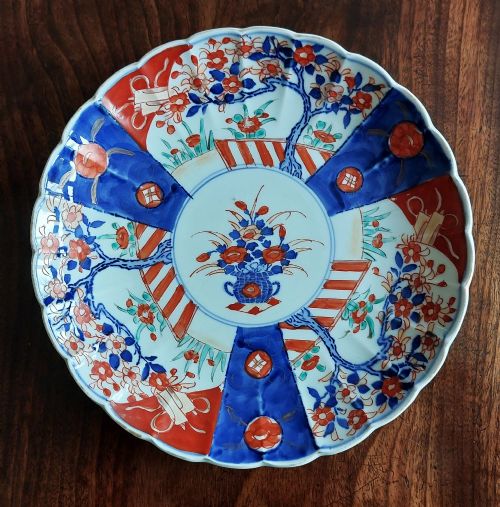

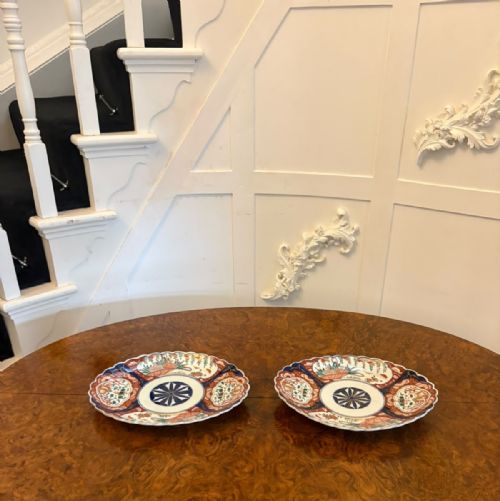


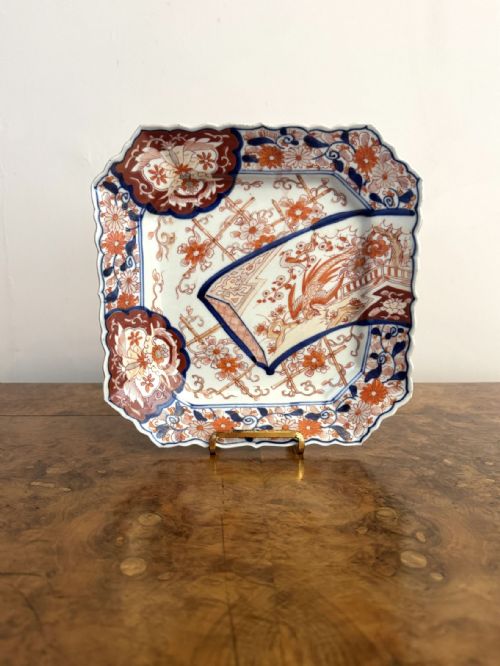

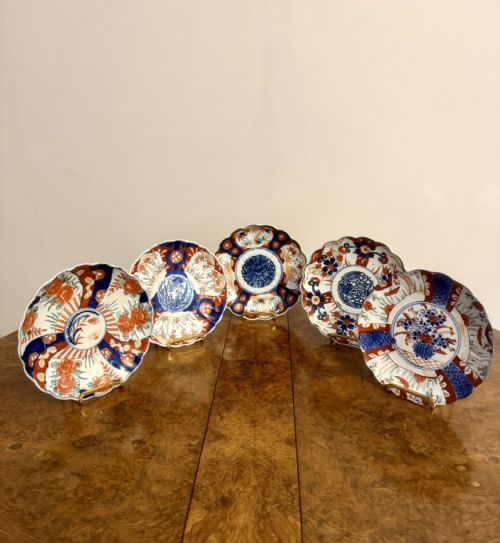
Japanese Imari Wall Plate
A japanese imari wall plate brings vibrant palettes of cobalt underglaze, enamel and gold leaf into a room, offering centuries of decorative tradition.

Japanese Imari Wall Plate
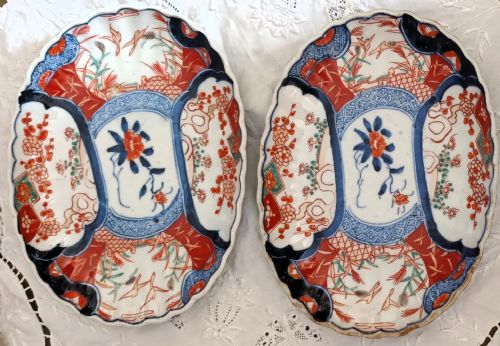
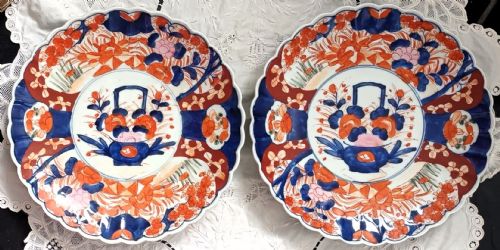
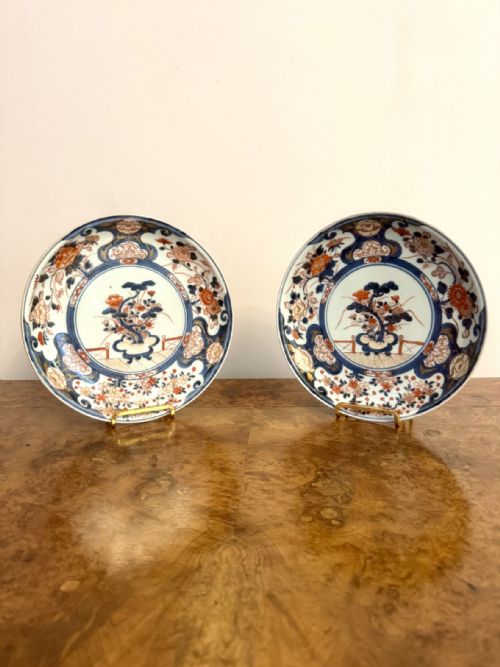
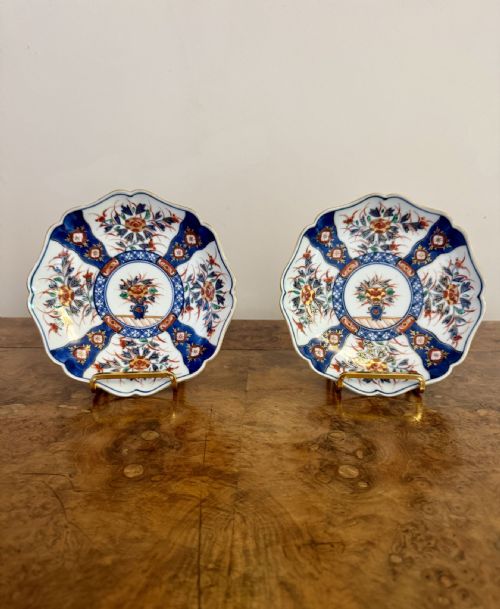
When searching for a japanese imari wall plate, buyers encounter decorative chargers, dishes and display plates primarily originating from Japan during the Meiji period and the nineteenth century. These ceramics span round forms, square shapes, oval dishes and scalloped edges designed specifically for visual impact on walls and surfaces.
The pieces appearing most frequently on this page date from the late nineteenth century around eighteen hundred and ninety to nineteen hundred, alongside earlier nineteenth-century examples and Edo period items. Alongside Japanese Arita imari porcelain, the selection includes Staffordshire plates produced in the imari palette.
Makers and workshops utilised diverse formats, from single large chargers depicting figures like the Seven Lucky Gods to matched pairs and sets of six featuring exotic birds. These objects function primarily as wall plates and decorative chargers rather than tableware.
How they were made
The foundation of these ceramics is porcelain or ceramic, shaped into round, square or scalloped plates and fired at high temperatures. Potters in Arita and elsewhere established the body before applying decoration.
Colour is introduced through cobalt underglaze blue, combined with overglaze enamel colours and accents of gold leaf or gilt. Hand-painted motifs often incorporate intricate patterning alongside natural subjects such as exotic birds.
Listings span the nineteenth century, the Meiji period, and the Victorian era, executed in porcelain and ceramic with cobalt underglaze.
What varies in quality
Quality depends upon the crispness of the hand-painted brushwork and the complexity of the design, such as depictions of specific figures like the Seven Lucky Gods rather than repeating geometric borders. The application and preservation of enamel and gold leaf contribute significantly to the visual weight of the piece.
Physical execution also separates standard production from finer work, seen in the symmetry of scalloped edges, the depth of the cobalt underglaze, and the overall balance of square or oval porcelain plates.

The Japanese Imari Wall Plate Glossary
- Imari
- A style of Japanese porcelain decorated in underglaze blue, iron red, and gold, named after the port from which the wares were shipped. This palette defines the visual character of the plates.
- Charger
- A large decorative plate intended for display on a wall or sideboard rather than for dining. These large formats allow for expansive pictorial scenes.
- Meiji Period
- The era in Japanese history lasting from eighteen sixty-eight to nineteen twelve, which encompasses a large proportion of the decorative plates seen here. Pieces from this time often exhibit confident enamel painting.
- Cobalt Underglaze
- A blue pigment applied to the ceramic body before glazing and firing, creating durable blue details beneath the glossy surface. It forms the structural foundation of imari decoration.
- Scalloped Edge
- A decorative curved border shaped like scallop shells, frequently utilised on antique plates and bowls. This shaping adds texture to the perimeter of wall displays.
Japanese Imari Wall Plate: Frequently Asked Questions
How do I hang a heavy charger?
Large chargers require robust wire wall hangers designed specifically for heavy porcelain ceramics, gripping the rim securely without slipping.
Ensure the wall fixing engages directly into a stud or uses a proper masonry plug to support the weight safely.
How do I identify Meiji period pieces?
Meiji period ceramics typically date between eighteen sixty-eight and nineteen twelve, reflecting the artistic output of Japan during that era. They often feature dense patterns, vibrant enamel colours, and precise hand-painted details.
Comparing the style of the cobalt underglaze and the quality of the porcelain body helps distinguish them from later reproductions.
What is the difference between Arita and Imari?
Arita is the Japanese town where the clay and porcelain were produced, while Imari is the port town through which the finished ceramics were exported to the West. Consequently, authentic imari wares are frequently associated with Arita production.
Both terms describe the same distinctive tradition of blue, red and gold porcelain decoration.