







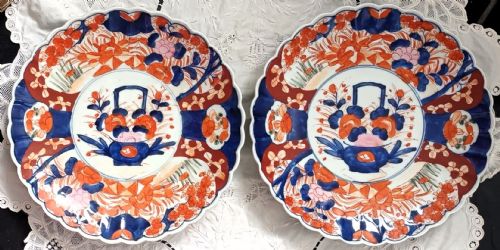
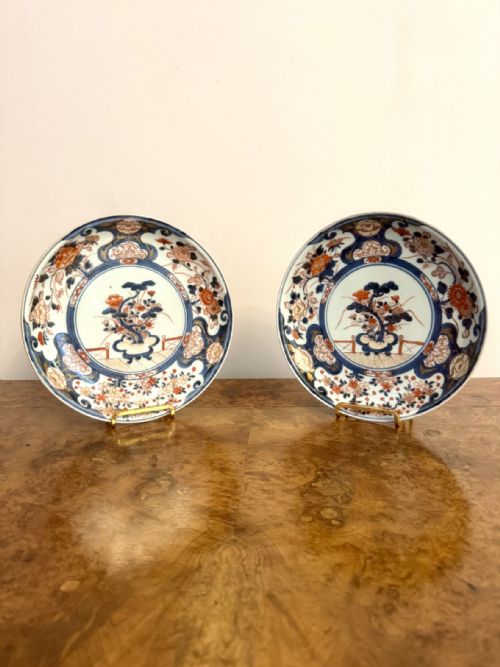
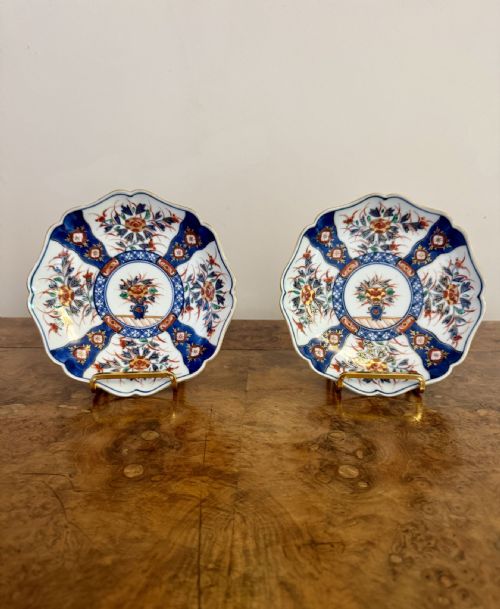
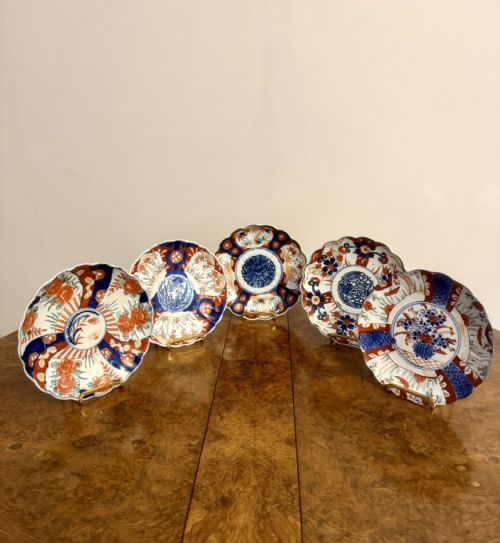
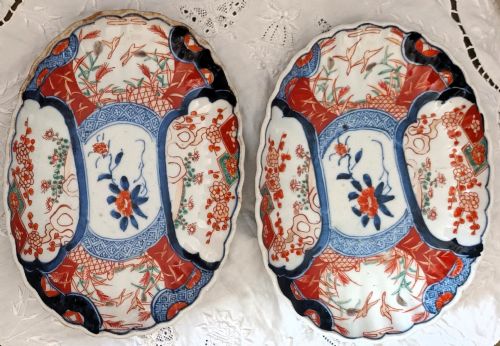
Japanese Imari Wall Dish
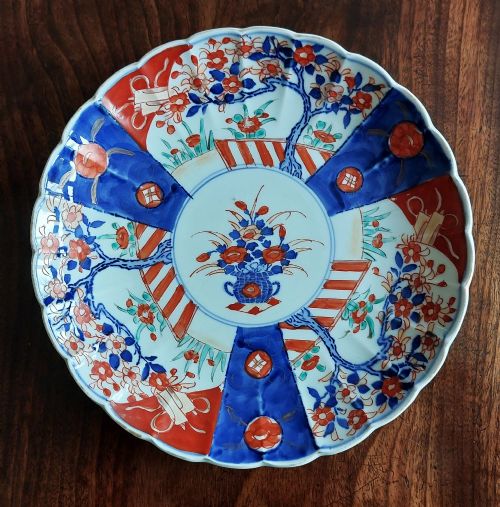
A japanese imari wall dish brings vibrant cobalt underglaze, enamel, and gold leaf into a room, offering rich colour and traditional pattern.
Japanese Imari Wall Dish
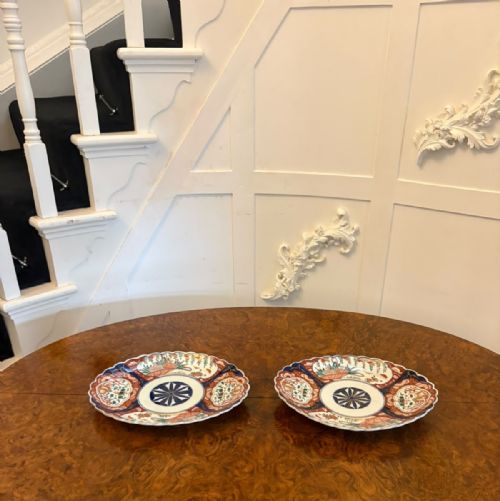
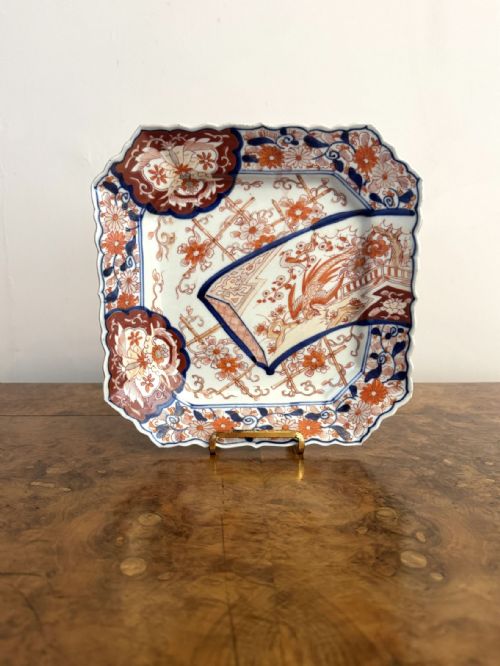
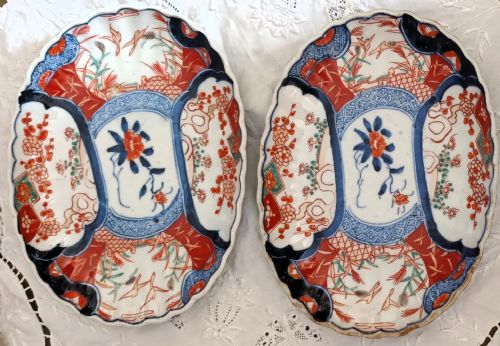
When you search for a japanese imari wall dish, you encounter decorative plates, chargers, and wall plates originating from Japan. These ceramic pieces span the Meiji period, Edo period, and Victorian eras, often taking circular, square, or scalloped forms.
You are most likely to meet large chargers and plates decorated with traditional motifs such as the Seven Lucky Gods or exotic birds. The listings feature single items, pairs, and sets of up to six pieces dating from the nineteenth and early twentieth centuries.
How They Were Made
Potters shaped these objects from porcelain and ceramic, applying cobalt underglaze for the foundational blue pigments. Hand painting formed the core of the decoration across the surface.
Artisans added enamel and gold leaf or gilt over the glaze to build up the characteristic layered palette. Firing integrated these materials into a durable finished body.
Several plates depict the Seven Lucky Gods, ensuring your wall display comes heavily staffed with divine protection.
What Varies in Quality
The precision of the hand painting separates standard production from finer examples. Crisp lines in the cobalt underglaze and careful placement of enamel show higher skill.
The presence and preservation of gold leaf or gilt influence the visual impact of a piece. Unusual forms, such as square shapes or scalloped edges, also distinguish better items.
The Japanese Imari Wall Dish Glossary
- Imari
- A style of Japanese porcelain named after the port from which it was shipped, known for a palette of blue, red, and gold. It was produced in the Arita area and became popular in Europe.
- Charger
- A large decorative plate intended for display rather than for serving food at the table. These sizable pieces often hang on walls or sit on mantelpieces.
- Meiji Period
- The era in Japanese history lasting from 1868 to 1912, characterised by openness to international trade. Many surviving export ceramics date from this time.
- Cobalt Underglaze
- A blue pigment applied to the raw ceramic body before glazing and firing. It withstands high temperatures without fading.
- Enamel
- Opaque glass-like material applied over the fired glaze to add secondary colours such as iron red and green. It provides a raised texture on the surface.
Japanese Imari Wall Dish: Frequently Asked Questions
How do I hang a wall dish safely?
Use a spring-loaded wire hanger designed specifically for heavy plates, ensuring the clips have protective coatings to prevent scratching the rim.
Verify that the wall fixture is secure and capable of supporting the weight of large porcelain chargers before hanging.
Were these dishes meant for daily use?
Larger chargers and decorative plates served primarily for display in both Japanese and Western interiors rather than dining.
Their substantial size and delicate enamel or gold leaf decoration made them unsuited for practical service.
How can I tell the Meiji period pieces apart?
Meiji period items often display crisp cobalt blue work combined with abundant enamel and gilt detailing depicting birds or figures.
They reflect the high volume of export production aimed at Western markets during the late nineteenth century.
What is the difference between Arita and Imari?
Arita refers to the Japanese town where the porcelain clay and kilns were located, while Imari was the shipping port.
Over time, the style took the name of the port through which the wares travelled to international buyers.