



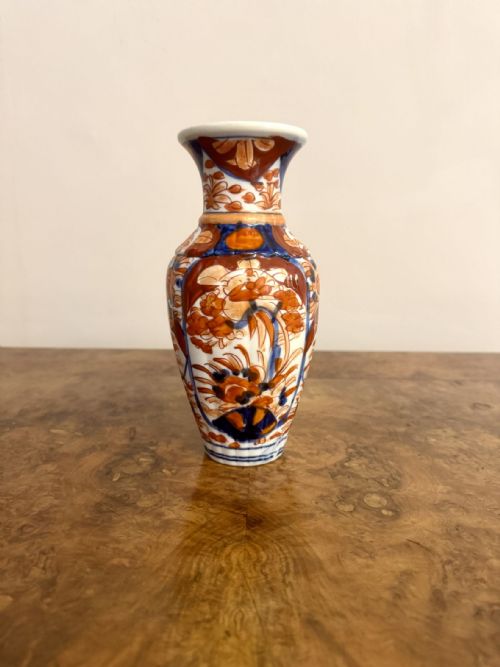
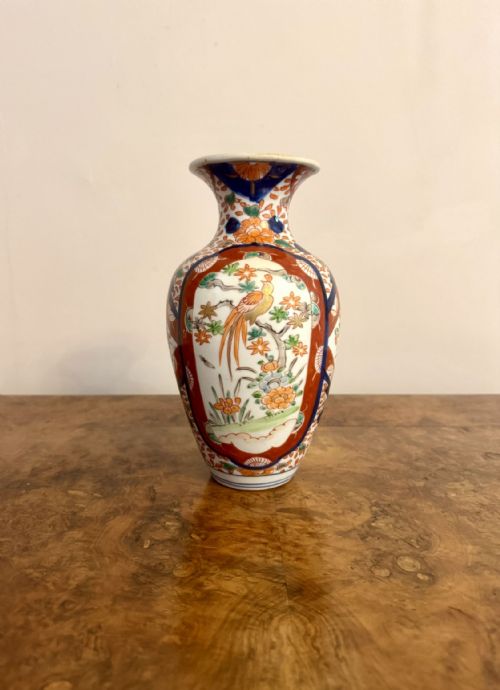
Japanese Imari Porcelain Urns
Japanese imari porcelain urns bring rich palettes of enamel and gold leaf into interiors, bridging centuries of Far Eastern and European design.
Japanese Imari Porcelain Urns
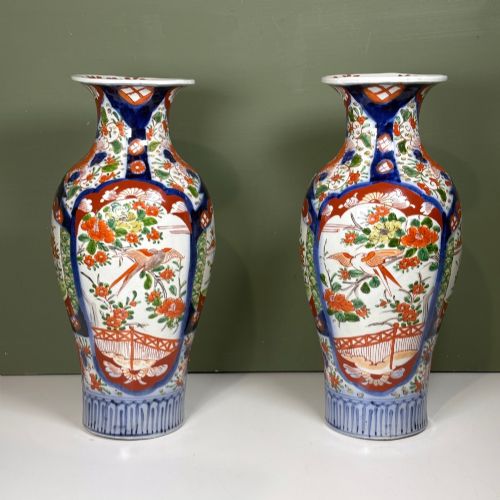
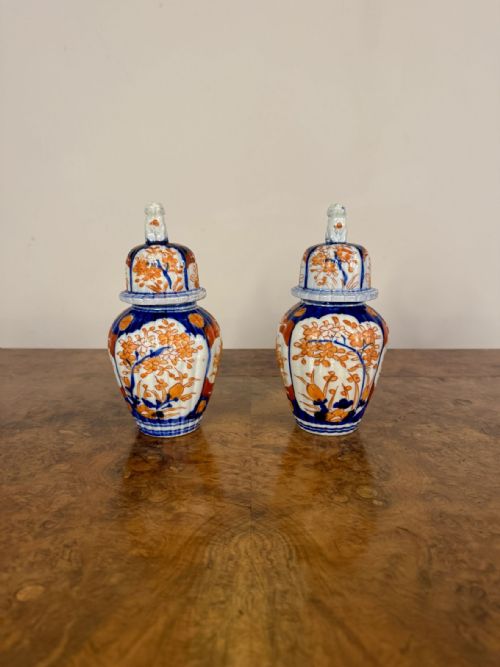
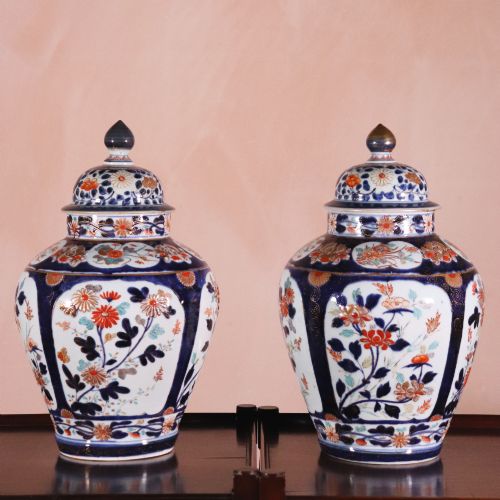
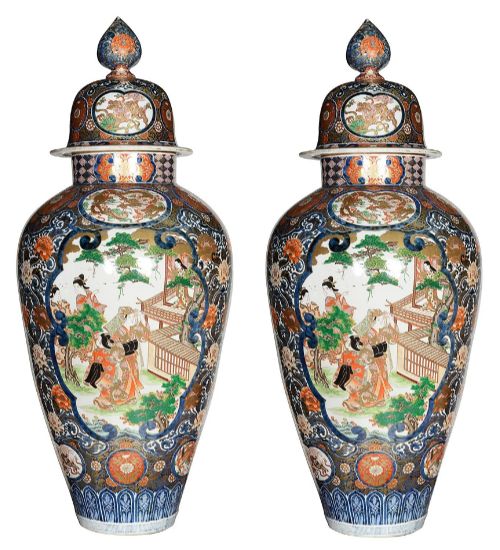
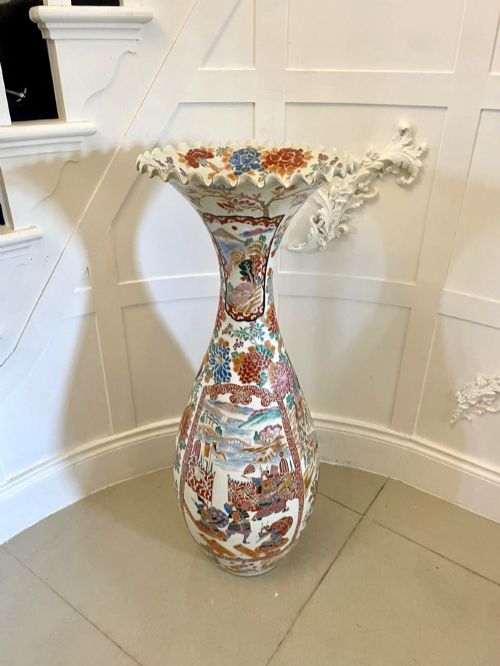
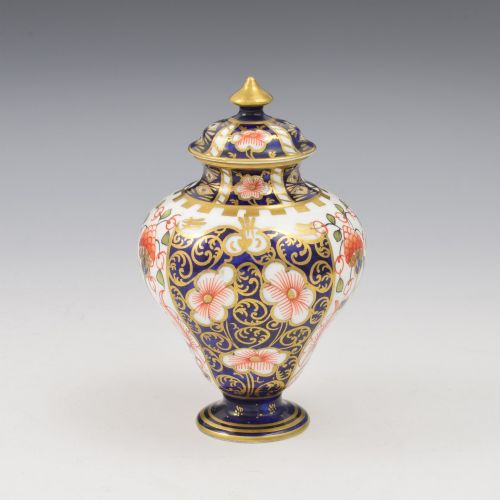
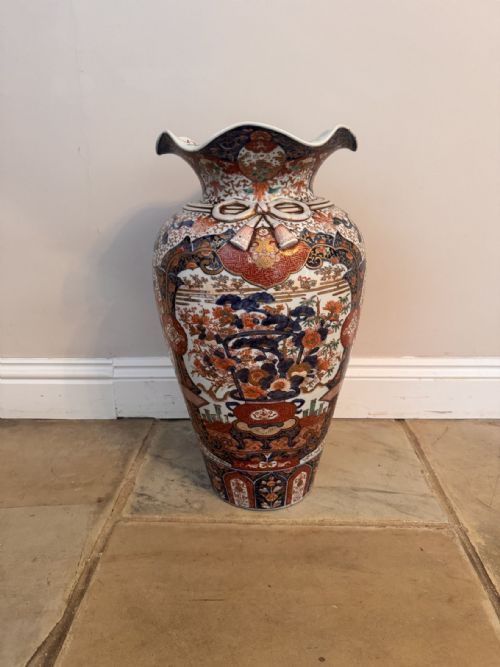
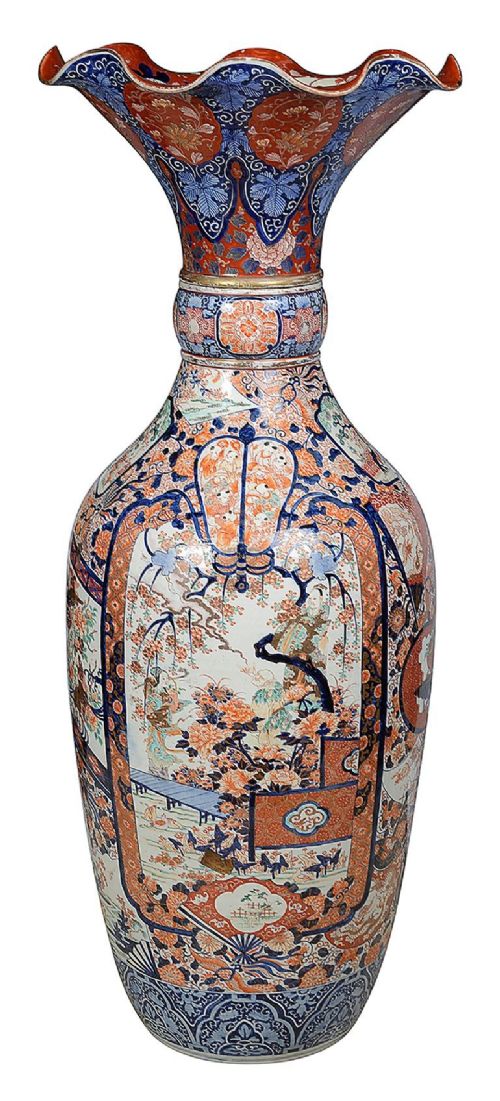
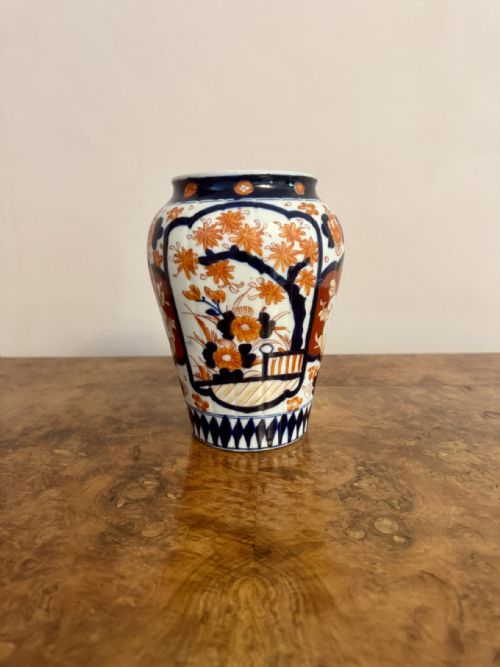
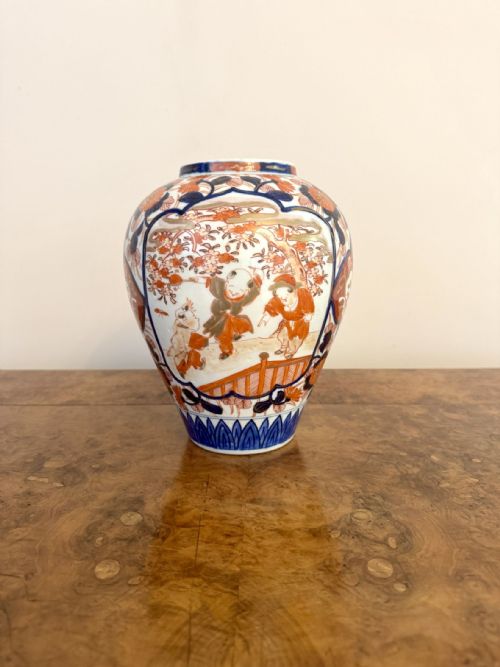
Japanese imari porcelain urns span several centuries of production, appearing in forms such as large floor vases, lidded jars, ginger jars, and double gourde shapes. The selection on this page leans heavily toward pieces from the nineteenth century, including the Meiji period and the Edo period, alongside occasional later items.
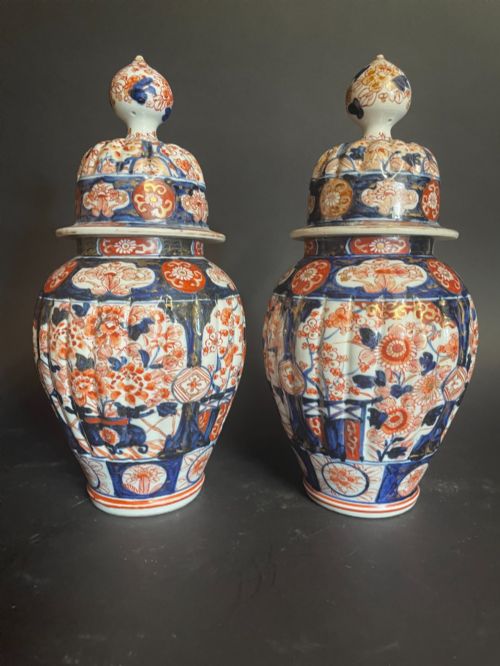
Buyers encounter single vessels, matched pairs, and larger garnitures of three pieces intended for mantelpieces or display cabinets. Earlier examples date back to the late seventeenth century, while the nineteenth-century pieces demonstrate the enduring popularity of the style among collectors.
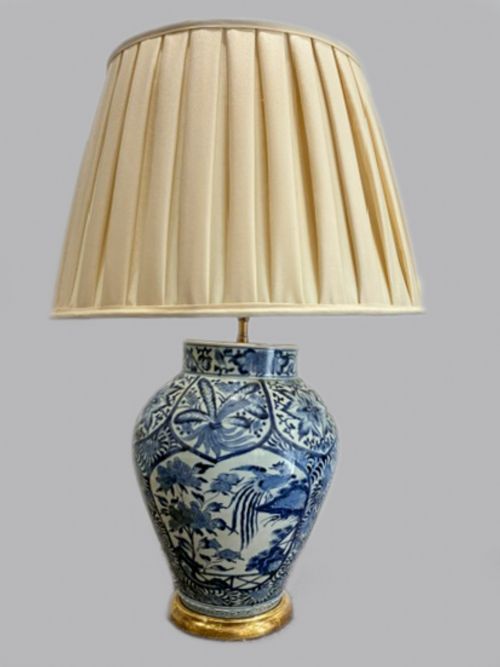
The objects frequently function as decorative vases, and some historic examples show conversion to lamps while retaining their original ceramic bodies and painted decoration.
How they were made
Potters shaped porcelain bodies on the wheel or in moulds before applying underglaze blue, enamel colours, and gold leaf or gilt details. These materials underwent high-temperature firing to fuse the mineral pigments and glazes to the white ceramic base.
Certain pieces incorporate supplementary mountings or structural elements in brass, providing functional additions such as covers or conversion fittings for electrical wiring.
Japanese Imari Porcelain Urns Retail Price Guide 2026
Typical asking prices for japanese imari porcelain urns among the pieces listed under this phrase on Sellingantiques today, from the lower quarter to the upper quarter. They describe what is for sale here now, not the wider market.
Some seventeenth-century giants escaped the dining room entirely to spend their retirement wired as bedside reading lamps.
What varies in quality
Quality rests upon the precision of the hand-painted decoration, where crisp lines in the enamel and the generous application of gold leaf separate superior work from simpler commercial output. The complexity of the shapes, such as octagonal baluster forms or double gourde silhouettes, also dictates the tier of the piece.
Scale plays a significant role, with towering floor-standing vases and large lidded jars requiring advanced skill to fire and decorate successfully without distortion. The preservation of the glaze and the vibrancy of the Imari palette across the entire surface determine the standing of each vessel.
Royal Crown Derby
The Japanese Imari Porcelain Urns Glossary
- Imari palette
- A traditional decorative colour scheme characteristically combining underglaze blue, iron red, and gold on a white porcelain ground. This palette originated in Japan and heavily influenced European ceramic production.
- Baluster
- A jar or vase form featuring a rounded body that tapers toward a narrow neck and a flared rim. This silhouette provides stability and generous surface area for detailed painting.
- Garniture
- A matched set of three or more vases or jars designed to be displayed together on a mantelpiece or sideboard. These sets often share identical decorative motifs across varying heights.
- Koro
- A traditional incense burner featuring a perforated cover that allows fragrant smoke to escape. These ceramic vessels frequently include decorative handles and small feet.
- Meiji Period
- The era in Japanese history spanning from 1868 to 1912, noted for a surge in porcelain production destined for international export markets. Pieces from this time display exceptional detail in enamel and gilding.
Japanese Imari Porcelain Urns: Frequently Asked Questions
How do I date a Japanese Imari vase?
Dating relies on stylistic clues, potting techniques, and the specific tones of the enamel and underglaze blue. Pieces associated with the Edo period differ visibly in weight and palette from nineteenth-century Meiji examples.
Examining the base and the condition of the glaze helps distinguish seventeenth-century origins from later European interpretations or Edwardian reproductions.
What is an Imari palette?
The Imari palette refers to the distinct combination of underglaze blue, iron red, and gold leaf applied over a white porcelain body. This specific colour combination creates high visual contrast.
Craftsmen used these hues to build complex floral and geometric patterns that cover much of the ceramic surface.
Where were these urns displayed?
Historically, large urns and floor vases stood in prominent reception rooms, hallways, and parlours of grand houses. Smaller ginger jars and lidded vessels rested on tables and mantelpieces.
Their striking colours allowed them to serve as focal points within both Asian and European interior schemes.
Are converted Imari lamps authentic?
Many historic vases underwent conversion into electric lamps during the twentieth century to suit modern domestic requirements. These pieces retain their original ceramic bodies and painted decoration.
Collectors assess the quality of the vase itself, noting whether the conversion altered or drilled the porcelain.