


Japanese Floral Porcelain Vase
A japanese floral porcelain vase brings vibrant colour and intricate pattern into a room through centuries of skilled kiln work.
Japanese Floral Porcelain Vase
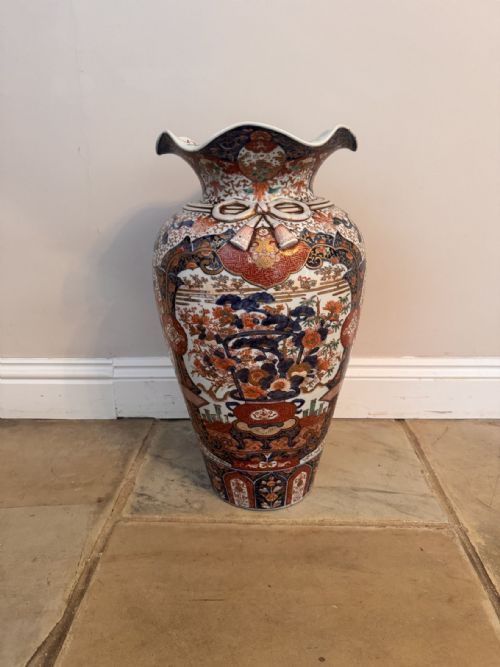
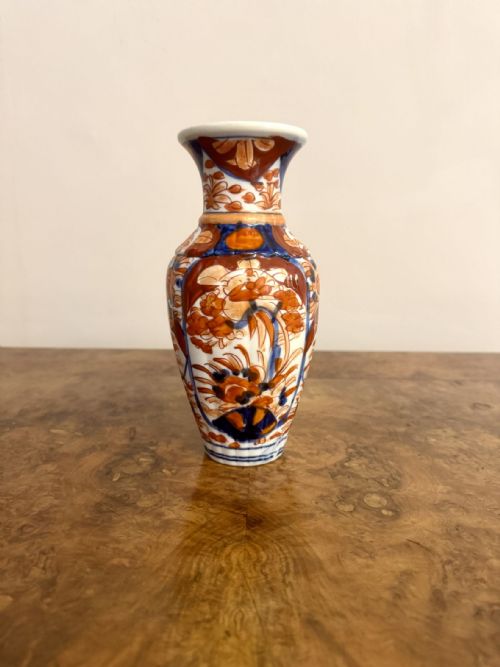
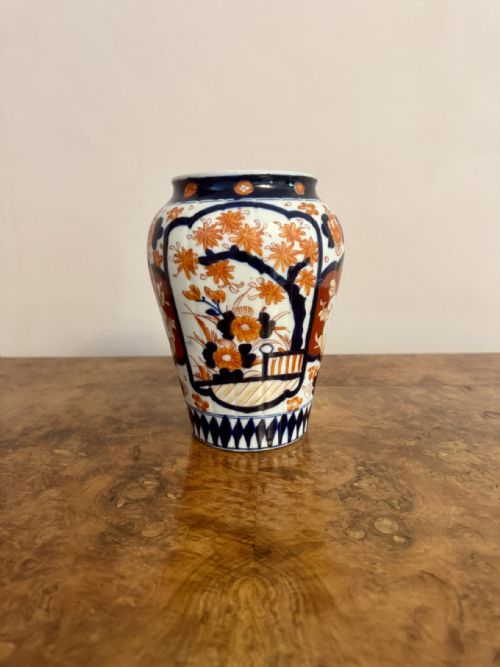
A japanese floral porcelain vase encompasses vessels made across the Edo, Meiji, and Showa periods, stretching from the seventeenth century through to the early twentieth century. Buyers seeking this phrase regularly encounter Imari palettes, Kutani styles, and Satsuma earthenware pieces.
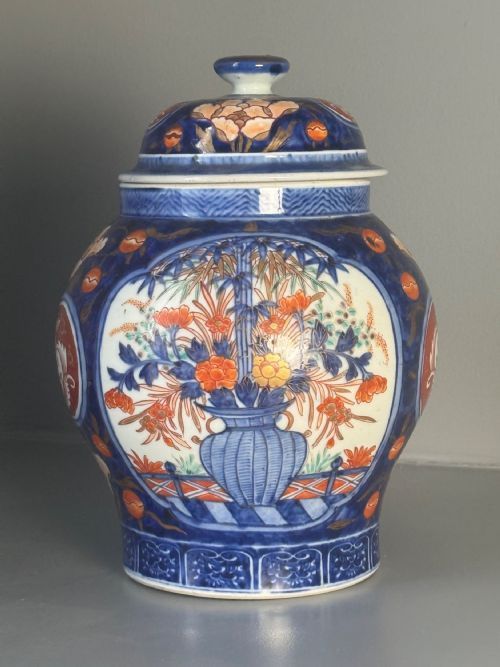
The forms span tall floor-standing vessels, double gourds, ginger jars with covers, and slender neck shapes. Many originate from kilns in Arita or Kyoto, recording export traditions destined for Western interiors.
Makers shaped these pots as pairs, garnitures, or single decorative pieces, combining floral motifs with geometric panels or bird designs. The surviving stock relies heavily on nineteenth-century examples decorated with cobalt blue and enamel details.
How they were made
Potters shaped porcelain and earthenware bodies on the wheel or in moulds before applying underglaze cobalt blue. Overglaze enamels in red, green, and other colours followed, often heightened with gold leaf or gilt detailing.
Kiln workers fired these pieces at high temperatures, embedding pigments into the glaze or fixing enamel layers on the surface. Certain Satsuma and export items also integrated lacquer, black paint, or specialised crackle glazes to create textured finishes.
Some nineteenth-century decorators snuck tiny hidden mon crests among dense floral thickets just to test keen-eyed buyers.
What varies in quality
The distinction between standard export items and exhibition quality pieces lies in the precision of the hand-painted floral motifs and the richness of the gilding. Master painters executed finer lines and more complex compositions, such as detailed wisteria or intricate mon crests.
Weight, symmetry, and the clarity of the porcelain body also set vessels apart, alongside the depth and preservation of the enamel colours across the surface.
Manpei Kobe·Tagawa·Hododa
The Japanese Floral Porcelain Vase Glossary
- Imari
- A traditional Japanese porcelain style featuring rich underglaze blue and overglaze iron red, frequently augmented with gold. These wares gained massive popularity in European export markets during the Meiji period.
- Satsuma
- An earthenware ceramic type characterised by a fine ivory crackle glaze decorated with polychrome enamels and gilt. Satsuma pieces often display dense figural or floral scenes.
- Kutani
- A style of Japanese porcelain and pottery known for vivid multi-coloured enamel designs and bold palettes. Kutani pieces frequently incorporate floral and nature motifs.
- Arita
- The Japanese town and surrounding region famous as the birthplace of Japanese porcelain production. Arita kilns supplied the core of early export wares.
- Meiji Period
- The historical era spanning from 1868 to 1912, marking a surge in detailed decorative arts produced for international exhibitions. Many surviving export vases originate from these decades.
Japanese Floral Porcelain Vase: Frequently Asked Questions
How do I identify Imari pieces?
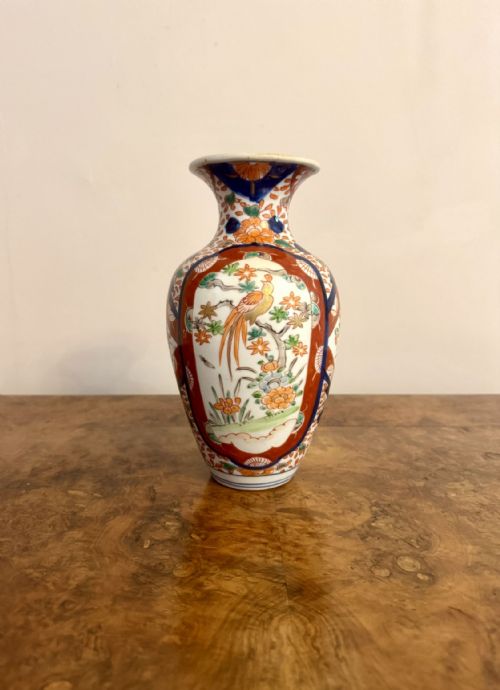
Imari wares rely on a distinct palette dominated by cobalt blue, iron red, and gold leaf. The designs typically combine floral patterns with intricate panels.
Look for the characteristic crisp white porcelain base beneath dense surface decoration that developed in Arita kilns.
What is Satsuma ware?
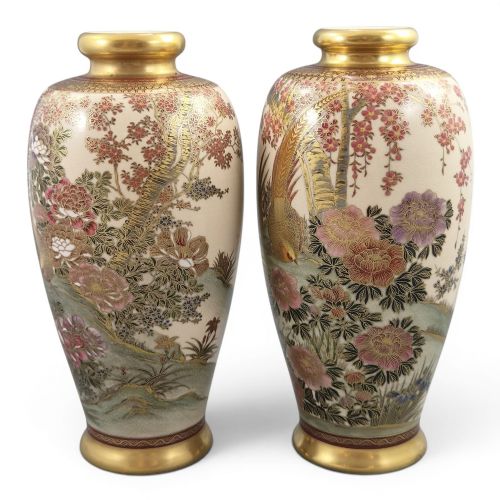
Satsuma ceramics use an earthenware body covered in a pale crackled glaze. They are painted with detailed enamels and heavy gilding rather than standard porcelain glazes.
These pieces often feature signature panels and delicate floral or courtly scenes from the Meiji period.
How were these vases used?
Historical households displayed these vessels as decorative centerpieces, often arranged in matching pairs or three-piece garnitures. Larger floor-standing examples filled empty corners in Victorian and Edwardian drawing rooms.
Covered jars served to hold ginger or dry goods before transitioning purely to ornamental display objects.
Are these pieces waterproof?
Many nineteenth-century export vases were made primarily for decorative display rather than holding water. Thermal shock or porosity in older earthenware bodies like Satsuma can cause issues.
Collectors generally use interior liners or keep them dry to protect the fragile enamels and gold leaf.
How do I date a Japanese vase?
Dating relies on stylistic markers, materials, and historical periods such as the Edo or Meiji eras. Kiln origins and export stamps also help place manufacture within specific decades.
Comparative study of the cobalt tones, enamel wear, and decorative motifs refines the approximate decade of creation.