




Japanese Geisha Ceramic Vases
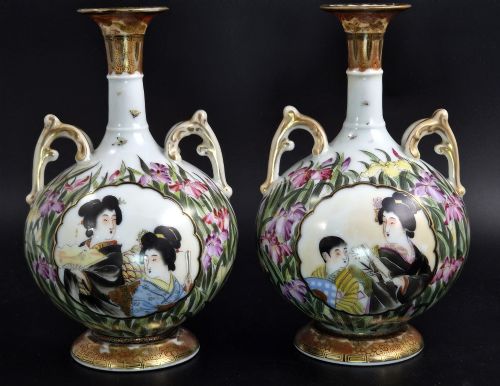
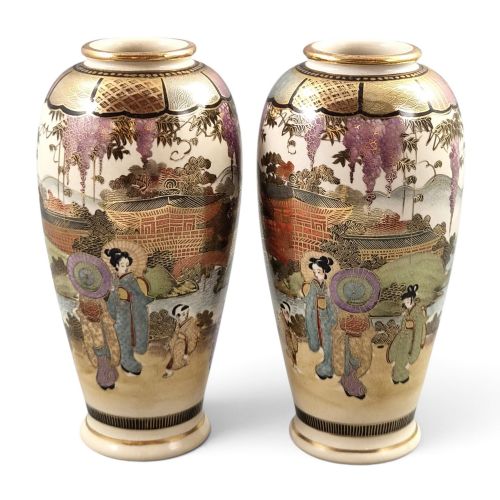
These japanese geisha ceramic vases bring vibrant Meiji and Victorian export artistry into a room, offering bold colour and intricate figurative detail.
Japanese Geisha Ceramic Vases
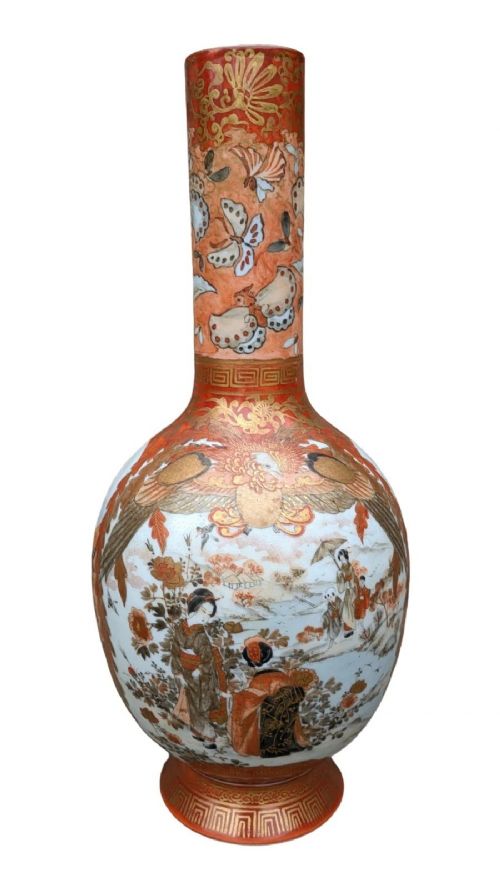
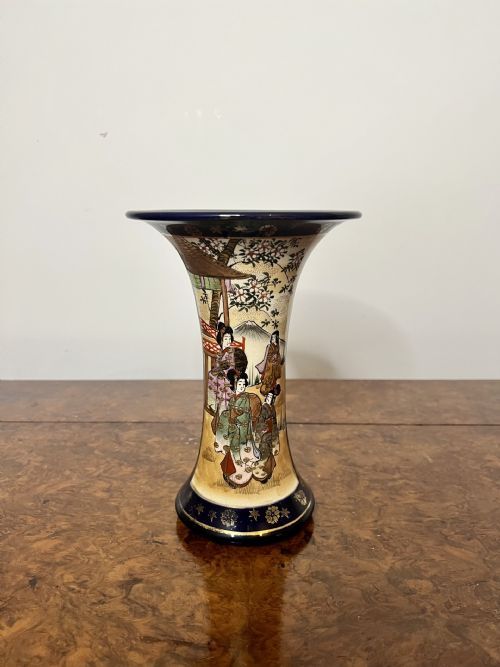
Japanese geisha ceramic vases are decorative vessels featuring traditional figural scenes, court figures, women, and children. Buyers searching this phrase look for these hand-painted narrative pieces originating from late nineteenth and early twentieth century export workshops.
The versions met most frequently on this page are Satsuma and Kutani wares produced during the Meiji period, Victorian era, and Edwardian years. These include pairs of shaped and bottle vases finished with rich cobalt grounds, gold leaf, and raised enamel decoration.
Makers such as Shozan, Nanzan, and Kinkozan produced these export vessels to cater to Western tastes for elaborate Japanese craftsmanship. Forms range from large statement vases to balanced pairs intended for display on mantelpieces and side tables.
How They Were Made
Potters shaped these vessels from earthenware and porcelain bodies before applying intricate hand-painted designs. Artisans utilised rich enamel colours alongside gold leaf and cobalt grounds to build striking visual contrast across the surface.
Techniques like moriage created raised slip decoration that added tactile depth to court figures, robes, and floral borders. Kiln firing fixed these complex layers of pigment and gilding onto the ceramic base for lasting durability.
Japanese Geisha Ceramic Vases Retail Price Guide 2026
Typical asking prices for japanese geisha ceramic vases among the pieces listed under this phrase on Sellingantiques today, from the lower quarter to the upper quarter. They describe what is for sale here now, not the wider market.
Artisans packed these delicate export vessels into straw-filled crates that occasionally trapped stray workshop dust for a century.
What Varies in Quality
Quality rests in the precision and density of the hand-painted figural work, where finely rendered facial expressions and detailed robes elevate a piece. The crispness of the raised moriage and the lavishness of the gold leaf application distinguish superior studio output from standard export work.
The depth and richness of the cobalt ground beneath the gilding contribute significantly to the visual presence of the vessel. Maker marks from established Kyoto workshops indicate higher tier production and firmer attribution for collectors.
Shozan·Nanzan·Kinkozan
The Japanese Geisha Ceramic Vases Glossary
- Satsuma
- A type of Japanese earthenware featuring a pale, ivory crackle glaze decorated with enamel and gold leaf. It became immensely popular for export during the Meiji period.
- Moriage
- A ceramic technique using piped clay slip to create raised, textured decorative patterns on the surface. This method gives garments and floral motifs a tangible three-dimensional feel.
- Kutani
- Japanese porcelain or pottery traditionally recognised by bold colour palettes and dynamic pictorial designs. These pieces often incorporate reds and greens alongside heavy gilding.
- Imari
- A style of Japanese export porcelain characterised by a distinct palette of underglaze blue, iron red, and added gold. Bottle-shaped vases in this tradition were widely produced for Western markets.
- Meiji Period
- The era spanning from eighteen sixty-eight to nineteen twelve, marking a period of intense artistic export and craftsmanship in Japan. Works from this time defined the Victorian and Edwardian view of Asian ceramics.
Japanese Geisha Ceramic Vases: Frequently Asked Questions
What periods do these vases come from?
The pieces span from the late nineteenth century through to the early twentieth century, encompassing the Meiji period, Victorian era, and Edwardian years.
Most examples reflect the height of Japanese export production aimed at Western collectors during these decades.
How do Satsuma and Kutani differ?
Satsuma wares generally feature an ivory-coloured earthenware body with a fine crackle glaze decorated in enamel and gold. Kutani pieces typically utilise porcelain or pottery with bolder, distinct colour palettes dominated by reds and greens.
Both styles frequently depict court figures and geisha scenes but rely on different foundational ceramic bodies and glazing techniques.
What is moriage decoration?
Moriage is a decorative technique where liquid clay is piped onto the unglazed or glazed vessel before firing to create raised, textured details. This method adds a tactile, sculptural quality to robes, foliage, and borders.
Artisans often enhanced these raised areas with vibrant enamel and gold leaf to catch the light.
How should I display them at home?
These decorative vessels work well on sturdy side tables, console surfaces, or mantelpieces where their detailed painting and gold leaf can be appreciated up close. Pairs look balanced when placed symmetrically on either side of a fireplace or central arrangement.
Keep them away from direct sunlight to preserve the richness of the enamel and gilt surfaces.