






Japanese Display Platter
A japanese display platter brings bold ceramic presence to a wall or cabinet, offering intricate hand-painted detail from the nineteenth and early twentieth centuries.
Japanese Display Platter
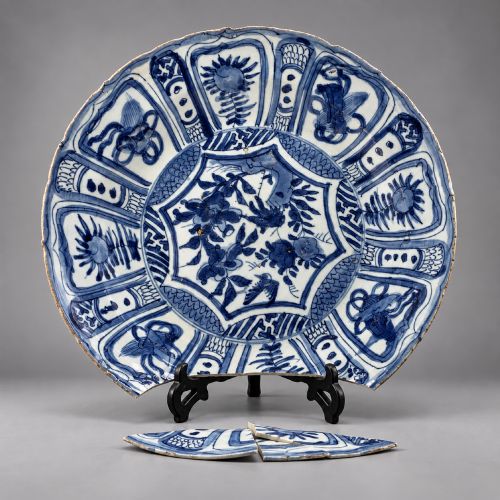
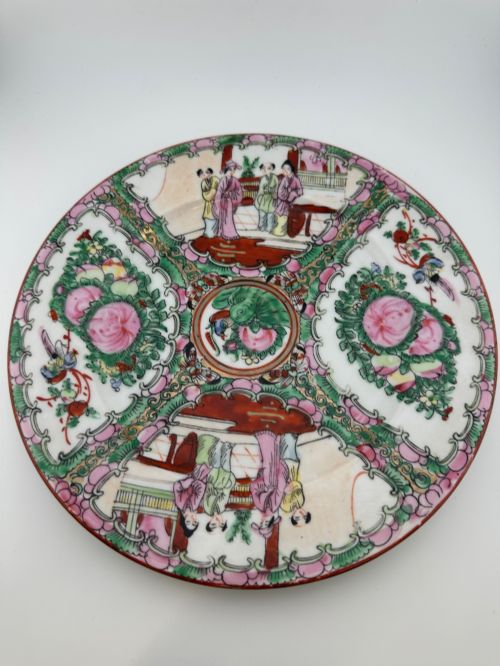
A japanese display platter comprises large chargers, decorative plates, and wide dishes intended primarily for display rather than dining. The examples gathered under this heading span the Victorian era, the Meiji period, and the Edo period, reflecting distinct phases of ceramic and metal craftsmanship.
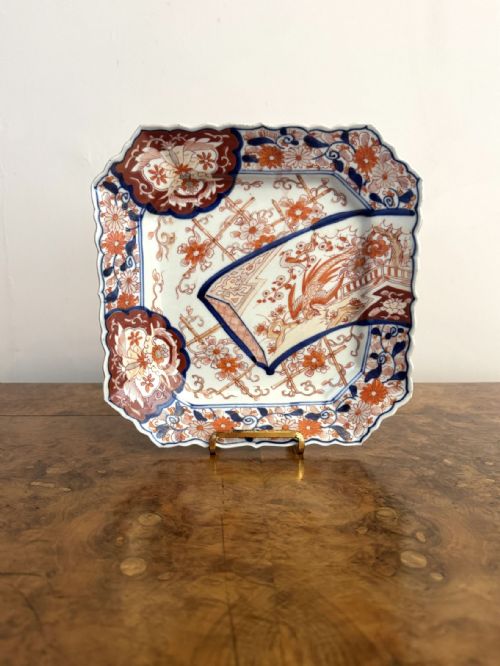
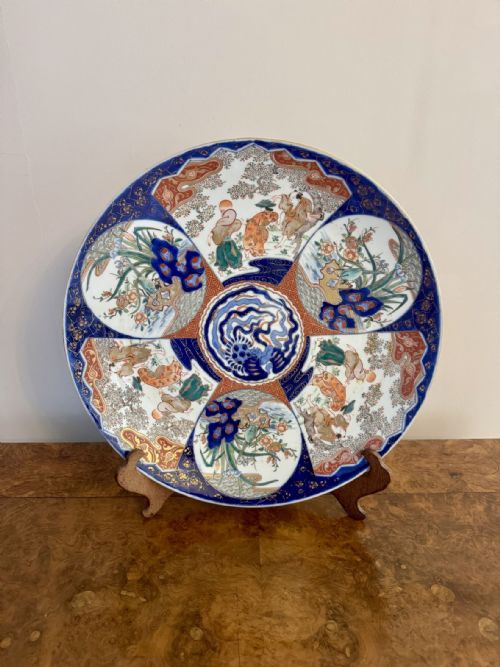
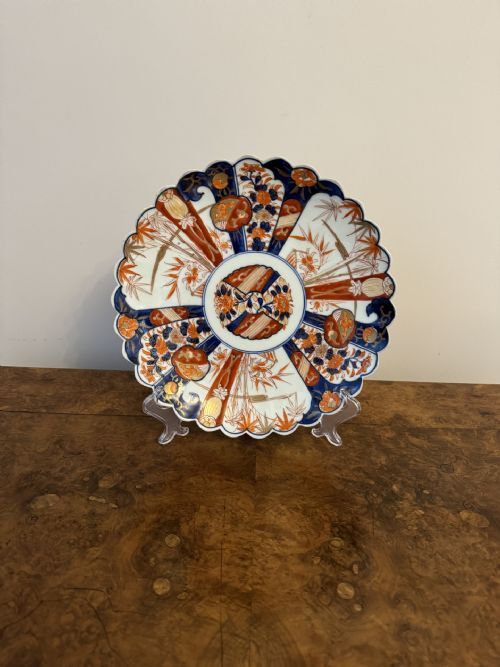
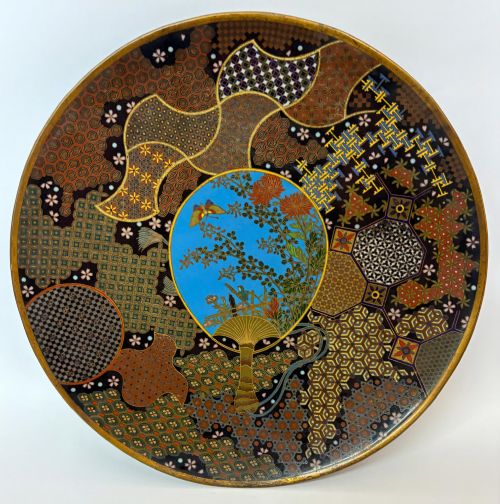
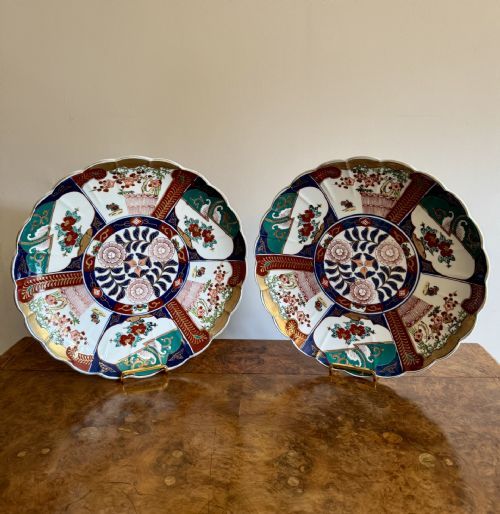
Most pieces encountered here take the form of Imari porcelain chargers or cloisonne enamel plates featuring floral, avian, or figural motifs. Buyers select these items for their expansive decorative surfaces and the traditional palette of underglaze blue, iron red, and gilt highlights.
The assortment also encompasses square plates, fan-shaped dishes, and wall plates originating from Japanese workshops active around nineteen hundred. These variations provide diverse geometric forms alongside the standard circular charger format.
How they were made
Potters shaped these chargers in porcelain using cobalt underglaze for foundational blue designs, subsequently adding enamel colours and gold leaf highlights in successive kiln firings. Other examples utilise a copper or porcelain base for intricate cloisonne enamel work, where thin wire partitions hold coloured pastes.
Techniques such as Totai Shippo apply cloisonne directly onto porcelain surfaces textured to resemble tree bark. Artisans combined hand painting, glazing, and precise metalwork to achieve the detailed pictorial scenes seen across these plates.
Certain Meiji period chargers feature unexpected wildlife details, capturing a single startled frog peering out from beneath blooming chrysanthemums.
What varies in quality
The distinction between standard production and masterwork pieces rests upon the precision of the hand painting and the complexity of the enamel or cobalt application. Finer chargers display tightly controlled pictorial compositions depicting birds, deities, or carp with exceptional clarity.
Surface finish and material depth dictate the visual impact, particularly in cloisonne pieces where smooth, flawless enamel cells contrast with uneven or pitted grounds. Superior examples maintain crisp delineation in every motif without blurring or bleeding of the cobalt underglaze.
The Japanese Display Platter Glossary
- Imari
- A style of Japanese export porcelain characterised by a palette of underglaze blue, iron red, and added gold leaf. The tradition originates from kilns near Arita.
- Cloisonne
- A decorative metalwork technique using thin wire soldered to a base to form compartments filled with enamel paste. These cells are then fired and polished flat.
- Charger
- A large decorative plate traditionally used for ceremonial display rather than serving food at the table. They measure significantly wider than standard dinnerware.
- Meiji Period
- The era of Japanese history spanning from eighteen sixty-eight to nineteen twelve, noted for the widespread export of high-quality decorative arts to Europe.
- Totai Shippo
- A specific Japanese technique where cloisonne enamel is applied directly onto a porcelain or pottery body rather than a metal base.
Japanese Display Platter: Frequently Asked Questions
How were japanese display platters used?
These large plates served primarily as decorative objects within traditional interiors and later for the European export market. They were stood on shelves, hung on walls, or placed on heavy furniture to display their pictorial designs.
Because of their substantial diameter and weight, they were rarely utilised for everyday dining. Their primary purpose was to showcase master craftsmanship and auspicious motifs to guests.
How do I hang a heavy charger safely?
Hanging a large ceramic or enamel plate requires a dedicated spring-loaded wall hanger sized specifically for the diameter of the piece. The device must distribute the weight evenly across the rim without putting pressure on the central glaze.
Ensure the wall fixing secures firmly into solid brick or a wall stud rather than plaster alone. Checking the tension of the springs periodically keeps the platter secure.
How do I tell Imari porcelain from cloisonne?
Imari pieces consist of hard-fired ceramic decorated with underglaze cobalt blue, iron red enamel, and gold leaf. They feel smooth, vitreous, and cold to the touch like standard porcelain.
Cloisonne pieces utilise a metal or porcelain base covered in intricate wire partitions filled with coloured glass paste. Running a hand across the surface reveals the slight texture of the raised metal wires.
What subjects appear on these platters?
Common motifs include natural elements such as chrysanthemums, bamboo, pine, and Mount Fuji, often accompanied by birds like phoenixes, ibises, and owls. Figural scenes frequently depict the Seven Lucky Gods, Buddha, or carp swimming in water.
Each symbol carries traditional meanings associated with longevity, prosperity, and good fortune in Japanese culture. These narratives transform a simple dish into a pictorial story.
How do I care for antique enamel and porcelain?
Dust these platters gently with a soft, dry brush to prevent the accumulation of particles in recessed enamel wires or painted surfaces. Avoid using water, chemical cleaners, or abrasive cloths, particularly on pieces with exposed gold leaf.
Keep the items away from direct sunlight and areas prone to rapid temperature fluctuations. Stable indoor conditions protect both the ceramic body and the delicate enamel layers from cracking.