


Japanese Carved Cupboard
A japanese carved cupboard brings intricate craftsmanship and rich historic texture into a room, offering both display space and enclosed storage.
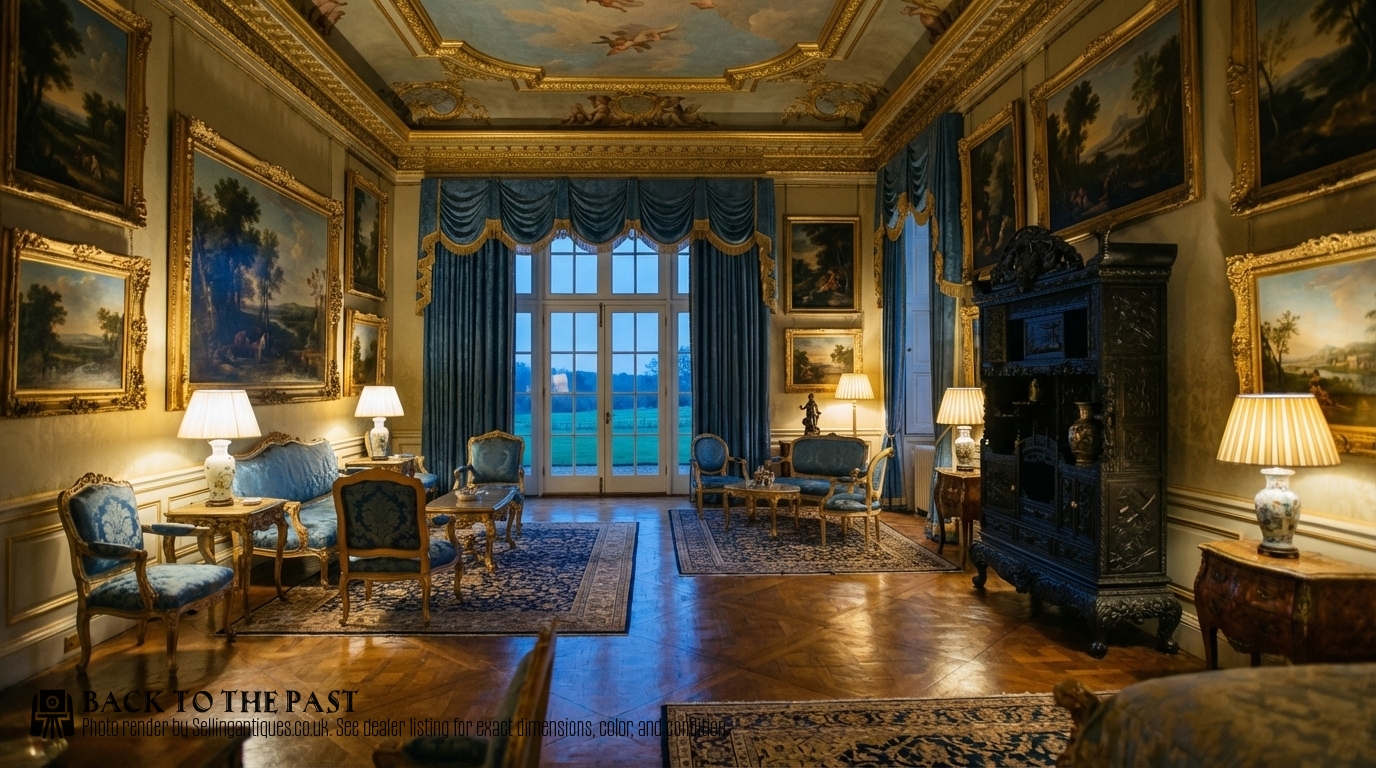
Japanese Carved Cupboard
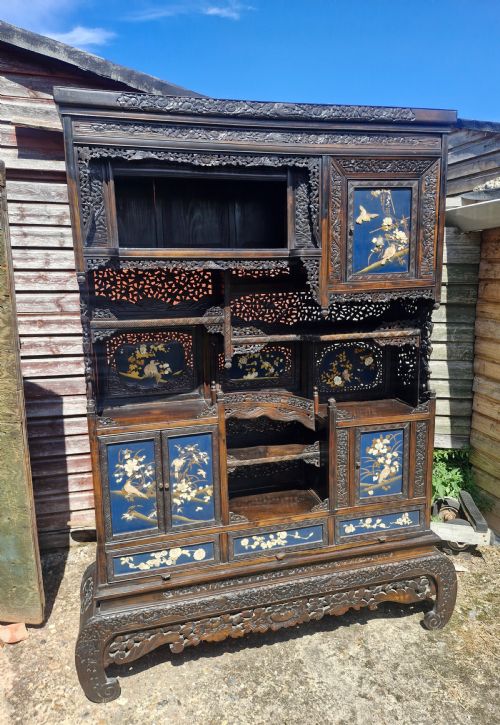
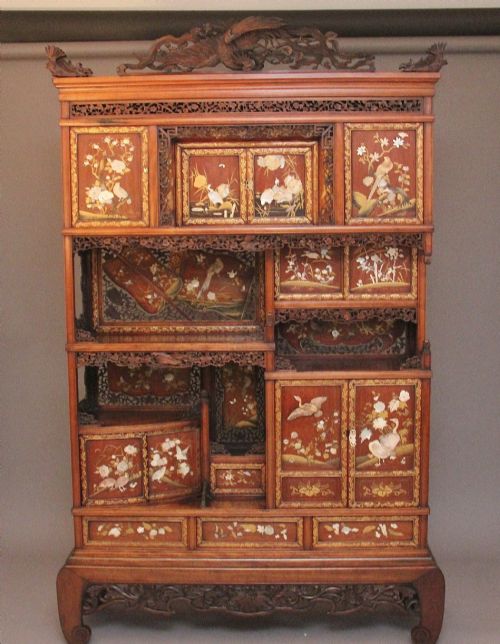
When you search for a japanese carved cupboard, you encounter a range of forms designed for display and storage, spanning the seventeenth century through to the early twentieth century. The selection leans heavily towards Meiji period shodana cabinets, display cabinets on stands, and wall-mounted versions.
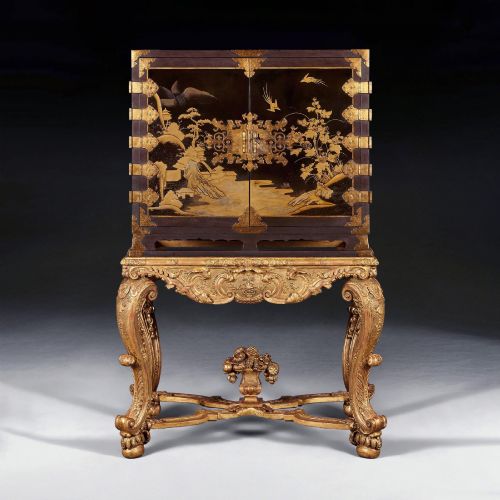
Makers and workshops from both Japan and Europe produced these works, drawing on distinct stylistic movements including the Aesthetic Movement, Chinoiserie, and Japonisme. You find pieces resting on French giltwood Regence stands alongside traditional freestanding cabinets and side cabinets.
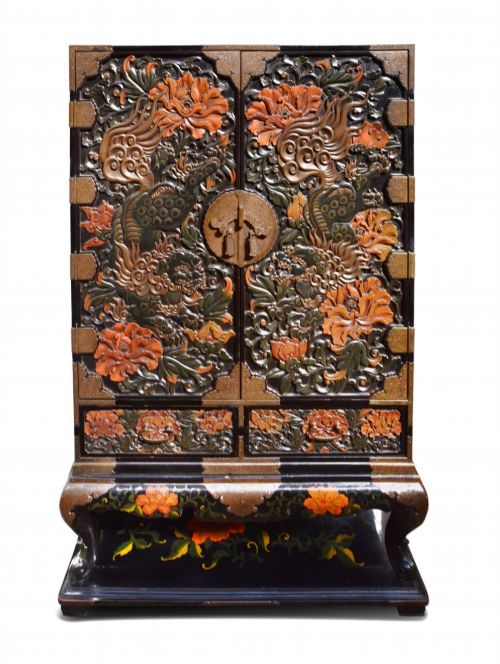
The materials and construction reflect considerable variety, from hardwood and walnut to ebonised surfaces and cinnabar lacquer. Whether you examine a large display cabinet or a hanging wall cabinet, each piece showcases the distinct design priorities of its period.
How they were made
Cabinet makers utilised dense hardwoods, walnut, and padouk as structural foundations, often finishing surfaces with ebonisation or rich layers of lacquer. These timber and lacquer techniques provided a durable canvas for detailed carving and joinery.
Artisans applied decorative elements including bone, mother-of-pearl, and brass fittings to enrich the surface texture of the cabinets. Shibayama elements and intricate carving further defined the visual depth of these works.
Some seventeenth-century cabinets ended up on French giltwood stands because European owners simply could not resist giving them a grander lift.
What varies in quality
The refinement of the carving and the intricacy of the decorative inlay set superior examples apart from simpler production. Masterful execution in lacquerwork and balanced proportions on cabinets placed upon stands indicate higher levels of workshop skill.
The integration of materials such as mother-of-pearl and bone, alongside the preservation of original mounts and stands, influences the overall character of the piece. Consistency in the joinery across complex shodana structures marks the distinction within this group.
Gabriel-Frederic Viardot·Gabriel Viardot
The Japanese Carved Cupboard Glossary
- Shodana
- A traditional Japanese tiered display cabinet featuring asymmetrical shelving and cupboards. These pieces were designed to showcase art objects and ceramics.
- Japonisme
- A Western artistic movement influenced by Japanese art and design, prominent during the late nineteenth century. It inspired European makers to adopt Japanese motifs and structural forms.
- Cinnabar lacquer
- A carved decorative surface created by building up numerous layers of red lacquer before carving intricate patterns into the depth. This technique requires considerable patience and skill.
- Aesthetic Movement
- A nineteenth-century design movement that emphasised visual beauty over narrative or moral function. It fostered cross-cultural styles such as Anglo-Japanese furniture.
- Regence
- A French decorative style bridging the classical Louis XIV period and the Rococo, known for curved lines and giltwood accents. Stands in this style were sometimes paired with earlier imported cabinets.
Japanese Carved Cupboard: Frequently Asked Questions
What is a shodana cabinet?
A shodana is a traditional Japanese display cabinet characterised by asymmetrical shelving, sliding doors, and small cupboards. They were built to exhibit decorative arts and scholarly objects.
In the marketplace, these cabinets appear both as authentic Japanese exports and as European interpretations influenced by the Aesthetic Movement.
How do I identify Meiji period pieces?
Meiji period works date from the late nineteenth to the early twentieth century, an era marked by increased trade and artistic exchange with the West. They often feature complex carving, lacquer, and shibayama inlay.
Look for distinctive construction details and materials like hardwood, bone, and mother-of-pearl that define Japanese craftsmanship of this time.
What is an Anglo-Japanese cabinet?
An Anglo-Japanese cabinet is a European-made piece of furniture that combines Victorian cabinet-making forms with Japanese aesthetic principles. These works often utilise ebonised wood, plain surfaces, and delicate brass hardware.
They emerged during the Aesthetic Movement when designers sought to integrate Japanese decorative ideas into British homes.
Where should I place a display cabinet?
Display cabinets and wall cabinets suit rooms where their intricate carving and decorative surfaces can be appreciated without visual clutter. They function well in reception rooms and studies for exhibiting small collections.
Ensure the piece is placed away from direct sunlight to protect delicate lacquer and organic inlays like bone and mother-of-pearl.