




Oriental Curio Cabinet
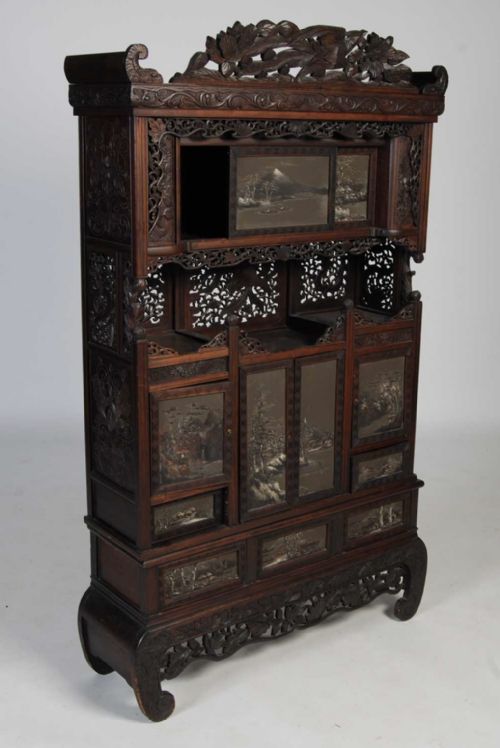
These oriental curio cabinet examples are intricate display pieces designed to showcase small treasures, bringing structured elegance and craftsmanship to any interior.
What an oriental curio cabinet is
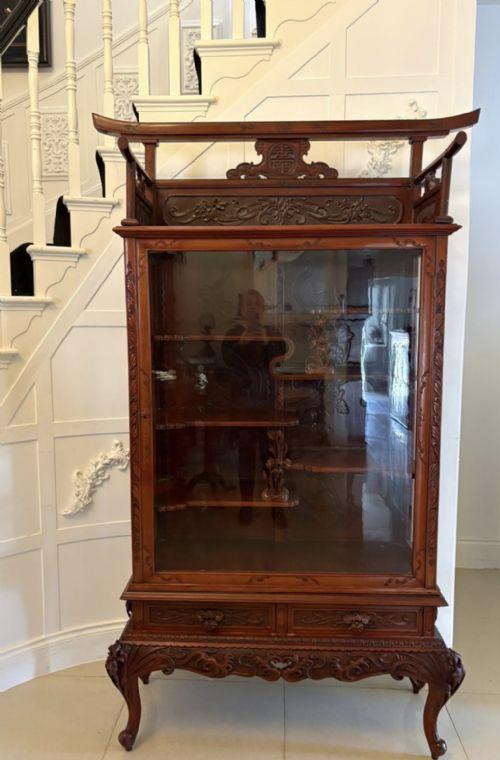
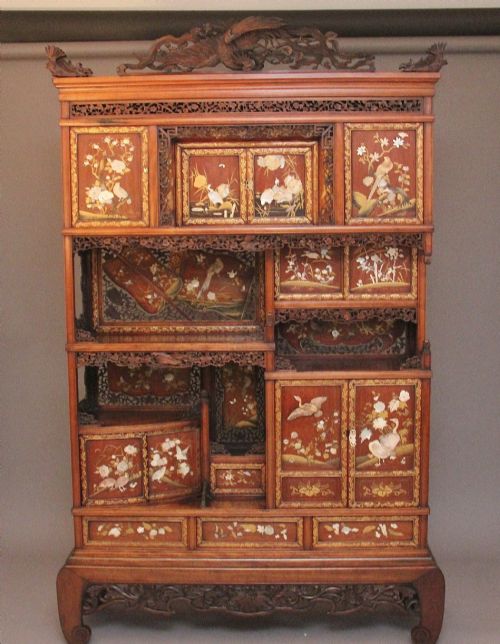
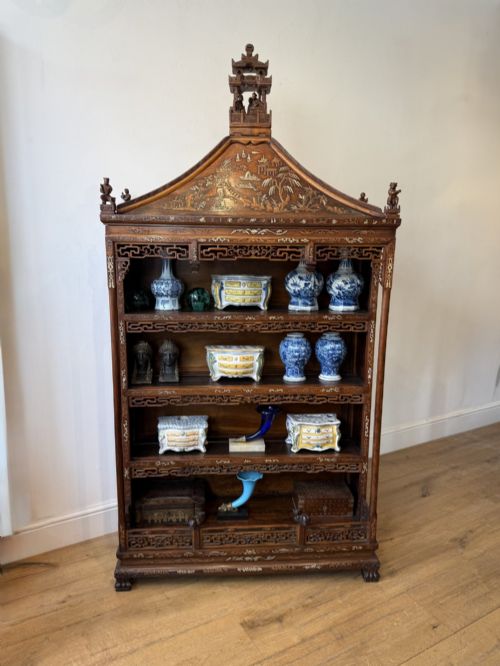
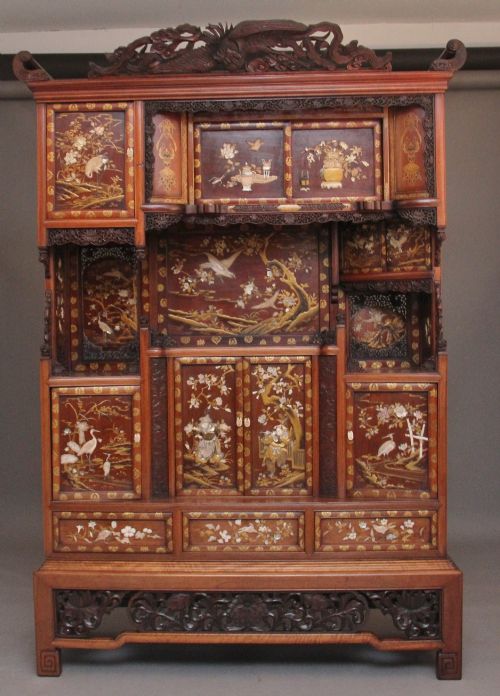
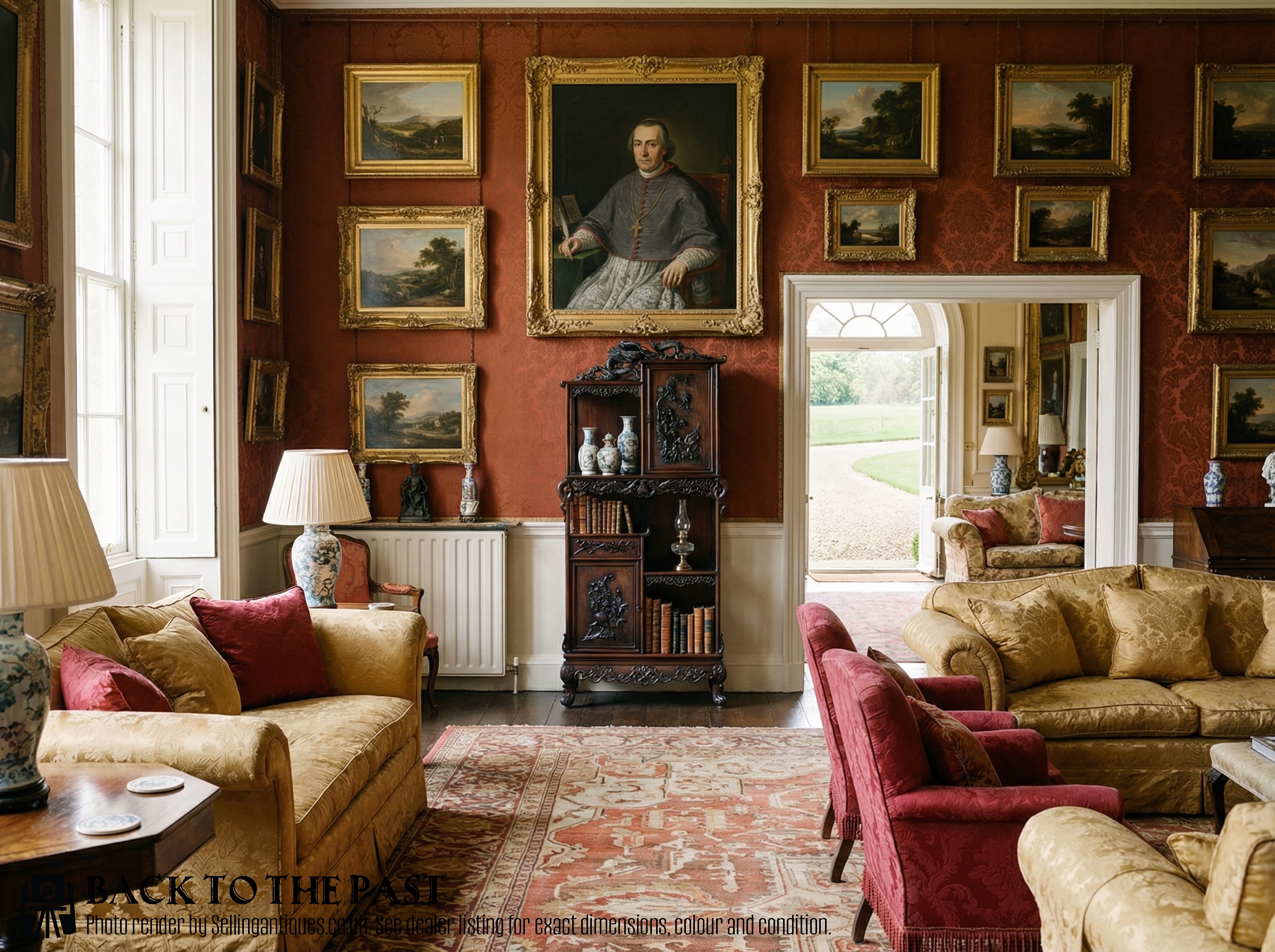
An oriental curio cabinet provides asymmetric shelving and enclosed compartments designed specifically to display small decorative items and precious objects. These pieces range from Japanese shodona cabinets originating in the Meiji and Taisho periods to Chinese Hongmu stands and carved hardwood display shelves.
Materials and construction
Makers constructed these cabinets using dense hardwoods such as hongmu and rosewood, alongside ebonised timber and lacquered surfaces. Many examples incorporate delicate inlay work utilising mother-of-pearl and bone to ornament the dark wood panels.
Joinery techniques enabled the creation of intricate shelving arrangements and pierced carvings without the need for visible modern fasteners. Surfaces frequently feature detailed hand carving depicting traditional flora, fauna, and geometric motifs.
Retail Price Guide 2026
Typical UK retail prices for oriental curio cabinet, calculated from the Sellingantiques database of over a million retail prices indexed since 2003. This retail price guide relies exclusively on Sellingantiques data; no external sources or auction records are used, so the figures do not describe the wider market.
Materials documented across the available selection include heavy hongmu, rosewood, ebonised hardwood, and lacquer, embellished with bone and mother-of-pearl.
Distinctions in quality
Quality in these cabinets rests upon the precision of the joinery and the depth of the hand carving across the staggered shelves and panels. Superior pieces display crisp detailing in bone and mother-of-pearl inlay that remains entirely flush with the surrounding polished wood.
The choice of primary timber dictates the substance of the piece, with dense hongmu and rosewood representing a higher tier of construction compared to softer secondary woods. Finer cabinets maintain structural rigidity within their complex, multi-level frameworks while preserving delicate decorative fretwork.
The Oriental Curio Cabinet Glossary
- Shodona
- A traditional Japanese small display cabinet featuring staggered shelves and compartments. These pieces were designed during the Meiji and Taisho eras to hold porcelain, incense burners, and other scholar objects.
- Hongmu
- A dense, heavy Chinese hardwood often translated as red wood. This material was favoured by traditional cabinetmakers for its rich natural colour and suitability for intricate carving.
- Meiji Period
- The era of Japanese history spanning from eighteen sixty-eight to nineteen twelve. Cabinets from this period often display refined lacquerwork and precise wood carving.
- Taisho Period
- The era in Japan following the Meiji period, lasting from nineteen twelve to nineteen twenty-six. Pieces from this time continue traditional display cabinet forms with evolving decorative details.
- Ebonised
- Wood finished to resemble ebony through staining or painting. This treatment was frequently applied to Japanese and Chinese export furniture to create a uniform dark background for inlaid decoration.
Frequently Asked Questions
How were these cabinets used?
These cabinets served primarily to display scholarly objects, small ceramics, bronzes, and curiosities collected by connoisseurs. The varied compartment sizes accommodated items of different dimensions.
Beyond simple storage, the internal architecture encouraged thoughtful arrangements of treasured possessions. They functioned as both display units and decorative art objects in domestic interiors.
How do I date a curio cabinet?
Dating relies on identifying stylistic markers associated with specific periods such as the Meiji era, Qing dynasty, or early twentieth century. Wood types, carving styles, and inlay materials offer primary clues to the era of production.
Examining the construction methods and the wear patterns on the timber helps establish the age of the piece. Comparing the joinery against known period examples confirms the likely decade of manufacture.
Where should I place one at home?
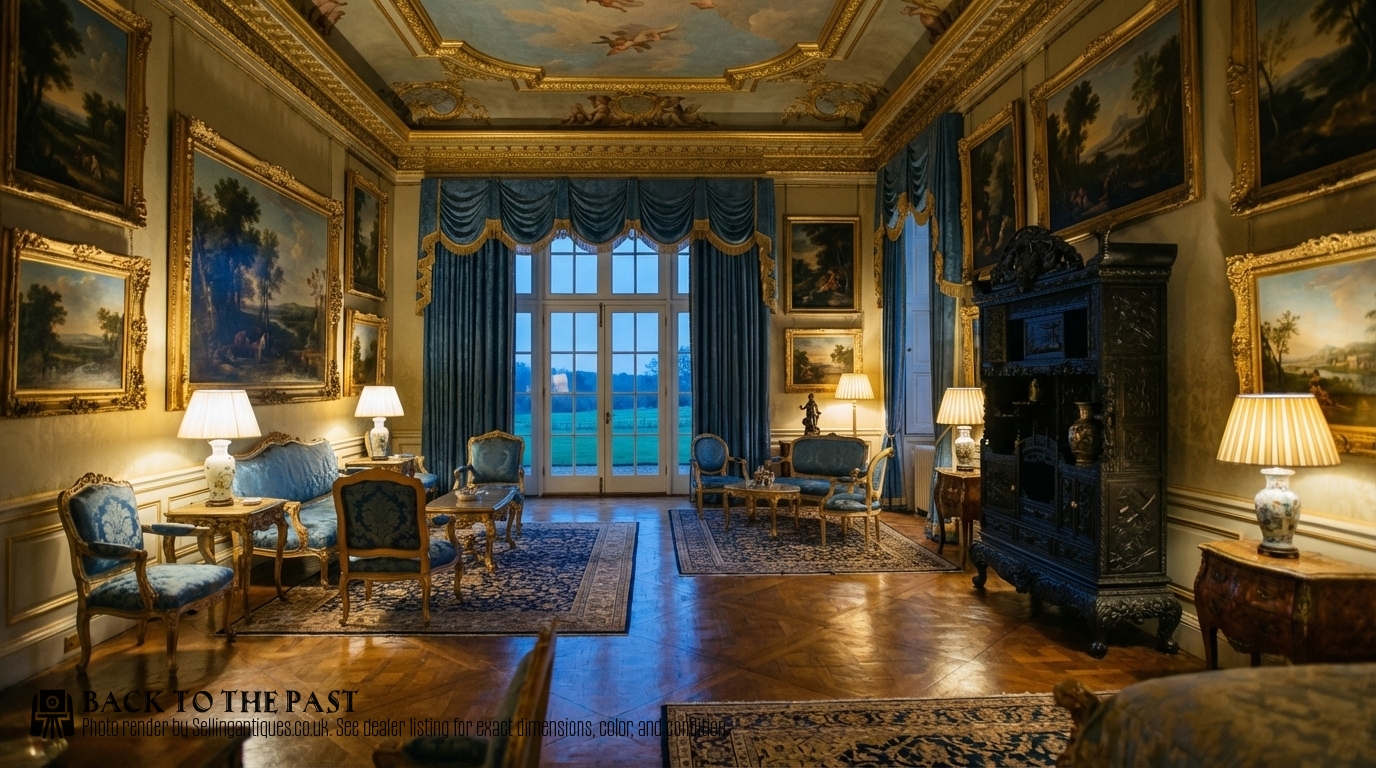
These cabinets suit quiet corners or focal walls where their intricate shelving and carvings can be appreciated without visual competition. Placing them away from direct sunlight protects the polished hardwood and delicate inlay.
Because they are designed for smaller items, positioning them at eye level allows viewers to examine the detailed contents and interior structure. They pair effectively with minimalist interiors that let the complex woodwork stand out.