

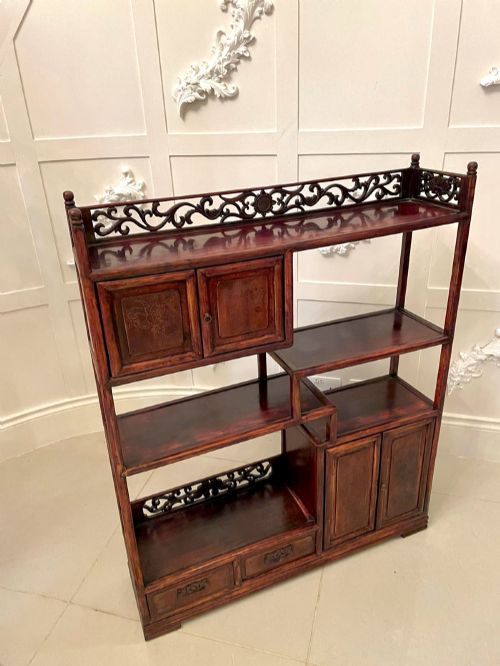

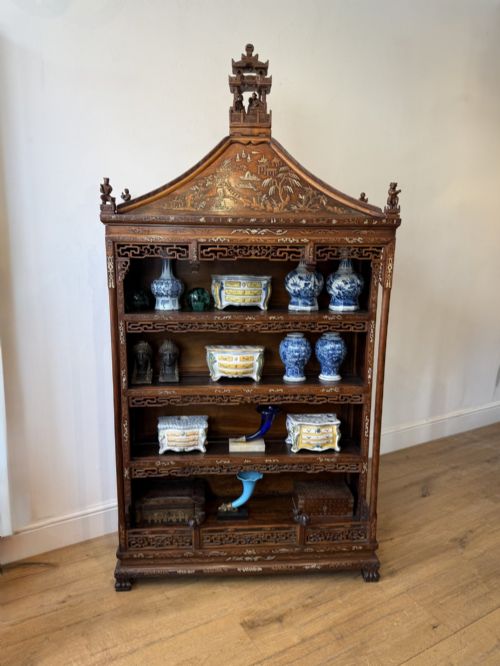


Qing Dynasty Style Cabinet
A qing dynasty style cabinet brings rich lacquer and traditional joinery into a room, offering both bold colour and practical storage.
Qing Dynasty Style Cabinet
When you search for qing dynasty style cabinet, you encounter storage forms rooted in traditional Chinese furniture traditions. These pieces include marriage cabinets, display cabinets, apothecary chests, and chests of drawers.
The versions most frequently met on this page span the late nineteenth century and the early twentieth century. They range from rustic provincial forms to elaborate export and pagoda display cabinets.
Makers drew on established forms like sideboards, display shelves, and whatnots. They served functional household roles while displaying status through surface decoration and form.
How they were made
Workshops built these cabinets using timber and hardwood frames. Construction relied on traditional joinery techniques suited to large storage forms.
Surfaces received layers of red lacquer, often finished with detailed bone inlay, mother of pearl inlay, or carved relief. Brass and iron hardware provided structural bracing and closure.
Qing Dynasty Style Cabinet Retail Price Guide 2026
Typical asking prices for qing dynasty style cabinet among the pieces listed under this phrase on Sellingantiques today, from the lower quarter to the upper quarter. They describe what is for sale here now, not the wider market.
Listings span periods from the nineteenth century through 1920, incorporating wood, lacquer, brass, iron, and bone inlay.
What varies in quality
Quality rests in the precision of the joinery and the depth of the lacquer work. Smoother operation of doors and drawers separates superior pieces from simpler provincial examples.
The complexity of inlay work dictates the upper tier of the range. Mother of pearl and bone elements require skilled hand placement that elevates the visual impact.
The Qing Dynasty Style Cabinet Glossary
- Lacquer
- A durable resin finish applied in multiple coats to wood surfaces, often appearing in red on these cabinets.
- Mother of pearl
- An iridescent inner shell layer used to create inlaid decorative motifs on panels and doors.
- Apothecary chest
- A multi-drawer storage chest originally designed for sorting herbs, medicines, and dry goods.
- Pagoda display cabinet
- A glazed storage form topped with tiered architectural roofs reminiscent of traditional East Asian towers.
- Chinoiserie
- European stylistic interpretation of Chinese artistic motifs applied to furniture and decorative arts.
Qing Dynasty Style Cabinet: Frequently Asked Questions
What is a qing dynasty style cabinet used for?
These cabinets provide enclosed shelving, drawer space, and display surfaces for household items. Historically, specific forms held garments, documents, or medicinal goods.
Today, they function as focal storage pieces in living rooms, hallways, and dining spaces.
Where were these cabinets made?
These pieces originate from Chinese workshops, encompassing both regional provincial centres and export hubs. Makers adapted traditional forms for domestic use and international markets.
Surviving examples reflect the manufacturing standards of the late nineteenth and early twentieth centuries.
How do I care for red lacquer surfaces?
Maintain lacquer by keeping the cabinet away from direct sunlight and rapid temperature shifts. Dust gently with a dry, soft cloth.
Avoid chemical polishes or abrasive cleaners that can damage the delicate finish and inlay details.