

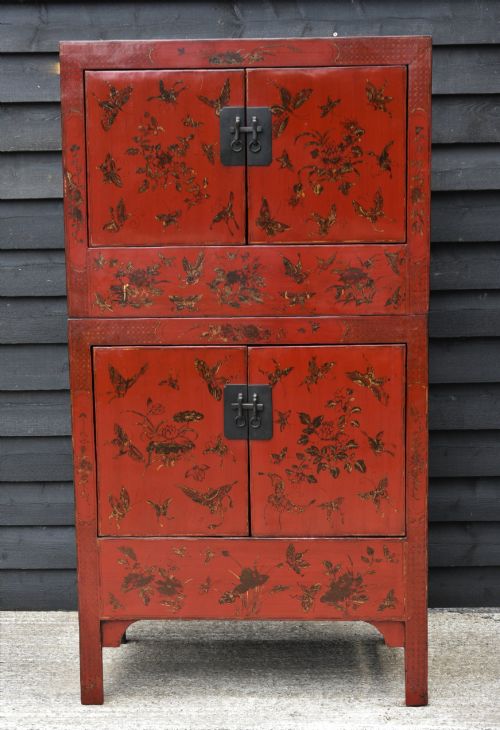
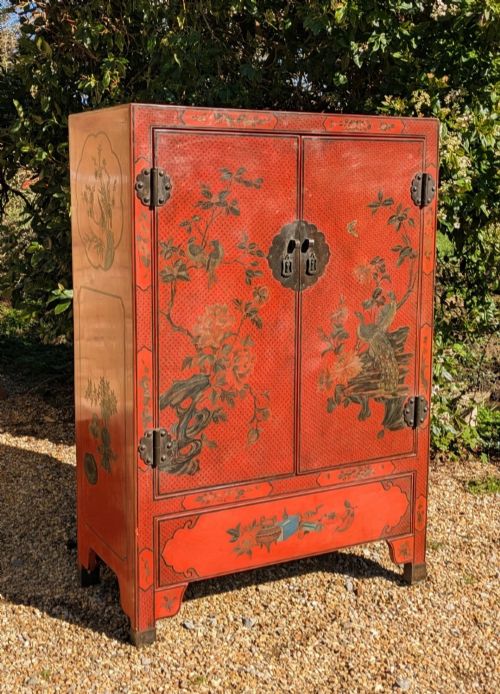
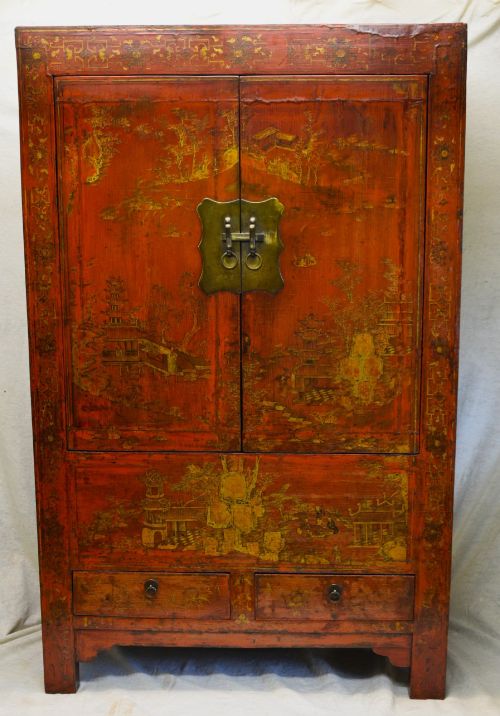
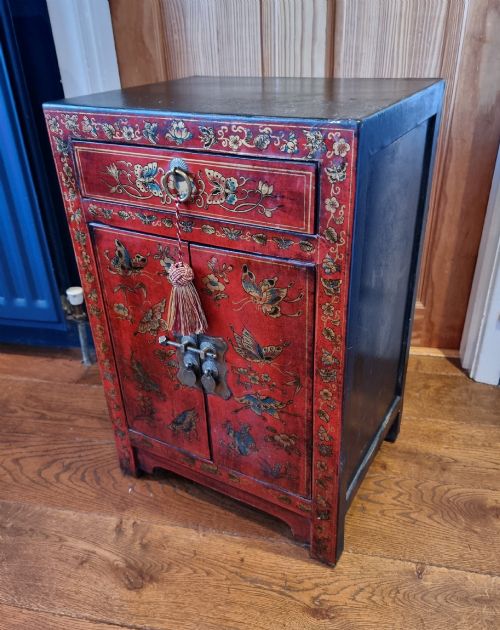
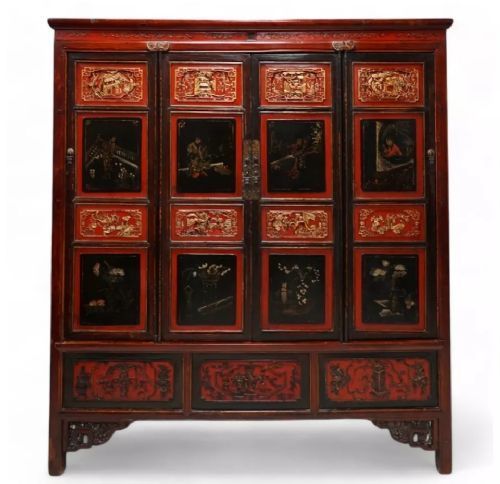
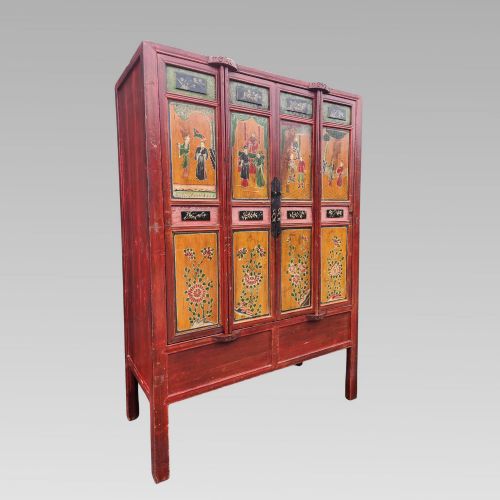


Red Lacquer Storage Cabinet
These red lacquer storage cabinet pieces bring brilliant scarlet presence and historical depth into a room, offering both bold decorative impact and practical organisation.
Red Lacquer Storage Cabinet
A red lacquer storage cabinet provides enclosed shelving or drawers within a striking vermilion finish, anchoring a room with deep colour and traditional craftsmanship. When hunting for a red lacquer storage cabinet, you encounter substantial wedding armoires, sideboards, and compact apothecary chests originating from China and Japan. The pieces available span the nineteenth century through the early twentieth century, showing regional influences from Qing Dynasty workshops to provincial Japanese makers.
Most examples you meet on this page take the form of large two-door marriage cabinets or smaller side units designed for domestic utility. These items combine solid timber construction with successive layers of applied lacquer, often highlighted by traditional Oriental motifs or gilded details. The aesthetic ranges from austere provincial woodwork to elaborate Chinoiserie and carved court pieces.
Assessing quality and craftsmanship
The quality of a piece rests in the depth of the lacquer finish and the integrity of the underlying woodwork. Superior examples display smooth, even layers of red lacquer that have aged with a fine network of craquelure, rather than flat or modern synthetic coatings.
Hardware execution and joinery differentiate finer workshop production from simpler provincial items. Original brass or iron mounts that fit flush and operate smoothly indicate careful original assembly by skilled artisans.
Red Lacquer Storage Cabinet Retail Price Guide 2026
Typical asking prices for red lacquer storage cabinet among the pieces listed under this phrase on Sellingantiques today, from the lower quarter to the upper quarter. They describe what is for sale here now, not the wider market.
Some apothecary chests contain dozens of tiny drawers once filled with dried dragon bones and ginseng.
The Red Lacquer Storage Cabinet Glossary
- Lacquer
- A natural resin applied in numerous thin coats to wooden furniture to create a hard, durable, and glossy protective surface. This technique requires considerable drying time between applications.
- Chinoiserie
- European artistic interpretation and imitation of Chinese and East Asian artistic traditions, often applied to furniture decoration. This style gained popularity across various periods.
- Marriage cabinet
- A large traditional Chinese cabinet traditionally given as a wedding gift to hold the bride's garments and valuables. These pieces often feature prominent brass lock plates.
- Tansu
- A traditional Japanese mobile storage chest built from wood with iron hardware, designed for utilitarian storage. These chests vary in configuration from small document boxes to large multi-section wardrobes.
- Apothecary chest
- A multi-drawer cabinet historically used for storing dried herbs, medicines, and botanical ingredients. They feature numerous small drawers labelled for identification.
Red Lacquer Storage Cabinet: Frequently Asked Questions
How do I clean a lacquer surface?
Dust the surface regularly with a soft, dry microfibre cloth to prevent abrasive particle buildup. Avoid chemical polishes, alcohol, and water, which can damage the delicate historic finish.
Keep the cabinet away from direct sunlight and fluctuating heat sources to prevent the wood underneath from expanding and cracking the lacquer layer.
Where should I place this cabinet?
Position the piece against a neutral wall where its strong red colour can serve as a focal point without visual competition. Ensure the room maintains stable humidity levels.
Allow sufficient clearance around doors and heavy brass hardware so the piece can be accessed and appreciated safely in daily use.
Are these pieces purely decorative?
While visually striking, these items served practical storage functions in their original homes and continue to do so today. The interior shelving and drawers accommodate modern household storage needs.
Larger armoires work well for linens or media equipment, while smaller bedside cabinets and sideboards provide accessible surface and drawer space.
How can I tell the period?
Examine the wood species, joinery methods, and the natural ageing patterns within the lacquer and brass hardware. Nineteenth-century examples typically show hand-forged iron or brass and dense timber shrinkage.
Compare the decorative motifs, such as Qing Dynasty carving styles or Meiji period hardware, against documented regional manufacturing traditions.