



Red Lacquered Oriental Furniture
Red lacquered oriental furniture brings rich colour and striking form into a room, spanning cabinets, tables and chairs from the nineteenth century onward.
Red Lacquered Oriental Furniture
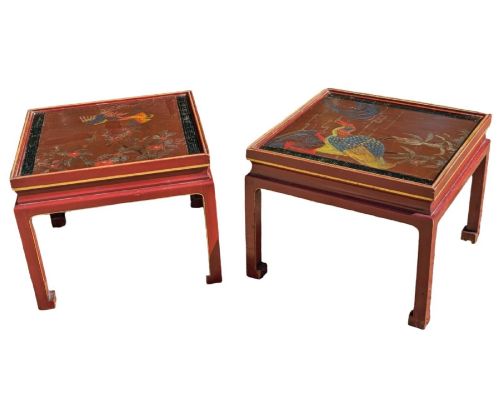
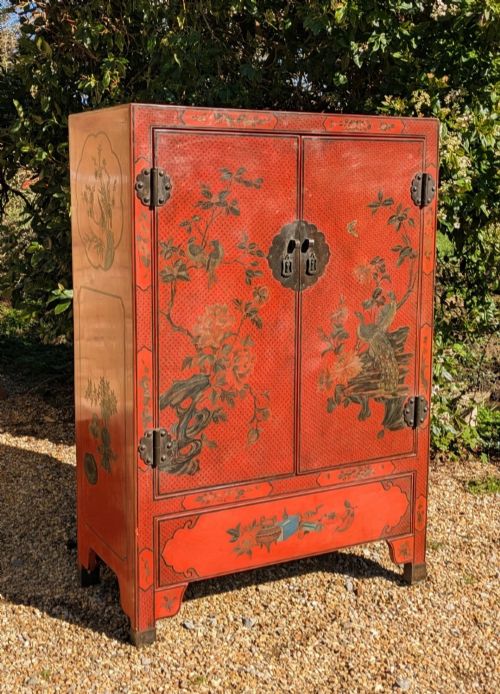
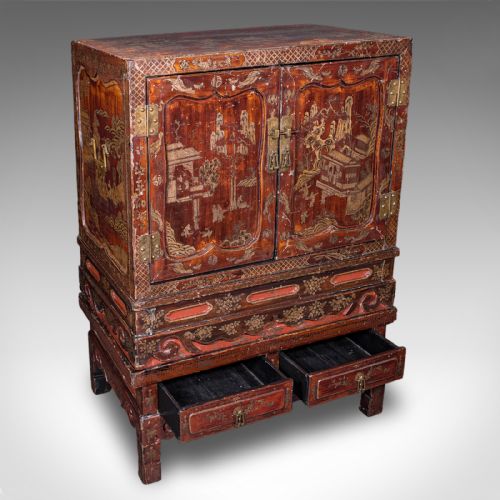
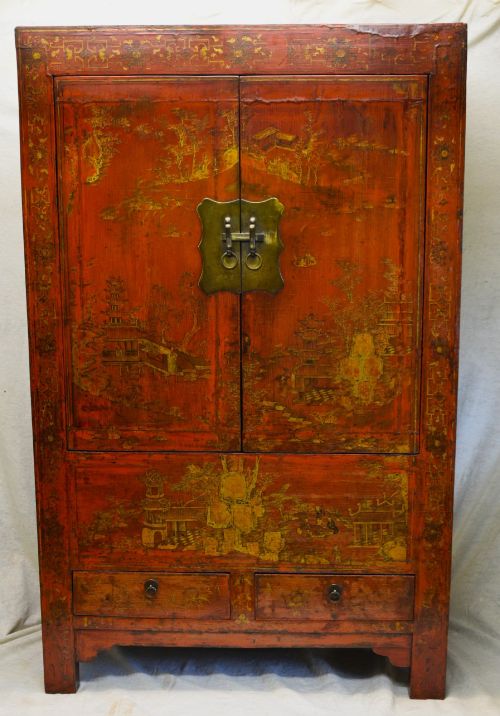
Red lacquered oriental furniture encompasses a diverse selection of storage pieces, tables and seating originating from Asian traditions alongside European interpretations like Chinoiserie. Cabinets, wedding armoires and side tables dominate the selection, often displaying vibrant red surfaces combined with contrasting black details or gilt highlights.
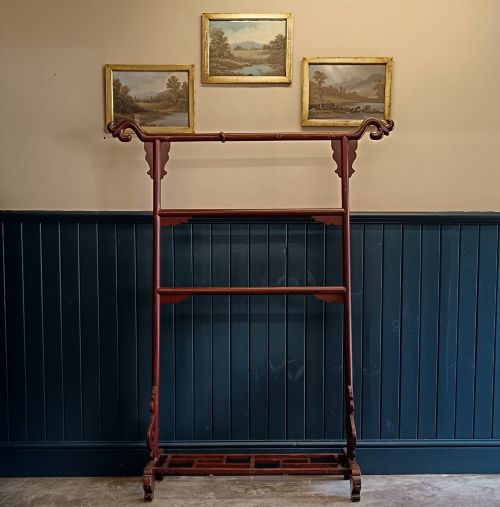
The objects span multiple periods, with nineteenth-century examples appearing frequently alongside pieces from the early twentieth century, including Edwardian and Victorian British adaptations. Forms range from large altar tables and apothecary cupboards down to compact nest tables, plant stands and robe racks.
Regional variations emerge clearly across the grouping, shifting between traditional Chinese Qing Dynasty designs, Japanese Meiji period items and Burmese tables. Provincial Chinese pieces sit alongside formal export furniture and English japanned mirrors, reflecting a long history of cross-cultural stylistic exchange.
Materials and Construction
Makers utilised solid timbers such as elm, hardwood, kiri wood and bamboo to form the structural carcasses of these cabinets and tables. Brass mounts, iron hardware and cane elements frequently provide functional contrast and structural support.
The distinctive surface finish relies on repeated applications of lacquer, sometimes enhanced with gold leaf, carved details or painted Chinoiserie decoration. Skilled artisans built up these protective and decorative layers over wood substrates to achieve deep, lustrous red finishes.
Red Lacquered Oriental Furniture Retail Price Guide 2026
Typical asking prices for red lacquered oriental furniture among the pieces listed under this phrase on Sellingantiques today, from the lower quarter to the upper quarter. They describe what is for sale here now, not the wider market.
Listings feature woods including elm, bamboo, kiri and various hardwoods, combined with brass and iron hardware across nineteenth and twentieth-century periods.
Assessing Quality
Quality rests heavily on the depth and stability of the lacquer surface, where refined application and careful preservation of carved or gilded details distinguish superior examples. Finer pieces demonstrate precise joinery in the underlying timber, ensuring that doors, drawers and joints operate smoothly despite the weight of multiple lacquer coats.
Design integrity and proportion separate standard utilitarian items from exceptional output, particularly in pieces bearing intricate carving or complex hardware like brass hinges and lock plates. The crispness of carved ornamentation and the harmonious balance of painted or gilded motifs reveal the skill invested by the original workshop.
The Red Lacquered Oriental Furniture Glossary
- Chinoiserie
- European decorative style reflecting Chinese artistic influences, prevalent in British furniture and mirrors from various periods. It typically involves painted or lacquered motifs on wood.
- Japanning
- European imitation of East Asian lacquerwork, popular in English pieces such as mirrors and cabinets. This technique uses layered varnishes and paints to simulate oriental finishes.
- Tansu
- Traditional Japanese mobile storage chest, constructed from wood with prominent iron or brass hardware. These pieces served various domestic functions.
- Altar Table
- Long, narrow table form originating in Chinese domestic and ritual architecture, often featuring upturned flange ends. They function effectively as console or display surfaces.
- Cinnabar
- Natural mineral pigment used to create a rich red colour in traditional lacquerwork. Carved cinnabar pieces display deep relief patterns.
Red Lacquered Oriental Furniture: Frequently Asked Questions
How do I clean red lacquer furniture?
Dust surfaces gently with a soft, dry cloth to prevent scratching the delicate finish. Avoid chemical cleaning agents and moisture, which can damage aged lacquer.
Keep pieces away from direct sunlight and heat sources to prevent the wood underneath from expanding and cracking the lacquer layer.
What is a wedding cabinet used for?
Traditional Chinese wedding cabinets served as major storage pieces for a bride's dowry textiles, clothing and personal possessions. They typically feature two large doors and internal shelving.
Today, these substantial cupboards function well as wardrobe spaces, linen storage or media cabinets in modern living areas.
How can I date an antique cabinet?
Examine the construction methods, wood types and hardware mechanics used in the piece. Nineteenth-century examples often display traditional joinery alongside period-specific brass or iron mountings.
Compare the decorative style, such as Qing Dynasty carvings or Victorian Chinoiserie motifs, against documented historical periods to narrow down the decade.
Where does Chinoiserie differ from Asian export pieces?
Chinoiserie describes European-made furniture decorated in an imagined Chinese style, such as English japanned mirrors and side cabinets. These reflect Western interpretations of eastern aesthetics.
Asian export pieces and domestic items were constructed and decorated within workshops in China or Japan specifically for local use or international trade.