




Chinese Wedding Cabinet
A Chinese wedding cabinet brings rich lacquer and traditional storage into a modern interior.
Chinese Wedding Cabinet
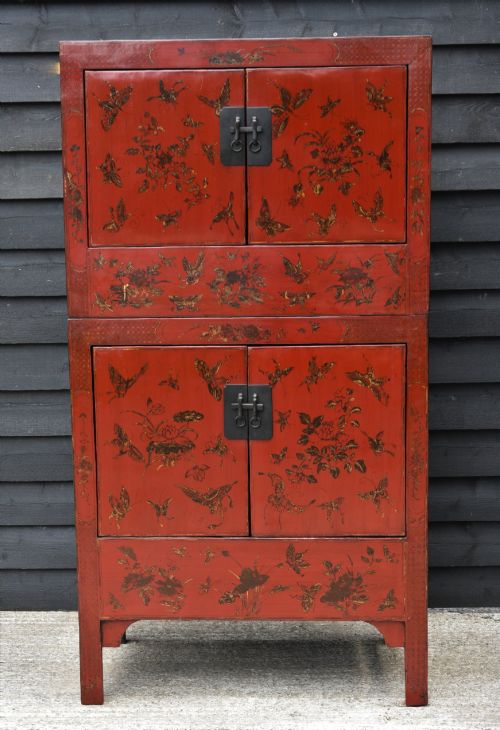
A Chinese wedding cabinet is a large storage piece traditionally given to a bride as part of her dowry during the Qing dynasty and subsequent early twentieth-century periods. These architectural cupboards offer generous internal capacity behind two main doors, often concealing internal shelving or small drawers.
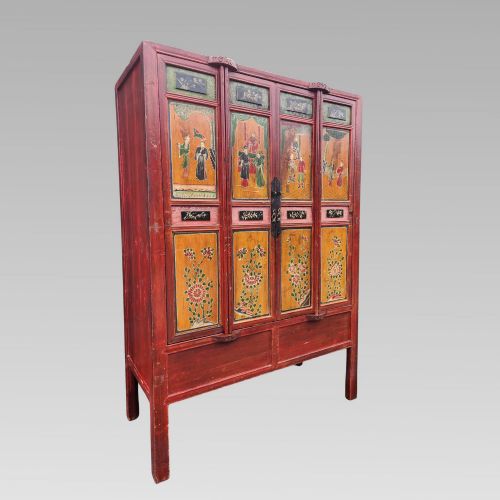
Most examples found here date from the nineteenth century up to around nineteen twenty, spanning black, red, and painted lacquer finishes as well as carved hardwood and softwood forms. Regional variations, such as Shanxi province styles, introduce distinctive proportions and joinery traditions to the market.
How they were made
Craftsmen built these cabinets using traditional timber frameworks, frequently utilising elm or other native Asian softwoods and hardwoods. Joinery relied on complex interlocking joints rather than metal nails, allowing the large wooden panels to expand and contract with seasonal humidity changes.
Surfaces received multiple coats of lacquer, sometimes combined with intricate gold leaf gilding, painted figural or floral motifs, and carved low-relief detailing. Heavy brass hardware, including circular faceplates and pin locks, secured the doors while adding metallic contrast to the red or black lacquered finishes.
Chinese Wedding Cabinet Retail Price Guide 2026
Typical asking prices for chinese wedding cabinet among the pieces listed under this phrase on Sellingantiques today, from the lower quarter to the upper quarter. They describe what is for sale here now, not the wider market.
Materials recorded across the archive include elm, softwood, gold leaf, and traditional black or red lacquer.
What varies in quality
The distinction between standard examples and superior pieces rests on the preservation of the original lacquer surface and the depth of the carved or gilded ornamentation. Cabinets retaining unblemished red or black pigment with crisp, undisturbed gold leaf demonstrate higher workshop standards.
Proportion and structural integrity also divide the range, as monumental cupboards require precise timber selection to prevent warping over time. Original brass hardware that remains intact adds to the authenticity and historical value of the piece.
The Chinese Wedding Cabinet Glossary
- Qing dynasty
- The final imperial dynasty of China, lasting from sixteen forty-four until nineteen twelve, which produced many of the traditional cabinets seen today.
- Lacquer
- A durable natural resin applied in numerous thin layers to wood, creating a smooth protective coating that accepts pigments, carvings, and gold leaf easily.
- Shanxi province style
- A regional design tradition known for sturdy construction, distinct architectural framing, and characteristic painted or lacquered surface treatments.
- Gilding
- The application of thin gold leaf or gold powder onto a prepared surface to highlight carved details and create striking visual contrast against dark lacquer.
Chinese Wedding Cabinet: Frequently Asked Questions
What is a Chinese wedding cabinet used for?
These large cabinets served as practical storage for a bride's personal belongings, textiles, and dowry items when she moved into her husband's family home.
Today, collectors use them as statement wardrobes, linen cupboards, or media cabinets in living spaces and bedrooms.
How do I date a Chinese wedding cabinet?
Dating relies on stylistic markers, construction methods, and the wear patterns visible on the lacquer and timber surfaces. Pieces associated with the Qing dynasty generally exhibit traditional joinery and hand-mixed pigments distinct from later twentieth-century production.
Archival examples from the late nineteenth and early twentieth centuries show specific variations in hardware placement and decorative painting styles.
Are these cabinets made of solid wood?
Traditional construction employs solid timber frameworks using woods such as elm, alongside secondary softwoods for internal panels and shelving.
The heavy wooden panels are finished with multiple layers of natural lacquer rather than modern synthetic veneers.
How should I care for lacquered wood?
Lacquered surfaces respond best to a stable indoor environment away from direct sunlight, extreme temperature shifts, and excessive moisture.
Dusting gently with a soft, dry cloth preserves the delicate pigments and gold leaf without scratching the finish.