


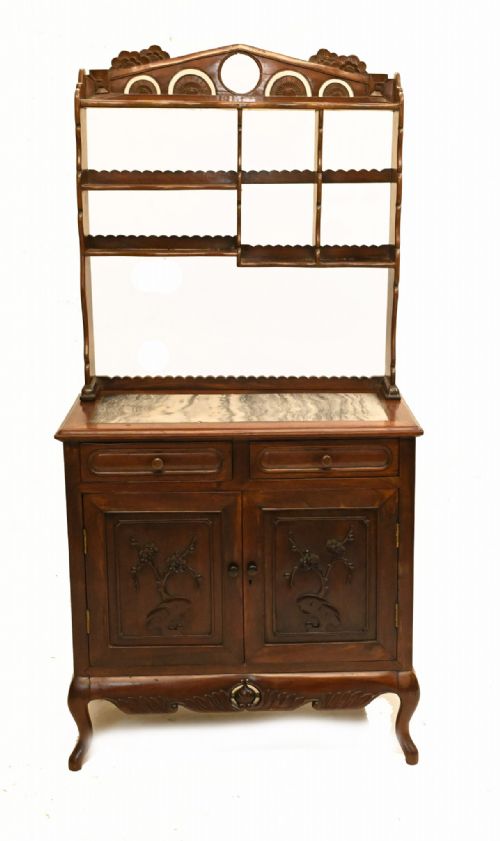
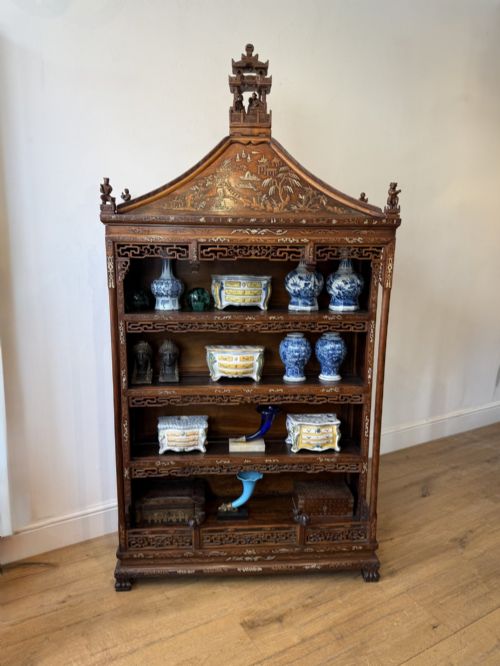


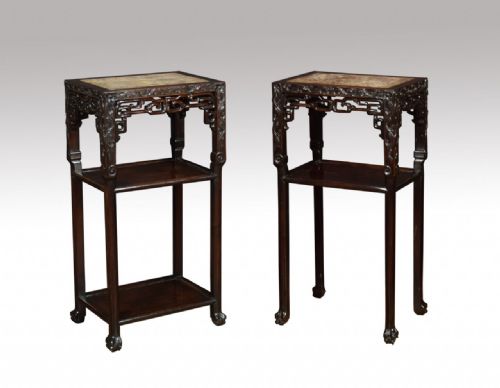


Chinese Hardwood Cabinet
A Chinese hardwood cabinet brings dense grain, intricate carving, and centuries of cabinet-making tradition straight into a modern interior.
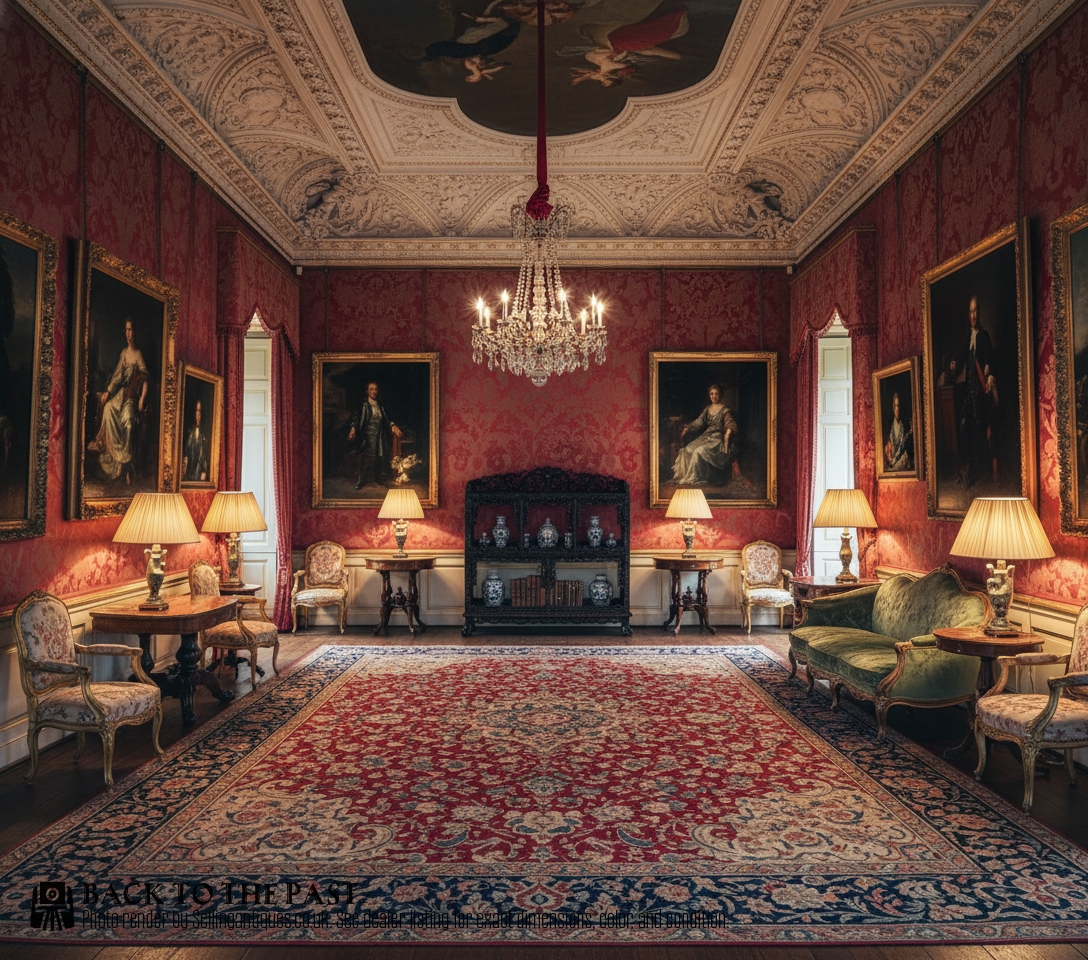
Chinese Hardwood Cabinet
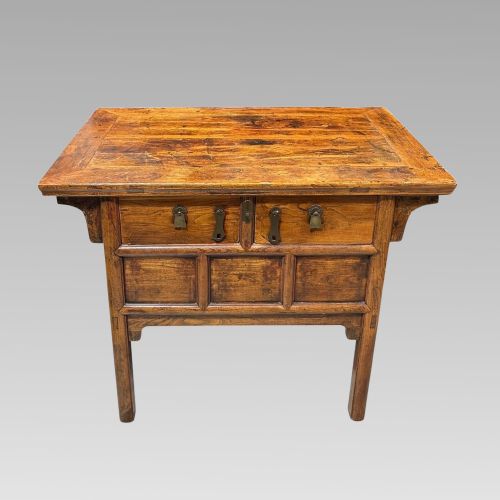
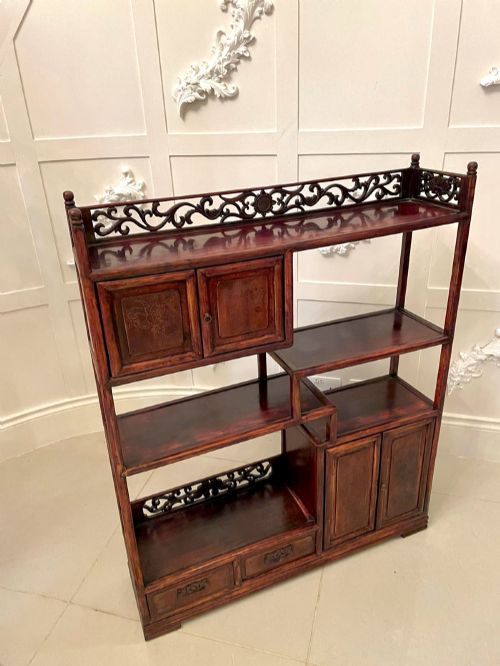
A chinese hardwood cabinet encompasses various forms such as large display cases, compact table cabinets, and storage cupboards originating predominantly from the nineteenth and early twentieth centuries. Buyers frequently encounter glazed display versions and open shelf structures designed to showcase ceramics or curios.
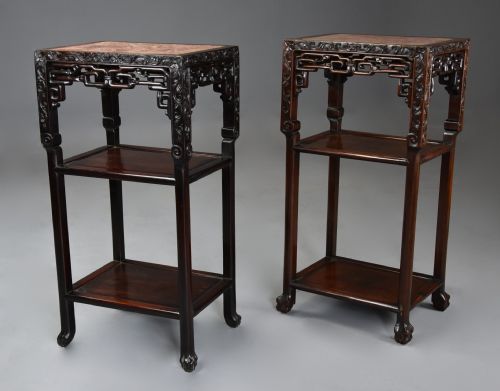
Many examples emerge from the Qing dynasty tradition, showing regional styles like Shanxi alongside classic export forms. These items range from floor-standing armoires to smaller pedestal stands and bedside companions.
The construction serves both decorative and functional purposes, housing everything from small precious objects to general household storage within robust timber frameworks.
How they were made
Cabinet makers utilised dense timbers such as hongmu, rosewood, elm, and zitan, often joined using traditional woodworking techniques that avoided metal fasteners. Artisans carved intricate dragons, floral motifs, and geometric patterns directly into the hardwood surfaces.
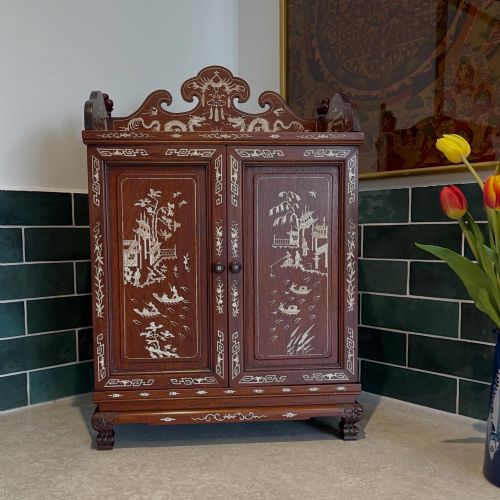
Selected panels incorporate contrasting materials, embedding mother-of-pearl, marble inserts, soapstone, or brass mounts into the primary wooden structure. Lacquer finishes and glass panels frequently complete the glazed display doors and table surfaces.
Chinese Hardwood Cabinet Retail Price Guide 2026
Typical asking prices for chinese hardwood cabinet among the pieces listed under this phrase on Sellingantiques today, from the lower quarter to the upper quarter. They describe what is for sale here now, not the wider market.
Some diminutive cabinets were built specifically to house tiny scent bottles and miniature netsuke.
What varies in quality
Quality separates pieces through the crispness of the hand-carving and the density and selection of the timber used in construction. Deep, well-defined relief work on structural elements indicates a higher level of workshop skill.
The integration of secondary materials like inset marble tops, engraved bronze mounts, and secure fitted interiors distinguishes finer commissions from standard utilitarian storage items.
The Chinese Hardwood Cabinet Glossary
- Hongmu
- A category of dense, fragrant tropical hardwoods prized in Chinese furniture making for its deep colour and heavy weight. It is often translated simply as red wood.
- Qing Dynasty
- The final imperial dynasty of China, spanning from sixteen forty-four to nineteen twelve, which produced the majority of carved hardwood furniture seen today.
- Zitan
- An exceptionally dense and heavy dark hardwood used for imperial and high-status Chinese furniture. It sinks in water and develops a deep lustrous patina over time.
- Mother of pearl
- The iridescent inner layer of certain mollusc shells, cut into thin sections and inlaid into wooden panels to form floral or figurative designs.
- Shodana
- A term sometimes applied to multi-tiered display cabinets featuring staggered shelving and compartments. It originates from Japanese terminology but describes similar multi-level display aesthetics.
Chinese Hardwood Cabinet: Frequently Asked Questions
Where should I place a Chinese hardwood cabinet?
These cabinets work well as focal points in living rooms, dining spaces, or hallways where their carved details can be appreciated. Taller glazed display versions suit studies or drawing rooms for holding collections.
Smaller table cabinets and pedestals fit easily onto sideboards or desks, adding vertical interest and enclosed storage to smaller areas.
How do I care for antique hardwood furniture?
Keep the timber away from direct heat sources and strong sunlight to prevent the wood from drying out or splitting. Maintain a stable room temperature and humidity level.
Dust the carved surfaces regularly with a soft, dry cloth. Avoid using silicone-based polishes, opting instead for occasional applications of natural beeswax where appropriate.
How can I tell the period of a cabinet?
Examine the construction methods, timber choice, and style of carving for clues to the era of manufacture. Nineteenth-century examples often display deep Qing dynasty carving and heavy native hardwoods.
Twentieth-century pieces may show slight shifts in proportion or lighter construction materials. Look at the wear patterns on the feet and interior shelves for signs of age.
Were these cabinets made for export?
Many pieces created during the late nineteenth century were tailored for Western tastes, combining traditional Chinese joinery with forms suited to European homes. These export items frequently included glazed display sections for curios.
Other pieces served strictly domestic functions within Chinese households before entering the antique market.