




Oriental Open Bookcase
An oriental open bookcase brings varied shelving and distinct craftsmanship into a room.
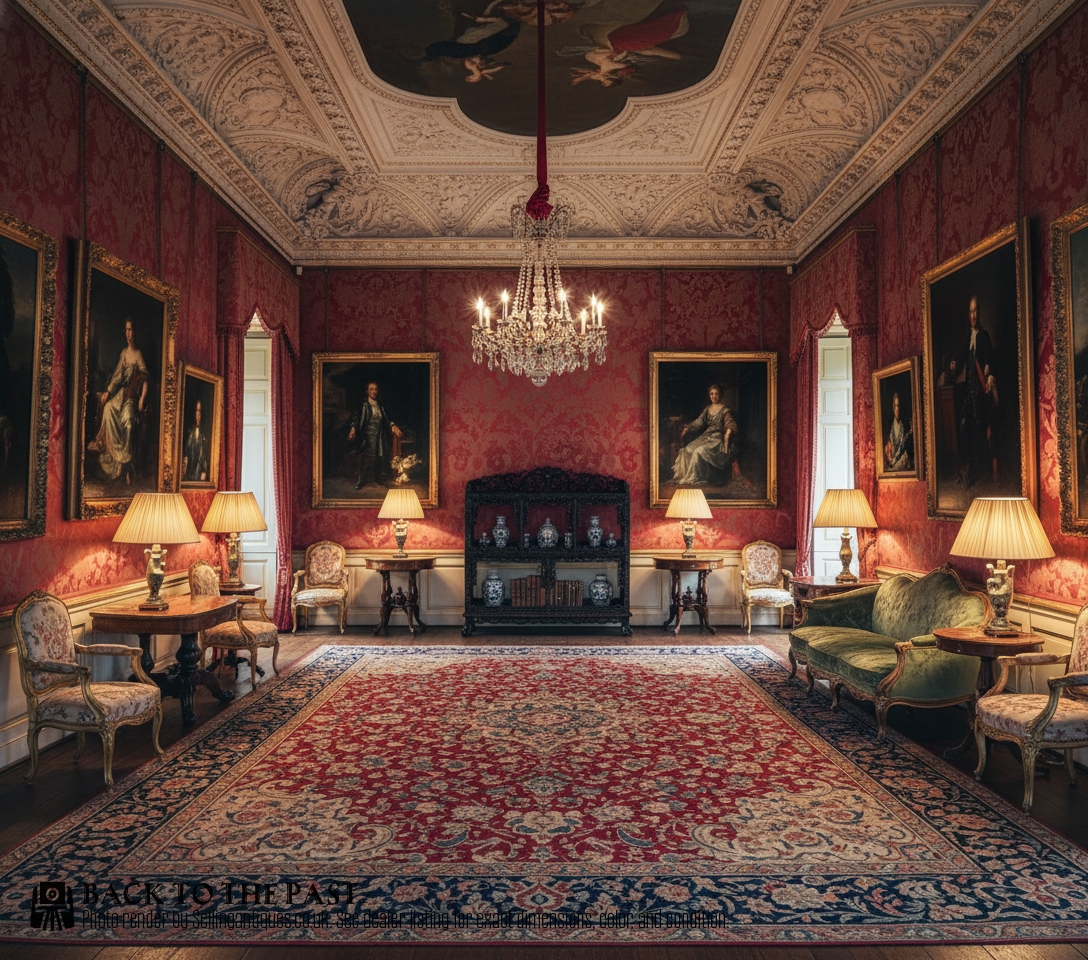
Oriental Open Bookcase
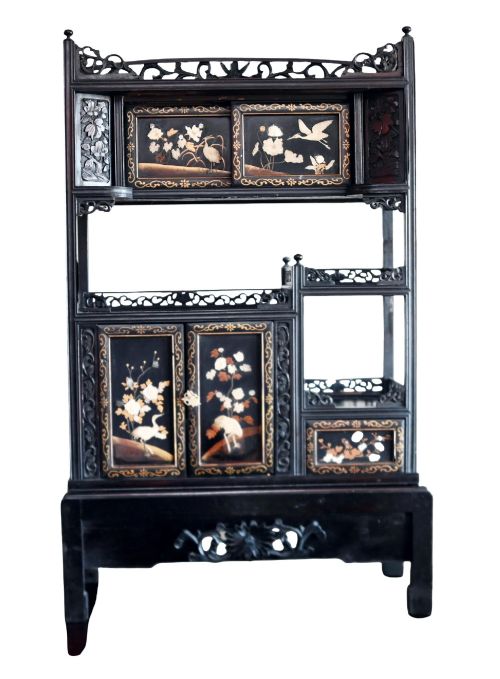
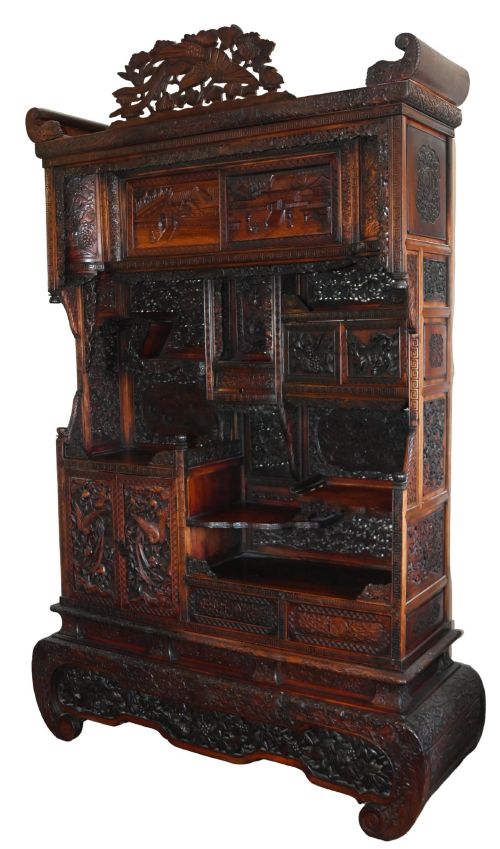
An oriental open bookcase combines display shelves with cabinet storage, often taking the form of a shodana or display cabinet. These pieces accommodate books and ornaments alike within open compartments and enclosed sections.
The selections span the nineteenth century into the early twentieth century, incorporating styles such as Chinese Qing Dynasty, Japanese taste, and Victorian Chinoiserie. They range from dwarf side-cabinets to taller display shelves.
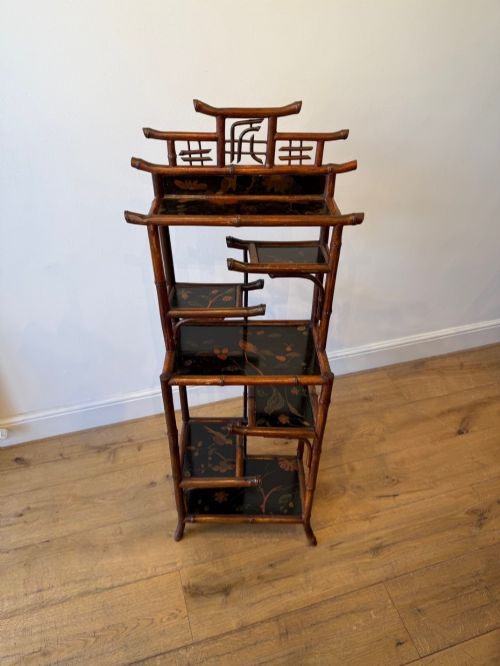
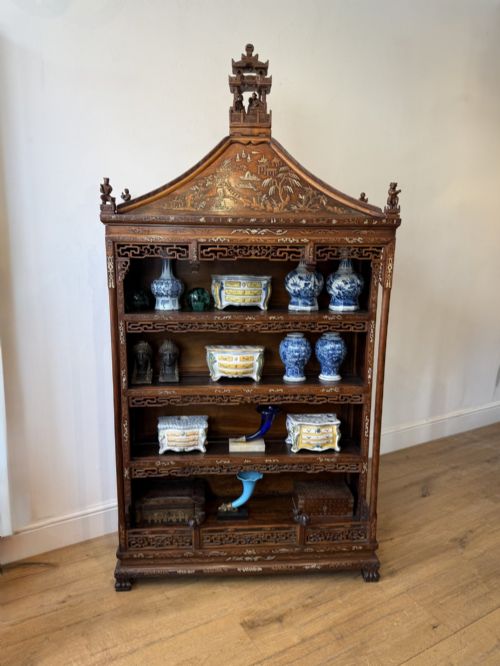
Forms include music cabinets, whatnot bookcases, and pagoda display cabinets, reflecting diverse cross-cultural influences from Chinese export to French Japonisme.
How they were made
Cabinetmakers utilised dense timbers including hardwood, rosewood, mahogany, walnut, and bamboo. These structural materials provide the sturdy framework required for multiple display tiers.
Surfaces frequently feature lacquer finishes, brass mounts, and mother-of-pearl inlay, alongside profuse carving that defines the ornamental detailing.
Oriental Open Bookcase Retail Price Guide 2026
Typical asking prices for oriental open bookcase among the pieces listed under this phrase on Sellingantiques today, from the lower quarter to the upper quarter. They describe what is for sale here now, not the wider market.
What varies in quality
The refinement of the carving distinguishes finer examples, where crisp detail on hardwood or rosewood marks out superior output. Simpler constructions rely on basic timber frames with minimal ornamentation.
The integration of decorative elements like mother-of-pearl inlay and brass hardware indicates the level of care taken during production.
Gabriel Viardot
The Oriental Open Bookcase Glossary
- Shodana
- A Japanese multi-tiered shelving unit with staggered shelves and small cupboards. These pieces were popularised in Europe during the nineteenth century.
- Hongmu
- A category of dense, heavy Chinese hardwoods prized for dark tones and durability. Items made from this material often feature intricate carved decoration.
- Japonisme
- A Western artistic style inspired by Japanese art and design, prominent in the late nineteenth century. It heavily influenced European furniture makers.
- Whatnot
- A piece of furniture consisting of a set of open shelves for displaying small objects. They often double as bookcases or side-cabinets.
Oriental Open Bookcase: Frequently Asked Questions
What is an oriental open bookcase?
An oriental open bookcase is a display unit featuring multiple shelves, sometimes combined with enclosed cupboards. They originate from various periods including the nineteenth century and early twentieth century.
These pieces draw on Chinese and Japanese design traditions, encompassing forms like shodanas, whatnot bookcases, and display cabinets.
How were these bookcases used?
Historically, they served to display collections of small ornaments, ceramics, and books. The open shelves allowed for decorative arrangement.
Enclosed sections provided storage for more private items or music rolls, balancing display with utility.
What materials are typical?
Common materials include hardwoods such as rosewood and hongmu, alongside walnut and mahogany. Bamboo also appears in lighter shelf structures.
Surface decoration frequently involves red lacquer, brass fittings, and mother-of-pearl inlay to enhance the appearance.
How do styles differ?
Styles range from traditional Chinese Qing Dynasty pieces to French Japonisme interpretations and Victorian Chinoiserie. Some exhibit profuse carving, while others rely on clean bamboo structures.
Understanding the design context helps identify whether a piece leans towards Chinese export work or European adaptation.