
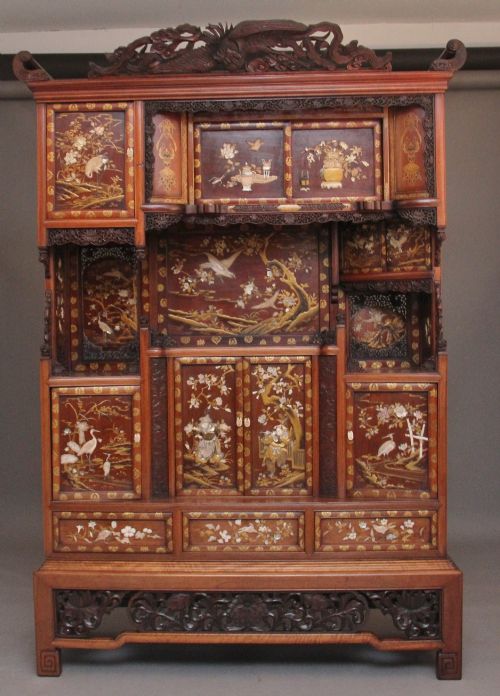

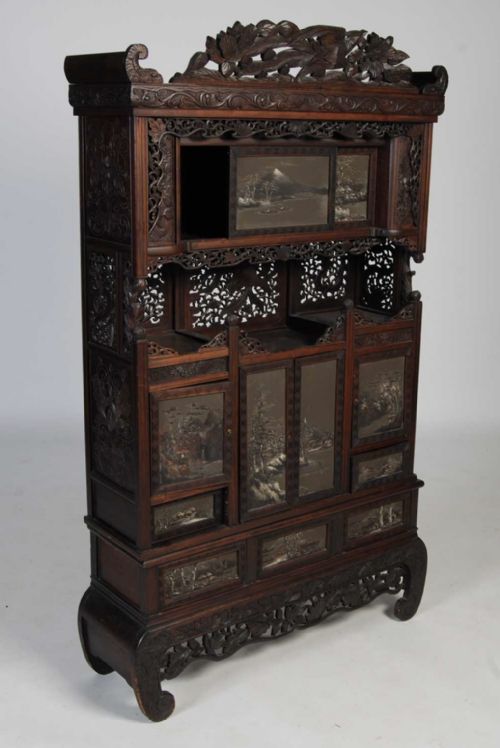


Asian Curio Cabinet
An asian curio cabinet organises small treasures behind glass and open shelving, bringing decades of craftsmanship into your home.
Asian Curio Cabinet
When you search for an asian curio cabinet, you are looking at display furniture designed to exhibit precious objects, porcelain, and small carvings. The selection on this page ranges from compact display stands to large nineteenth century cabinets.
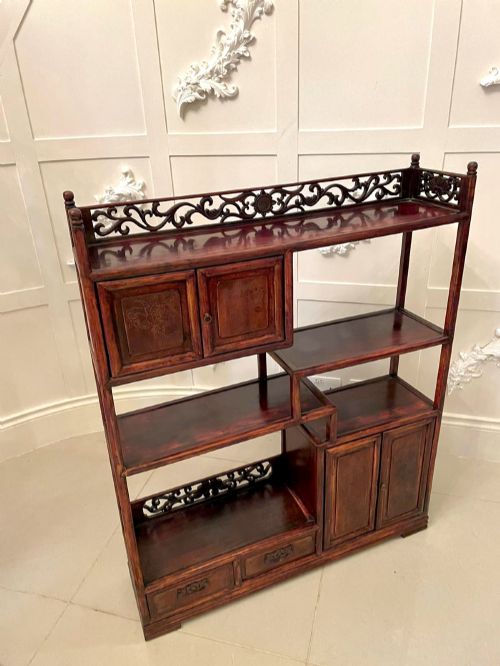
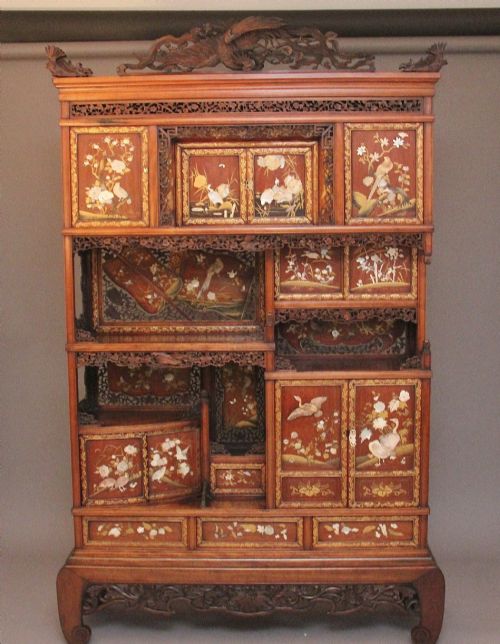
The pieces you are most likely to meet here include Japanese shodona cabinets from the Meiji and Taisho periods alongside Chinese hardwood display cabinets. These items reflect distinct regional aesthetic traditions in their construction and ornament.
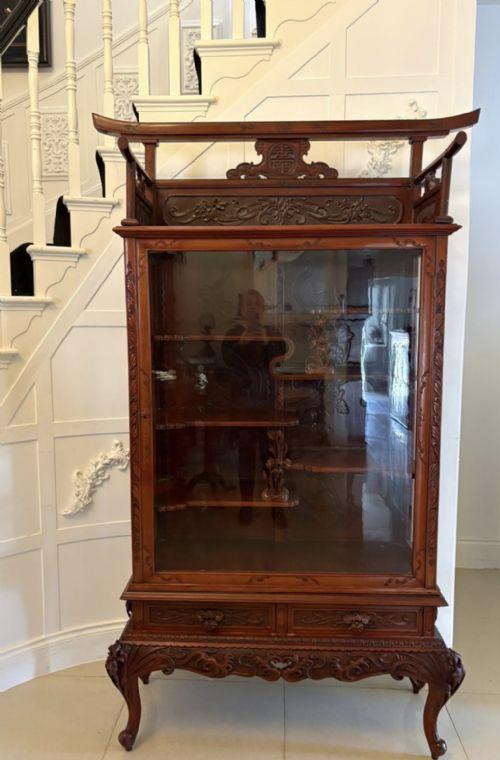
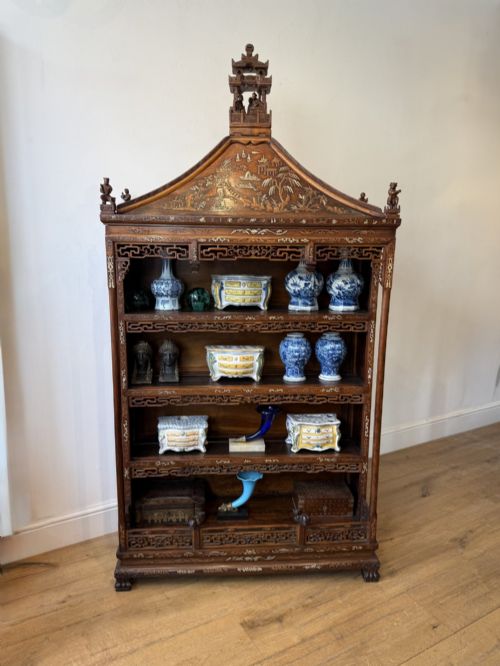
Many examples feature asymmetric shelving known as shodona, which allows for dynamic arrangement of ornaments. Others take the form of pagoda cabinets or glazed hardwood cases intended to protect contents from dust.
How they were made
Hardwood forms the structural core of these cabinets, utilising dense timbers such as hongmu that provide stability for intricate carving. Workshops employed traditional joinery techniques without metal fasteners to construct the frames and shelving.
Lacquer surfaces appear frequently, often built up in multiple layers over wood before receiving hand-polished finishes. Artisans applied decorative details using mother-of-pearl, bone inlay, and brass fittings to accent the dark timber.
Glazing was incorporated into doors to secure the interior while maintaining visibility for displayed items. Carved relief panels adorn lower sections and cornices, executed by specialists in woodcarving.
Listings span the nineteenth century through the early twentieth century, featuring hardwood, lacquer, and bone inlay.
What varies in quality
The refinement of the carving separates standard production from exceptional examples, where undercuts and crisp details reveal the hand of a master. Timber selection also dictates grade, with heavier, denser hardwoods commanding greater respect among collectors.
Surface preservation affects the overall integrity of the piece, particularly with lacquered or inlaid elements that can suffer from shrinkage over decades. Original brass hardware and intact glass panes contribute significantly to the standing of a cabinet.
The Asian Curio Cabinet Glossary
- Shodona
- A traditional Japanese multi-shelf display cabinet featuring staggered compartments. These pieces were developed for the display of art objects and scholarly treasures.
- Hongmu
- A category of dense, dark Asian hardwoods prized for furniture making. This material takes a fine polish and supports intricate carving.
- Meiji Period
- The era in Japanese history spanning from eighteen sixty-eight to nineteen twelve, noted for opening trade and refined decorative arts. Cabinets from this time often show exceptional joinery and lacquer work.
- Mother-of-Pearl
- The iridescent inner layer of mollusc shells used for inlay work. Artisans cut thin sections to form floral and geometric patterns on cabinet doors.
- Taisho Period
- The period in Japan following the Meiji era, lasting from nineteen twelve to nineteen twenty-six. Furniture from this time bridges traditional forms with early twentieth-century design influences.
Asian Curio Cabinet: Frequently Asked Questions
What fits inside an asian curio cabinet?
These cabinets suit small ceramics, jade carvings, netsuke, and other compact collectibles. The varied shelf heights accommodate objects of diverse dimensions.
Larger compartments house taller vases or scholarly scrolls, while enclosed lower sections provide storage for supplementary items.
How do I date an asian curio cabinet?
Dating relies on timber characteristics, joinery methods, and decorative motifs associated with specific dynastic or imperial periods. Meiji and Qing pieces display distinct carving styles and material combinations.
Examining the back panels and interior construction reveals the age of the wood and the tools used in manufacture.
Where should I place a display cabinet?
Position the cabinet away from direct sunlight and heat sources to protect delicate lacquer and timber surfaces. A stable interior wall prevents vibration that could affect fragile displayed objects.
Ensure adequate ambient light reaches the glass panes to properly illuminate the contents within.
What is the difference between shodona and standard cabinets?
Shodona cabinets feature asymmetric, staggered shelving designed specifically for the aesthetic display of curios in Japanese interiors. Standard cabinets generally offer symmetrical layouts with uniform shelf divisions.
Both forms serve to exhibit collections, but shodona prioritize visual variety through their architectural arrangement.