


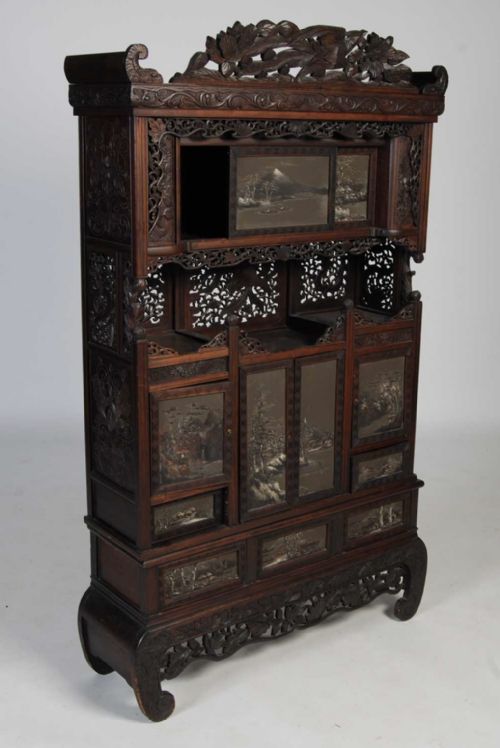


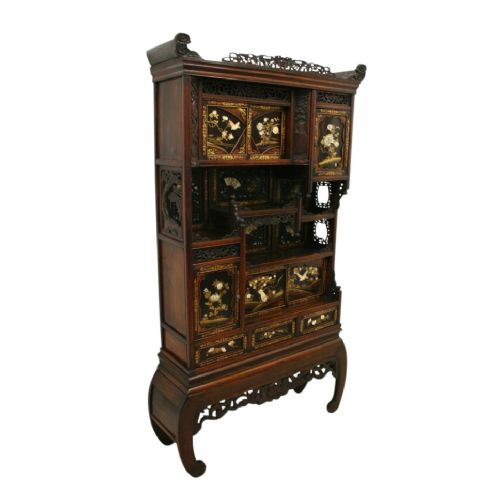
Carved Hardwood Display Shelves
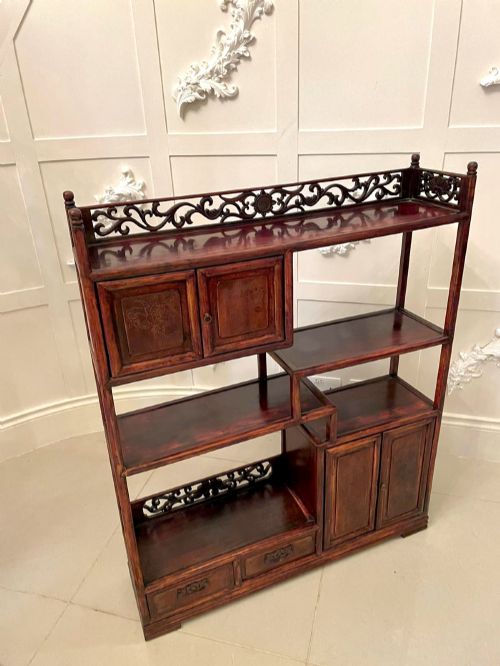
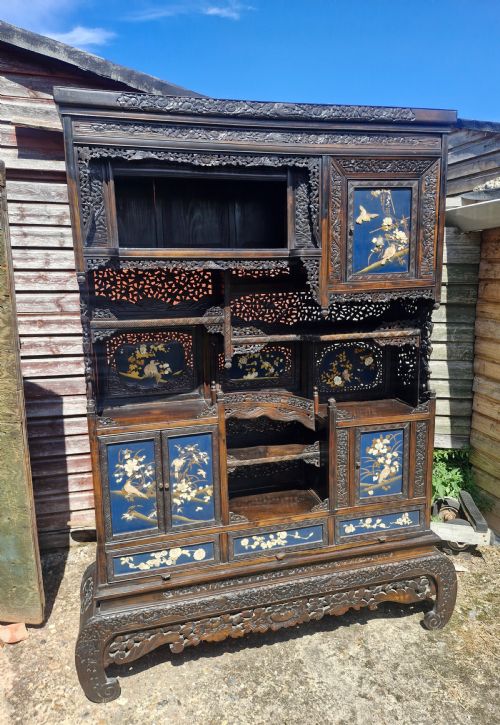
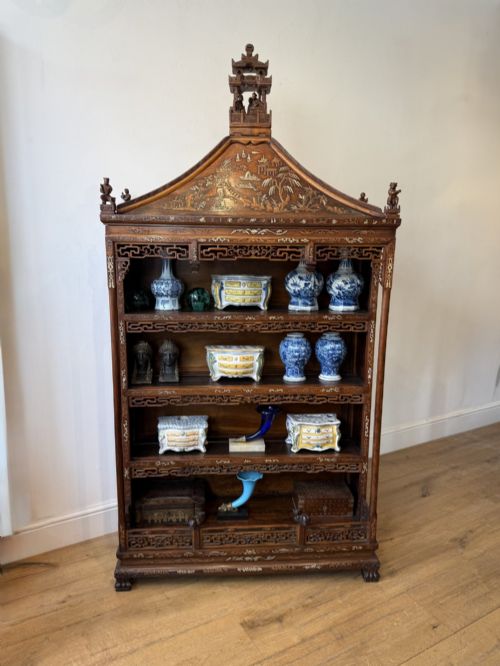
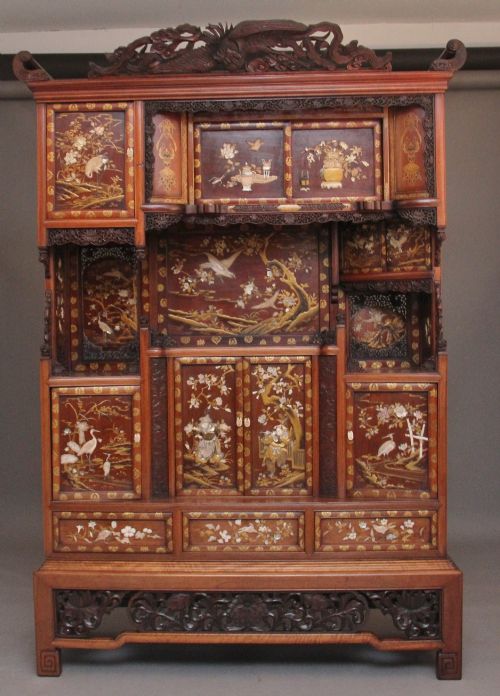
These carved hardwood display shelves bring intricate craftsmanship and rich timber tones to any interior.
Carved Hardwood Display Shelves
Carved hardwood display shelves encompass intricate storage pieces designed to showcase small objects, ceramics, and ornaments. When searching for carved hardwood display shelves, buyers encounter diverse forms ranging from wall-hanging brackets to substantial floor-standing cabinets.
The pieces appearing in this category span the nineteenth and early twentieth centuries, originating primarily from Chinese and Japanese workshops. Makers utilised dense timbers to create complex shelving tiers, glazed compartments, and open display areas.
Examples include Chinese Hongmu open cabinets, Japanese shodana cabinets, and Anglo-Indian wall brackets. Each variation reflects the distinct aesthetic preferences of its regional origin while maintaining a strong emphasis on decorative carving.
Materials and Construction
Artisans constructed these shelves using dense tropical timbers, most notably Hongmu and rosewood, selected for their stability and capacity to hold fine detail. These woods were carved deeply into asymmetrical shelving tiers, pierced panels, and scrolling motifs.
Many examples incorporate contrasting decorative elements such as bone inlay, mother-of-pearl, and lacquered surfaces. Joinery techniques allowed complex frameworks of staggered shelves to support heavy porcelain and decorative objects without metal fasteners.
Listings feature items dated from the nineteenth and early twentieth centuries, encompassing the Meiji period and the Qing Dynasty.
Judging Quality and Execution
The distinction between standard and exceptional pieces lies in the depth and crispness of the carving. Superior examples exhibit undercut foliage, figurative scenes, and pierced fretwork that retain sharp edges and clear definition.
Material selection also dictates overall standing, with heavier, highly figured Hongmu or dense rosewood commanding greater attention than simpler utility timbers. Integrated decorative flourishes, such as precisely fitted bone inlay or undamaged lacquer work, elevate the piece.
The Carved Hardwood Display Shelves Glossary
- Shodana
- A traditional Japanese multi-tiered display cabinet featuring staggered shelves and sliding doors. These pieces were designed to display prized ceramics and scholar's objects.
- Hongmu
- A category of dense, heavy Chinese hardwoods translated literally as red wood. It encompasses timbers like padauk and rosewood used for formal furniture.
- Chinoiserie
- European artistic styles reflecting Chinese motifs and decorative techniques. This aesthetic influenced various nineteenth-century decorative items produced for export markets.
- Bone Inlay
- The technique of recessing thin sections of animal bone into carved channels within the timber. It creates pale, contrasting decorative patterns against dark hardwoods.
Carved Hardwood Display Shelves: Frequently Asked Questions
How do I date these cabinets?
Dating relies on stylistic markers, construction methods, and material characteristics documented across nineteenth and early twentieth-century examples. Pieces often correspond to specific manufacturing periods in China and Japan.
Examining the joinery and the type of timber used helps determine whether a piece belongs to the late Qing Dynasty or the Meiji era.
Where should I place these shelves?
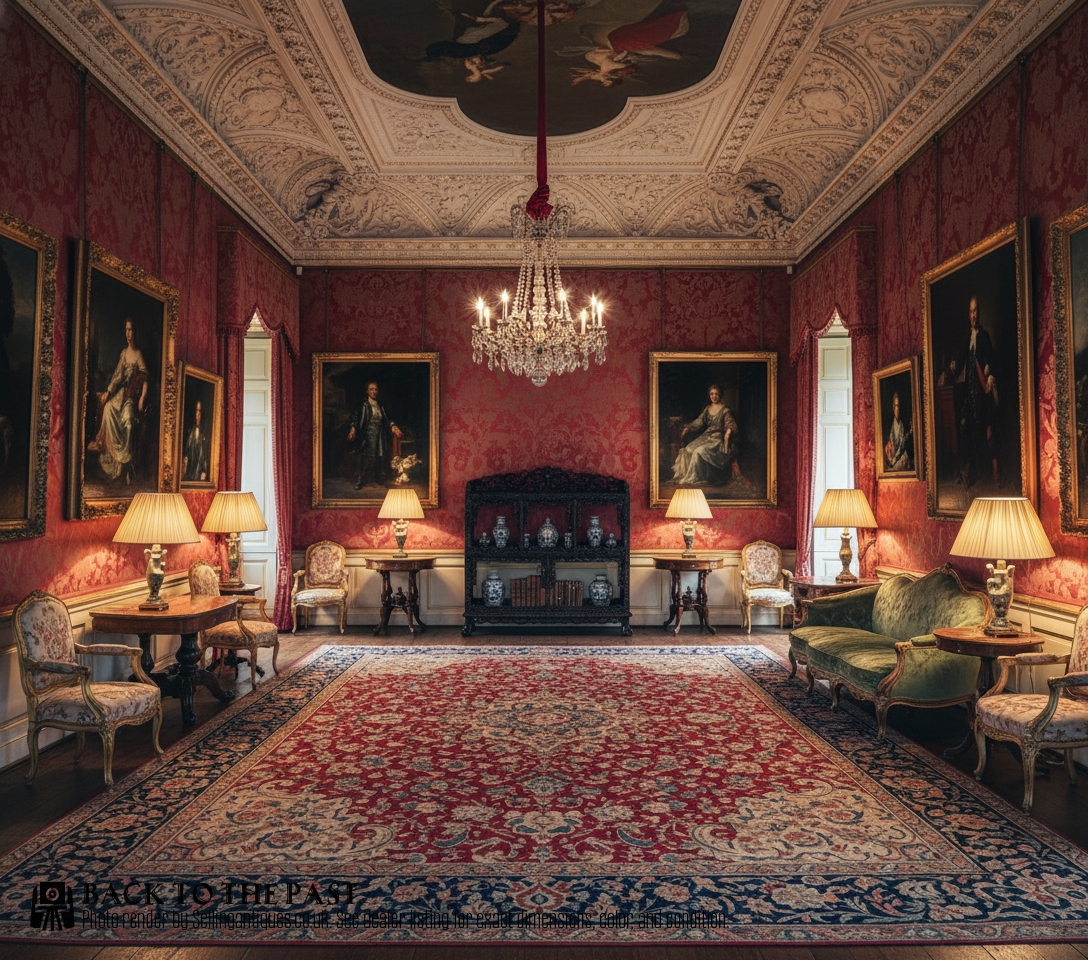
These display pieces suit spaces where they can be appreciated close up, functioning as focal points in a study or drawing room. Their intricate shelving tiers serve to hold small collections of ceramics or glass.
Positioning them away from direct sunlight protects the dense hardwood surfaces and any delicate bone inlay from drying out.
How do I clean carved hardwood?
Dusting requires a soft, dry brush to reach into the deep recesses of the intricate woodcarving without snagging delicate elements. Avoid harsh chemical cleaners or excess moisture on antique timber surfaces.
Periodic application of appropriate furniture wax helps preserve the natural sheen of rosewood and Hongmu without building up heavy residues.