


Asian Carved Display Cabinet
An asian carved display cabinet brings intricate craftsmanship and rich timber tones into a room, offering both storage and a stage for treasured objects.
Asian Carved Display Cabinet
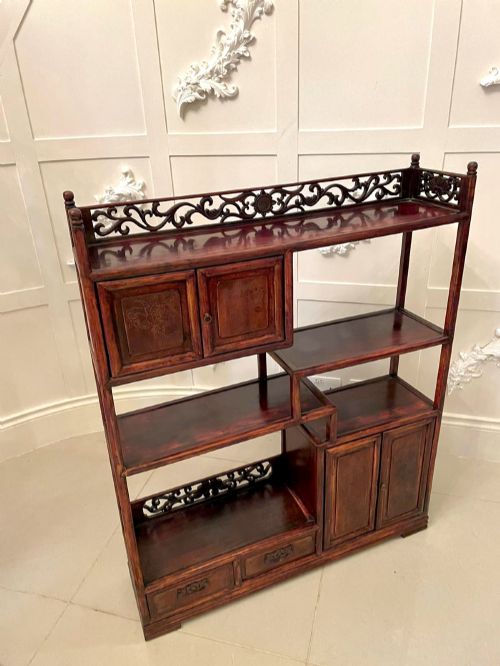
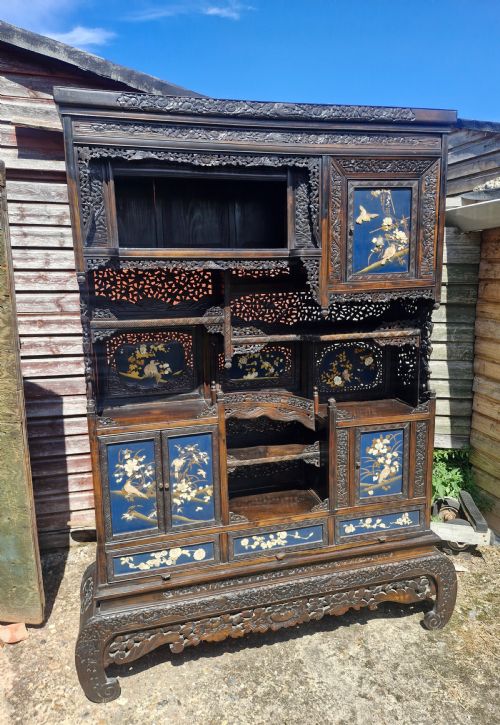
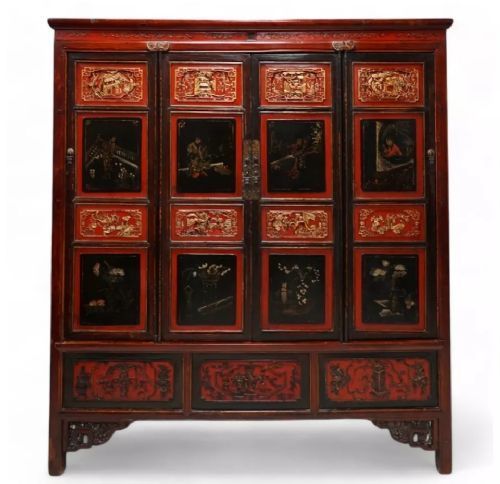
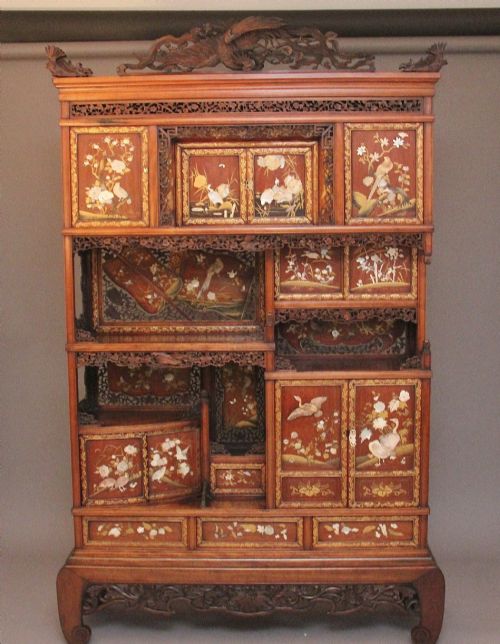
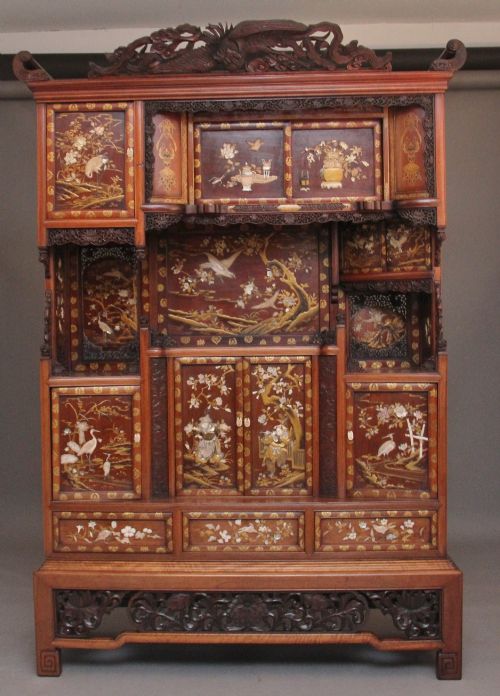
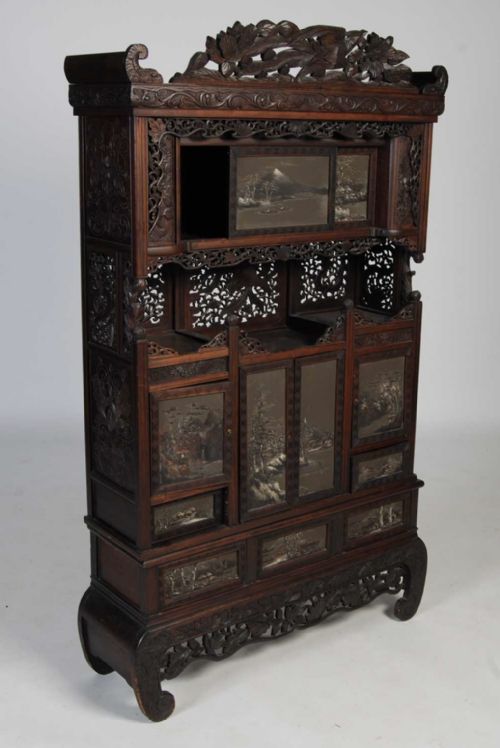
When you examine an asian carved display cabinet on this page, you encounter pieces originating primarily from the nineteenth and early twentieth centuries. These works span distinct cultural traditions, including Chinese Qing Dynasty pieces and Japanese Meiji period examples such as the traditional shodona.
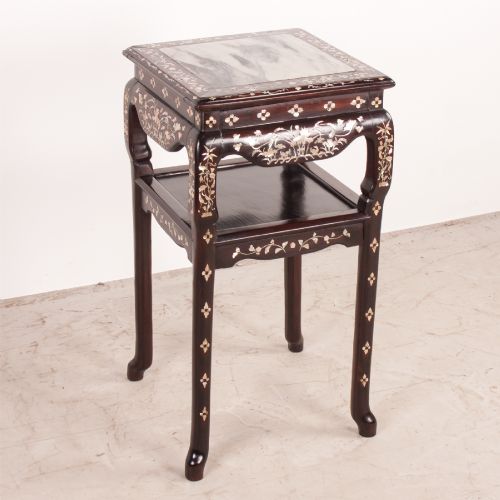
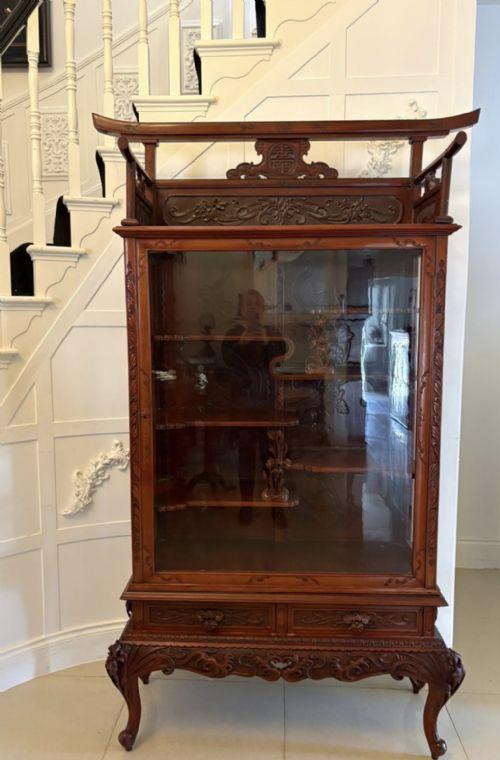
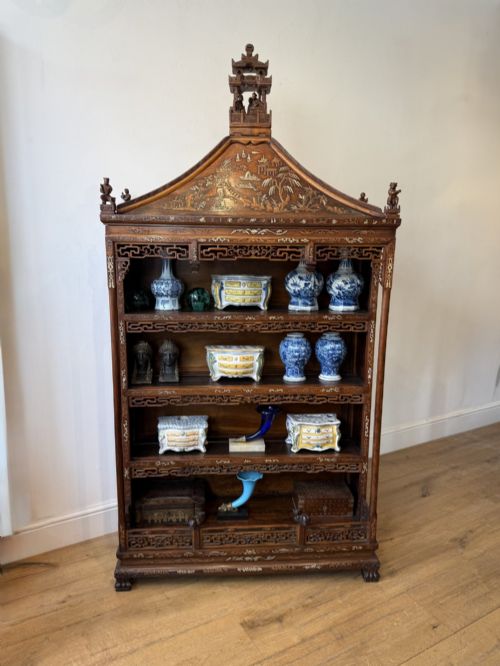
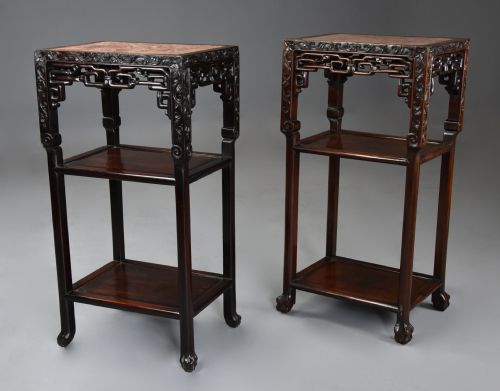
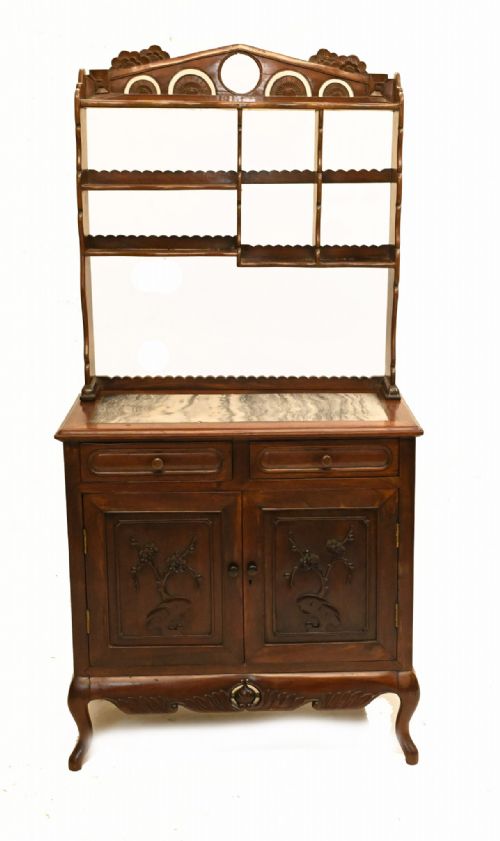
The selection ranges from compact dwarf side-cabinets and occasional tables to substantial glazed storage cupboards and tall floor-standing cabinets. Hardwoods form the structural core of most examples, complemented by specialised lacquer finishes and inlaid decorative elements.
Makers and workshops across East Asia produced these furnishings for both domestic interiors and export markets, adapting traditional forms for Western homes. The surviving pieces demonstrate remarkable versatility in domestic settings, functioning as focal points for curated collections.
Materials and Construction
Construction relies heavily on dense Asian hardwoods, including rosewood, zitan, and hongmu, which provide the structural integrity required for intricate deep relief carving. Artisans also utilised elm and other regional timbers to form the underlying framework of cabinets and cupboards.
Surface decoration frequently involves multi-layered lacquer techniques, seen in red, black, and cinnabar finishes applied to wood surfaces. Workshops integrated contrasting materials such as polished marble inserts, mother-of-pearl inlay, brass fittings, bone accents, and glass panels into the primary wooden structures.
Listings span the nineteenth century up to nineteen-twenty, featuring rosewood, lacquer, and marble.
Quality Variations
The depth, sharpness, and undercut precision of the wood carving distinguish exceptional examples from standard production pieces. Superior items display meticulous hand-tooling across every visible surface, whereas lesser pieces rely on shallow surface incisions.
The integrity of the timber framing and the stability of joinery dictate longevity, alongside the preservation of original lacquer and inlay. Pieces retaining their undisturbed surface patination and complete decorative elements command greater attention from discerning collectors.
The Asian Carved Display Cabinet Glossary
- Shodona
- A traditional Japanese tiered display cabinet featuring asymmetrical shelving, sliding doors, and small compartments. These pieces were designed to showcase precious ornaments and scholarly objects.
- Hongmu
- A dense, heavy tropical hardwood prized by Chinese cabinetmakers for its rich colour and ability to hold fine carved detail. It translates literally as red wood.
- Zitan
- An exceptionally dense and slow-growing Asian hardwood used for high-status furniture during the Qing Dynasty. Its dark, fine-grained surface takes a high natural polish.
- Cinnabar lacquer
- A decorative technique involving numerous brushed layers of red lacquer derived from mercury sulphide, which is carved once hardened. This process creates deep, tactile surface patterns.
- Qing Dynasty
- The final imperial dynasty of China, lasting from sixteen-forty-four to nineteen-twelve, known for prolific decorative arts and elaborate hardwood furniture production.
Asian Carved Display Cabinet: Frequently Asked Questions
What is a shodona cabinet?
A shodona is a Japanese display cabinet characterised by staggered shelving and small compartment doors. These pieces emerged prominently during the Meiji period.
Craftsmen designed them to exhibit delicate ceramics, bronzes, and scholarly items within traditional interiors.
How do I care for hardwood furniture?
Maintain stable indoor humidity levels to prevent the dense tropical hardwoods from splitting or warping over time. Avoid placing these cabinets in direct sunlight to protect original lacquer and polished timber surfaces.
Dust regularly with a soft, dry cloth rather than using silicone-based polishes that can degrade historical finishes.
What woods were commonly used?
Cabinetmakers utilised dense Asian timbers such as rosewood, hongmu, and zitan for their strength and deep colour. Elm also served as a reliable structural wood for larger storage cupboards.
These timbers provided a stable base capable of supporting deep relief carving and secure joinery.
How are Chinese and Japanese cabinets different?
Chinese cabinets often emphasise symmetrical architectural forms, dragon motifs, and deep panel carving in dense hardwood. Japanese shodona pieces frequently feature asymmetrical tiered shelving and lacquerwork.
Both traditions integrate specialised decorative inlays such as mother-of-pearl and bone.