


Late 19th Century Chinese Cabinet
These late 19th century chinese cabinet examples bring rich Qing Dynasty craftsmanship and distinct regional timber into your interior.
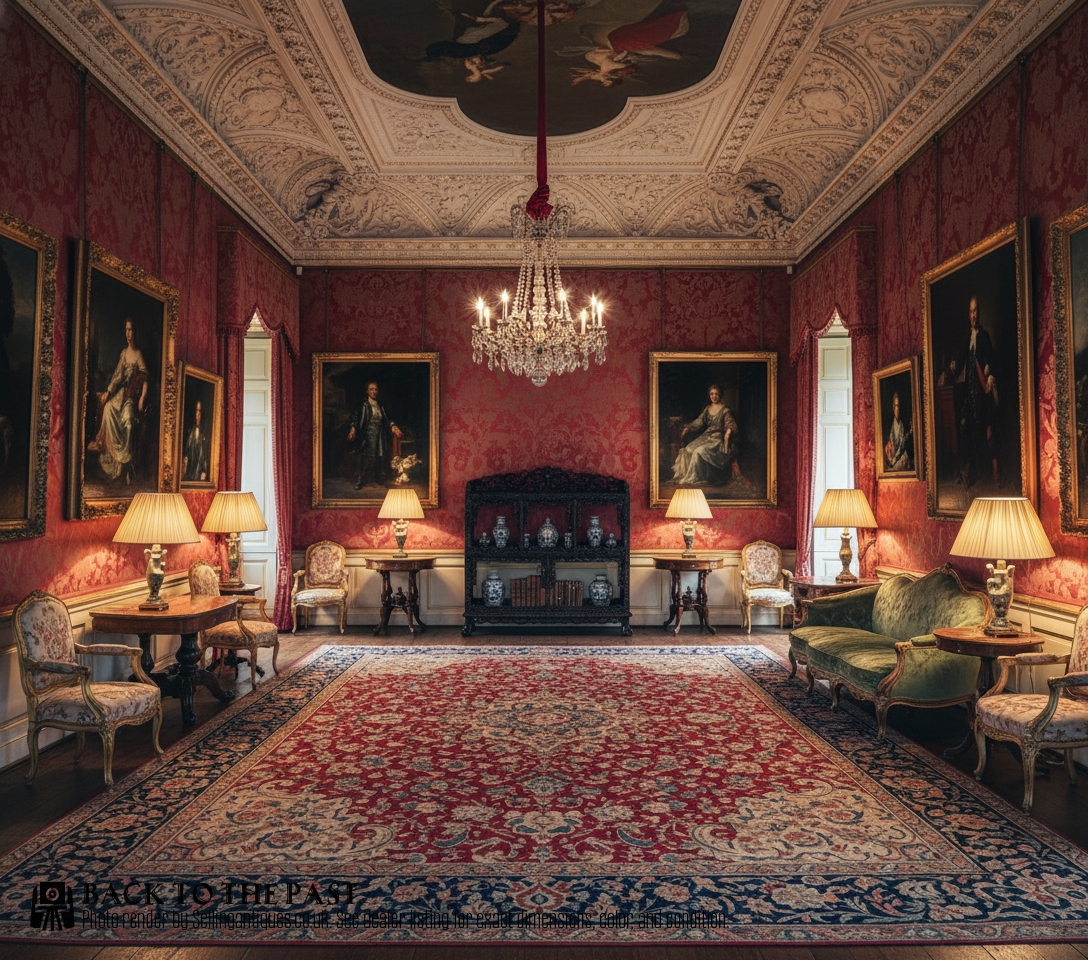
Late 19th Century Chinese Cabinet
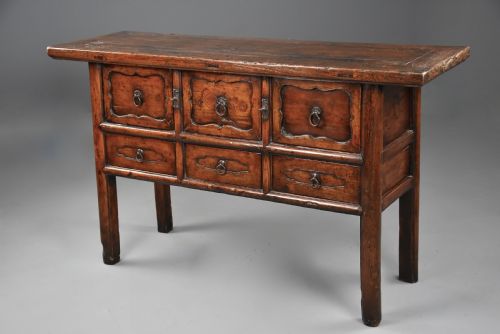
A late 19th century chinese cabinet brings together traditional forms from the Qing Dynasty and provincial workshops, ranging from large sideboards and apothecary chests to compact table cabinets and plant stands. You will most frequently encounter elm and hardwood pieces, alongside lacquered surfaces originating from regions such as Fujian and Shanxi.
The objects span formal display furniture and utilitarian storage, including multi-drawer apothecary chests and small sideboards designed for specific domestic uses. Surviving pieces often demonstrate the distinct aesthetic choices of late 19th century provincial makers working within centuries-old woodworking traditions.
How they were made
Makers utilised dense timbers like elm, Hongmu, padouk, camphor and general hardwood alongside structural iron and brass fittings. These woods provided the necessary strength for complex joinery without relying on modern fasteners.
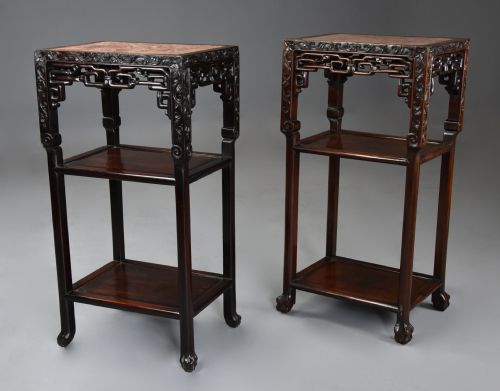
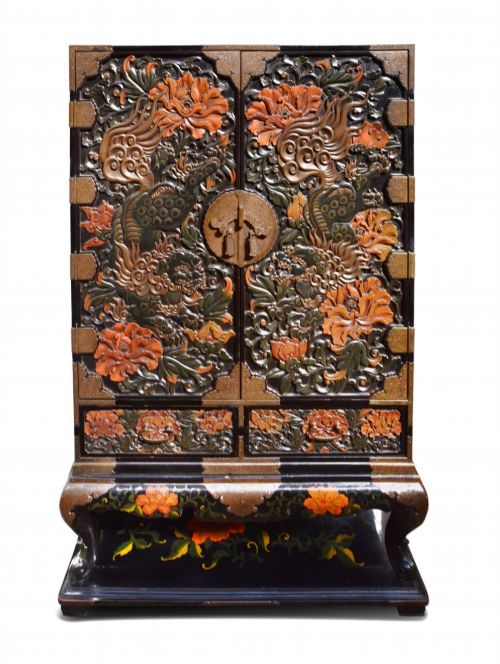
Surfaces received elaborate treatments including red and black lacquer finishes, intricate carved details and inlaid marble panels. Many pieces combined joinery techniques with applied decoration to achieve both durability and visual depth.
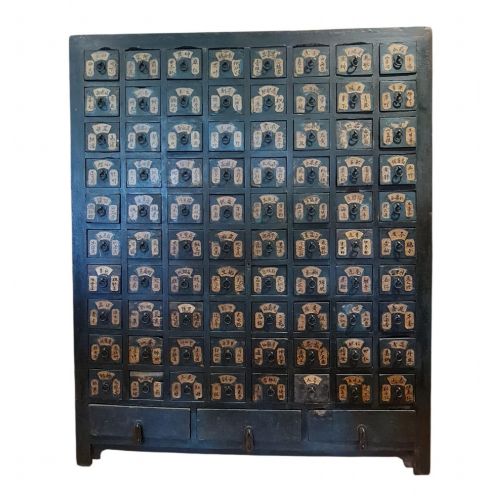
The archive includes specialised apothecary chests featuring eighty individual drawers alongside freestanding pot stands.
What varies in quality
The distinction between standard examples and exceptional pieces rests on the depth of carving and the selection of timber. Profusely carved surfaces and heavier hardwoods elevate a piece beyond basic utilitarian storage.
The integrity of the lacquer work and the survival of original brass or iron hardware further distinguish finer items. Regional provenance and the complexity of internal configurations, such as numerous apothecary drawers, influence the character of the object.
The Late 19th Century Chinese Cabinet Glossary
- Qing Dynasty
- The final imperial dynasty of China, lasting from 1644 until 1912. Furniture from this era often combines traditional joinery with regional decorative styles.
- Lacquer
- A durable finish applied to wood using natural resin derived from trees. It provides a glossy protective coating that accepts rich red and black pigmentation.
- Apothecary Chest
- A multi-drawer cabinet traditionally utilised in Chinese medicine for storing herbs and dried ingredients. These pieces typically feature numerous small compartments.
- Hongmu
- A translation meaning red wood, referring to various dense and dark tropical hardwoods utilised in fine Chinese furniture construction.
- Elm
- A resilient native timber utilised extensively in provincial Chinese cabinet making. It offers prominent grain patterns and structural stability.
Late 19th Century Chinese Cabinet: Frequently Asked Questions
How are apothecary chests different?
Apothecary chests are characterised by dozens of small drawers designed to hold medicinal herbs and ingredients. They were utilised in traditional pharmacies and homes for organised storage.
Their distinct multi-drawer layouts set them apart from standard sideboards and display cabinets.
Where were these cabinets made?
Production occurred across various Chinese provinces, including Fujian and Shanxi, as well as broader regional workshops. Each area contributed distinct timber choices and decorative techniques.
Provincial items often reflect local material availability rather than imperial workshop standards.
What woods were used?
Makers utilised native elm and camphor alongside dense imported hardwoods like Hongmu and padouk. These materials provided durability and distinctive grain patterns.
Metal elements in brass and iron frequently reinforced the wooden construction.
How do I care for lacquer?
Lacquer surfaces require protection from direct sunlight and extreme humidity changes to prevent cracking. Dusting with a soft dry cloth maintains the finish without chemical polishes.
Stable indoor environments help preserve the original surface integrity.