

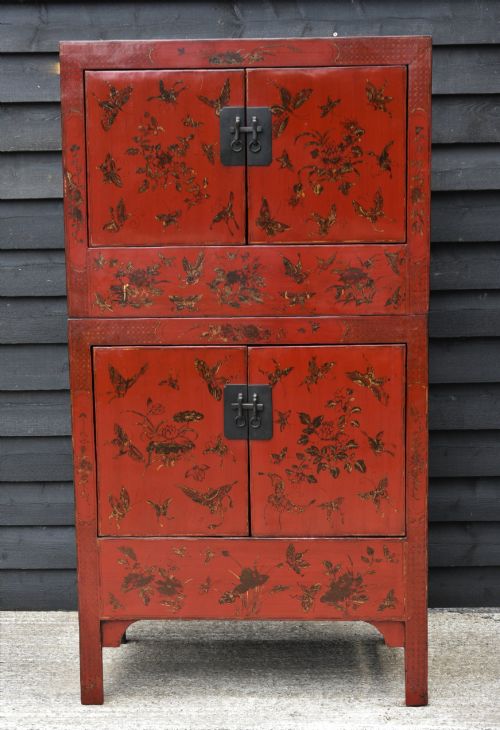
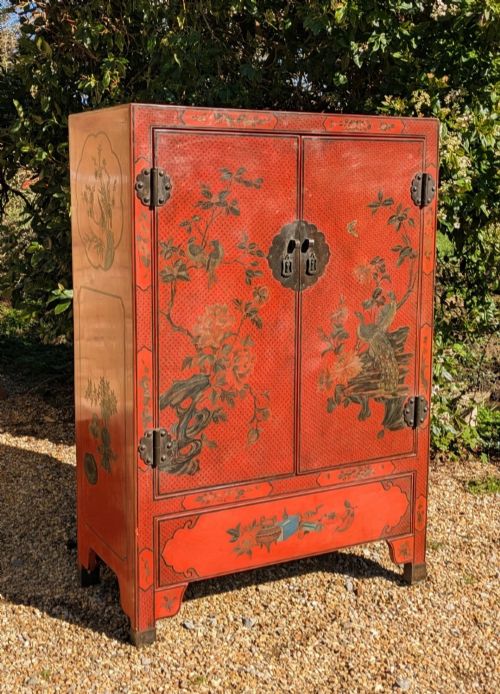
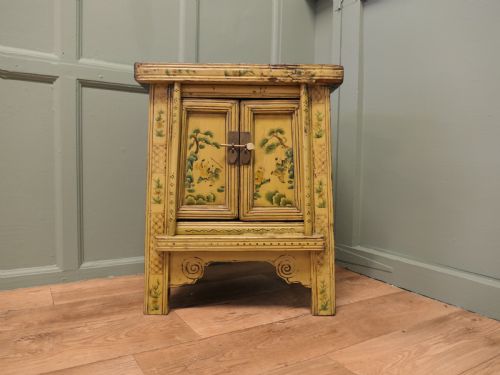
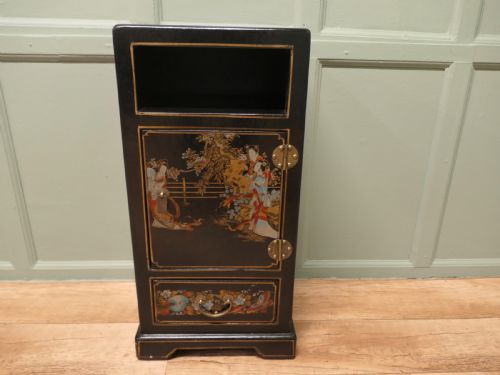
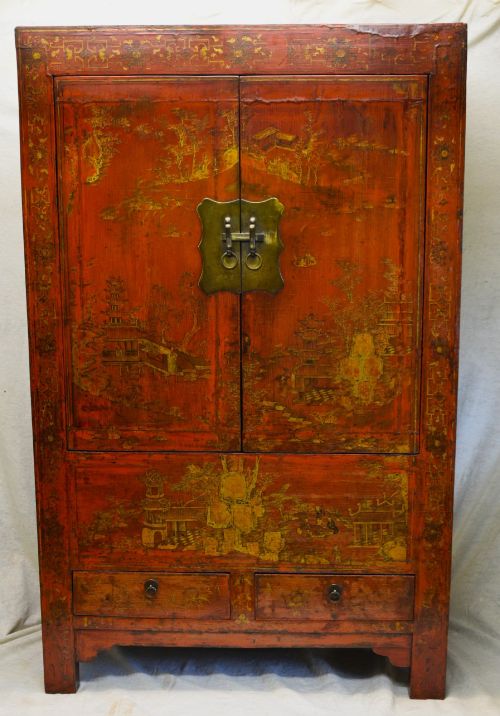
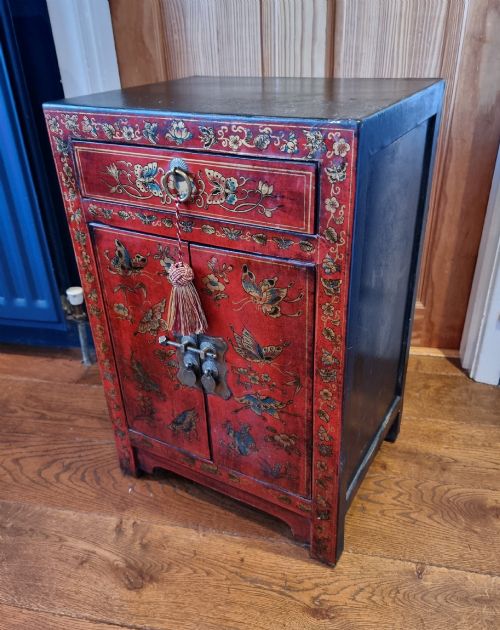
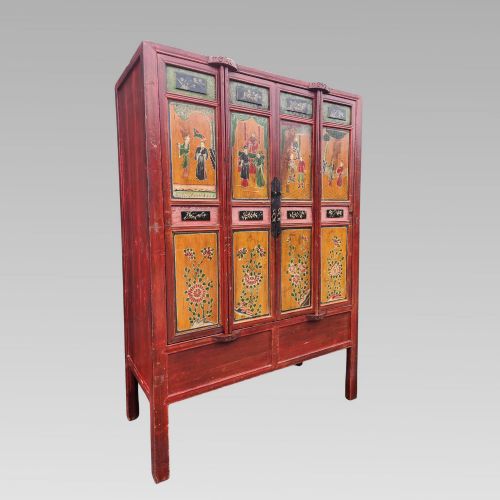


Chinese Hand Painted Lacquer Cupboard
These pieces of chinese hand painted lacquer cupboard bring brilliant colour and historic depth into a room.
Chinese Hand Painted Lacquer Cupboard
A chinese hand painted lacquer cupboard offers substantial storage whilst introducing rich visual character to an interior. Buyers investigating this category encounter items designed for domestic utility, ranging from compact side units to large marriage or wedding cabinets.
The pieces available span the nineteenth century, nineteen hundred, and nineteen thirty, encompassing styles such as Qing Dynasty, Chinoiserie, traditional Chinese, and Chinese antique. Forms include sideboards, display cabinets, cocktail cabinets, and storage armoires.
Red lacquer is particularly prevalent among the pieces found here, alongside cream and multi-coloured painted finishes. These items function as striking focal points in contemporary and traditional spaces alike.
How they were made
Construction relies primarily on wood, finished with layers of lacquer to build a smooth, durable surface. Artisans applied polychrome paint and gold leaf to create intricate decorative scenes upon the wooden frames.
Metal hardware such as brass and iron provides structural reinforcement and functional closure for doors and drawers. These traditional materials work in tandem to secure longevity and distinct aesthetic contrast.
Chinese Hand Painted Lacquer Cupboard Retail Price Guide 2026
Typical asking prices for chinese hand painted lacquer cupboard among the pieces listed under this phrase on Sellingantiques today, from the lower quarter to the upper quarter. They describe what is for sale here now, not the wider market.
The listings span the nineteenth century up to nineteen thirty, featuring materials such as brass, iron, gold leaf, and polychrome paint on lacquered wood.
What varies in quality
The refinement of the painted and gilded surface work distinguishes the finest examples from simpler utilitarian items. Details executed in gold leaf and polychrome paint display varying degrees of artistic complexity and preservation.
The depth of the lacquer layers and the integrity of the underlying wood determine the tactile substance of each cabinet. Coarser domestic pieces contrast with more elaborate marriage or cocktail cabinets designed for prominent display.
The Chinese Hand Painted Lacquer Cupboard Glossary
- Lacquer
- A durable finish applied to wood surfaces in multiple coats to create a hard, smooth sheen. It protects the timber and provides a base for painted decoration.
- Chinoiserie
- European interpretations and adaptations of traditional Chinese artistic motifs and styles. This aesthetic heavily influences many nineteenth and twentieth century decorative cabinets.
- Polychrome
- The practice of decorating surfaces with multiple colours. This technique brings vibrant life to floral and figurative scenes on painted woodwork.
- Marriage cabinet
- A traditional large storage piece historically given to newlywed couples. These units often feature prominent red lacquer and symbolic ornamentation.
Chinese Hand Painted Lacquer Cupboard: Frequently Asked Questions
How were chinese lacquer cupboards used?
These cabinets served primarily for domestic storage, holding clothing, textiles, and household goods within traditional homes. Larger marriage cabinets held valuables and linens gifted to couples.
Today, similar pieces function as striking focal points in living areas, dining rooms, and hallways. Their internal shelving accommodates modern storage needs while preserving historic character.
How do I date a lacquer cupboard?
Dating relies on observing construction methods, timber types, and the specific style of decoration. Nineteenth-century examples often display traditional joinery alongside dense layers of red or cream lacquer.
Pieces from nineteen thirty often reflect distinct Chinoiserie revivals or cocktail cabinet formats. Comparing hardware such as brass hinges and iron mountings also aids chronological assessment.
Where should I place a lacquer cabinet?
Position these cabinets away from direct sunlight and excessive heat sources to protect the delicate lacquer and painted surfaces. Stable indoor humidity prevents timber movement and preserves the finish.
Allow sufficient space for the decorative doors to open fully without obstruction. Placing them against neutral walls lets the vibrant red and polychrome colours stand out.
What is the difference between Chinoiserie and traditional Chinese pieces?
Traditional Chinese pieces originate directly from domestic workshops within China, reflecting indigenous decorative conventions and Qing Dynasty aesthetics. They carry authentic cultural motifs embedded in daily life.
Chinoiserie items often incorporate European stylistic interpretations of Chinese design popular during later periods. Both categories utilise painted wood and lacquer techniques to achieve their visual impact.