

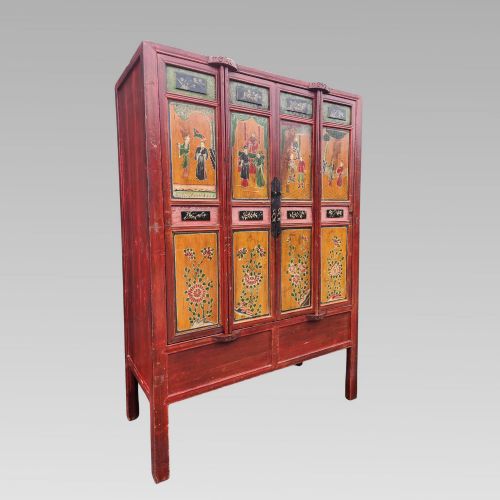


Oriental Painted Lacquer Sideboard
An oriental painted lacquer sideboard or cabinet brings rich colour, pictorial depth, and historic character to a room through traditional Asian and European Chinoiserie craft.
Oriental Painted Lacquer Sideboard
When you search for an oriental painted lacquer sideboard, you encounter an array of storage forms including cupboards, cabinets on stands, and console tables. These pieces span the eighteenth, nineteenth, and early twentieth centuries, reflecting both Chinese regional workshop output and European Chinoiserie interpretations.
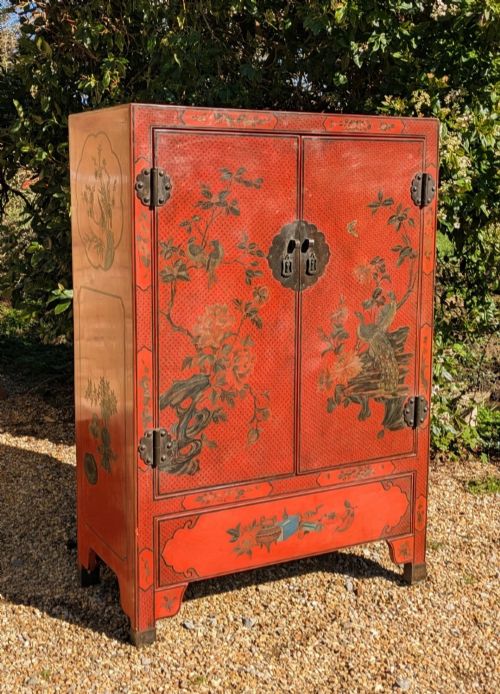
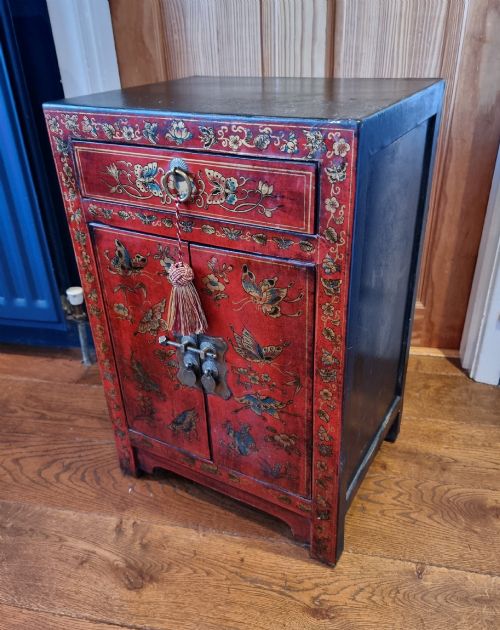
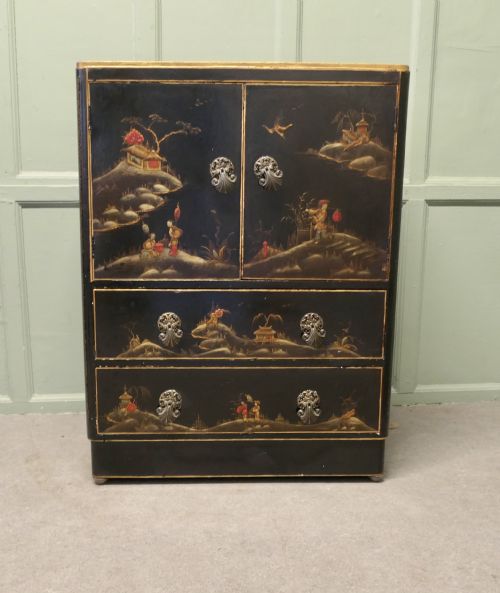
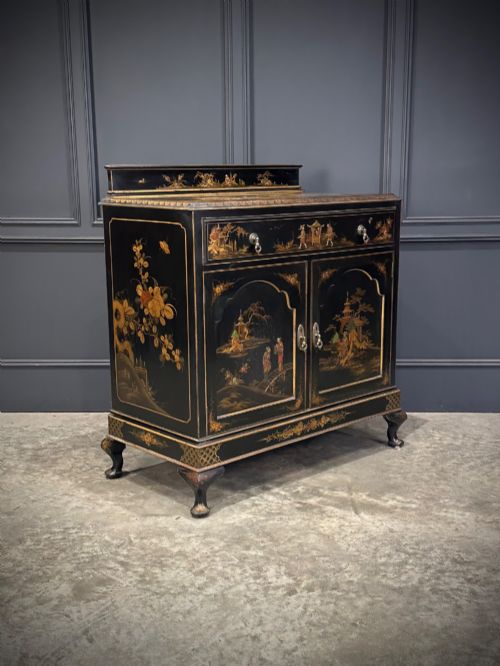
The most common forms on this page are upright storage cabinets and sideboards rendered in bold red or black lacquer finishes. Many feature distinct pictorial decoration depicting birds, flowers, and traditional landscape motifs derived from Chinese provincial and Qing Dynasty traditions.
Materials and construction methods
These pieces rely on timber carcases coated in multiple layers of lacquer to create a smooth, hard-wearing surface that takes paint and gilt decoration effectively. Artisans built up the decorative schemes using contrasting pigments, frequently highlighting the red or black grounds with metallic leaf and detailed brushwork.
Hardware such as brass hinges and lock plates provides structural reinforcement while adding a functional metallic contrast to the painted wood. Certain examples incorporate carved wooden stands or marble tops, varying the construction according to the specific regional style or period of manufacture.
Oriental Painted Lacquer Sideboard Retail Price Guide 2026
Typical asking prices for oriental painted lacquer sideboard among the pieces listed under this phrase on Sellingantiques today, from the lower quarter to the upper quarter. They describe what is for sale here now, not the wider market.
Several cupboards feature hand-painted birds perched amongst floral branches, ensuring your storage comes with permanent feathered company.
Assessing craftsmanship and condition
Quality in these lacquer pieces rests upon the crispness of the painted detail and the preservation of the underlying surface. Finer examples display intricate, well-defined depictions of birds and floral motifs that retain their original depth and contrast against the lacquer ground.
The integrity of the timber carcase and the stability of the lacquer layers determine the enduring appeal of each piece. Superior items show harmonious proportions, careful integration with their stands or bases, and well-preserved decorative surfaces that reflect their period of origin.
The Oriental Painted Lacquer Sideboard Glossary
- Chinoiserie
- European decorative style inspired by Chinese artistic traditions, popular in furniture and interior design. It uses painted lacquer and gilt motifs to evoke East Asian aesthetics.
- Lacquer
- A durable resin finish applied to wooden furniture in successive layers to create a glossy, protective surface. It serves as the foundation for painted and gilt decoration.
- Qing Dynasty
- The final imperial dynasty of China, spanning from sixteen-forty-four to nineteen-twelve. Furniture from this era often informs the regional and antique cabinets found here.
- Japanned
- European imitation of East Asian lacquerwork, developed during the seventeenth and eighteenth centuries. It involves building up layers of varnish and applying metallic decoration.
- Altar table
- A traditional Chinese long table form originally designed for ceremonial use in domestic or temple spaces. These tables often feature distinctive proportion and joinery.
Oriental Painted Lacquer Sideboard: Frequently Asked Questions
How do I care for a lacquer sideboard?
Keep painted lacquer furniture away from direct sunlight and sources of extreme heat to prevent the surface from drying or cracking over time.
Dust the piece gently with a soft, dry cloth and avoid using chemical cleaning agents or abrasive polishes that can damage the delicate painted finish.
Where were these cabinets made?
The pieces originate from various sources, including Chinese provincial workshops in regions like Fujian as well as European makers producing Chinoiserie items.
Chinese regional pieces often reflect local cabinet-making traditions, whereas European interpretations adapt Asian decorative motifs onto domestic furniture forms.
What is the difference between red and black lacquer?
Red and black lacquer both utilise traditional resin bases pigmented with mineral or organic substances to achieve their distinct, saturated hues.
Red grounds frequently highlight figurative and floral painted details with strong contrast, while black grounds provide a dark, reflective surface suited to gilt embellishment.
How do I date an antique lacquer cabinet?
Dating relies on examining the timber construction, hardware fixings, and the style of the painted decoration relative to known historical periods.
Nineteenth-century and early twentieth-century pieces often display specific structural characteristics and regional motifs that distinguish them from earlier eighteenth-century examples.