
Asian Carved Furniture
Asian carved furniture gathers seating, tables, and cabinets from Chinese, Japanese, and Burmese workshops to bring regional character into a room.
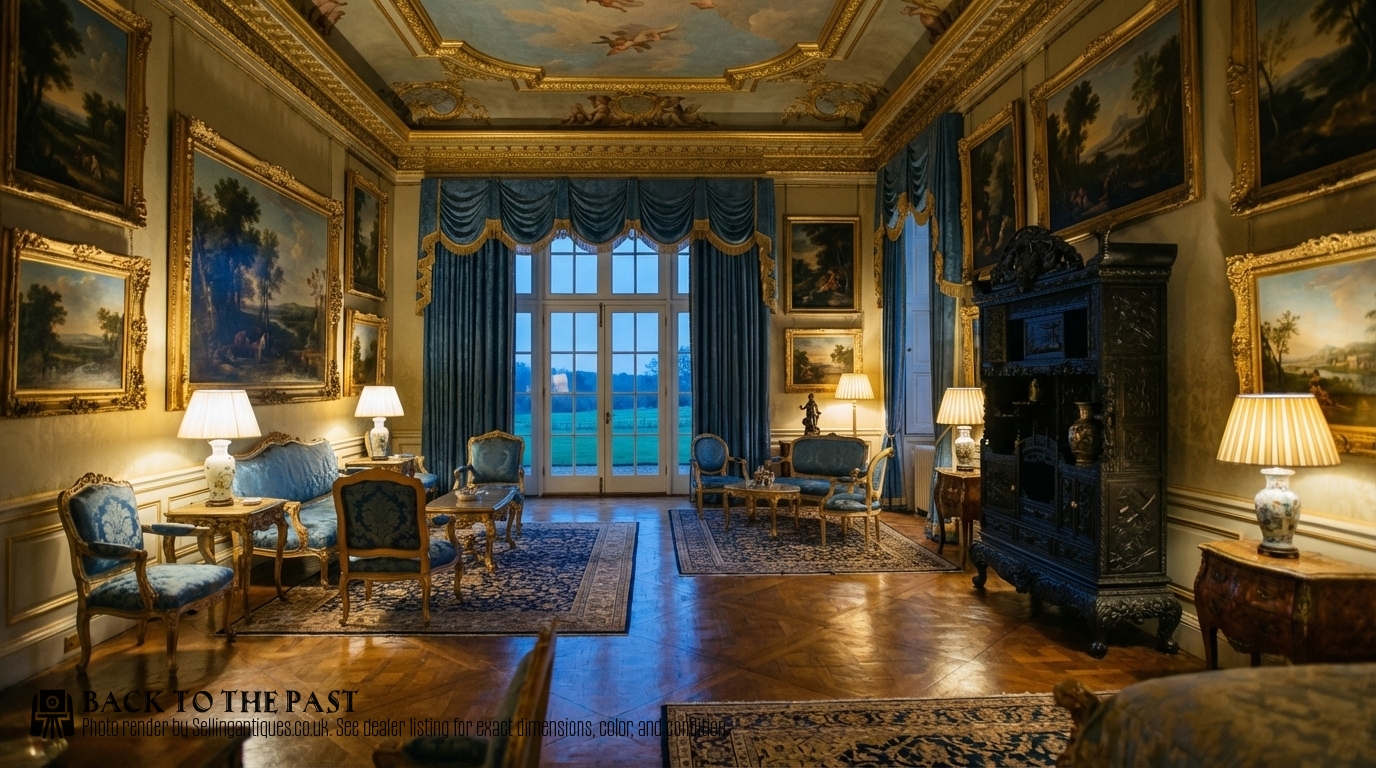
Asian Carved Furniture
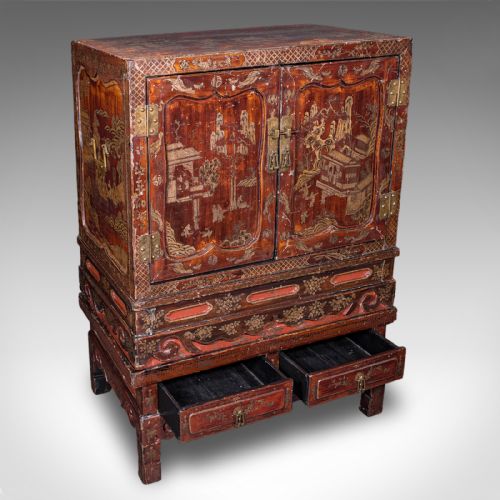
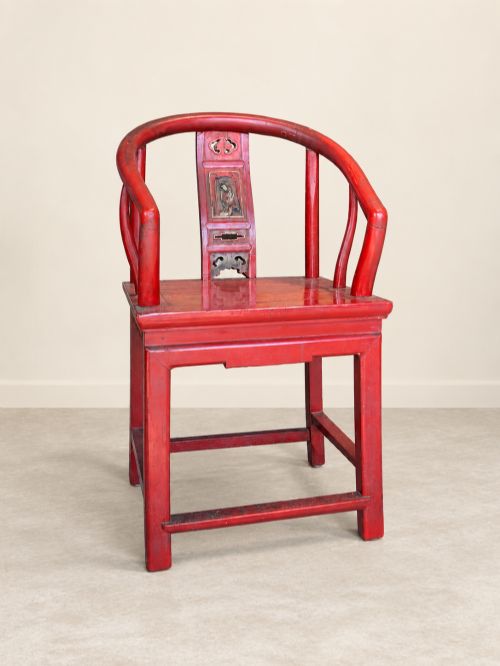
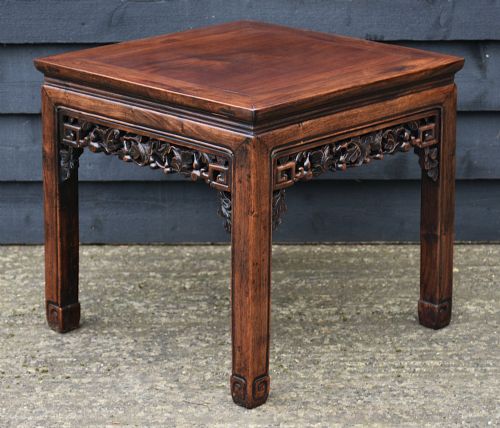
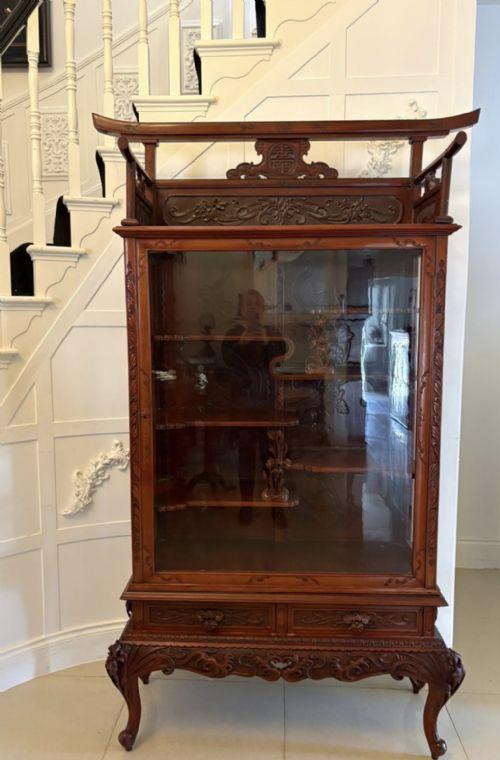
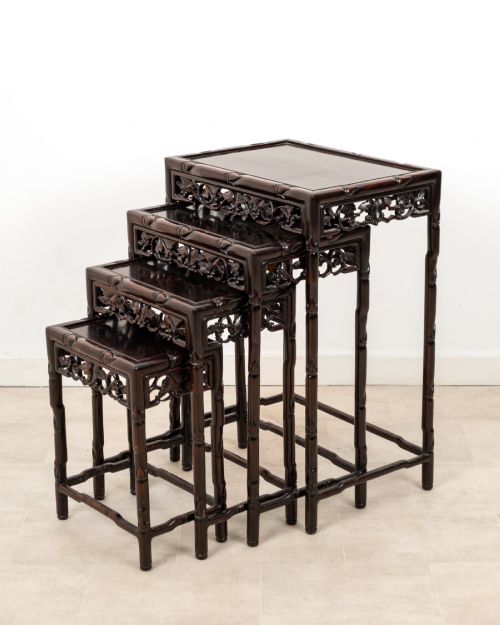
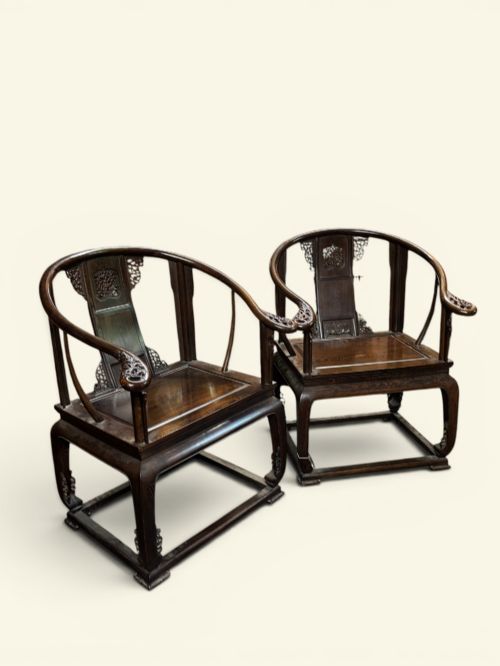
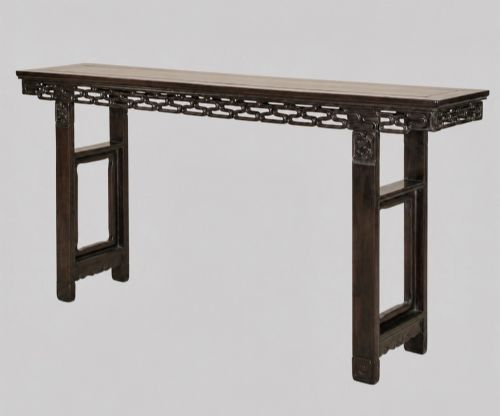
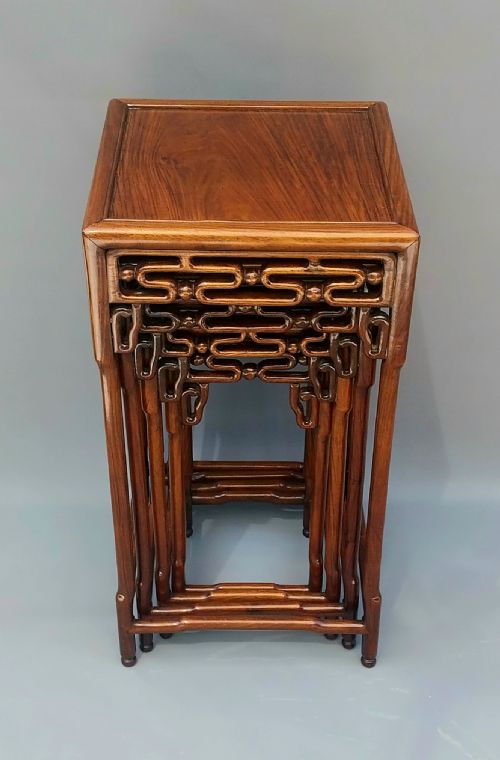
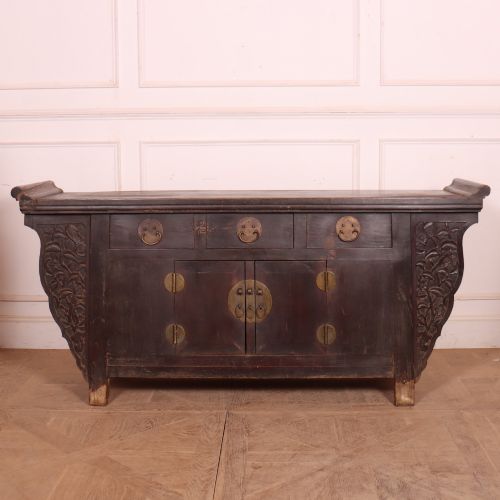
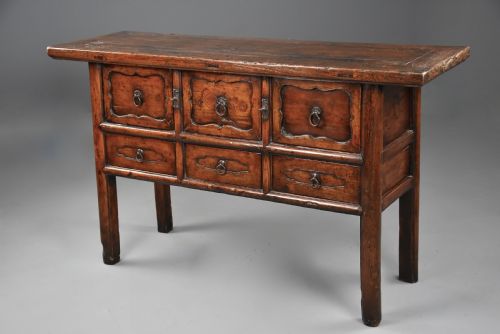
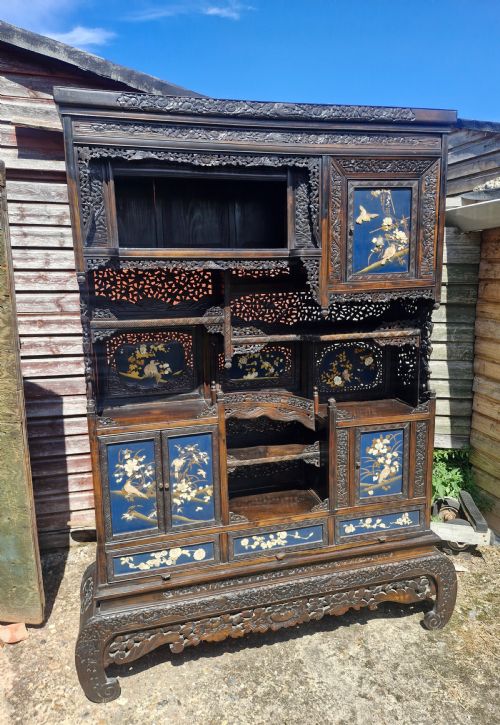
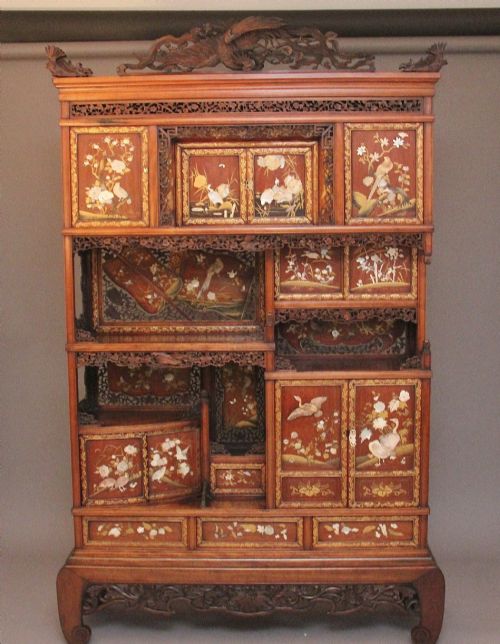
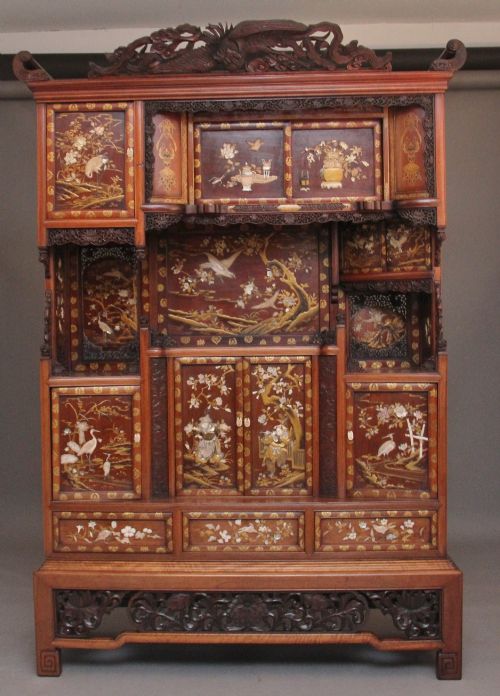
Asian carved furniture encompasses seating, tables, and cabinets originating from Chinese, Japanese, and Burmese makers across the nineteenth and early twentieth centuries. Pieces range from modest elm sideboards and nested tables to elaborate rosewood altar tables, horseshoe-back armchairs, and Japanese shodona display cabinets.
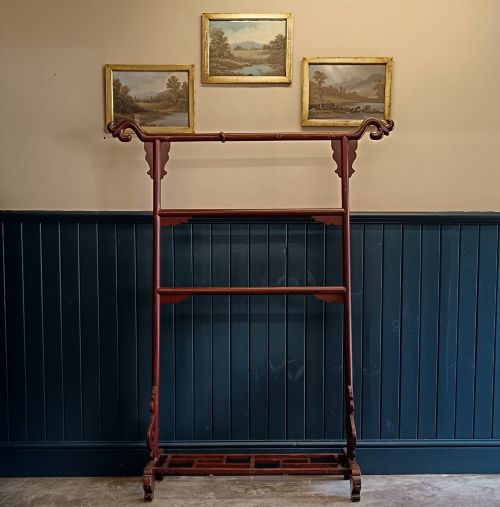
The selection frequently includes nineteenth-century pieces from the Qing Dynasty and the Japanese Meiji period, alongside later twentieth-century items reflecting traditional craftsmanship. Common forms serve practical domestic functions, such as coffee tables, plant stands, benches, and robes stands.
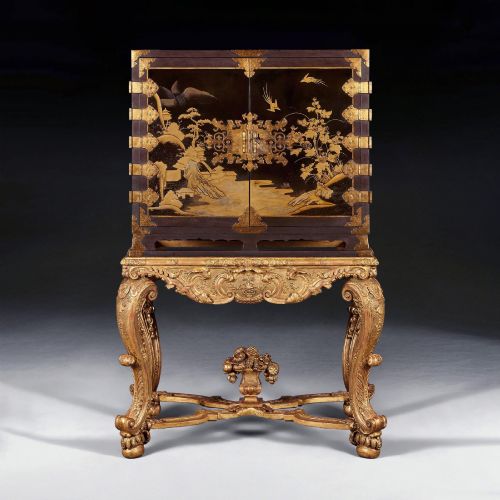
Buyers encounter distinct regional styles, including Chinese export pieces, Chinoiserie interpretations, and traditional elm or hardwood joinery. These items range from rustic domestic furniture to highly ornate display pieces finished with lacquer or mother-of-pearl inlay.
Materials and construction
Construction relies heavily on dense timbers such as rosewood, elm, and general hardwoods, shaped through traditional joinery techniques without extensive metal fixings. Many items incorporate intricate surface decoration including red or black lacquer, gold leaf, and inlaid mother-of-pearl.
Cabinets and tables often combine structural hardwood frames with decorative panels, brass mounts, and carved elements depicting figurative or natural motifs. Lacquered surfaces receive multiple coats applied over wood, sometimes housing carved cinnabar elements or intricate painted details.
Solid wood elephant seats bring sculpted tusks and painted bodies directly into the room.
Evaluating workmanship
Quality rests in the precision of the joinery and the depth and crispness of the hand carving across structural elements and panels. Dense rosewood and finely applied lacquer finishes indicate higher workshop standards than simpler elm constructions.
The integrity of decorative inlays, original brass hardware, and the preservation of the timber's natural patina distinguish superior examples. Consistency in the carving detail and stability in the frame construction reveal the original maker's skill.
The Asian Carved Furniture Glossary
- Shodona
- A Japanese tabletop or cabinet display piece featuring staggered shelving, common in the Meiji period. These cabinets serve to display small decorative objects.
- Qing Dynasty
- The final imperial dynasty of China, spanning from the seventeenth to the early twentieth century. Pieces from this era often utilise dense rosewood or elm.
- Cinnabar lacquer
- A technique involving numerous layers of red lacquer carved with intricate designs. This method produces a rich, tactile surface relief.
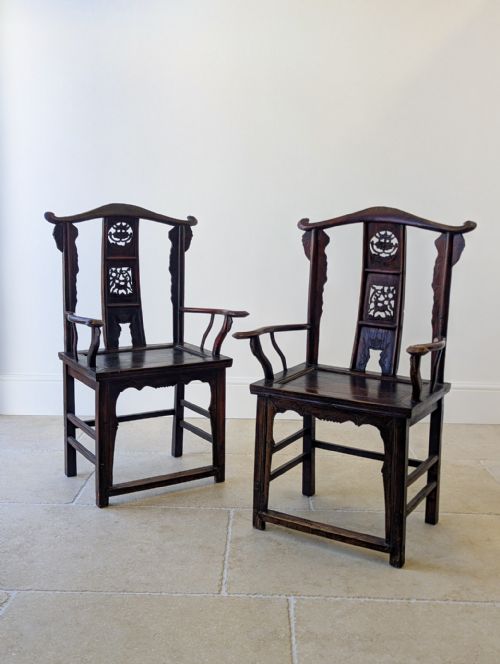
- Yoke-back armchair
- A traditional Chinese chair style featuring a top crestrail that curves upward like an ox yoke. These chairs provide structured upright seating.
- Chinoiserie
- European artistic styles reflecting Chinese motifs and decorative techniques. This aesthetic appears on cabinets and stands produced for Western markets.
Asian Carved Furniture: Frequently Asked Questions
How do I identify a Meiji period cabinet?
Japanese Meiji period cabinets, often known as shodonas, typically display asymmetric shelving arrangements and detailed woodwork. They reflect the decorative arts produced between eighteen sixty-eight and nineteen twelve.
Look for fine joinery, small sliding doors, and traditional Japanese metal hardware. These cabinets were built for displaying ornaments rather than heavy storage.
How do I care for lacquered furniture?
Lacquered surfaces require gentle dusting with a soft, dry cloth to prevent scratching the delicate finish. Avoid exposure to direct sunlight and extreme humidity changes.
Keep pieces away from direct heat sources to prevent the wood underneath from expanding and cracking the lacquer. Wax should be used sparingly, if at all.
What defines a horseshoe-back armchair?
Horseshoe-back armchairs feature a continuous curved crestrail that sweeps down to form the armrests. This ergonomic Chinese form provides comfortable support.
They are commonly constructed from hardwood such as rosewood or elm using traditional joinery. The design balances structural strength with smooth, curved lines.