
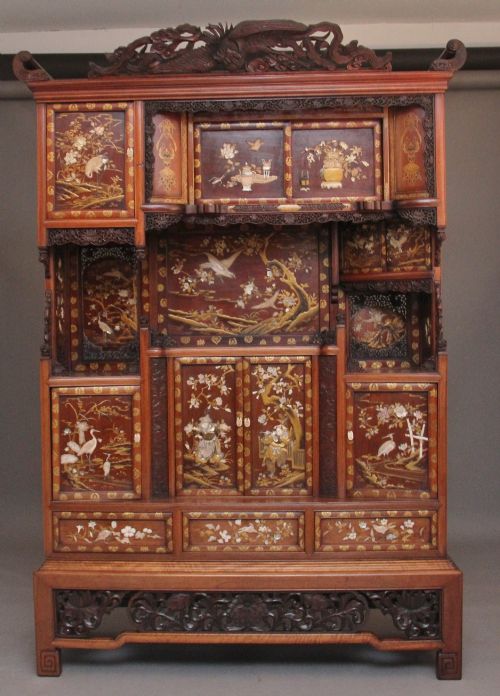


Meiji Display Cabinet
These pieces known as a meiji display cabinet bring intricate craftsmanship and rich materials into a room, offering a structured space to hold small collections.
Meiji Display Cabinet
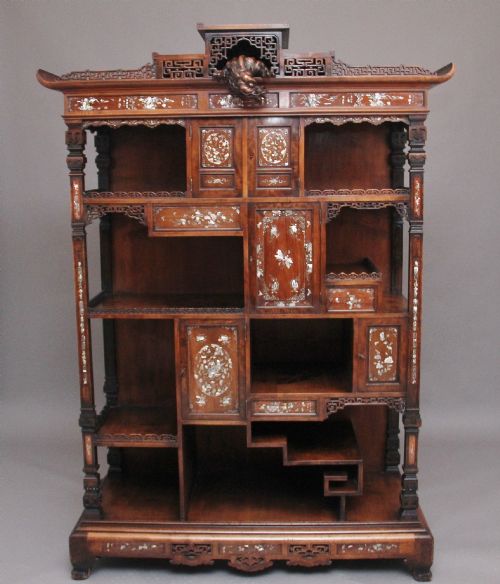
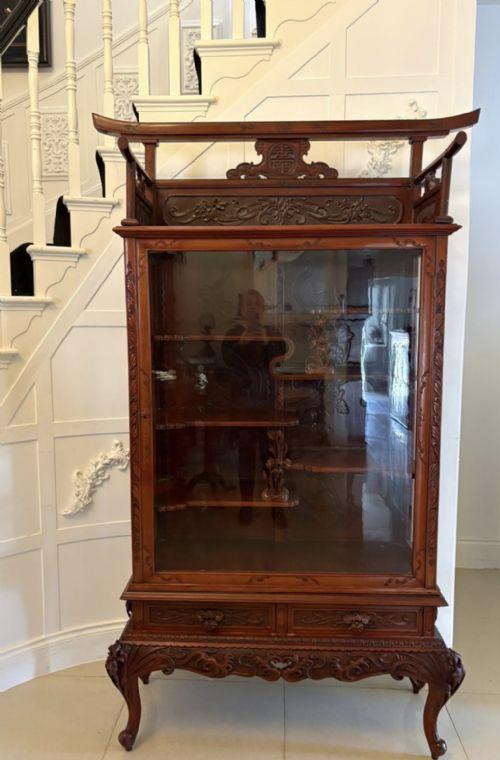
A meiji display cabinet comprises distinct forms built for exhibition and storage, most frequently appearing as a shodona cabinet or cabinet on stand. These objects emerge from the nineteenth century into the early twentieth century, spanning the Meiji and Taisho periods alongside European interpretations like Japonisme. Cabinets range from compact table models to large standing versions with shelves and compartments.
Beyond cabinetry, related decorative forms appear in the selection including wall chargers, plates, and dishes in Japanese Imari, Satsuma, and porcelain. The primary focus remains the freestanding or table-standing cabinet intended for interior presentation. These works combine traditional Japanese joinery and surface decoration with formats suited to Western homes of the period.
How they were made
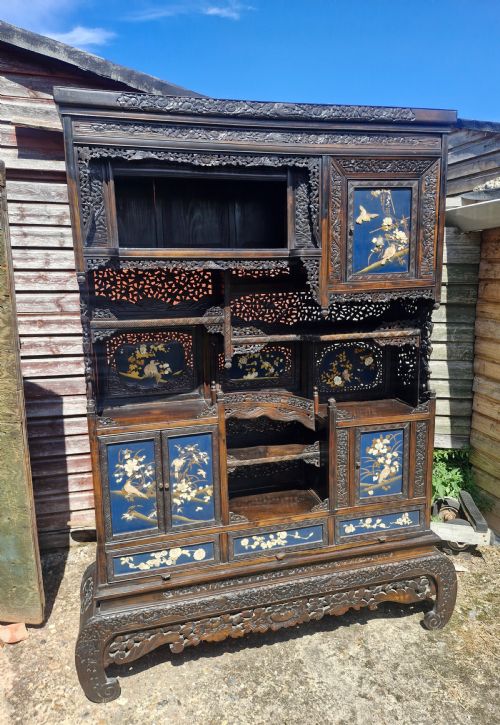
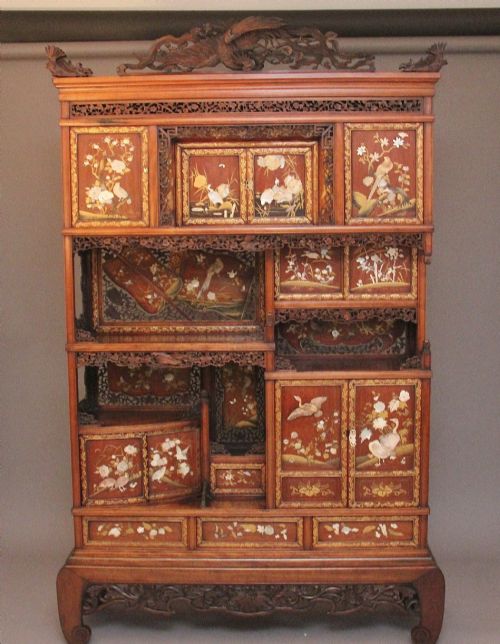
Maker construction relies heavily on dense hardwood as a structural base, combined with lacquered surfaces finished in red, black, or cinnabar tones. Artisans apply detailed carving, gold leaf, and inlays of mother of pearl, bone, and enamel to embellish doors, panels, and surrounds. Glazed sections and fitted interior shelves allow for the secure arrangement of objects.
Porcelain elements and plates associated with these furnishings utilise traditional firing, glaze application, and hand-painted pigments in styles such as Imari and Satsuma. Cabinets often incorporate intricate wood carving and ebonised finishes, while specialised panels utilise Shibayama techniques. Each material requires distinct handling, from wood joinery to the application of delicate lacquer layers.
What varies in quality
The standard of a piece rests upon the complexity of its construction and the precision of its surface decoration. Superior examples feature deeply carved hardwood, flawless lacquer, and intricate inlay work using materials like mother of pearl and bone. Simpler iterations rely on plain timber surfaces with minimal embellishment.
The refinement of painted details on associated porcelain chargers and the structural integrity of cabinets on stands distinguish high-end examples. Original glazing, intact stands, and harmonious proportions elevate the visual impact and overall execution of the work.
Shuzan for Yasuda·Fukagawa
The Meiji Display Cabinet Glossary
- Shodona
- A traditional Japanese cabinet featuring asymmetrical shelving, sliding doors, and small compartments. These pieces serve as display furniture for decorative objects.
- Imari
- A style of Japanese porcelain featuring distinctive underglaze blue and overglaze red, gold, and green pigments. This ware appears frequently in plates and chargers.
- Shibayama
- A decorative technique involving inlays of materials such as shell, ivory, bone, and wood onto a lacquer or wood base. This method creates textured, pictorial relief designs.
- Cinnabar
- A bright red mineral pigment used to create thick carved lacquer layers on boxes and small cabinets. Artisans carve intricate patterns directly into the hardened lacquer.
- Japonisme
- A Western artistic movement influenced by Japanese art and design during the late nineteenth century. European makers adopted these aesthetic principles in furniture and decorative items.
Meiji Display Cabinet: Frequently Asked Questions
What is a shodona cabinet?
A shodona is a Japanese display cabinet characterised by staggered shelving, small drawers, and cupboards designed for showcasing small treasures.
These pieces originate from the Meiji period and combine utility with decorative joinery.
How do I place a display cabinet?
Position the cabinet against a solid wall or upon a dedicated stand where natural light highlights the carved wood and lacquer surfaces.
Keep the interior shelves arranged with a small collection of ceramics or decorative objects to maintain proper visual balance.
What materials are used on these cabinets?
Construction primarily utilises dense hardwood, often finished with red or black lacquer, ebonisation, or cinnabar.
Surfaces are frequently enhanced with gold leaf, mother of pearl inlay, bone carvings, and glazed viewing panels.
How do I distinguish Meiji period pieces?
Meiji period items date from the late nineteenth to early twentieth century and display distinct traditional Japanese motifs combined with export craftsmanship.
Examine the joinery, lacquer depth, and inlay materials to understand the period manufacturing standards.